
Steep steeper oh O!(wo)man
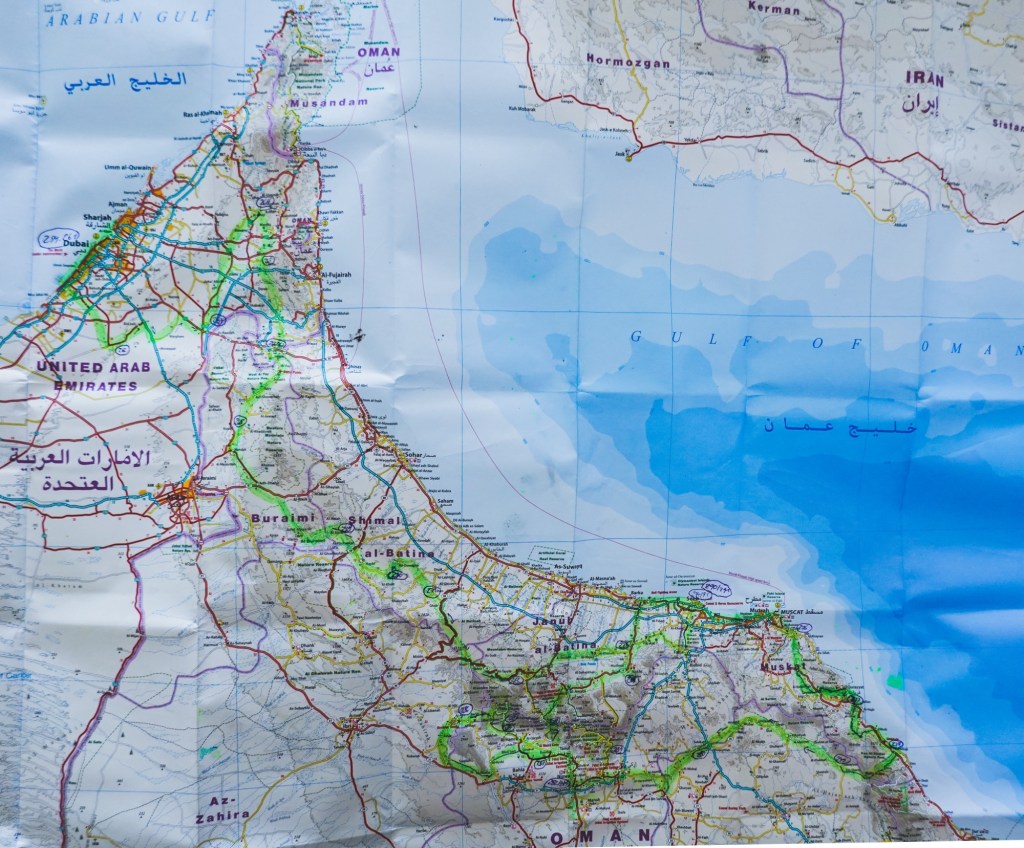
The Al Hajar mountain range stretches 700 km across the north of Oman, majestically dominating the scenery as it rises abruptly to over 3,000m from the coastal area. Our route starts in the west crossing and following the range via passes and valleys.
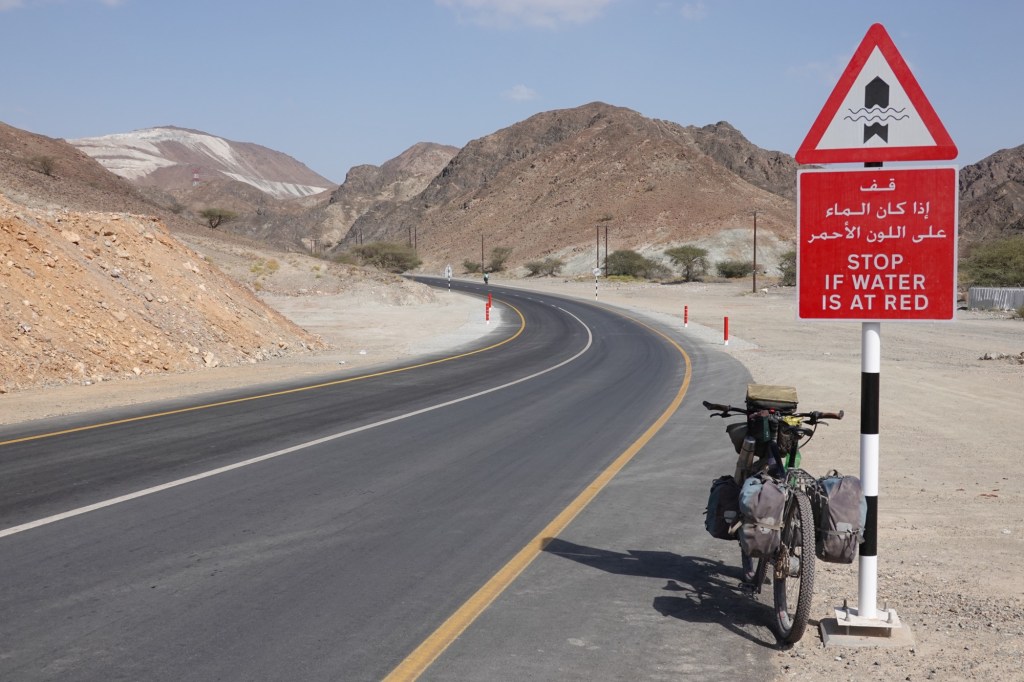
The new year starts with a delicious coffee tasting in the Hatta coffee shop. Fuelled with two very strong brews and 1kg of delicious coffee additional in our bike bags, we make our way to the omani border. After a very organised border we find ourselves on the empty roads of Oman and experience the first steep up and downs the country has to offer. A traffic sign – an arrow crossed with two waves – announces the potential risk for a flood, where a road crosses a (dried out) river bed. And usually this means an uphill sprint interval for us. 😂
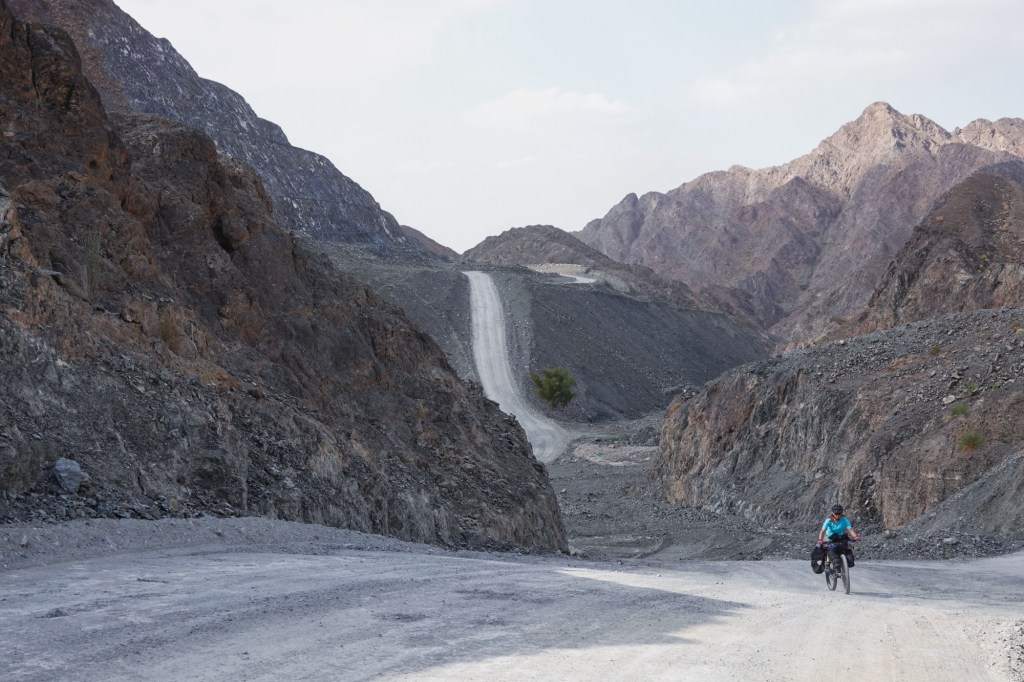
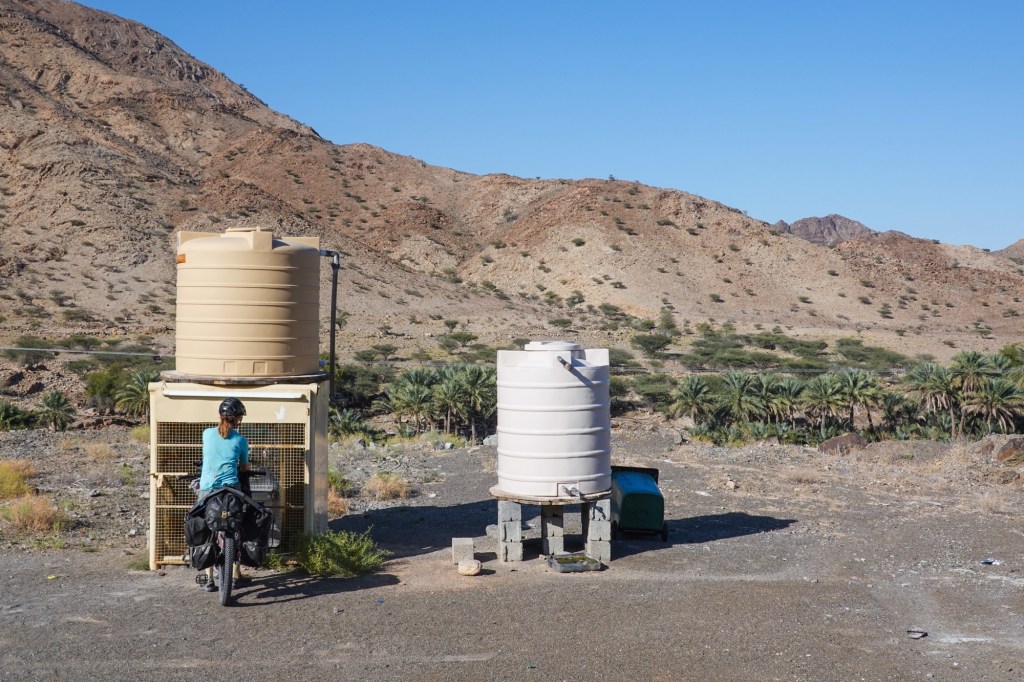
We pass a few small deserted villages and Mahdan, a smaller town. While supermarkets are rather rare in the country side, water tanks and mosques with filtered water make the life of bikepackers easy.
Wadi, wadi – wuup wuup
Our maps show a nice looking pass crossing from the south side of the mountains range to the north and we decide to try it. Some smooth altitude meters to start off and 300 altitude meters of heavy bike pushing later, a smiley painted on a rock welcomes us to the pass.
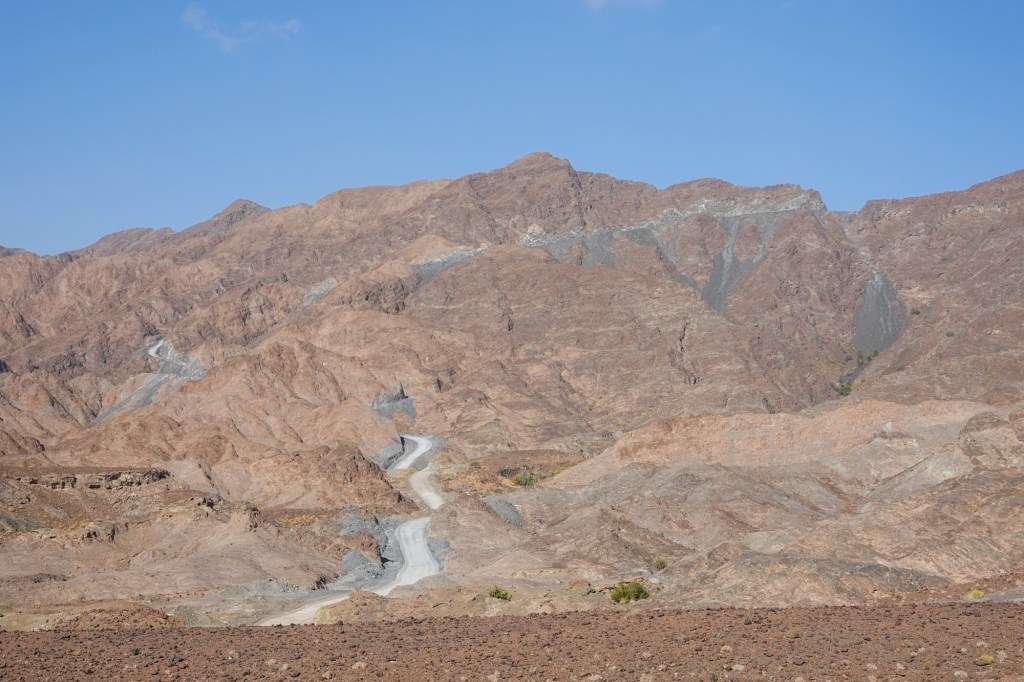
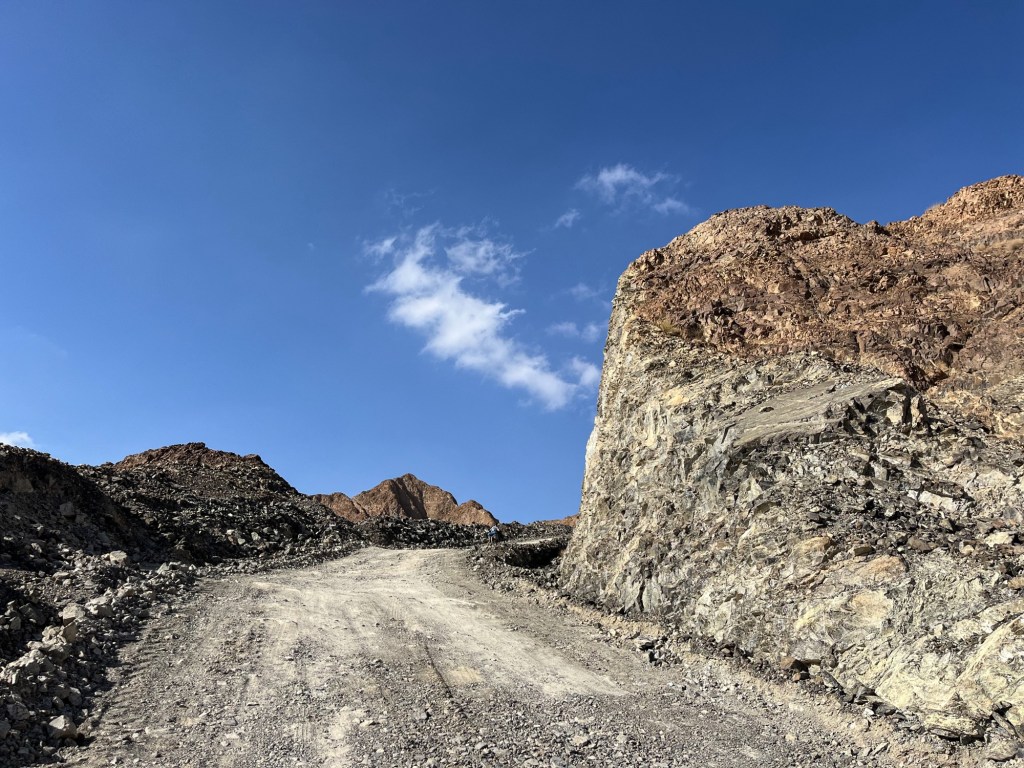
We follow a maze of dry riverbeds, passing through many beautiful wadis and small settlements. In a few wadis little streams flow through the deep gravel nourishing the palm trees. The canyons are usually silent and peaceful. Sometimes voices echo, indicating sign of life some 50 meters above us on the cliffs. Sometimes we spot daredevil goats, manoeuvring on the walls of the cliffs to get the best breakfast shrubs while loose gravel rushes down on the cliffs.
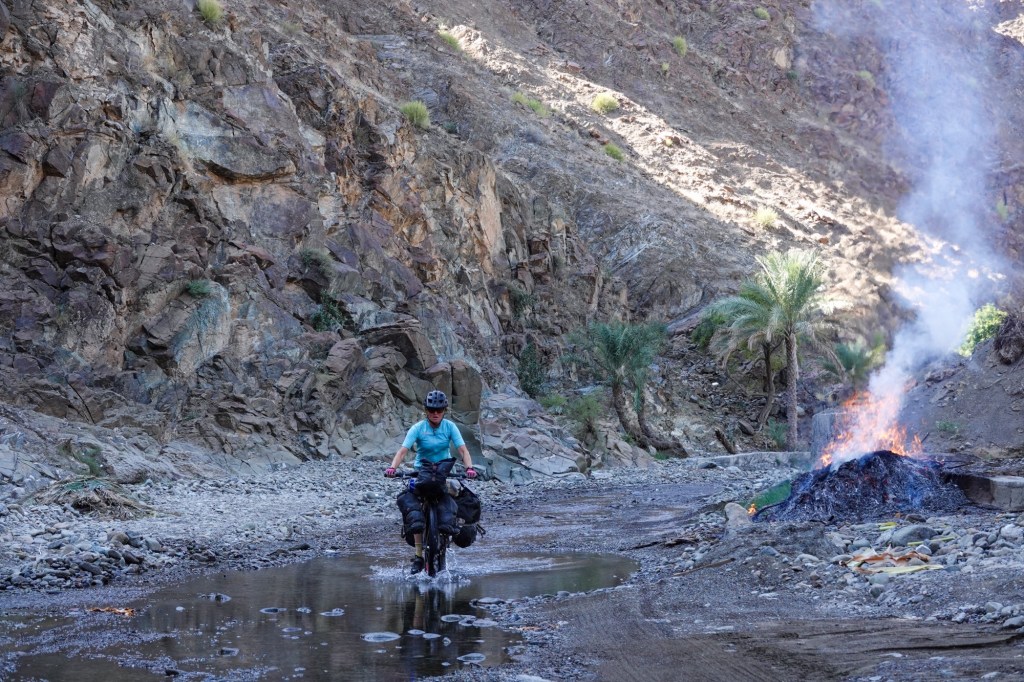
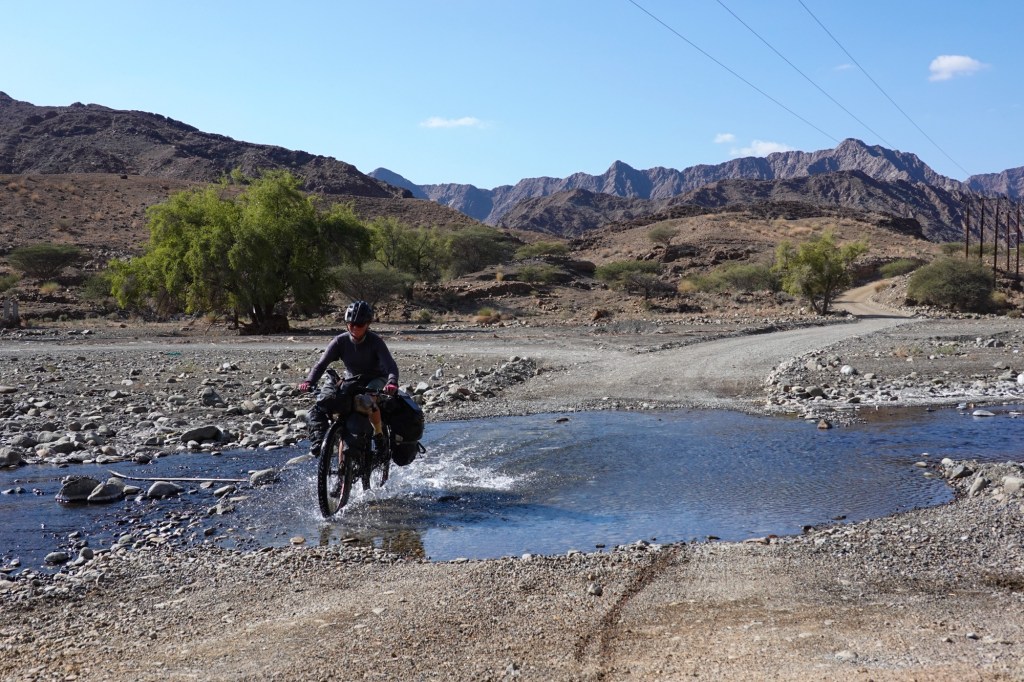
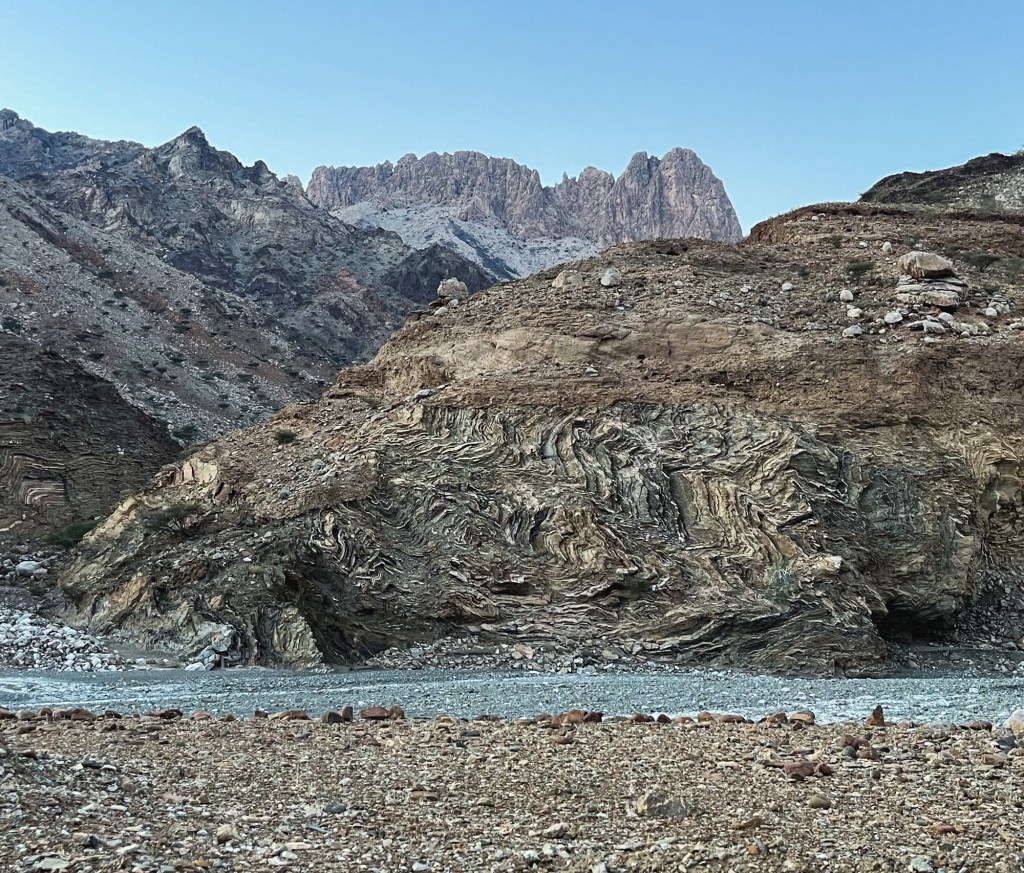
The geology of Oman is so unique that even lay(wo)men, like us, are bewildered by it.
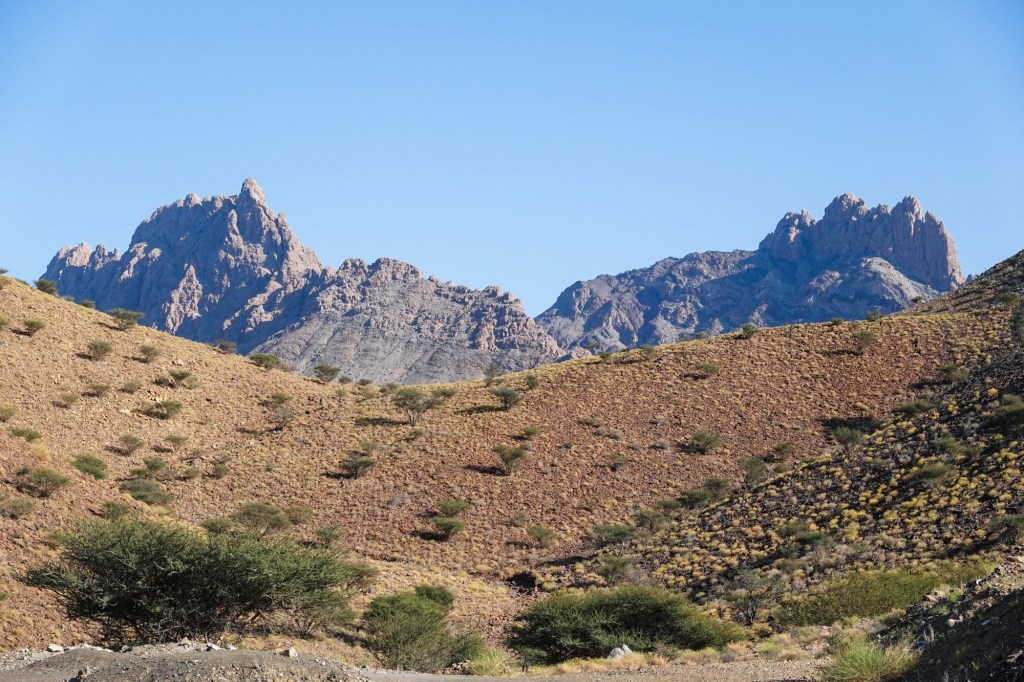
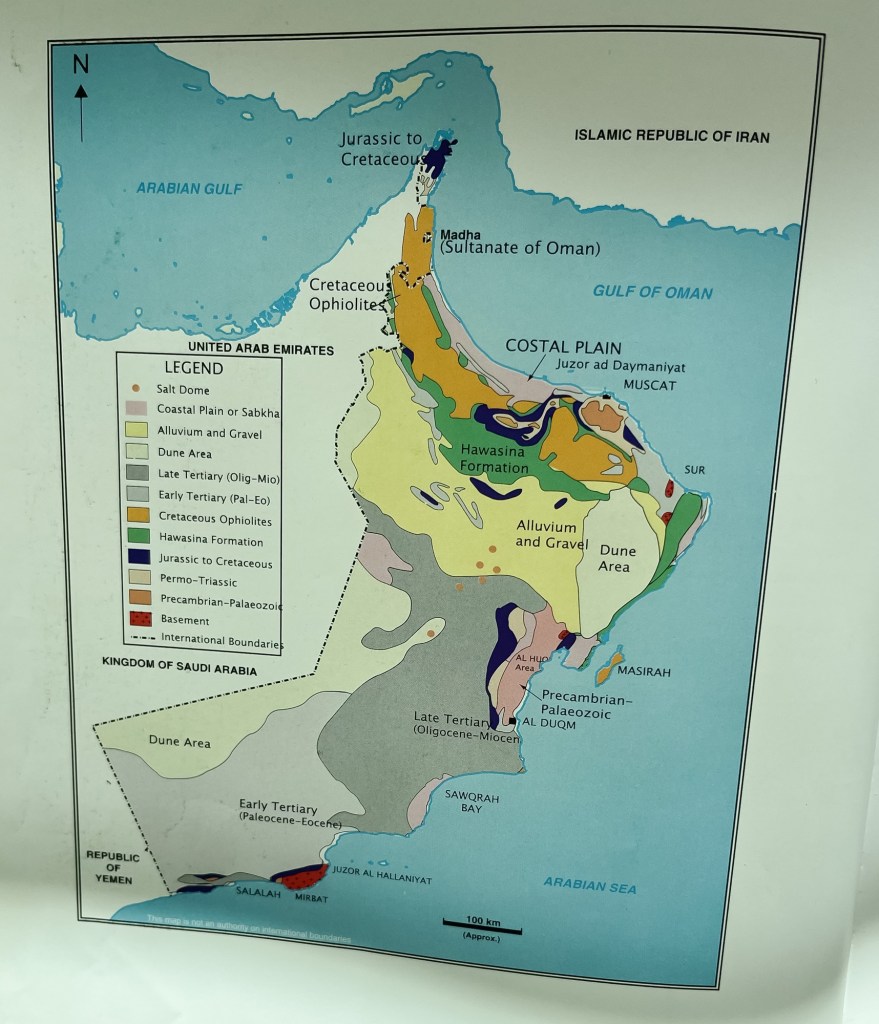
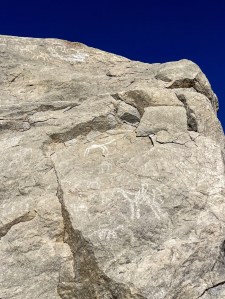
One Wadi follows the next one – the ups and downs on gravel roads are a lot of fun. But hard work! Just next to a road we pass some ancient rock art, depicting camels and hunting scenes.
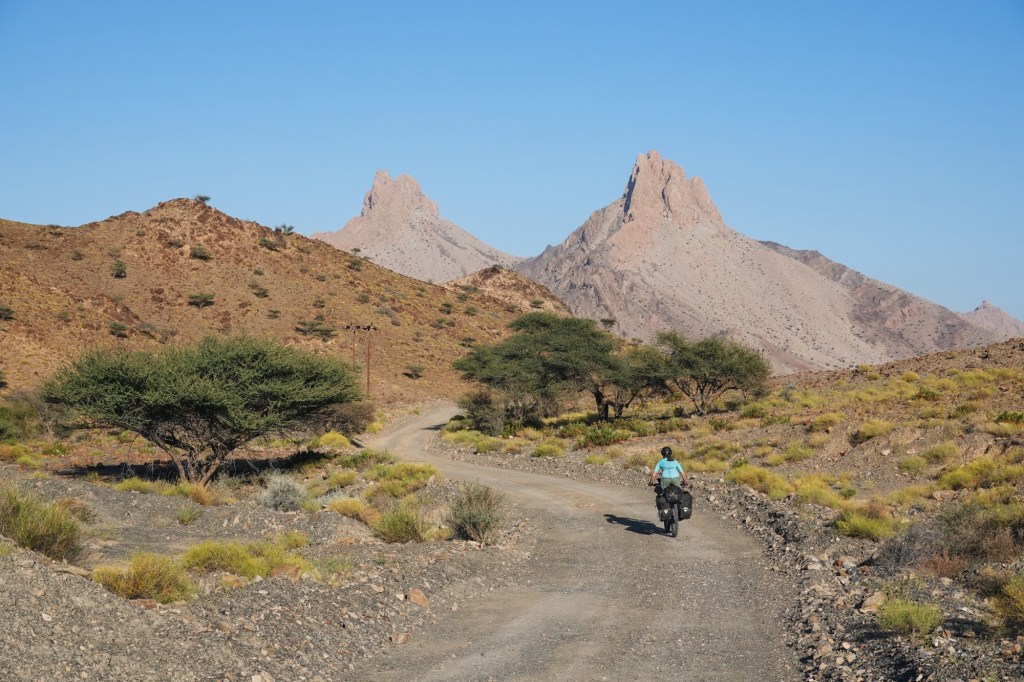
A plateau opens up, after another steep pass and Jebel al Abyad appears – like the sails of a shipwreck with its twin right behind.
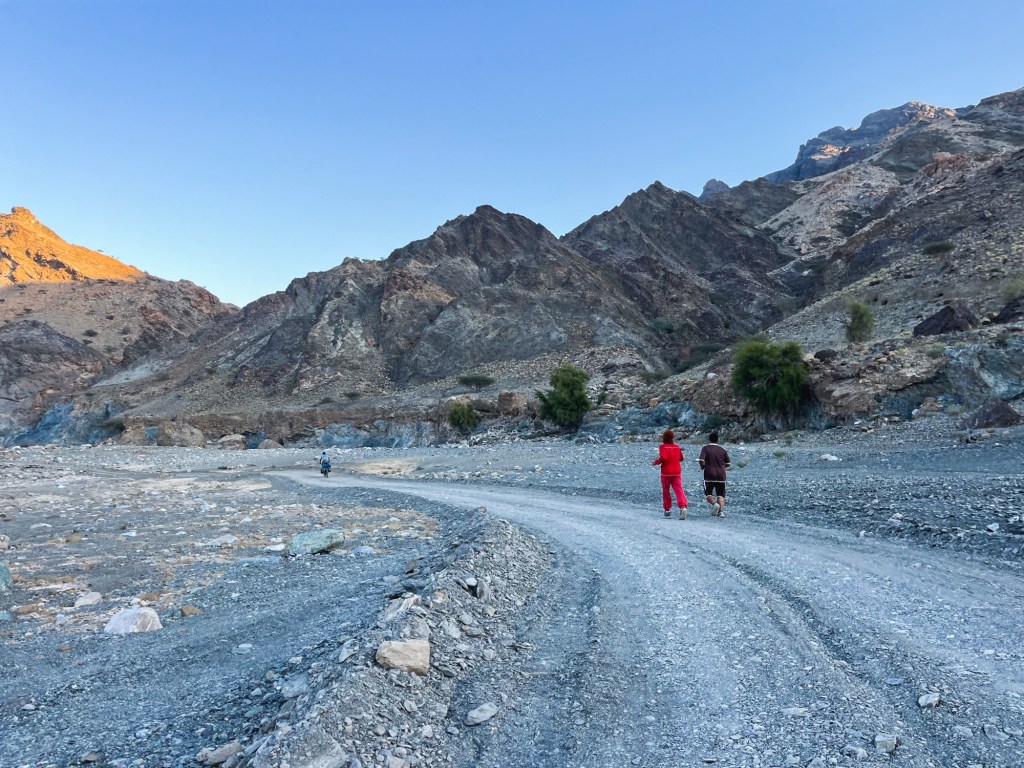
In the Wadi Bani Omar we pass some ruins. While we are doing some sightseeing and route scouting, two brothers during their evening jogging session pass our way.
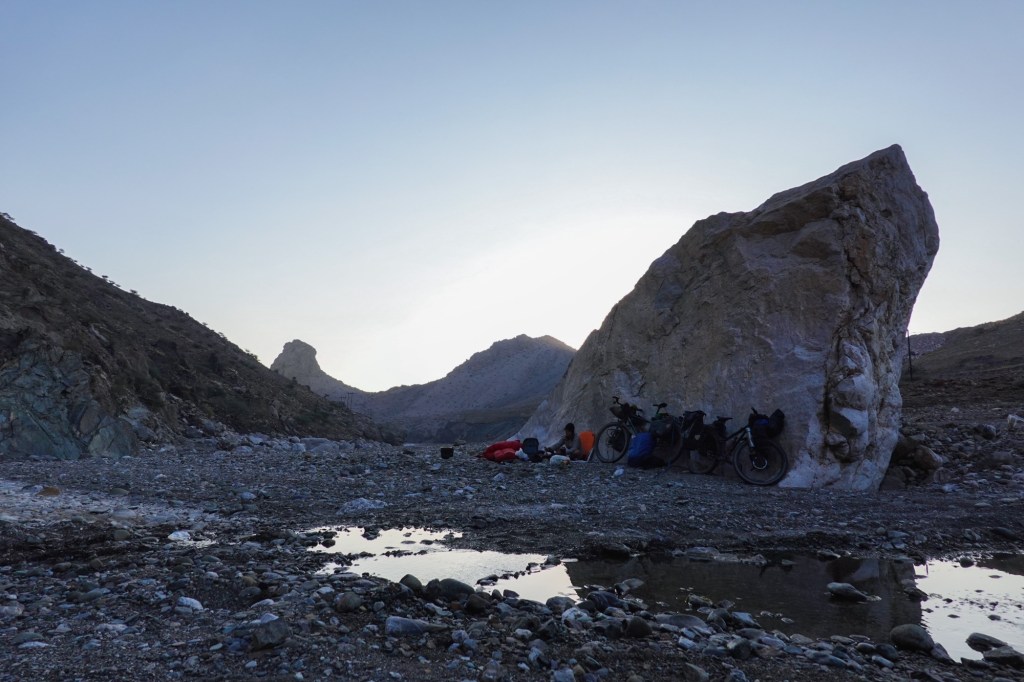
It feels like each valley has a different story to tell. Like gigantic sculptures, where different time epochs leave their unique artistic fingerprints. A massive boulder next to a little stream offers shelter and turns into fun slide.

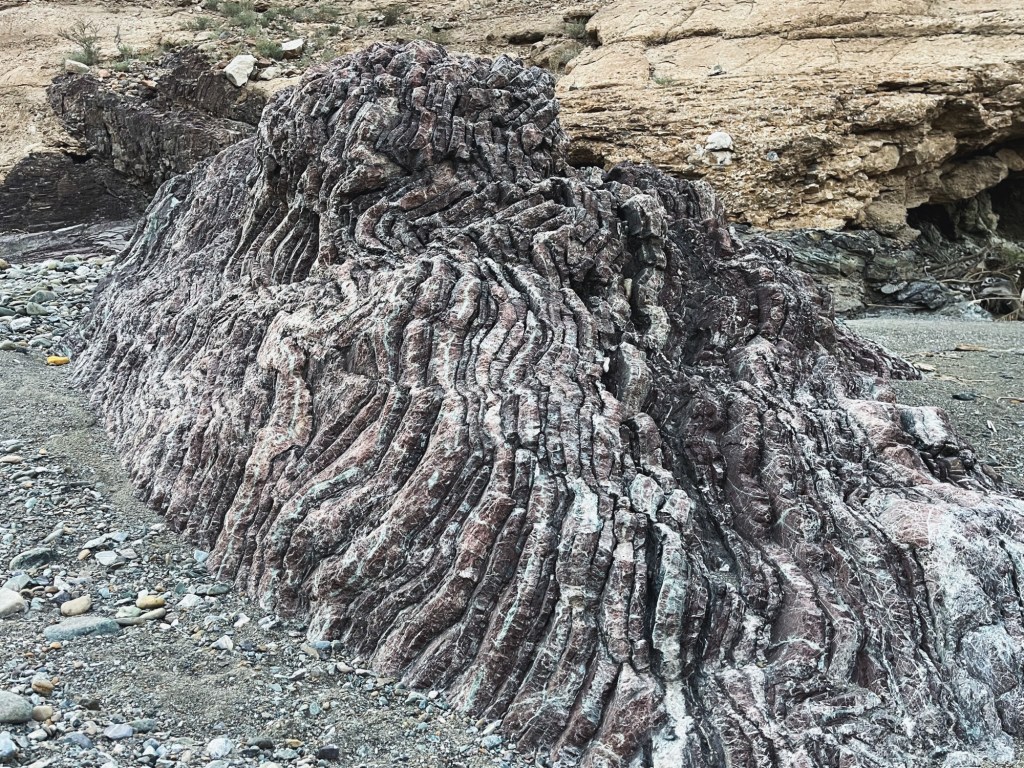
The folds whisper their secrets.
Mesmerising structures
Formed under enormous pressure
Long ago
In an ancient ocean
Some forces
So strong
Create
Unique pieces of art

A beautiful lecture
For life
Between these lines
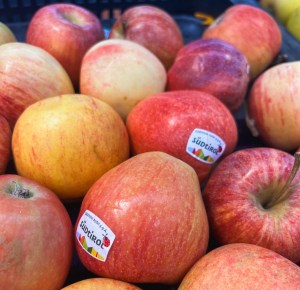
After some time away from major cities we stock up in a big hypermarket shockingly well stocked. Around 10 different types of apples from about 10 different countries.
On the way out of the town we end up in the maze of a new housing project. Roads are built, houses not yet – we ride in squares to find the exit on this boardgame. It is not that long ago that Oman started investing heavily in infrastructure and education.
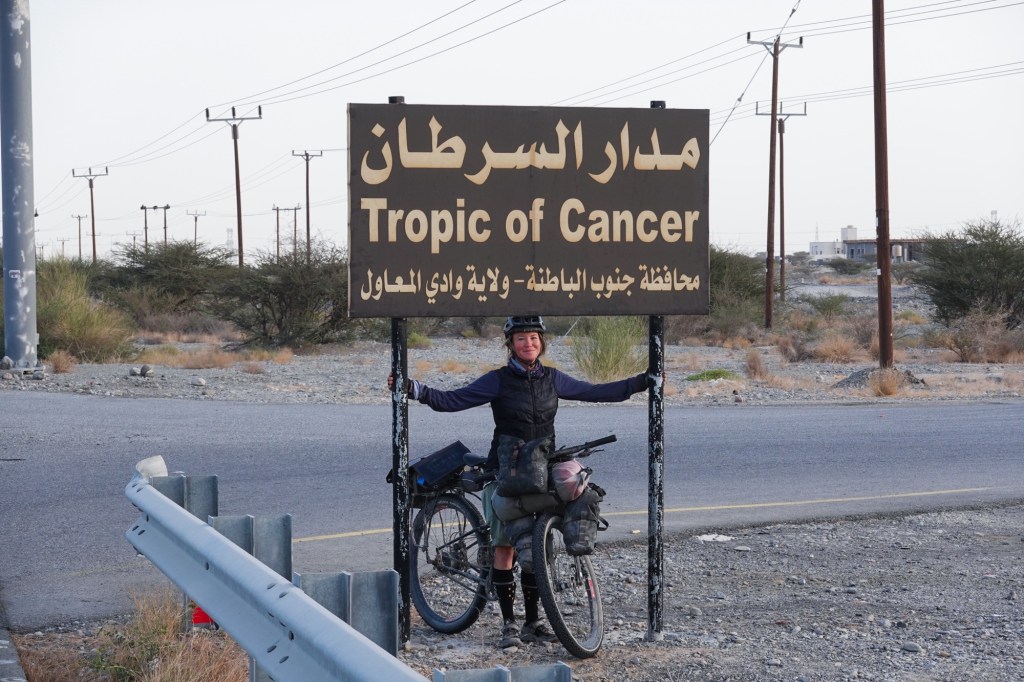
Somewhere on the road a rather untypical traffic sign appears indicating that we are at the the tropic of cancer – or the Northern Tropic: the Earth’s northernmost circle of latitude where the Sun can be seen directly overhead at the June Solstice.
Via one of the highways we head to the Golf of Oman in Barka. After our breakfast at the beach, Rolfi takes a nap and I join the invitation of a group of women. Sharing stories over Omani coffee (very very light coffee- tastes like tea but with hint of coffee), Ragag – Omani bread (crepe-like bread, delicious but really hard to eat and transport), Samosas, vegetables and fruits for breakfast.
The first part of our tour is over and we arrive in a little town close to Muskat. The city spreads over many kilometres along the coast and while the buildings are fairly new, they maintain the traditional architecture. Even the water tanks on the roof top have the shape of a watch tower. We try our best to ride the last 10km on small roads next to the seaside but somehow always get stuck in sand or in the maze of incomplete housing complex or too close to government buildings.

Sightseeing and Wadi Pools
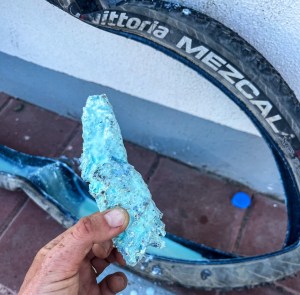
Before we head out to the wilderness for Part 2 of our Oman journey we switch my tire and figure out it was not a good idea to mix motorbike sealant with bike sealant (or to use motorbike sealant at all). 😂
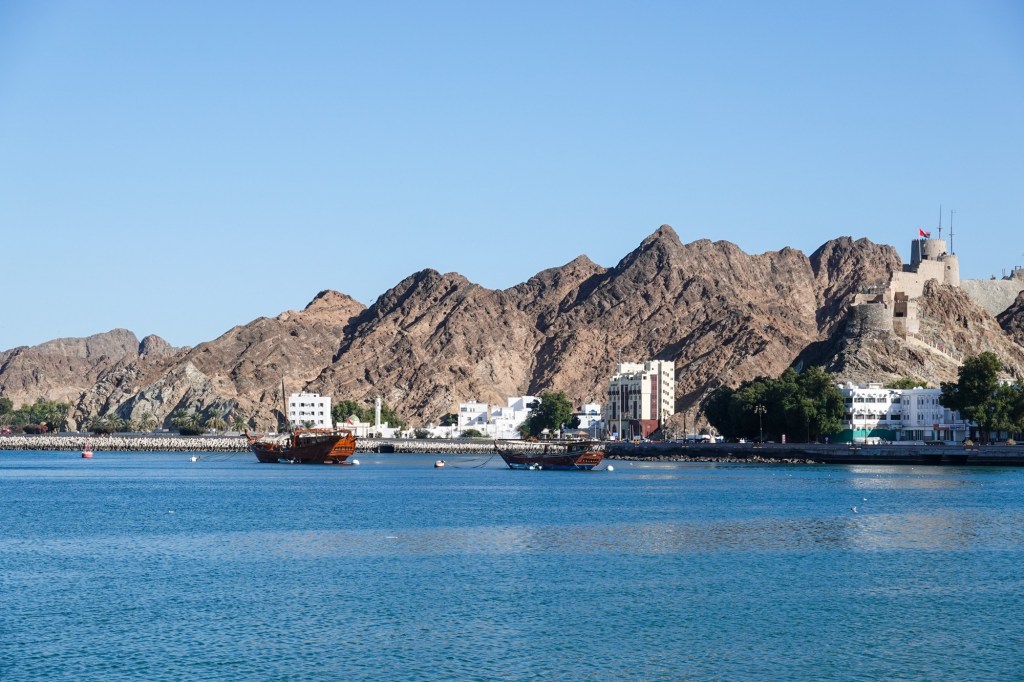
Some sightseeing in Old muskat. Some chats with local men who did some bike touring in Europe. And then the second part of the tour starts.
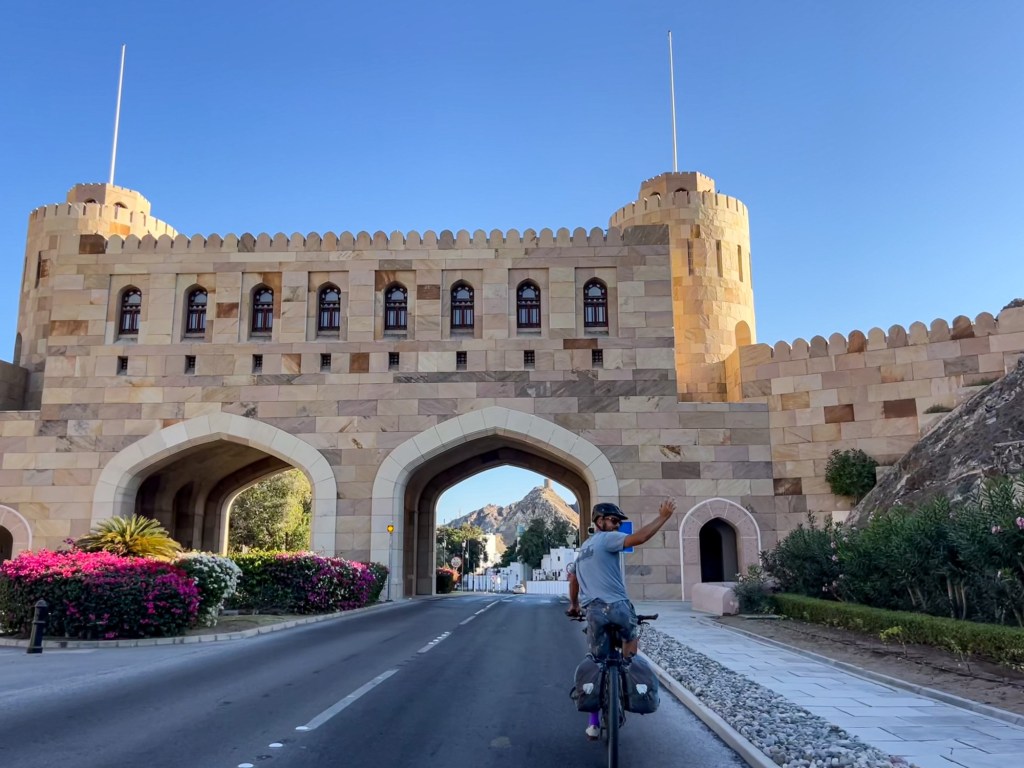
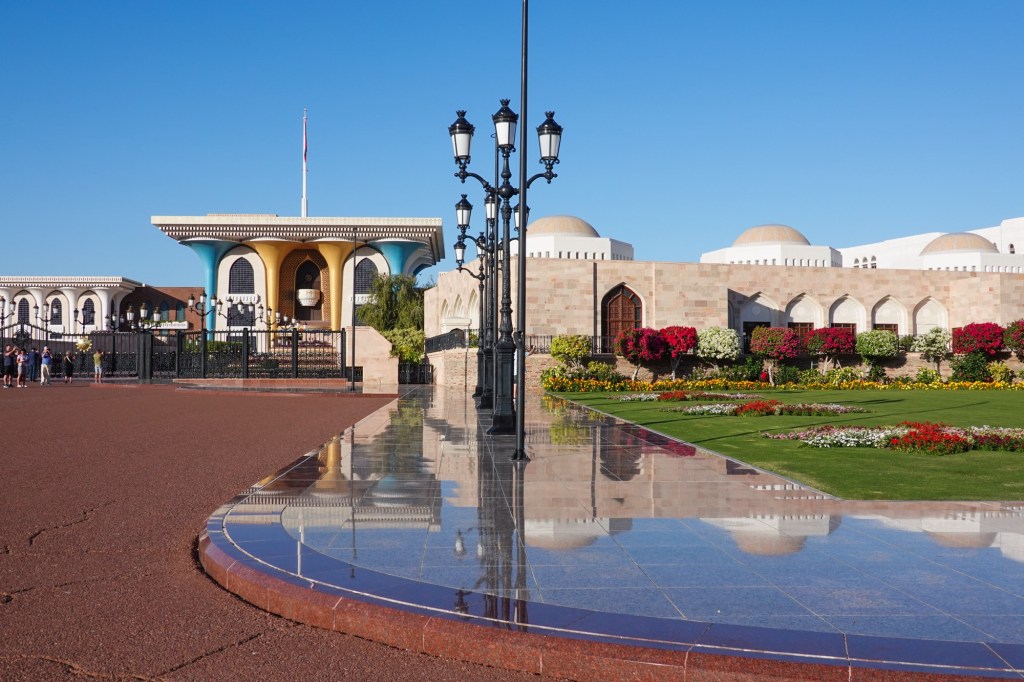
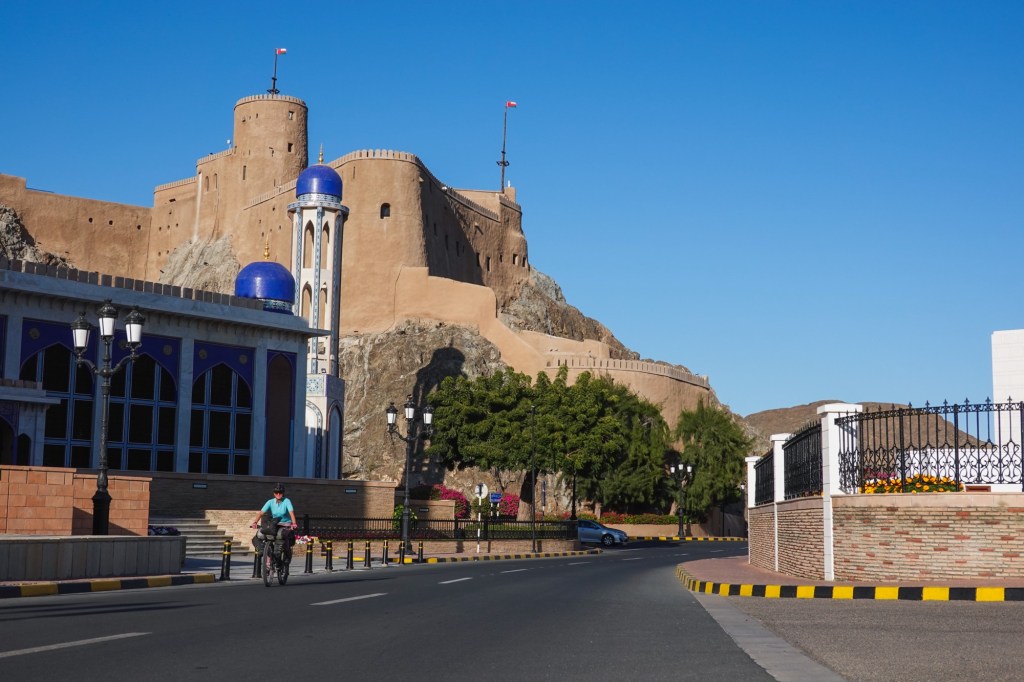
Our route follows some gravel paths and little villages and along an electricity line. For a few kilometres two donkey follow us, racing in a safe distance next to us.
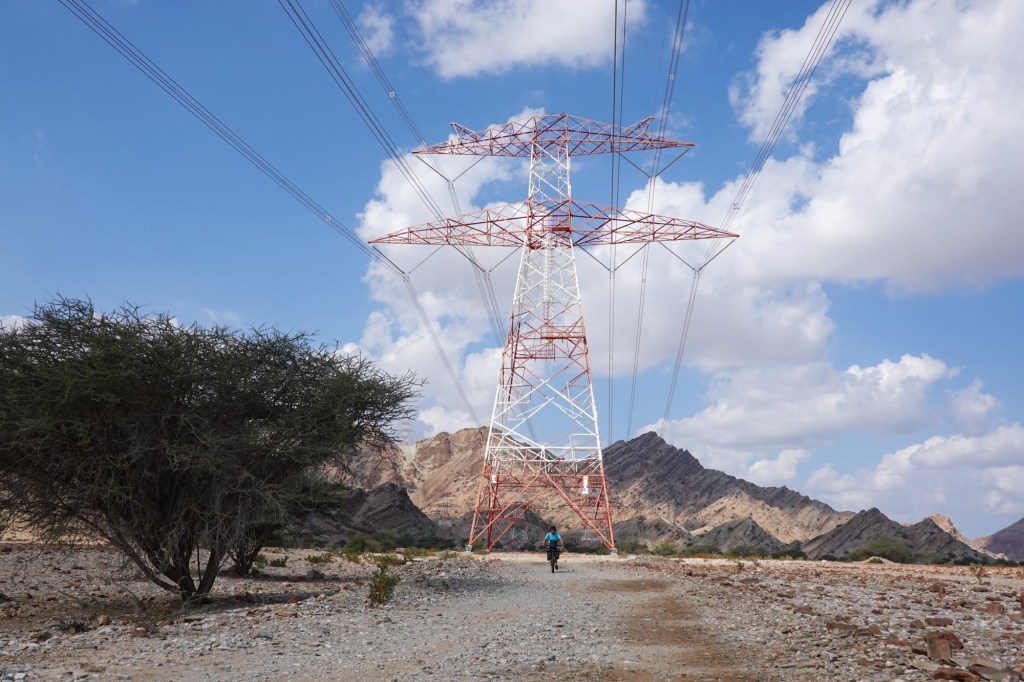
We head through Wadi Majlas ride to the town of Quriyat.


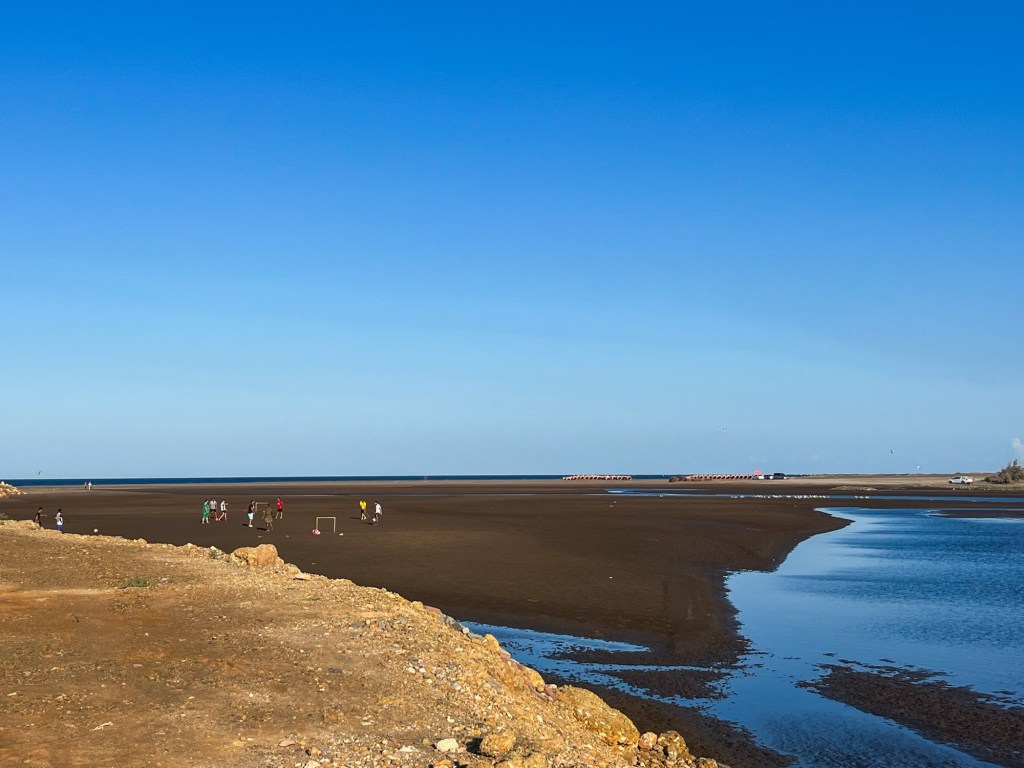
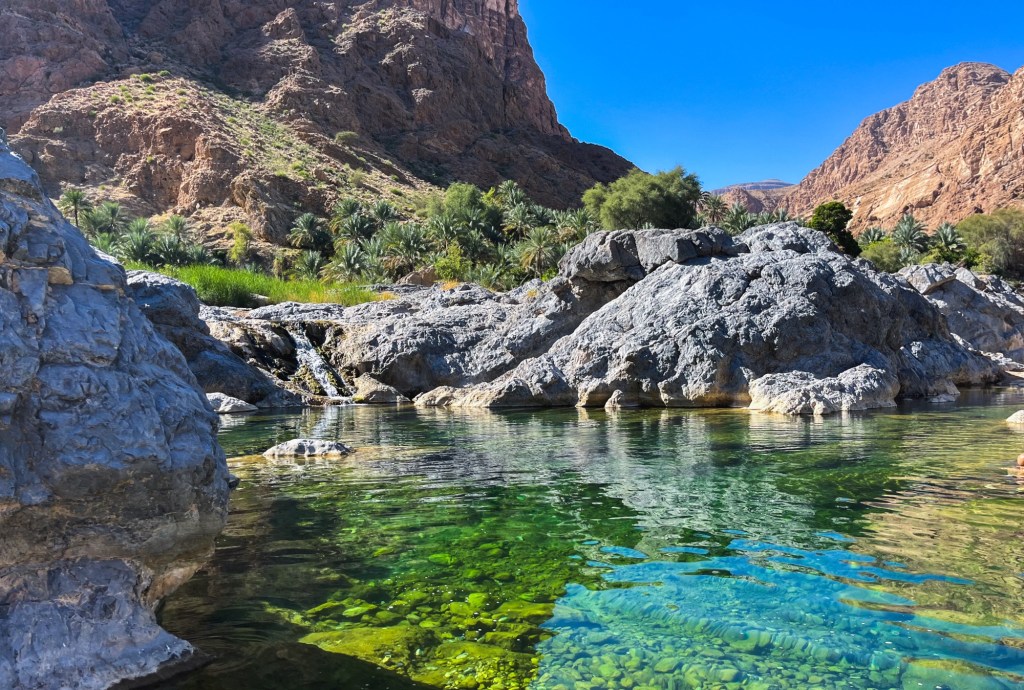
We pass by a group of climbers on their last routes in the evening light in Wadi Daiqah and enjoy a relaxing swim in the beautiful Wadi Al Arabeen. We dig like hamsters through the fine gravel of the dry river beds.

After stopping briefly at the Bimah sinkhole, a nice campspot in between local campers at the beach awaits.
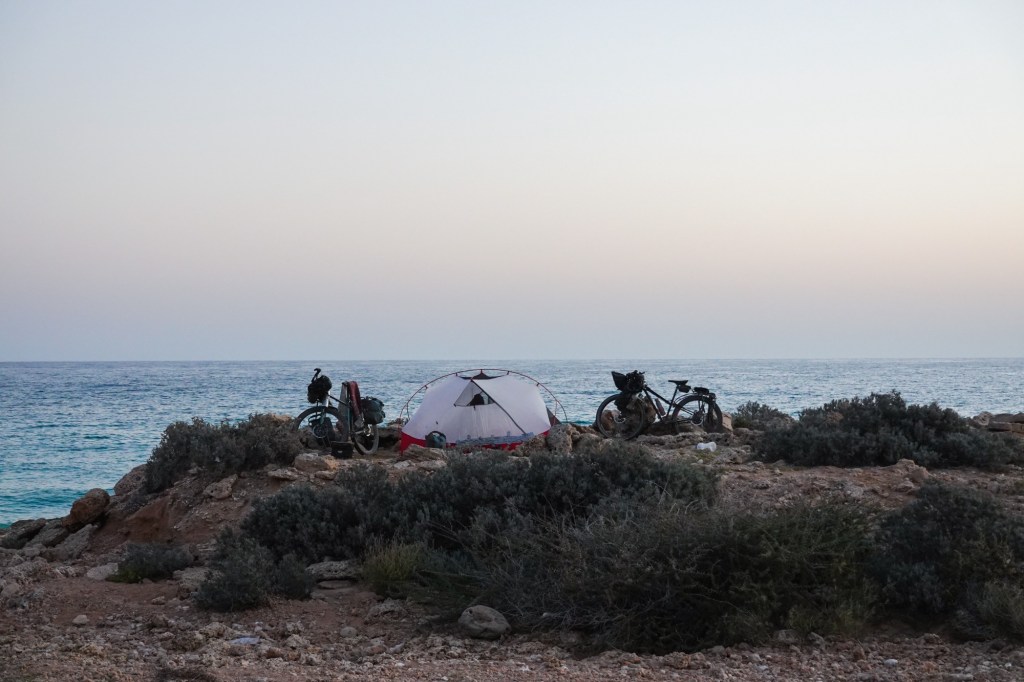
The ocean is restless this evening, waves splash against the cliffs where crabs hide in little puddles. Before going to bed I remember telling Rolfi „I know I’ ll regret saying this but I am really looking forward to a tough day tomorrow“. Because it is finally time to go back to the mountain range!

What a beautiful day!
The deep red colours of the sunrise transfuse the mesh of the tent. Our Omani camping neighbours wave „Good Morning“ from their perfect luxurious tent set up. The waves crash against the rocks, while we sip our delicious Hatta Mountain coffee. After some orga stuff we head towards the mountain range behind us. A sign indicates that we are entering the „Ras al Shajar“ nature reserve. On our first few turns, two arabian antilopes cross our path, elegantly bouncing over the dirt track, like giant rabbits. At the first village a water tank awaits us and we take a few sips to cool off. A friendly man shows us the way, by drawing arrows into the sand. This happened so many times already to us, in Mongolia, Tajikistan and Pakistan. Who needs a navigation system anyways?
As we make our way up on the range that belongs to the Salma plateau, the track becomes steeper and steeper. Like snails we zigzag up on the sand and concrete tracks, trying to trick the gradient. Further up, we push the bikes.

We slowly gain altitude on the track piercing through the inaccessible seeming cliffs facing the coast, and coming closer to the plateau-like central area with hills and in part steep wadi incisions. The endless seeming ocean that matching the sky.
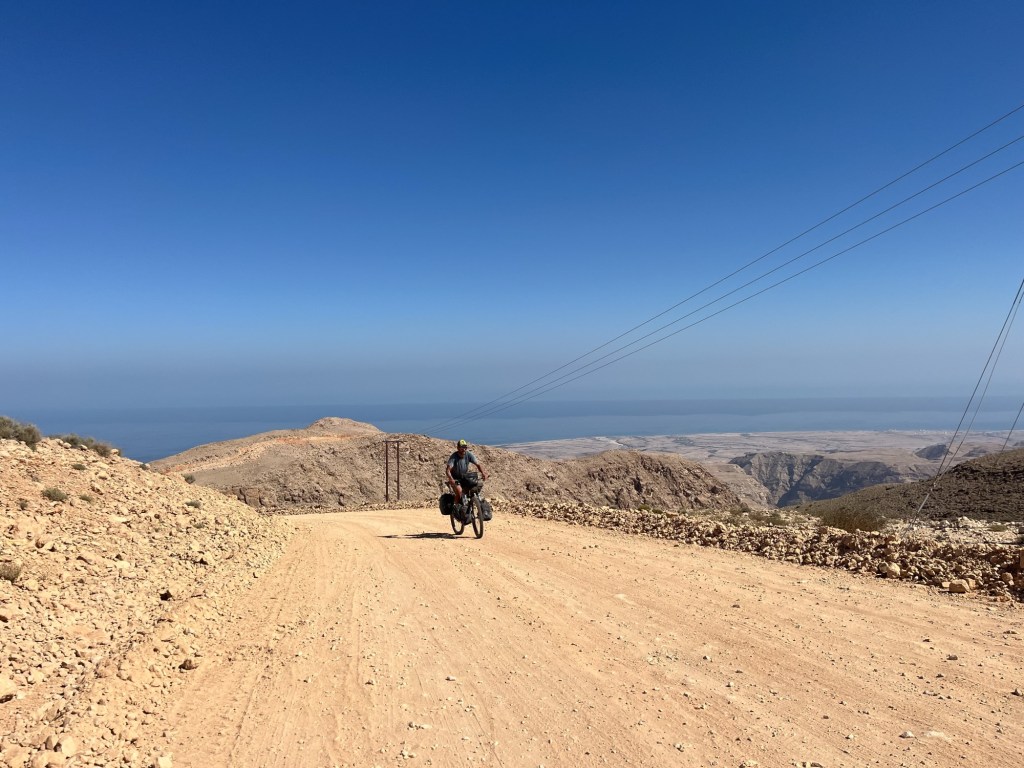
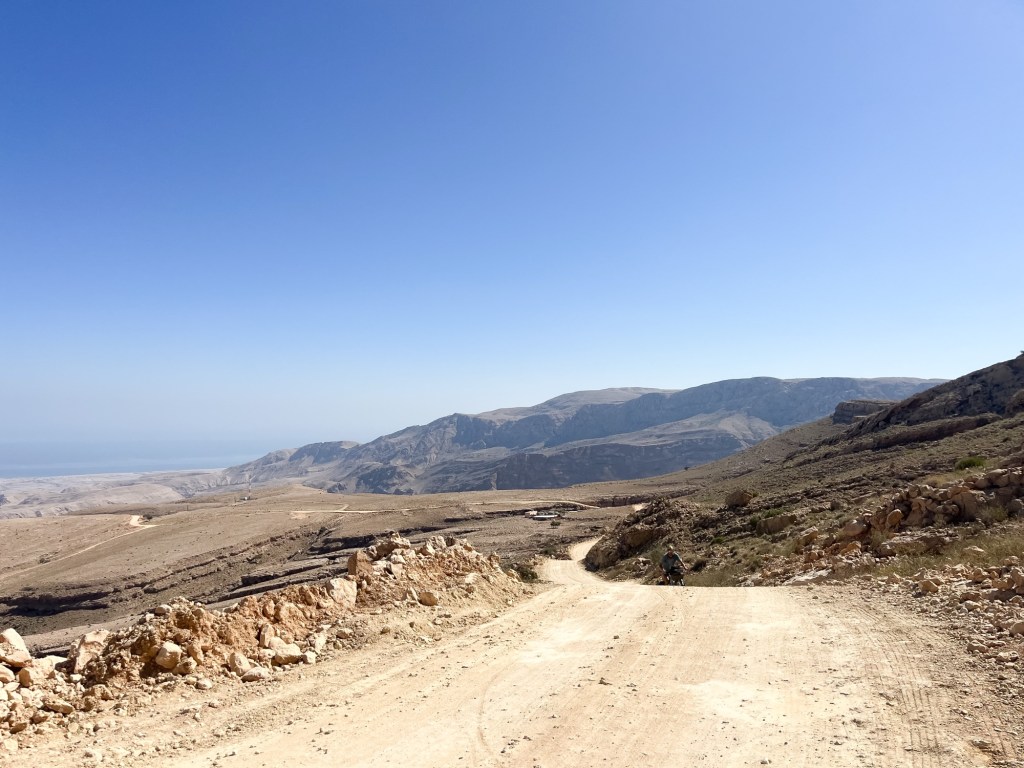
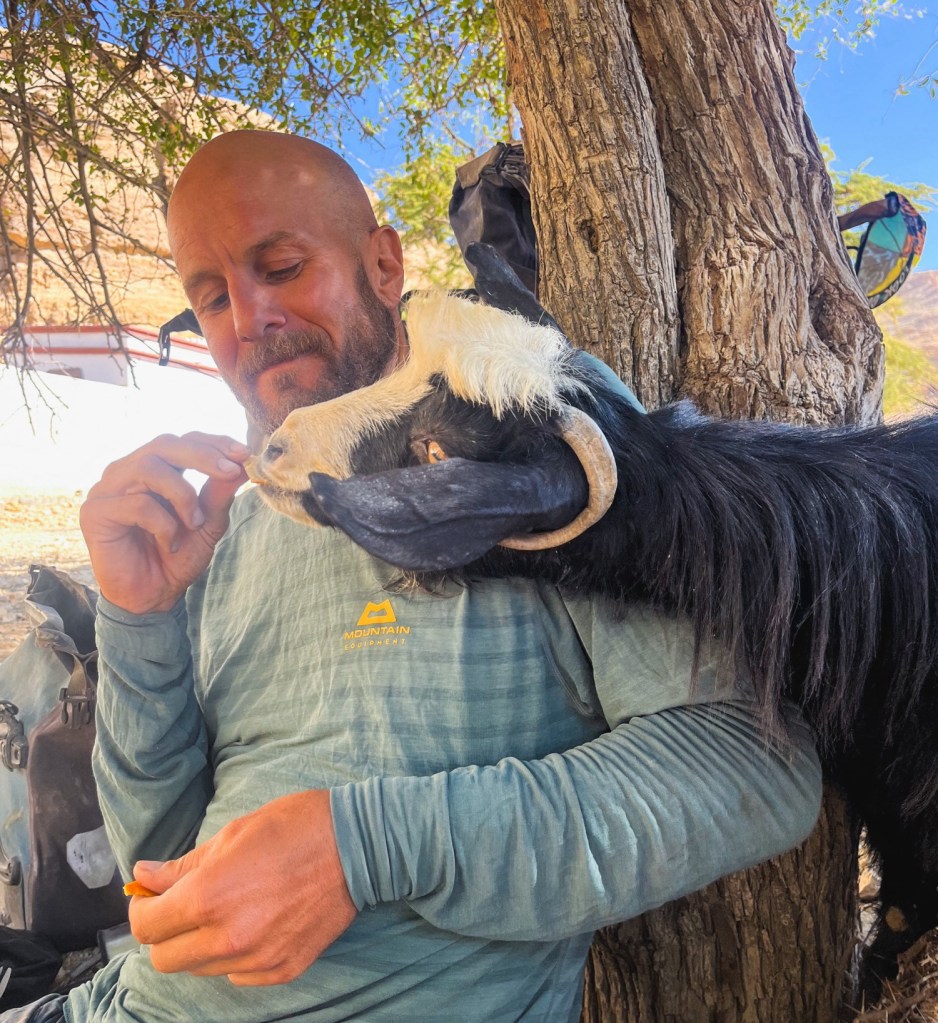
20 km and more than 1500 altitude meter later our lunch break tree is waiting for us. Some goats join us. One inattentive moment and a very sneaky goat has her tongue in Rolfis freshly prepared cold chocolate. As a thank you he gets a kiss afterwards.
We enter again the Wadi Al Arabeen in a different section – than the one we visited yesterday. The sun is strong and sweat drips from our skins. The gentle breeze makes the temperatures bearable. Some more flowy sections followed by another tough and steep climb and finally we reach the top.
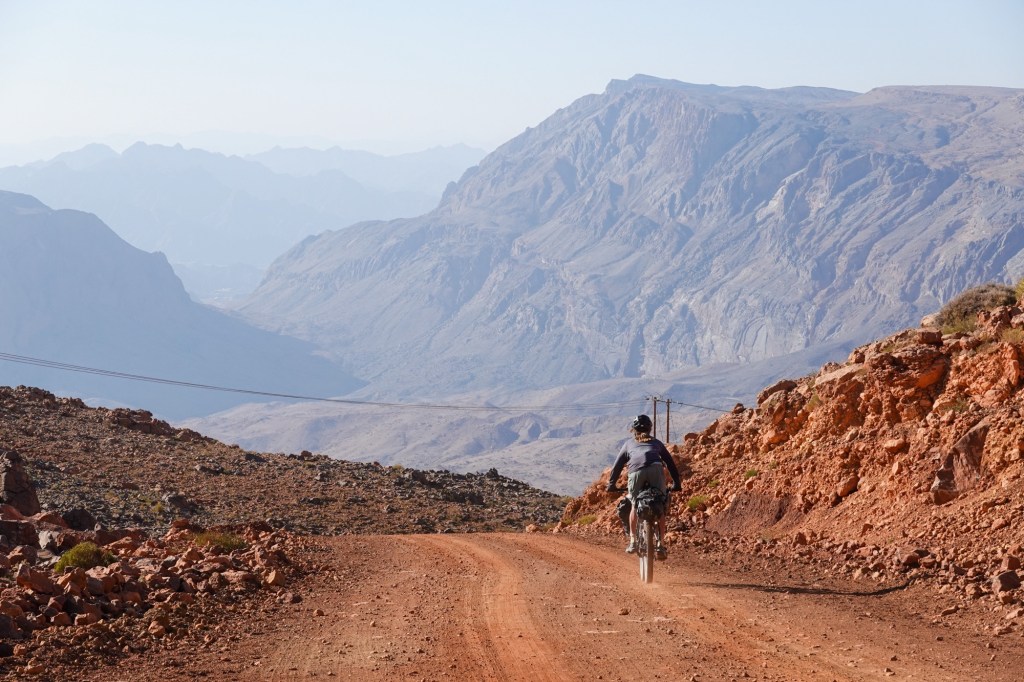
The mountain range shimmers in various shades of grey and blue and the soil in a deep red. Debating if we should call it a day but ist still early. So we decide to roll down.
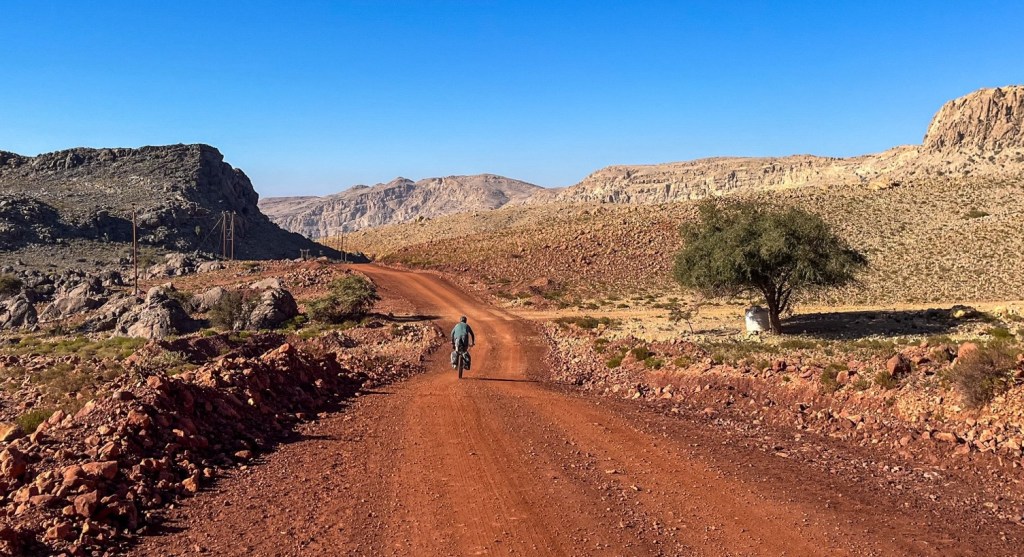
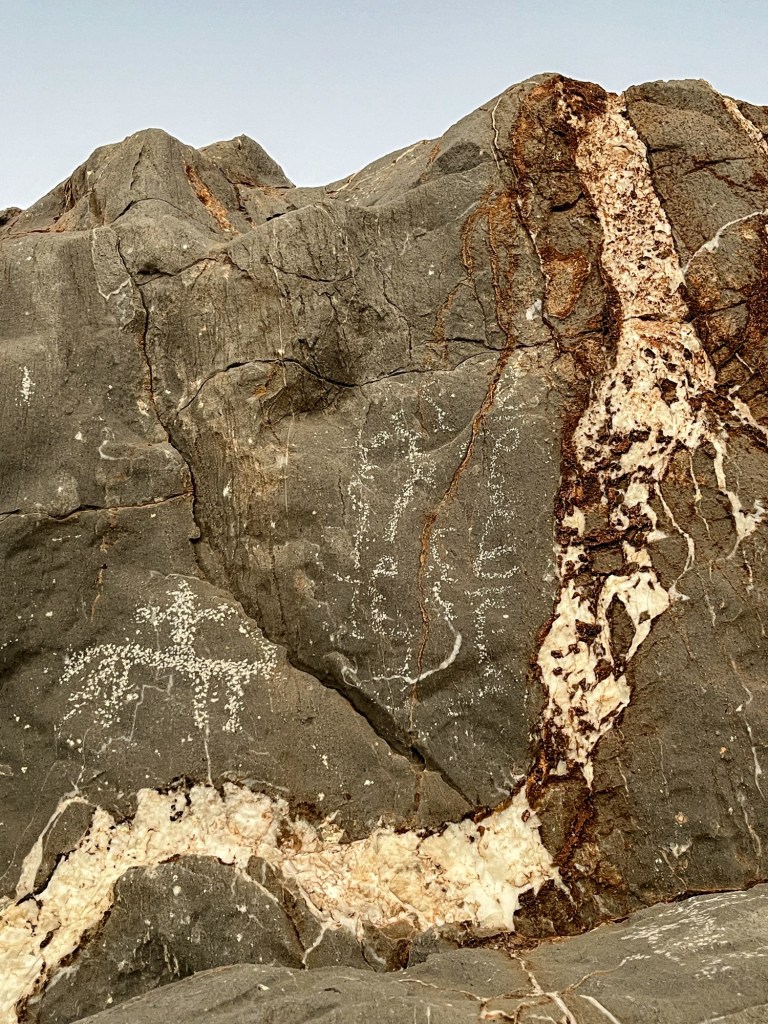
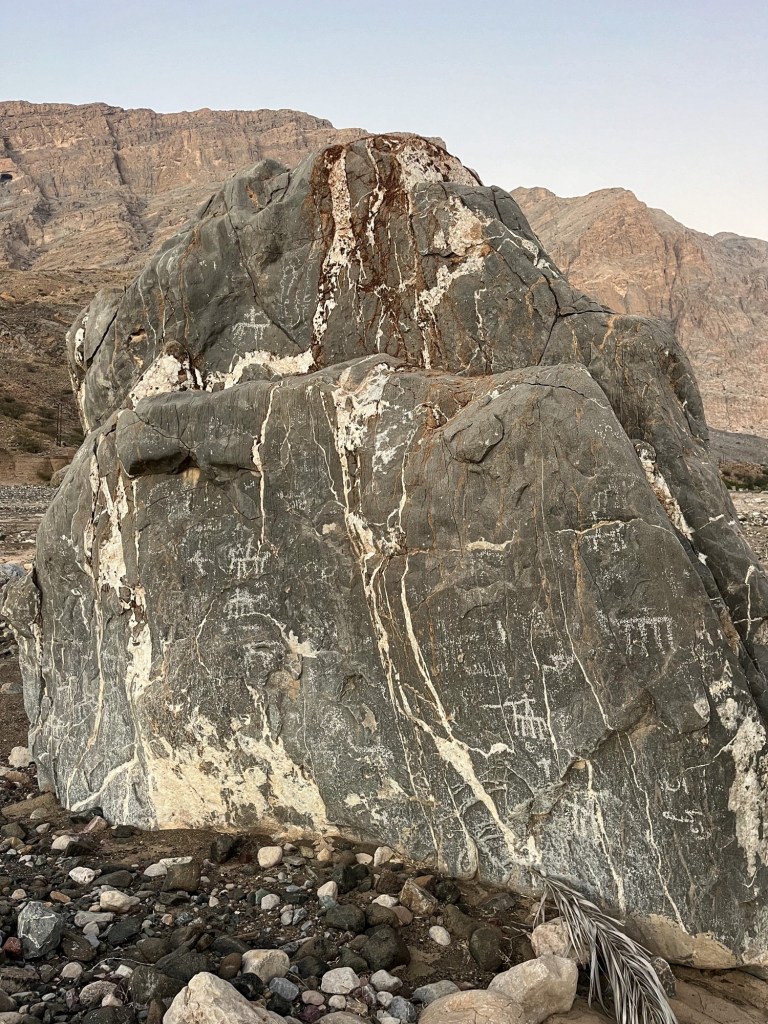
We arrive in Sumaya and later find a camp spot on some old terraces in a Wadi passing by a rock with seemingly old engravings.
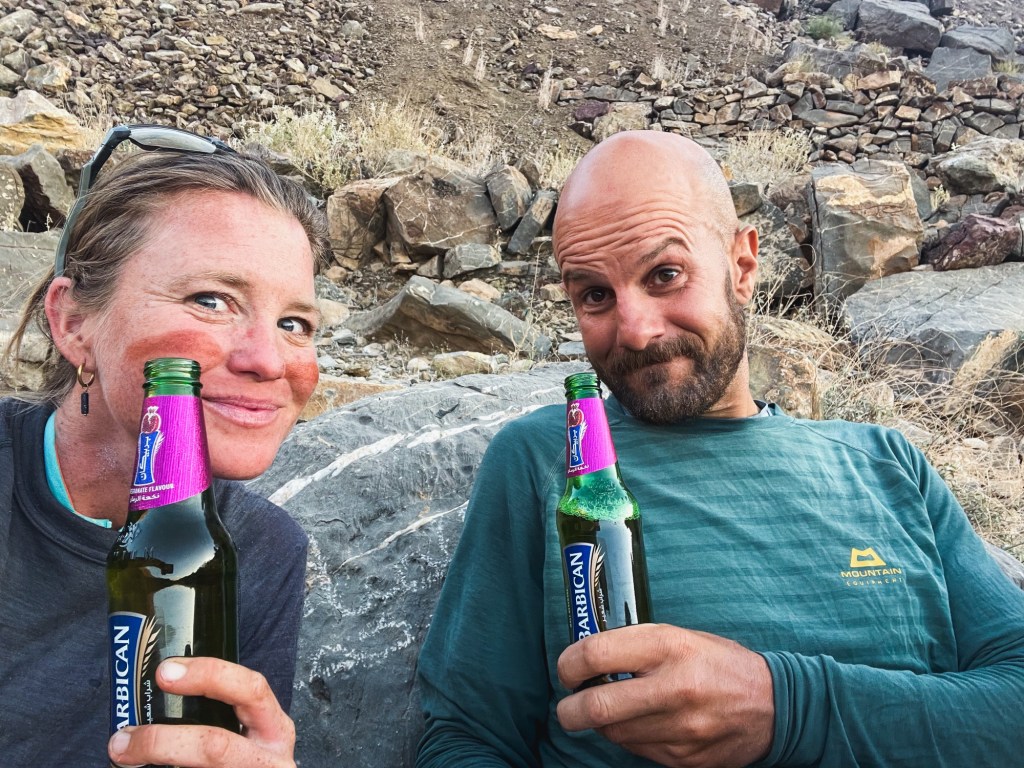
Cheers (with pomgranate malt) to this perfect cycling day!
Oases of Izki and Nizwa
After some kilometres on asphalt we end up in the old towns Birkat al Mawz and Izki. The maze of palmtrees is cooling down the area. Ruins of the supposedly oldest town of Oman hide between their leafs.
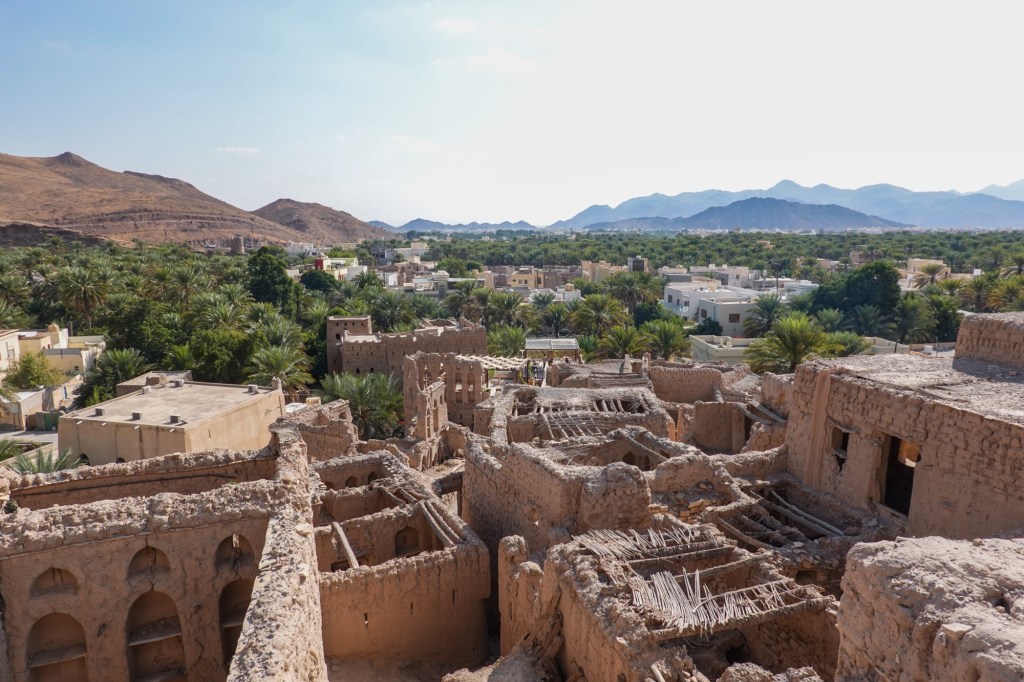
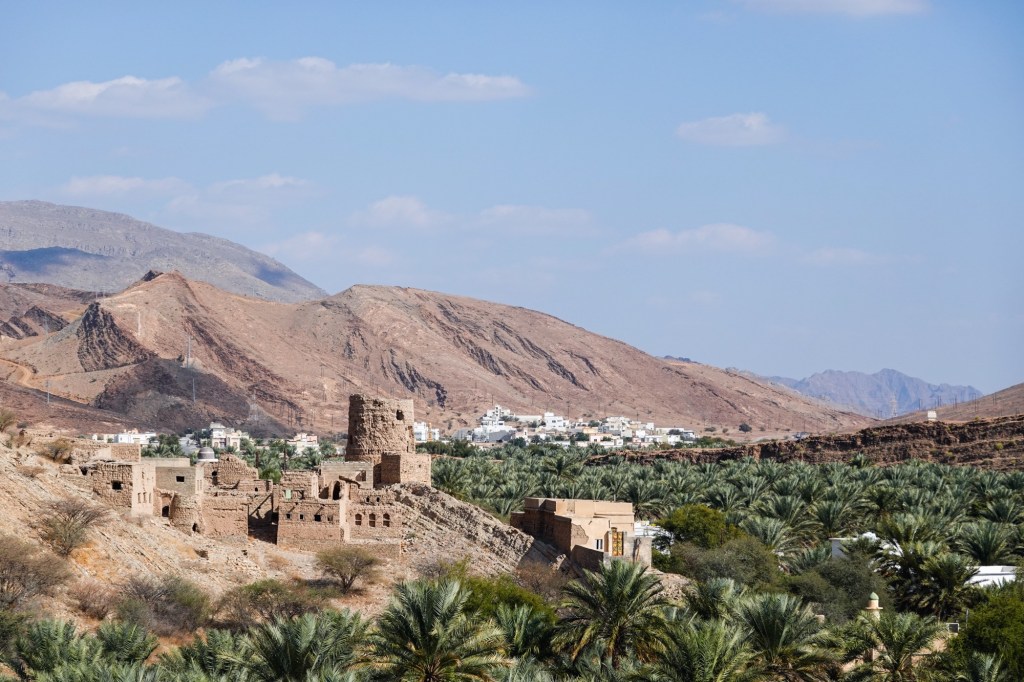
We enjoy a quite pricey romantic coffee in the mudbrick town with ancient history and oasis view. In the afternoon we make our way up on the not so romantic road to the Saiq plateau in the Jebel Akhdar mountain range. The Plateau in grey and feels industrial and again, not as romantic as we had imagined it. It is quite fresh up the plateau (10-15 degrees cooler) – must be nice in summer. We visit one of the smaller villages and then head to the campground in Nizwa. Time to wash the dusty clothes 🙂
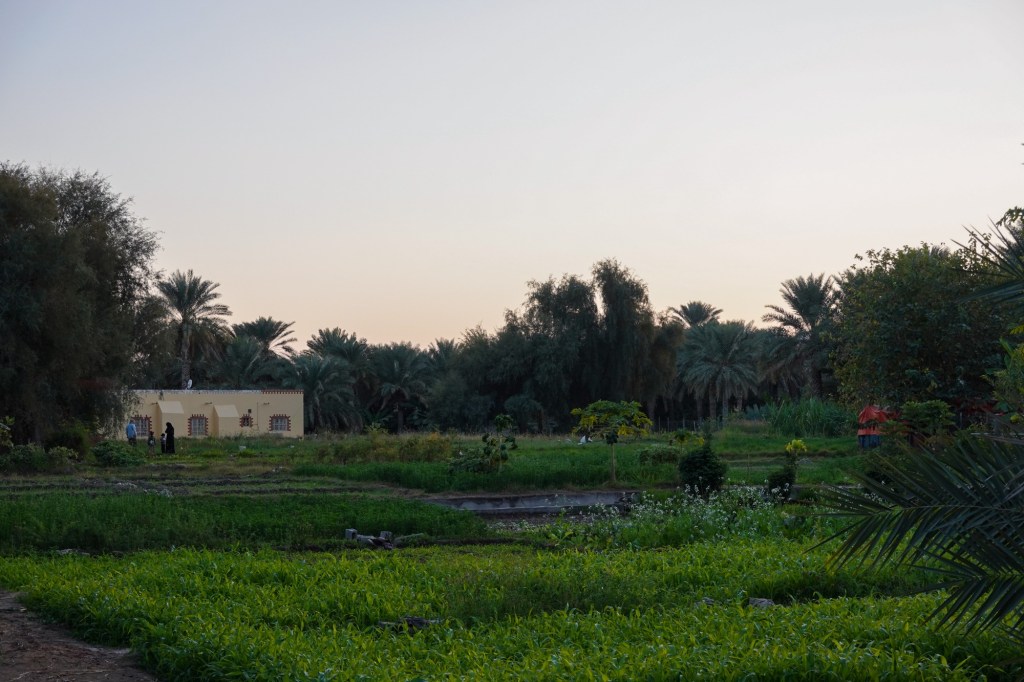
The shiny blue wings of an Indian Roller – a cheerful bird – decorate the campground. Making its turns over the heads of tourists and sitting on the laundry line to observe the chats. We enjoy the conversation with other campers and the stories they share about travelling in this region.

Nizwa another old town of Oman and it used to be the center of trade, religion, education, art and dates growing.
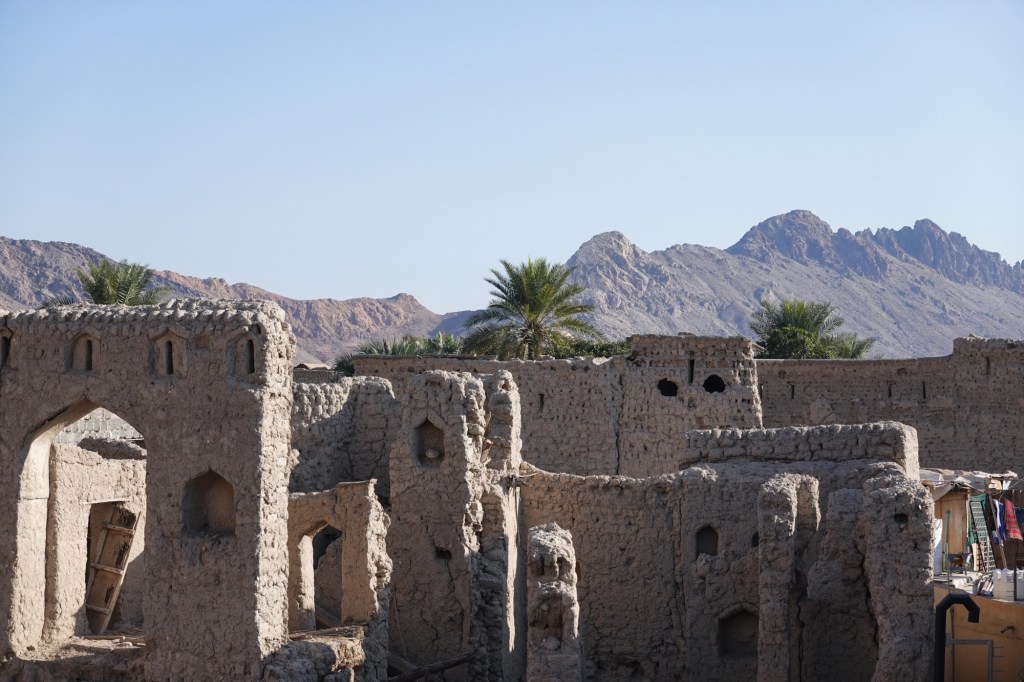
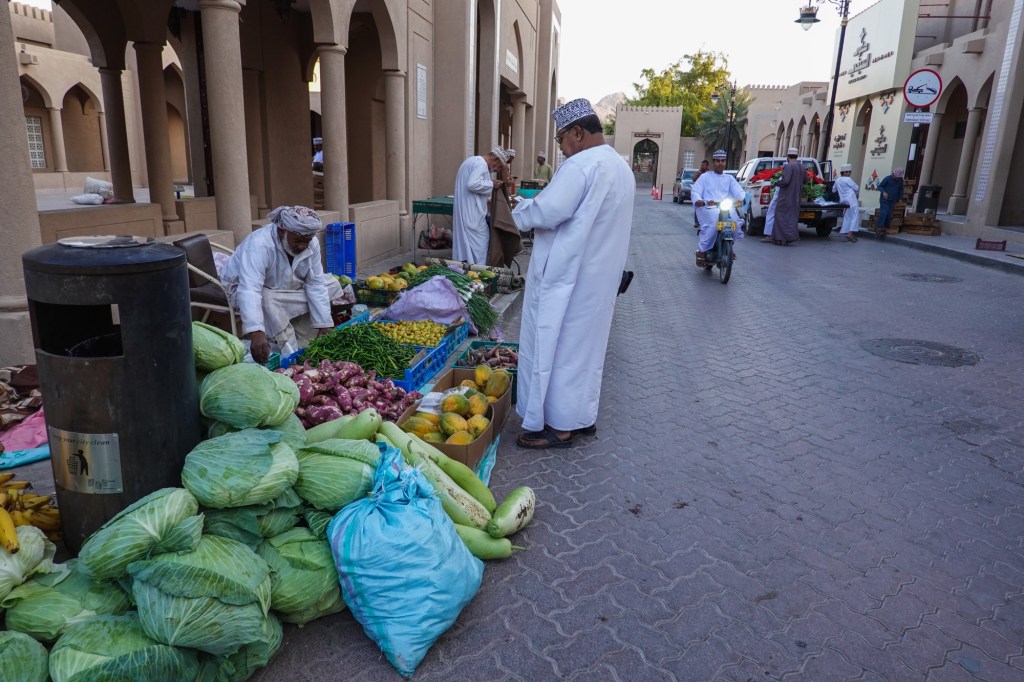

During sightseeing we notice military and civilians strolling around in festive gowns and a group of men practicing the pipes. Turns out it is Accession Day!
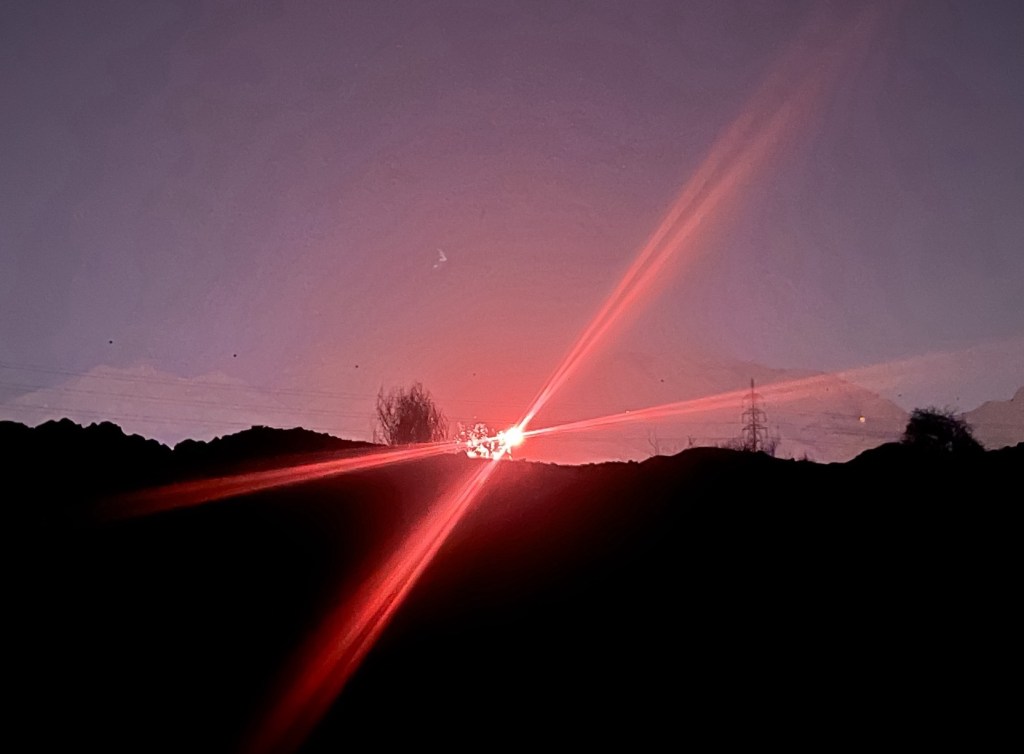
After filling our bellies at a delicious dates tasting, we cycle out of town. From the distance we can watch the lasershow on the mountains behind Nizwa and the fireworks for accesion day.
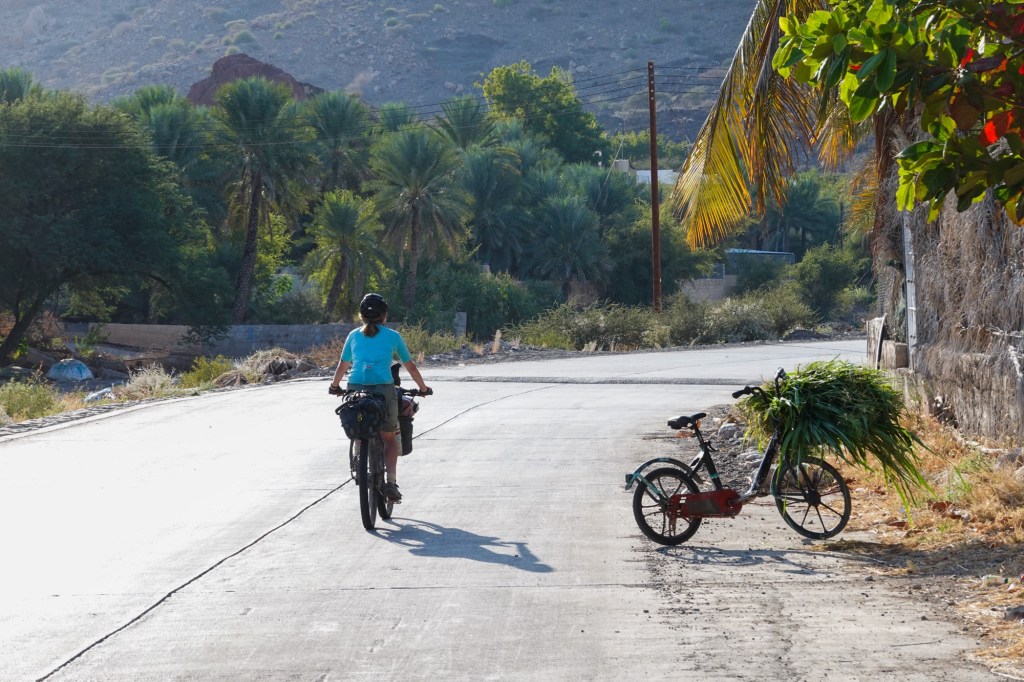
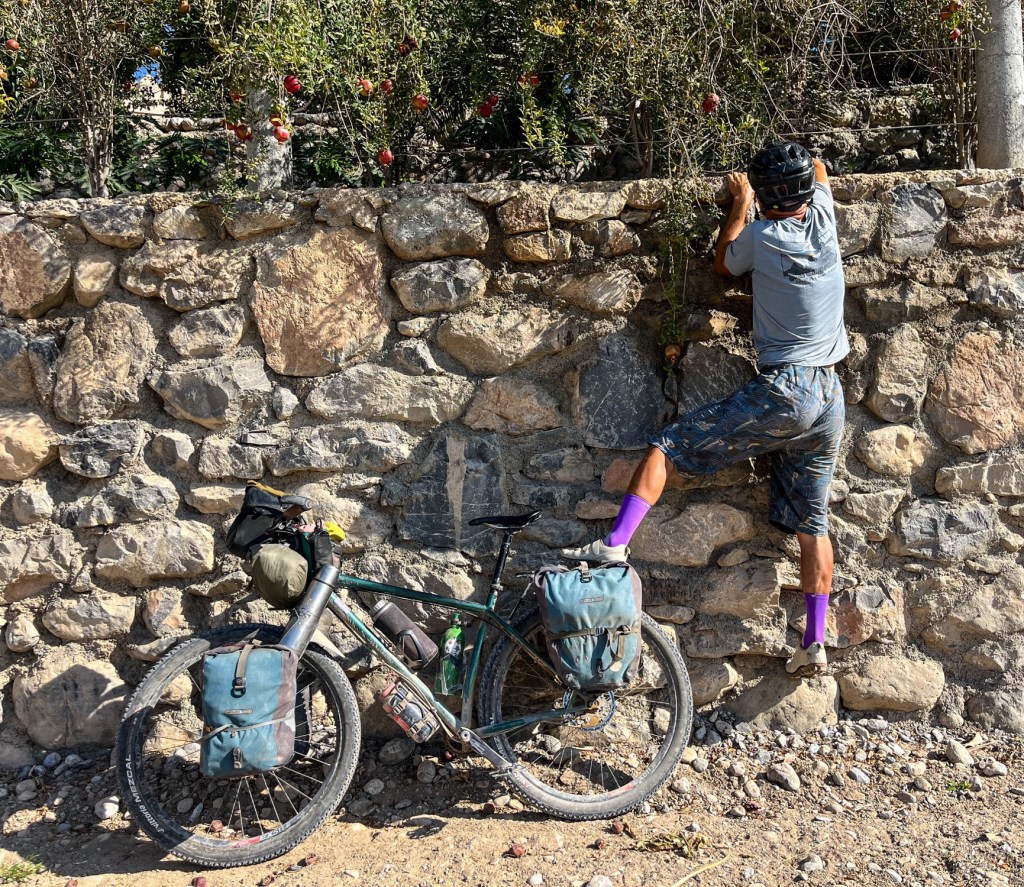
On the road again Rolfi could not resist to get some low hanging Pomgranate fruits. Sour business! Not ripe yet we will rather add them to a salad than eating them fresh.
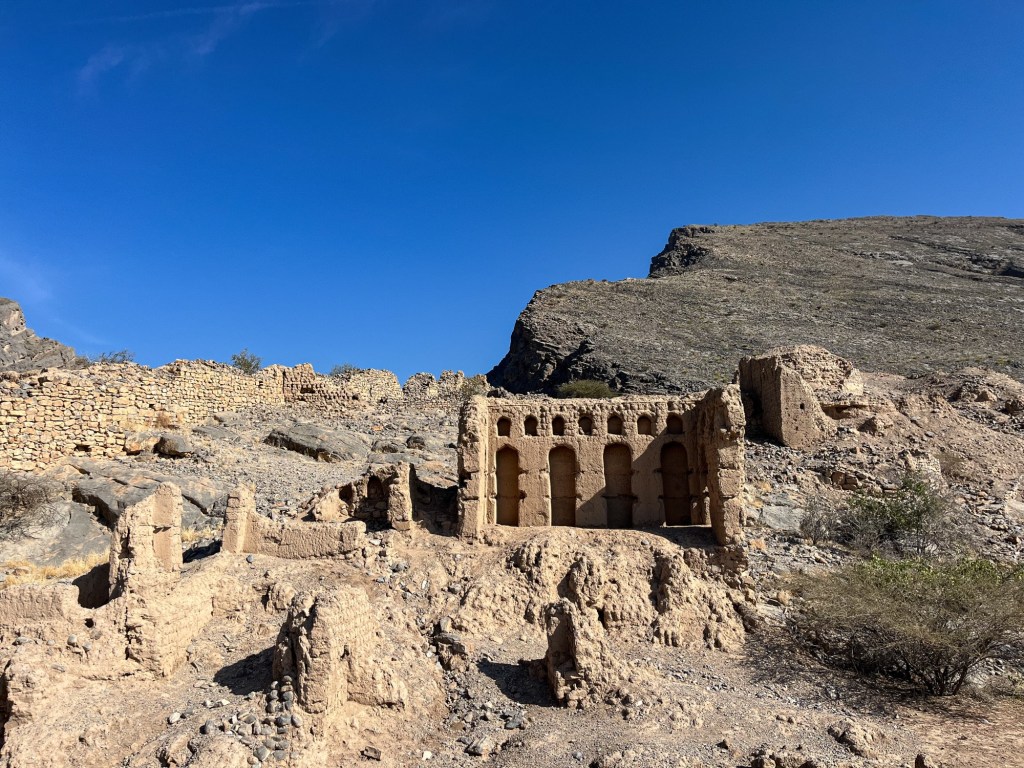
While most of the forts are perfectly restored and look almost too shiny for our taste, the Taruf ruins appear untouched and full of history. Only the water channels and the stair leading down to the stream look rather new.
Wadi Taruf is another beautiful valley. At the entrance the famous arch opens up like a gate to heaven. At the end of the valley a small village appears – nested between the rocks of the high rising cliffs.
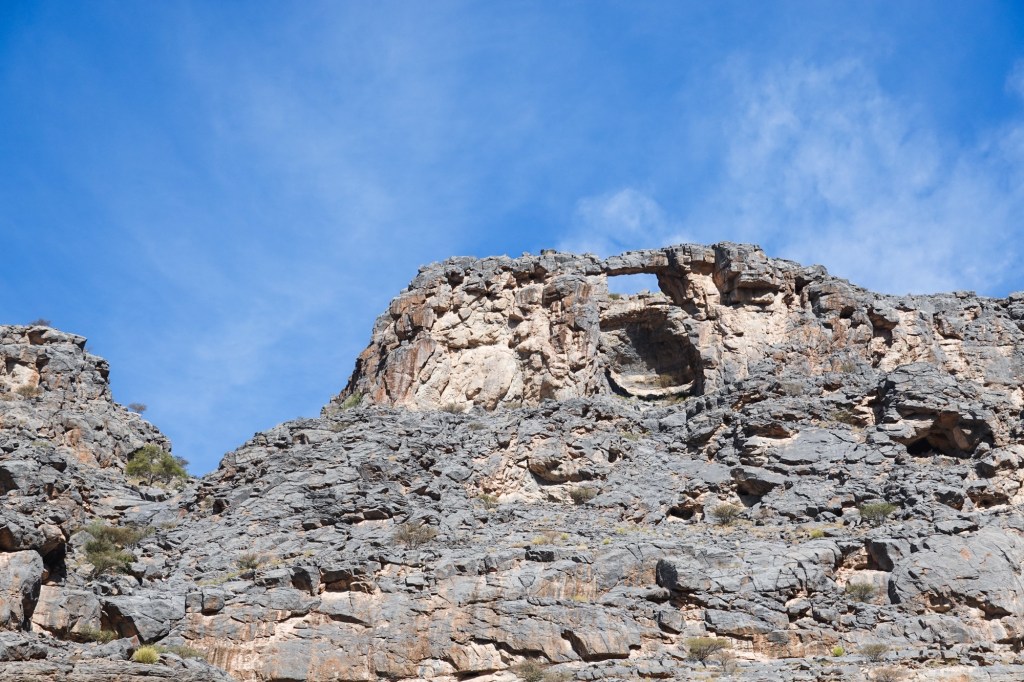
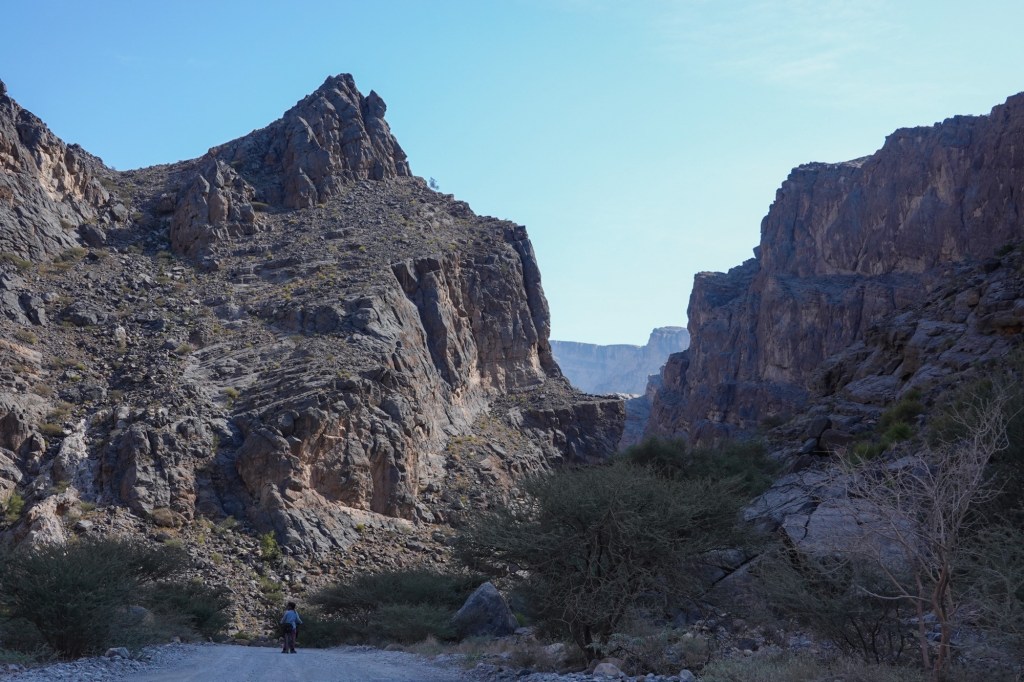
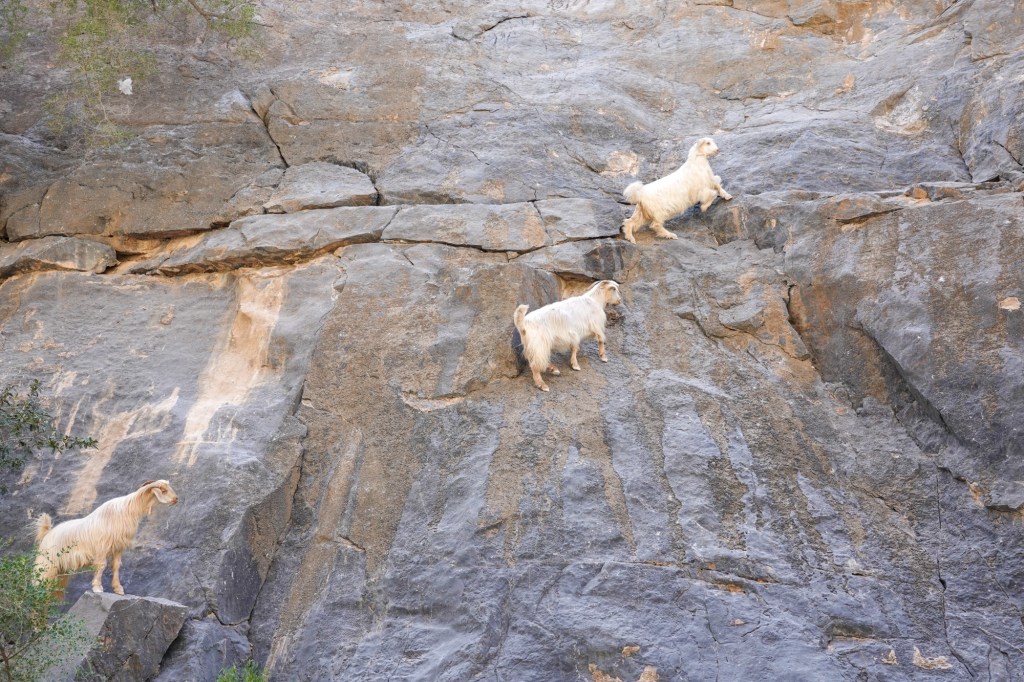
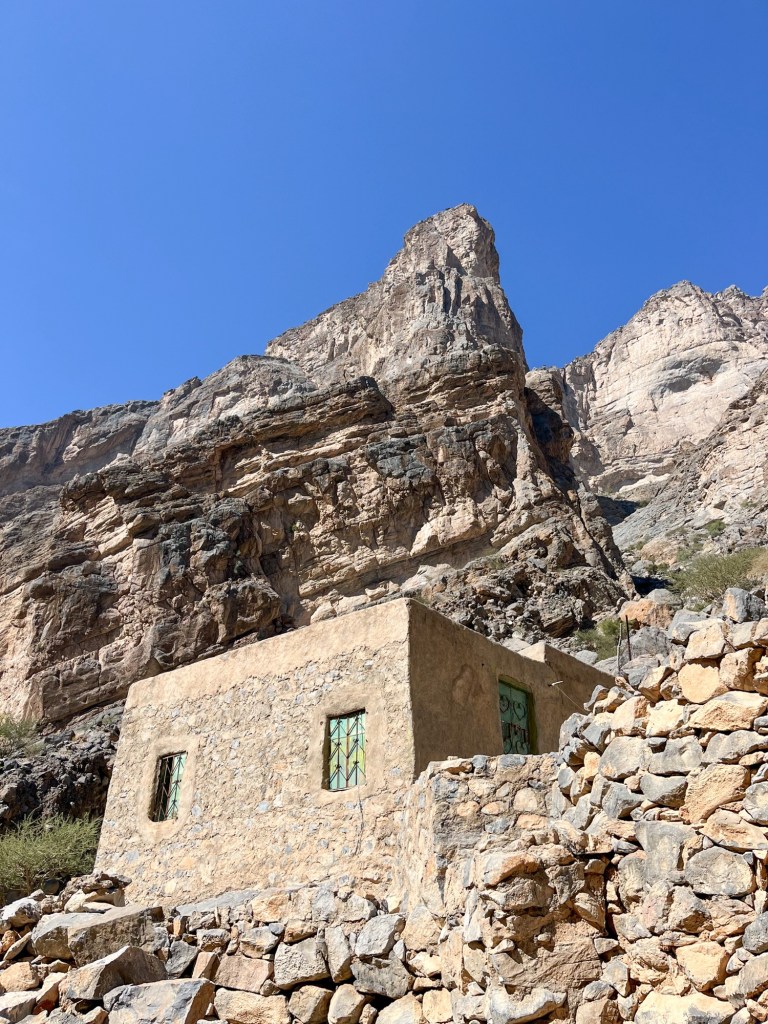
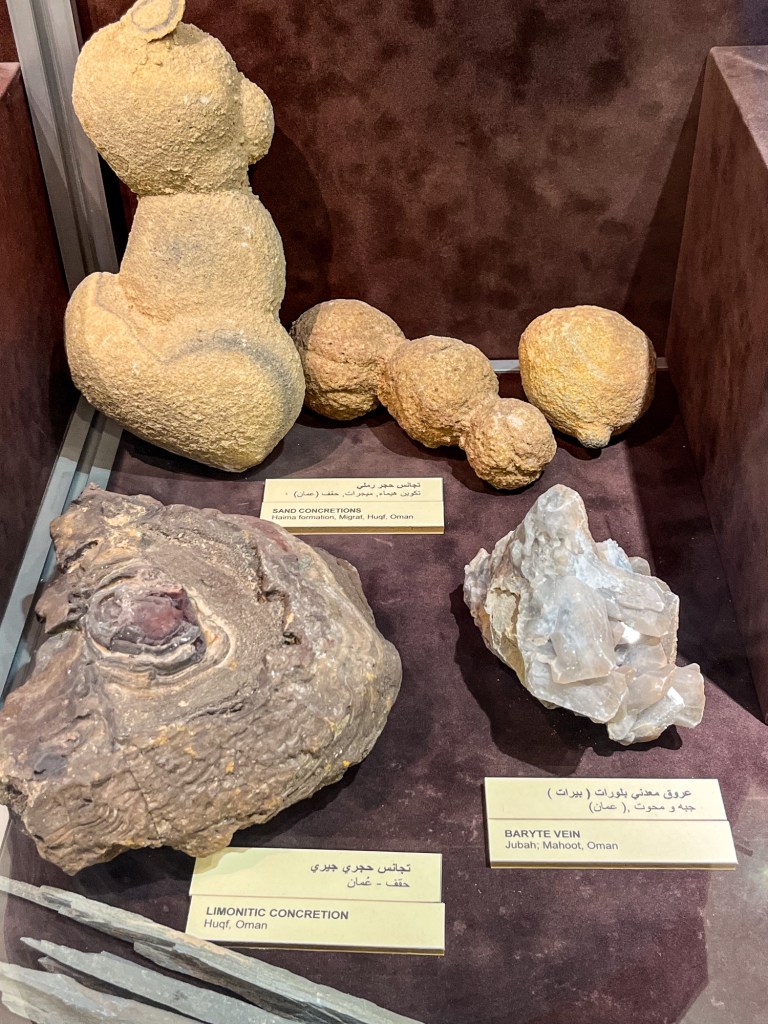
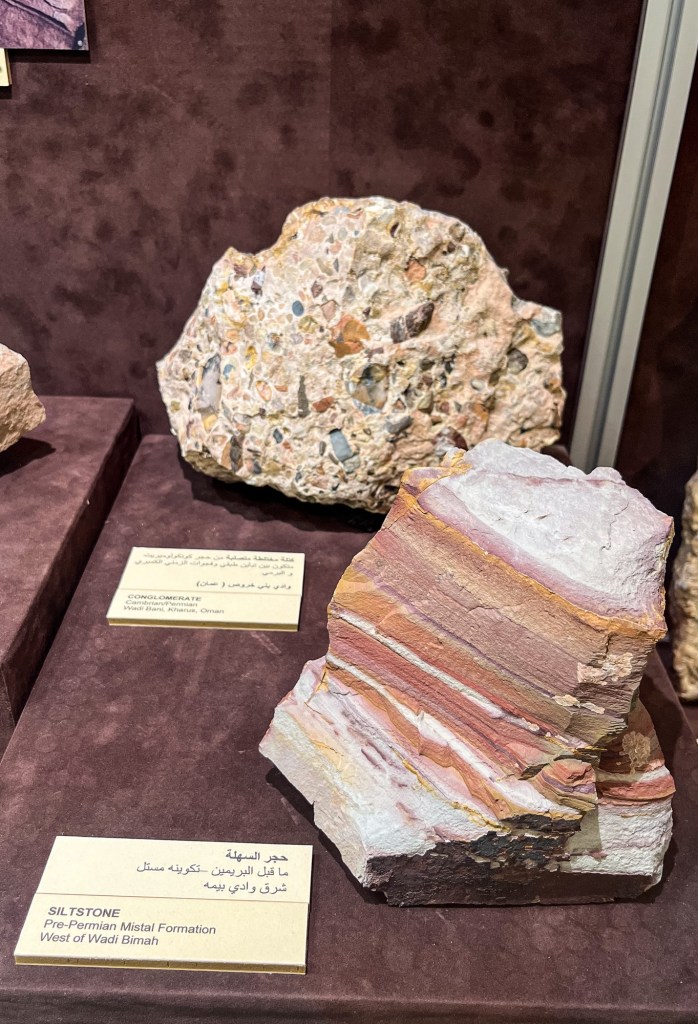
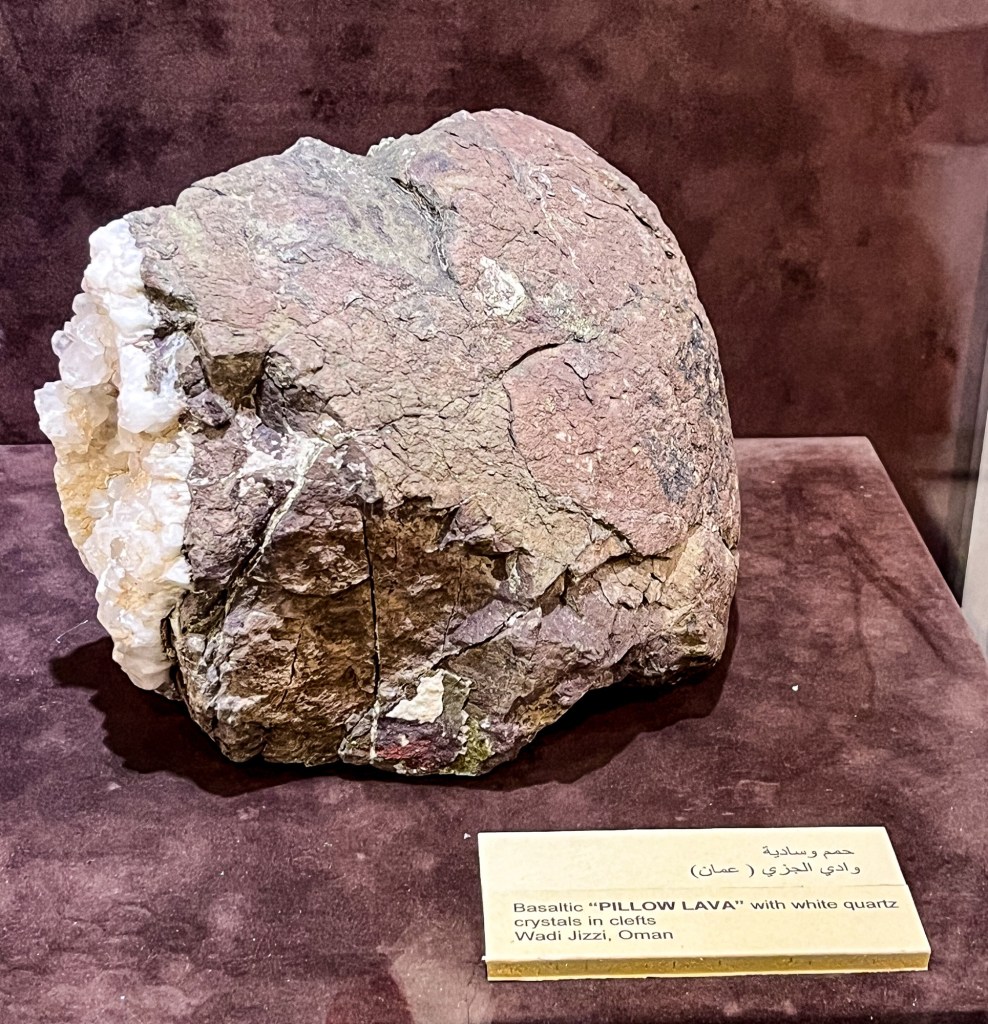
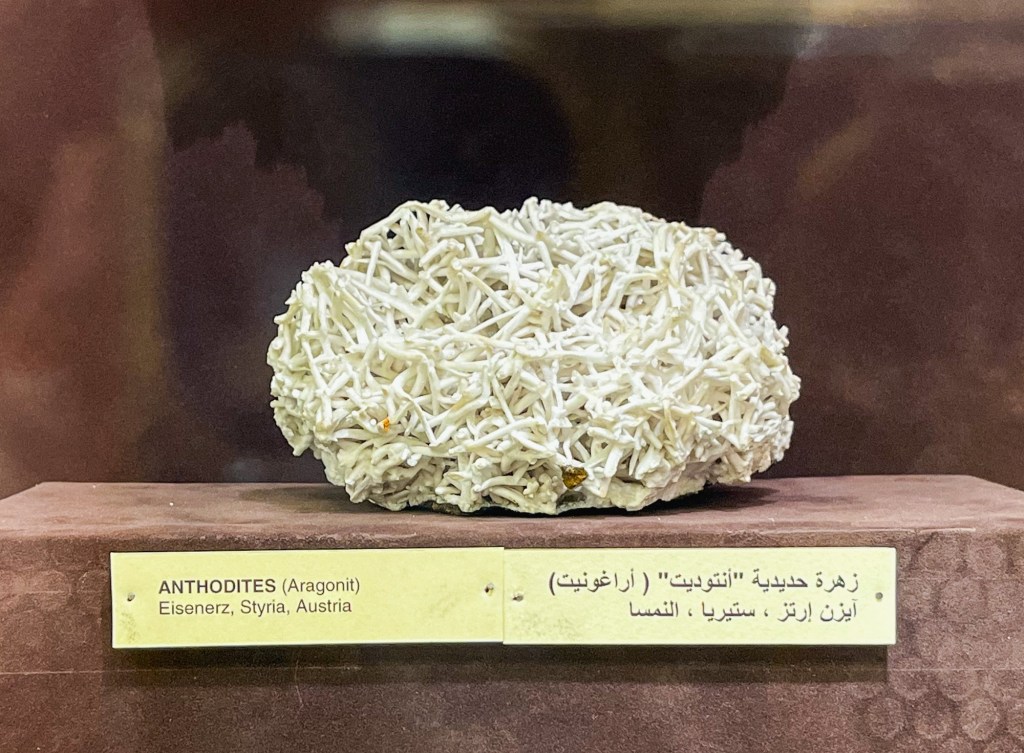
A free geology museum at the visitor centre of a famous cave gives a nice overview of the geology of oman and depicts some items from caves at home.
On the way we find a little shop stating: “you are the buyer – you are the seller” – a self-service shop in front of a farm. Two people pass by to explain us the concept. Figs, eggplant and some onions go on the scale and our omani rial go in the little box and voila fresh ingredients for dinner and breakfast!
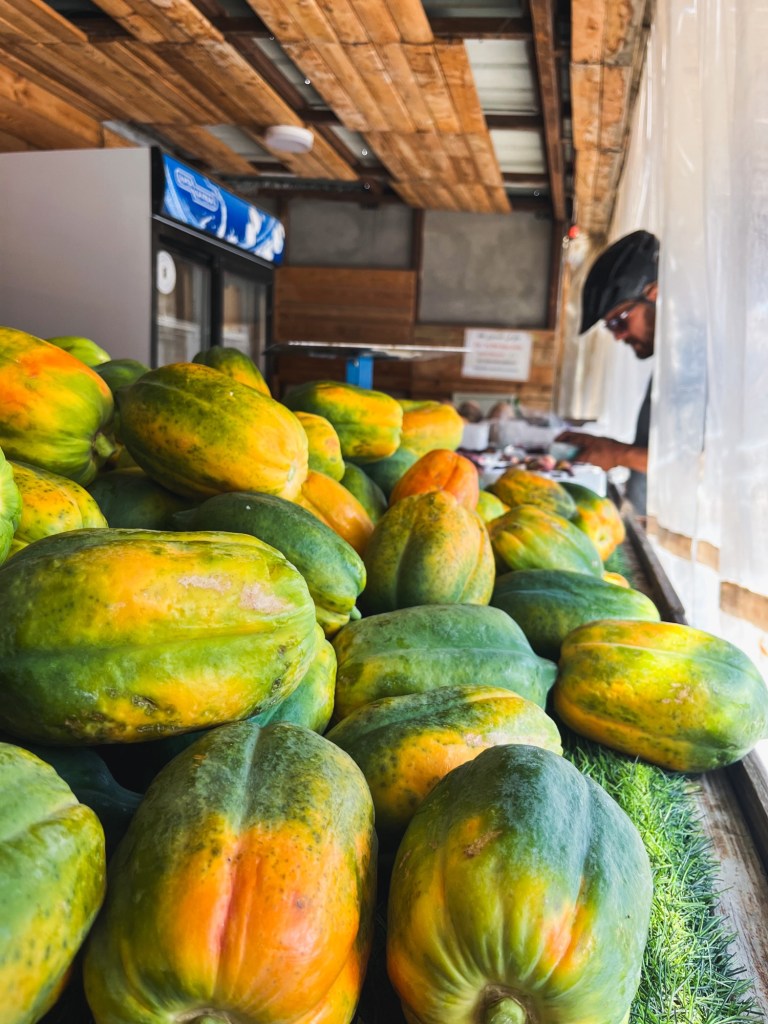


Geology lecture at the Great Canyon of Arabia and a stormy Jebel Shams
This night we spend in the protective walls of the „Grand canyon of Arabia“ – the Wadi al Nakhr. The cliffs of the canyon are 1,500m high.
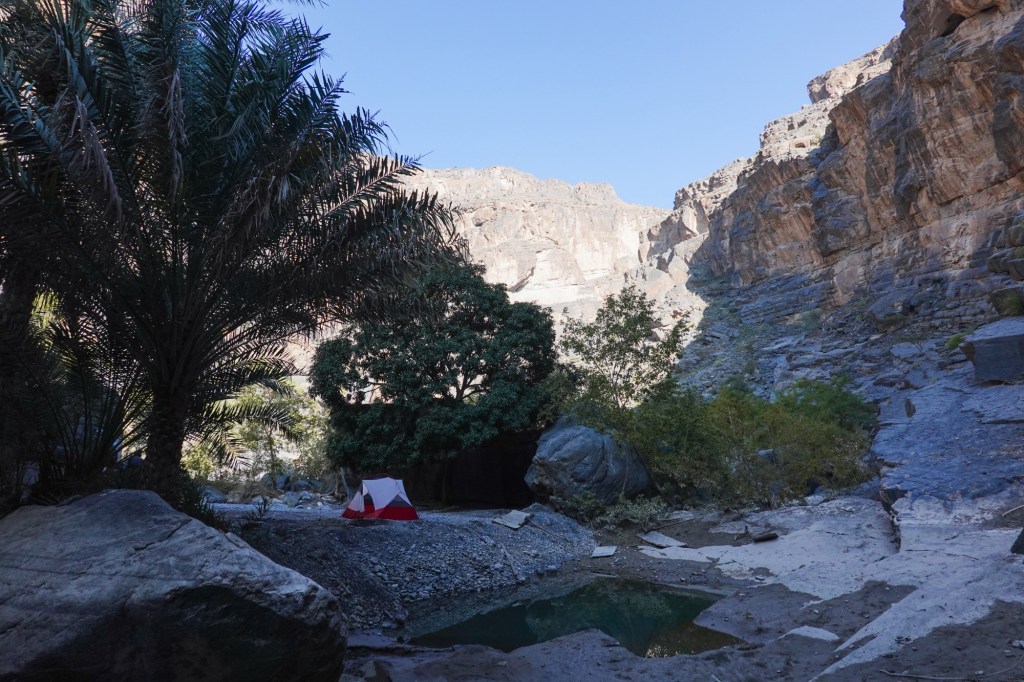
We fall asleep to the gentle sound of water running through the irrigation system, called falaj, close to us. The channels are incredible, guiding the water through the maze of palm trees. At early nighttime villagers came by and opened one of the small channels to let the water flow through the small fields. In the morning they close it again. A stone and an old tshirt do the job.
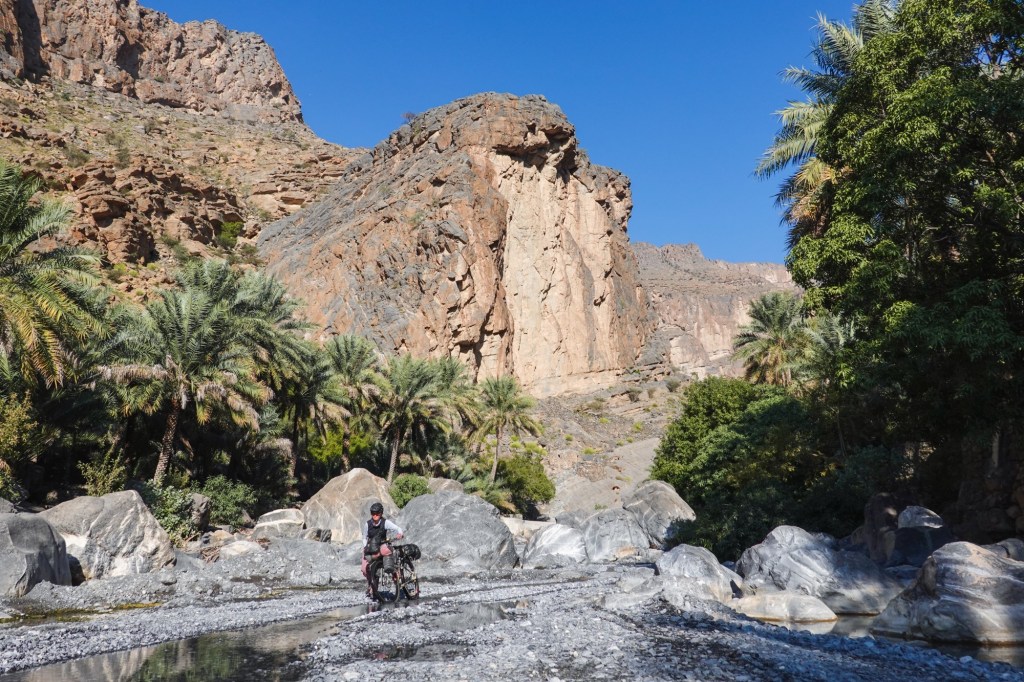
After some chats with fellow cyclist we head to the plateau towards Jebel Shams.
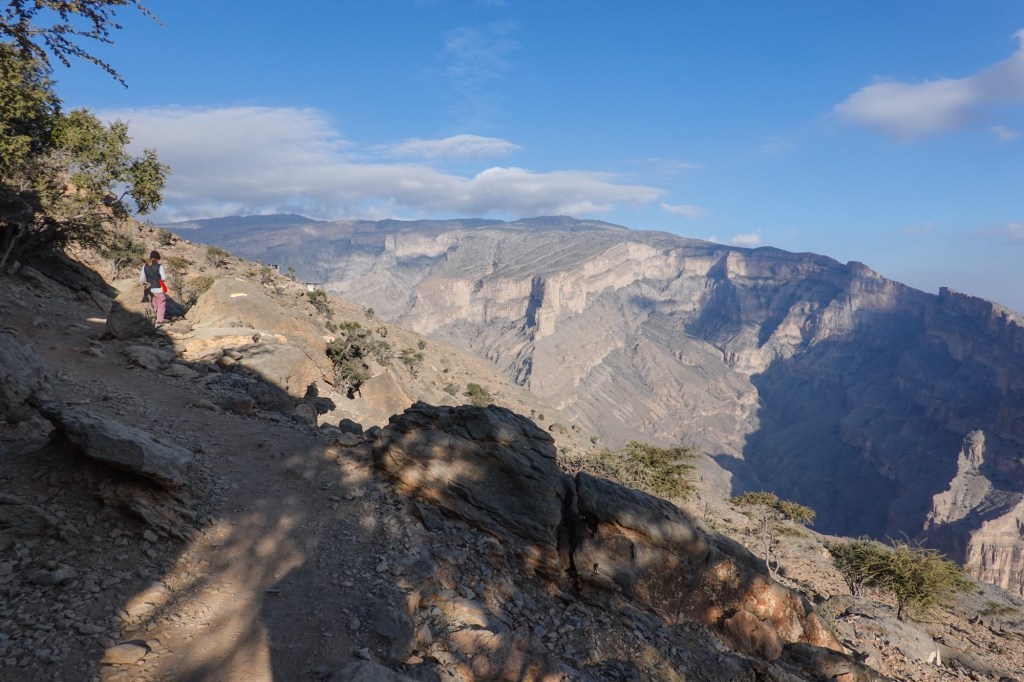

Jebel Shams is the highest mountain of the Jebel al Akhdar Range and of Oman (above 3000m). Its is part of the Hajar Supergroup with its layered limestones and gentle slopes dipping westwards.
On the top there is a military station and the road leading to the top is closed for unauthorised people – like us. We find a nice little spot overlooking the great canyon, trying to spot yesterday’s camp, and start to build a little wall to have some shelter from the wind. Half an hour and many many stones later, our masterpiece is constructed.
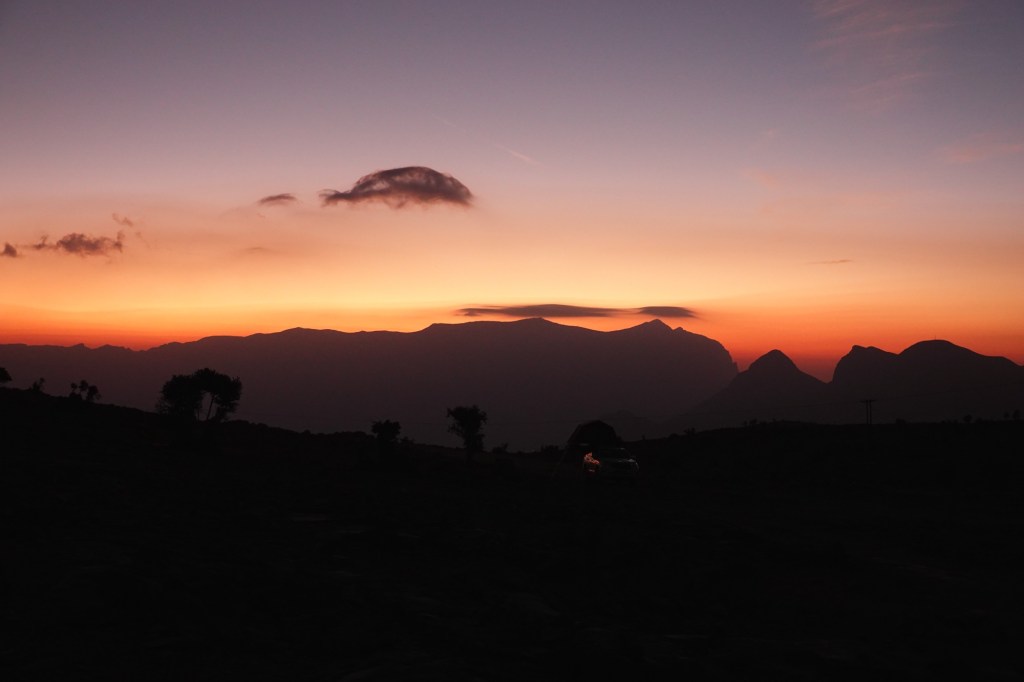
The wind is blasting an angry song all night long.
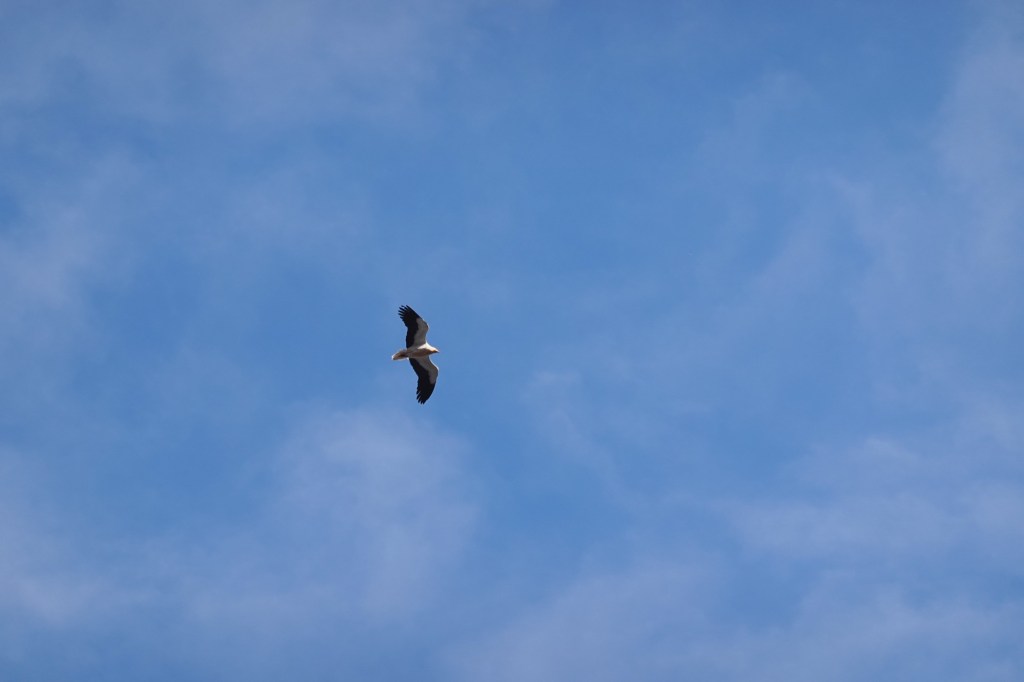
In the early morning we move up to a perfect sunrise spot and watch the vultures making their turns.
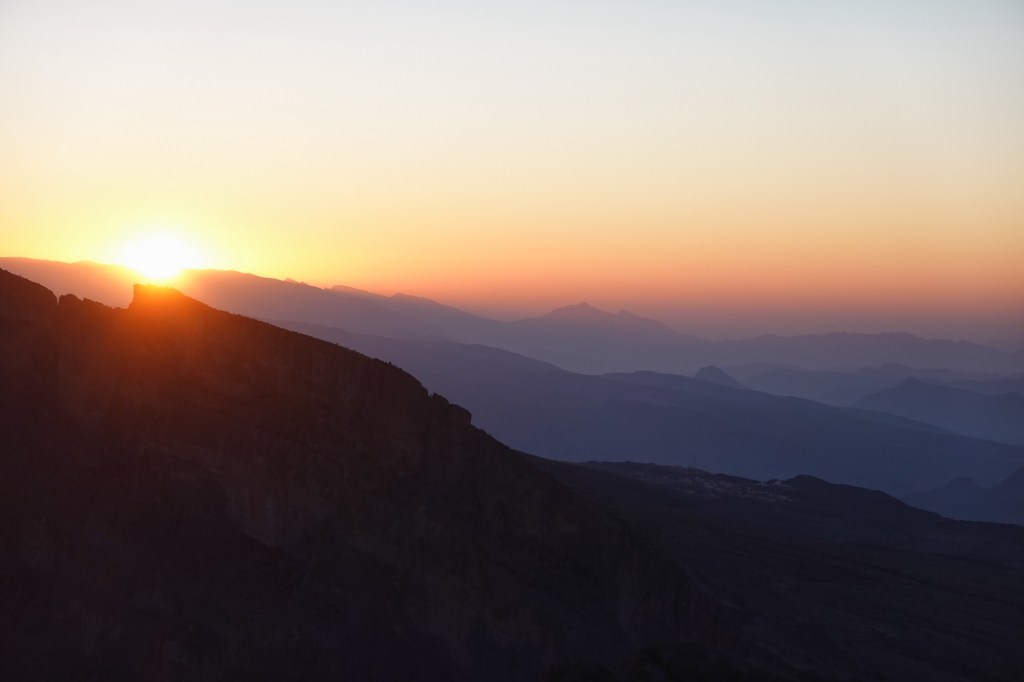
We take some time to roam around on the plateau and to hang out on viewpoints overlooking the steep canyon.

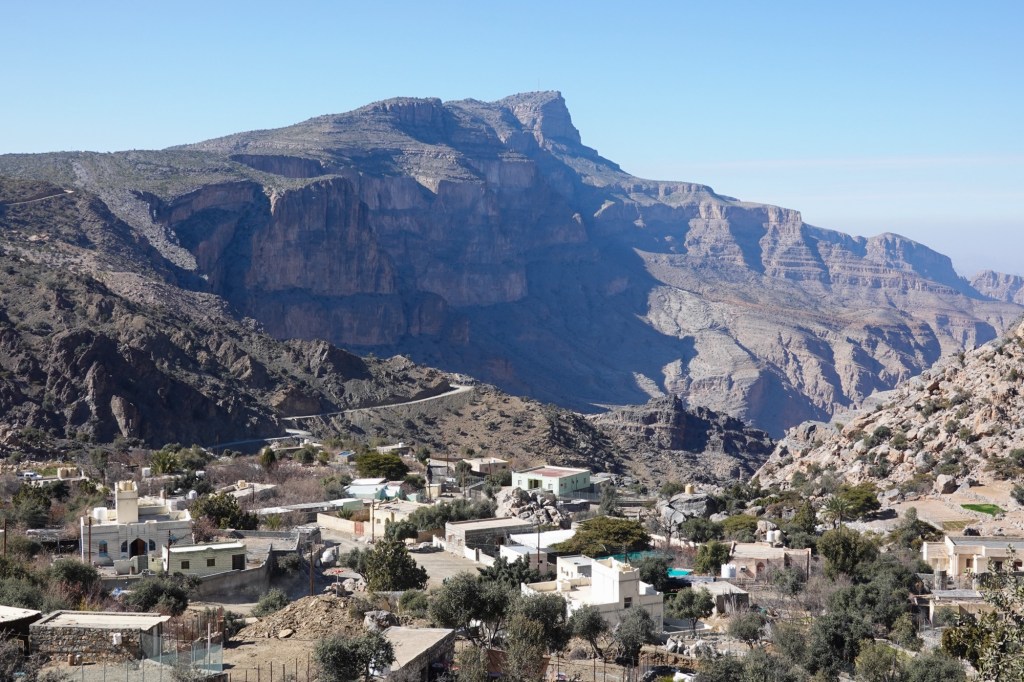
The wind and the sleepless night(s) are showing their impact and the legs feel super empty.
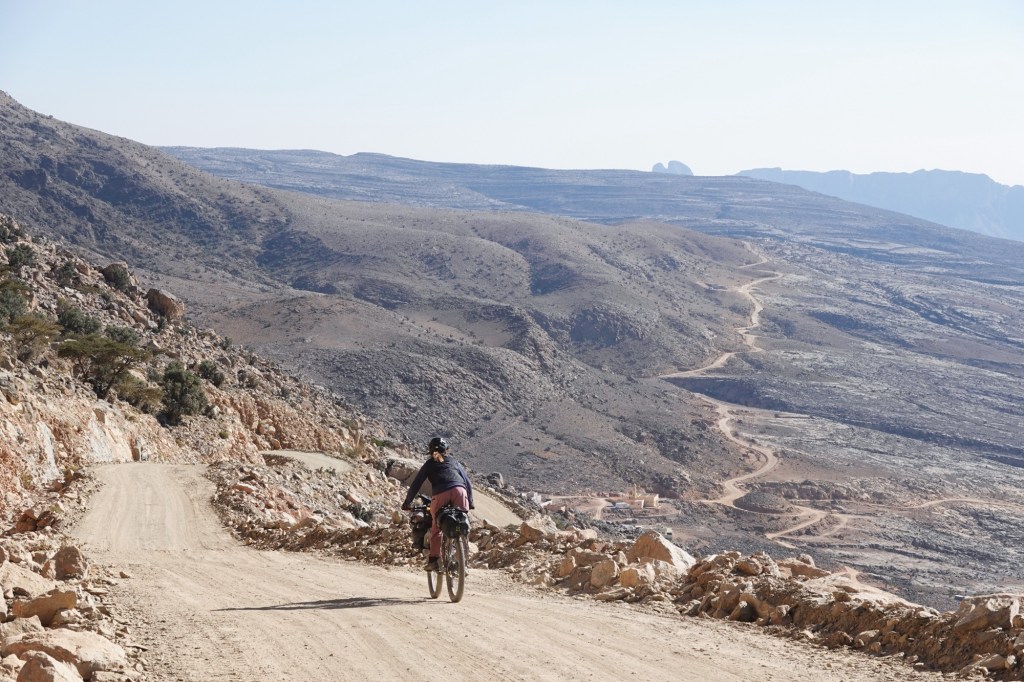
Jebel Mishta, Jebel Kawr and the beehive tombs of Al Ayn
For the aesthetic of the routing and because we are not the biggest fans doing same roads twice, we found a nice a detour down from the plateau via Wadi Damm. The fun track follows a narrow canyon, piercing its way down to the valley with view over the Hawasina Complex and the “Oman exotics”.
This nights camp is on the foot of Jebel Mishta = known as one Oman exotic. Probably it was a submarine volcano with an atoll on top of it (atoll = coral reef enclosing a lagoon) and it is made up of limestone and dolomite sitting on top of volcanic rock.
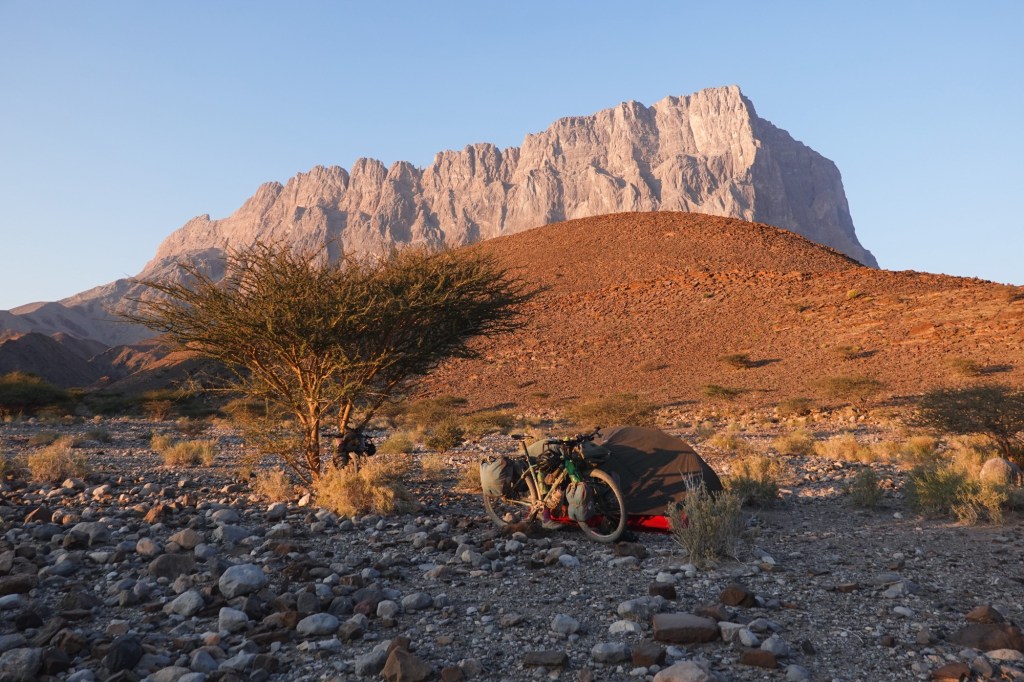
The name means „comb“ – and to me it looks like the body of a lizard is hiding under the ground. While taking a picture we spot two beehive tombs on a small hill.
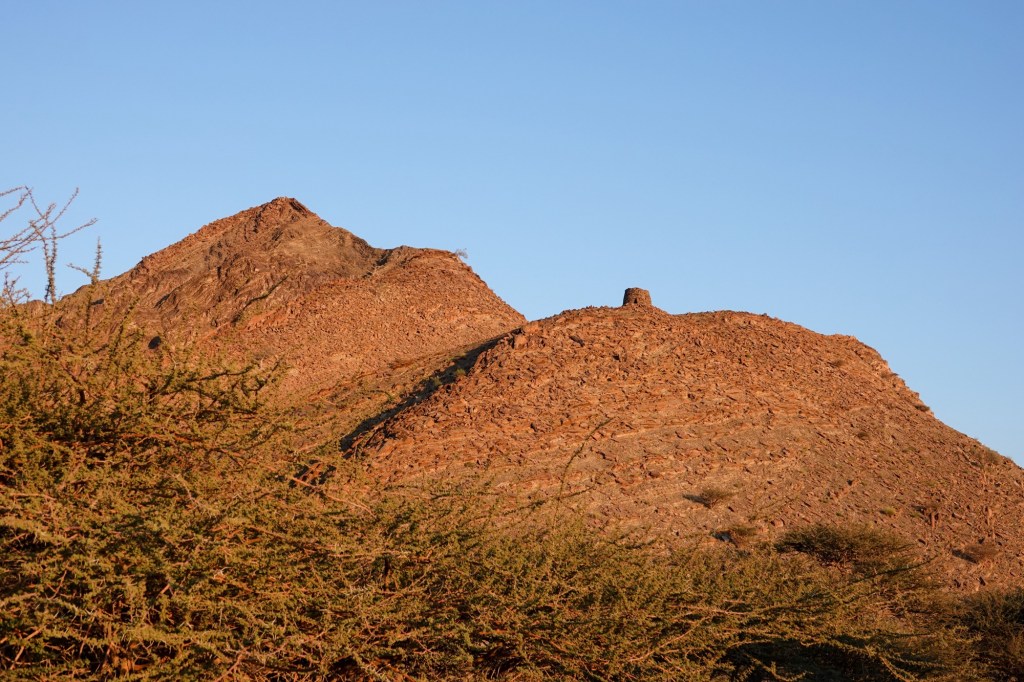
The next morning we head out to visit the touristy beehive tombs of Al Ayn. Bit tricky to find as the parking lot appears to be washed away and no signs indicates the way to the tombs which we could already spot from the road.
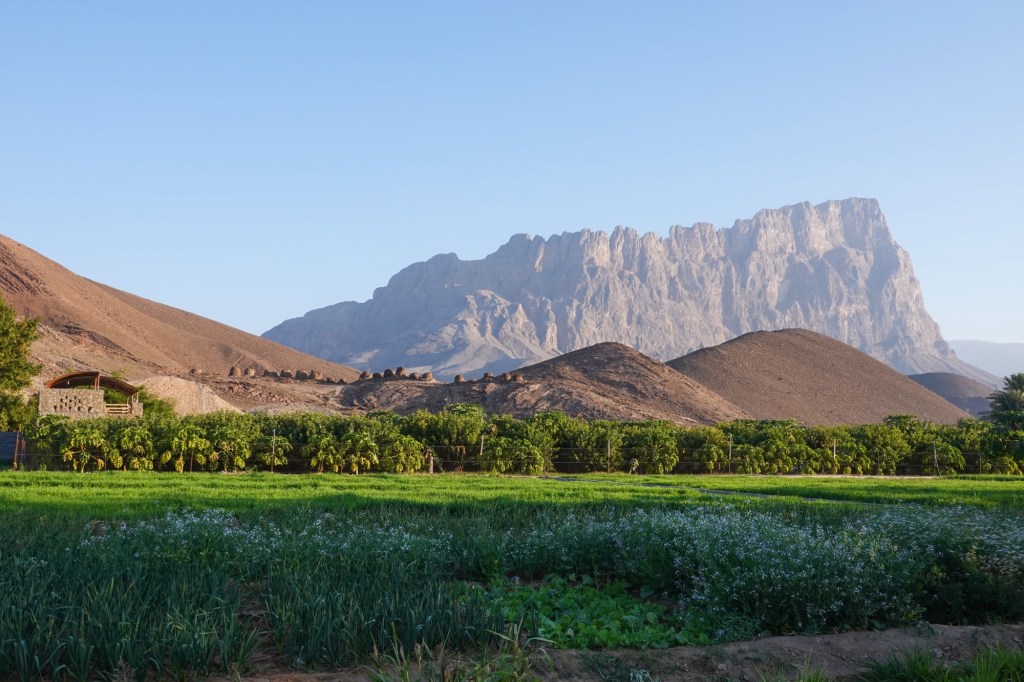
The tombs are from the early Bronze Age period and it is unclear what they were used for. Human remains where not found in them so it is unlikely that they are burial sites. They are in really good shape and could have been built yesterday by the looks of it.
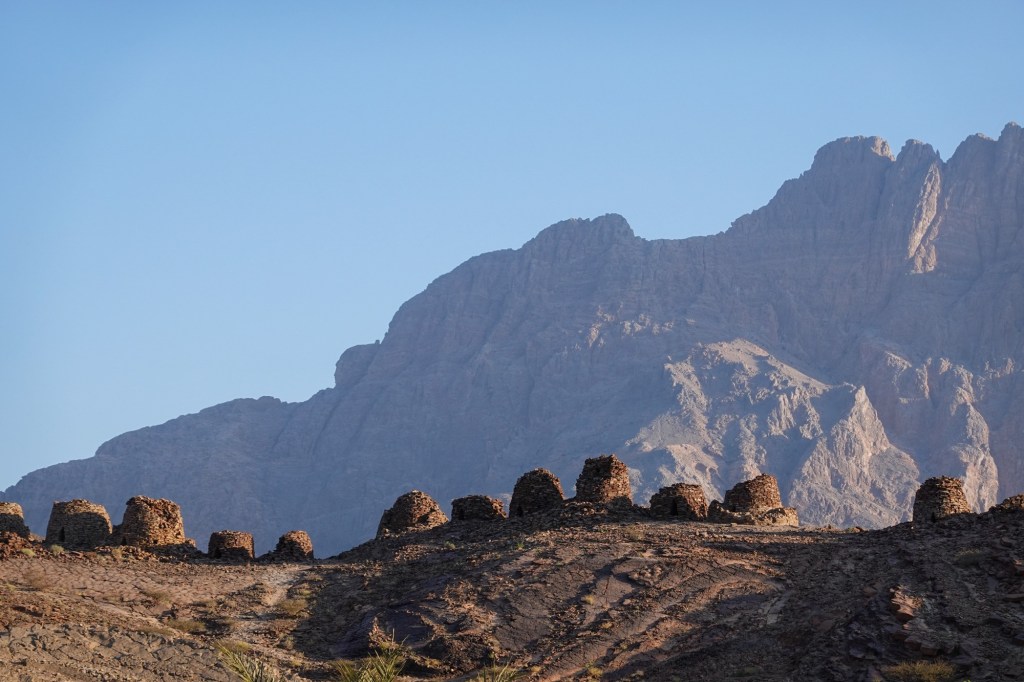
Our little biwak wall definitely cannot compete with the architectural efforts here. We cycle around the limestone massif of Jebel Al Kawr and pass by small villages. Jebel Al Kawr is another so called “exotic”.
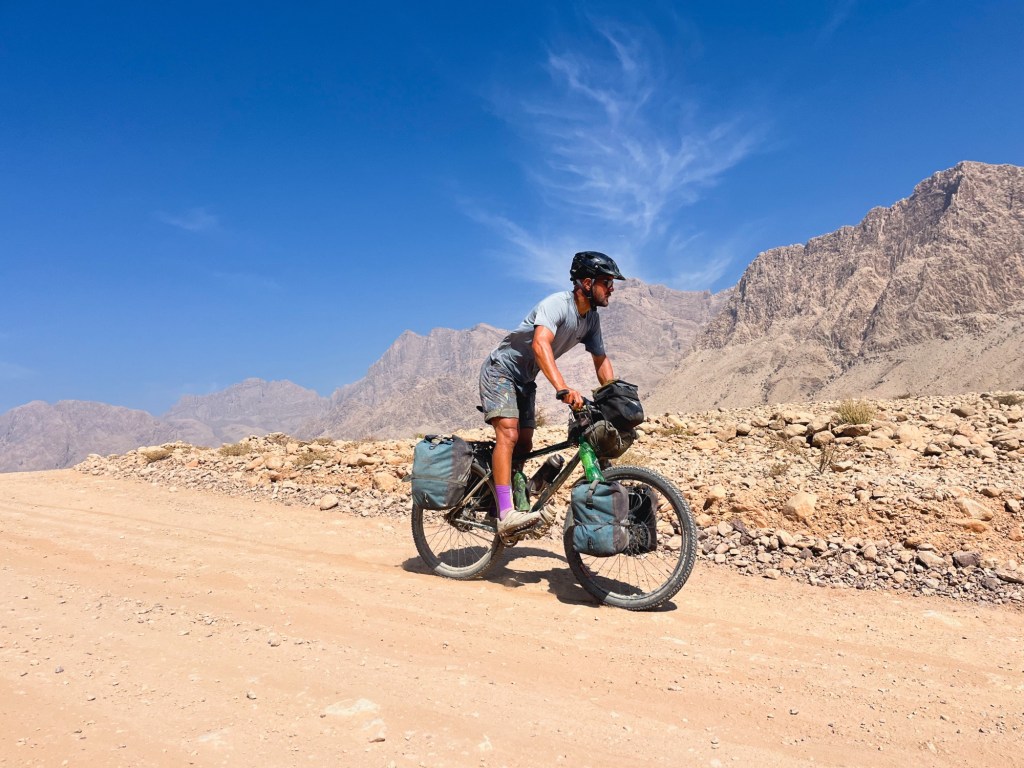
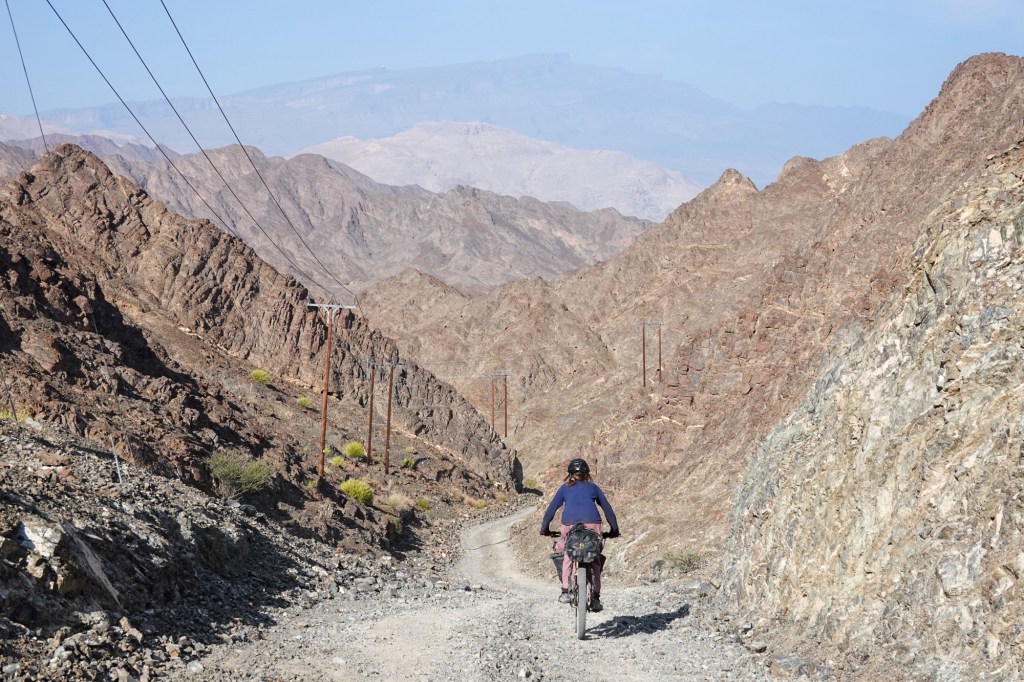
Hairpin turns and ridge rides: sweet ingredients for a detour
In the evening light a colourful gravel road awaits us and we gain a few easy altitude meters on perfectly shaped switchback. A track on which I had my eye on since we arrived in this area.
The switchbacks can be seen from a distance as the glow copper coloured in the dusty green slope. On the first plateau we find a perfect spot to watch the sun set in the distance mountainscape.
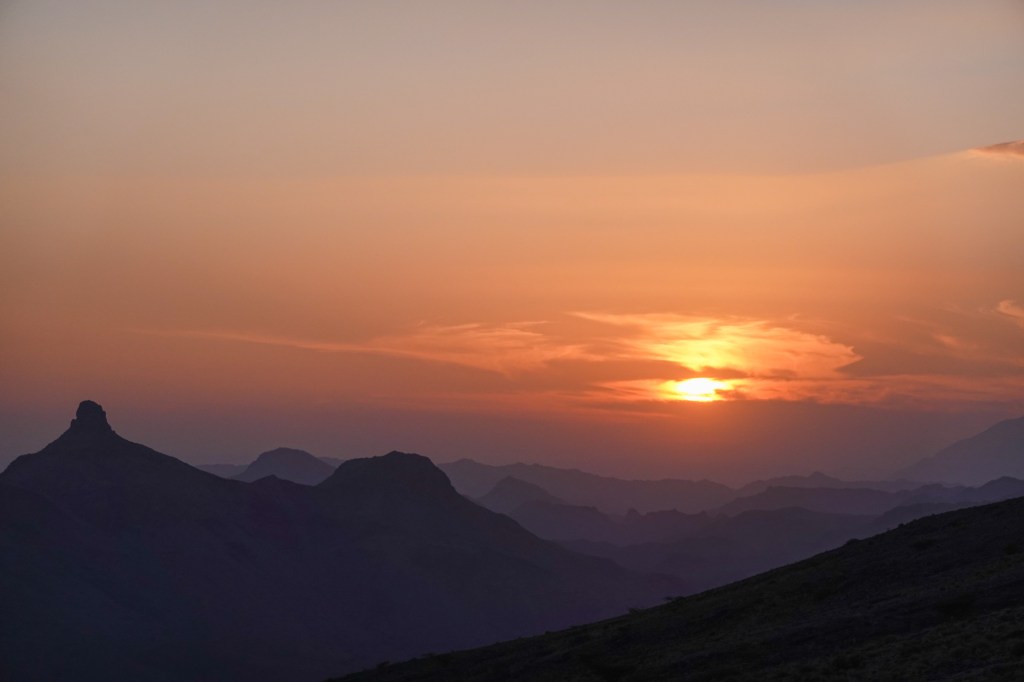
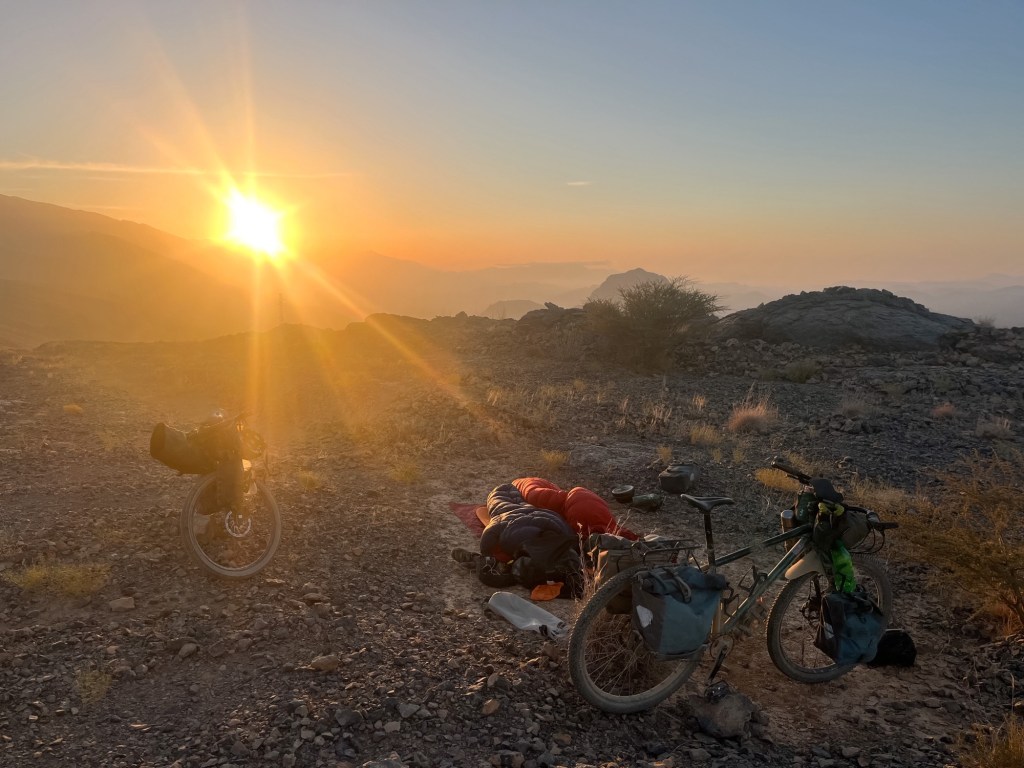
As we have some time left, the explorer mode in us is bright awake. We find another detour linking up to the original route we planned to follow.
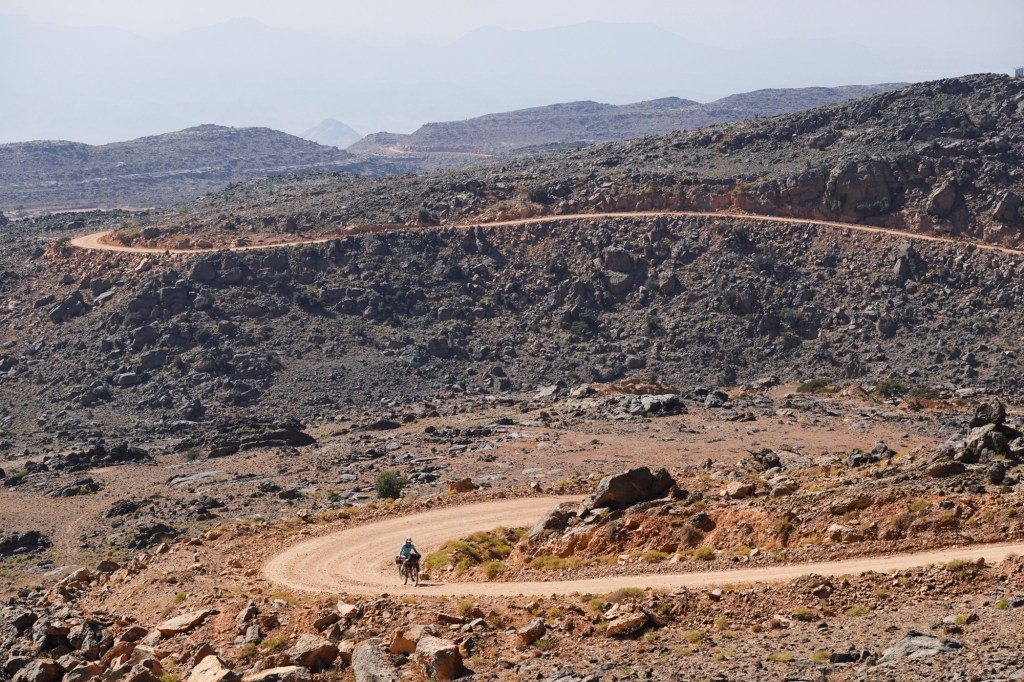
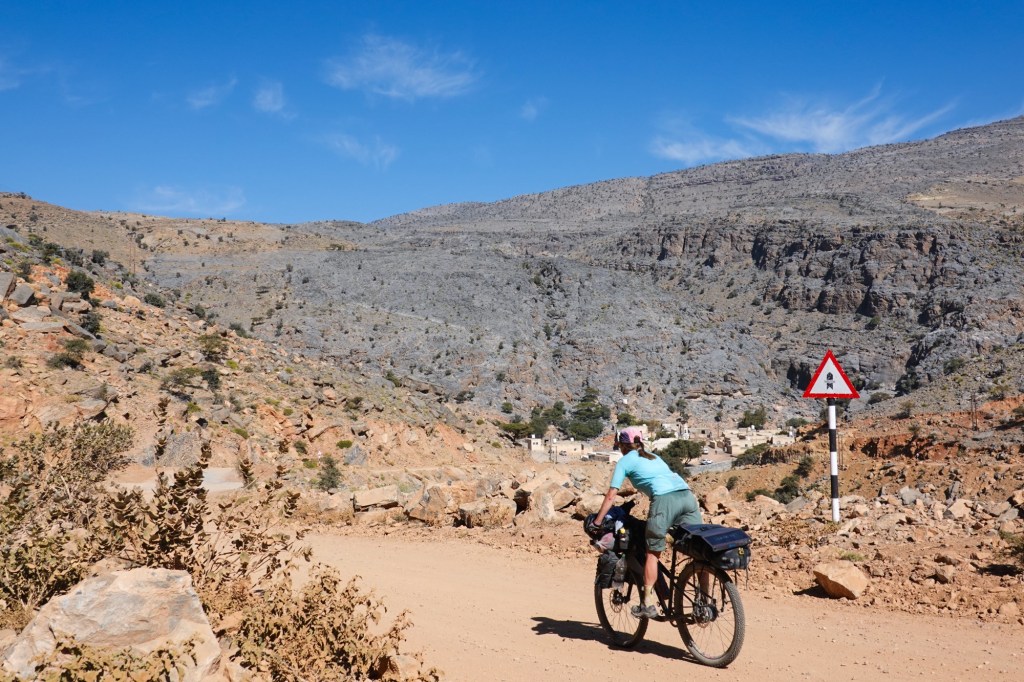
So we set off on a dust track only to find ourselves – 1000 altitude meters later – in a deadend village. The villagers start laughing at us when they see us. We knew it could be tricky as it was marked as a path, however, lately all the paths turned out to be quite rideable and did connect somehow to other tracks. Two switchbacks further down there is a well marked hiking trail. Some route scouting and brainstorming later – we quickly calculate worst and best case scenario. We are a bit low on food but afterall our curiosity was stronger. The trail is well marked, even with reflecting dots on the ground and later find out that used to be a section of the 55km route of the Himam Trail Race. I was curious about the route anyways and so it s a cool detour.

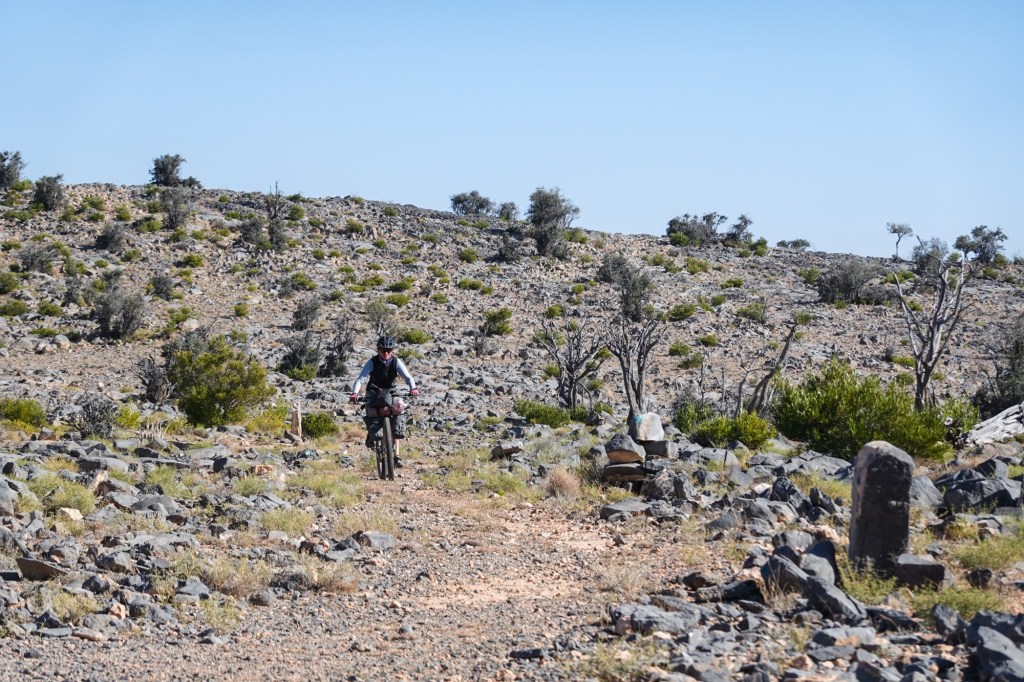
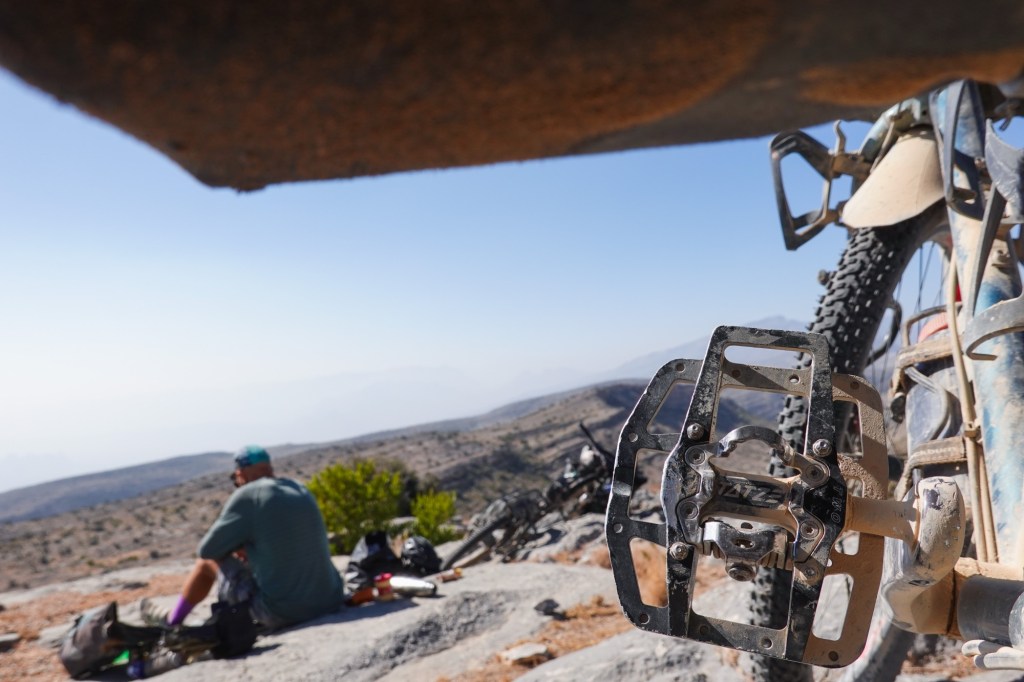
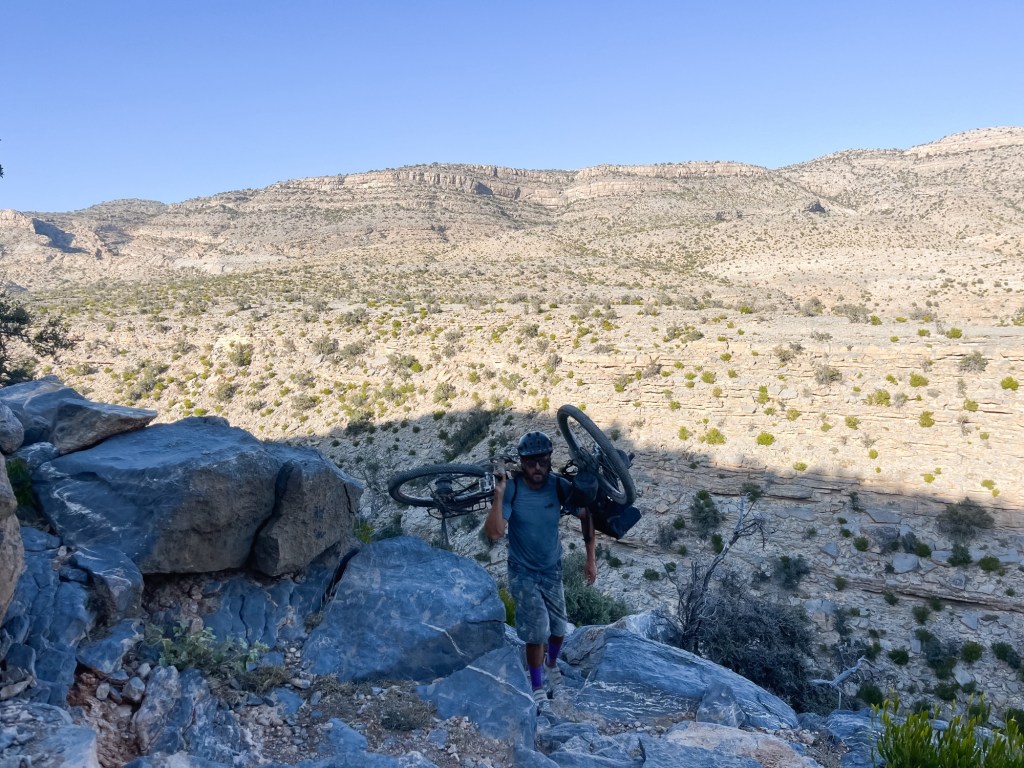
It starts with some smooth plates of rock making riding and pushing the bikes easy. We are happy about every meter we are able to ride – probably with more skills, less heavier bikes and a bit of suspension it could have been a little bit more. The path follows a ridge.
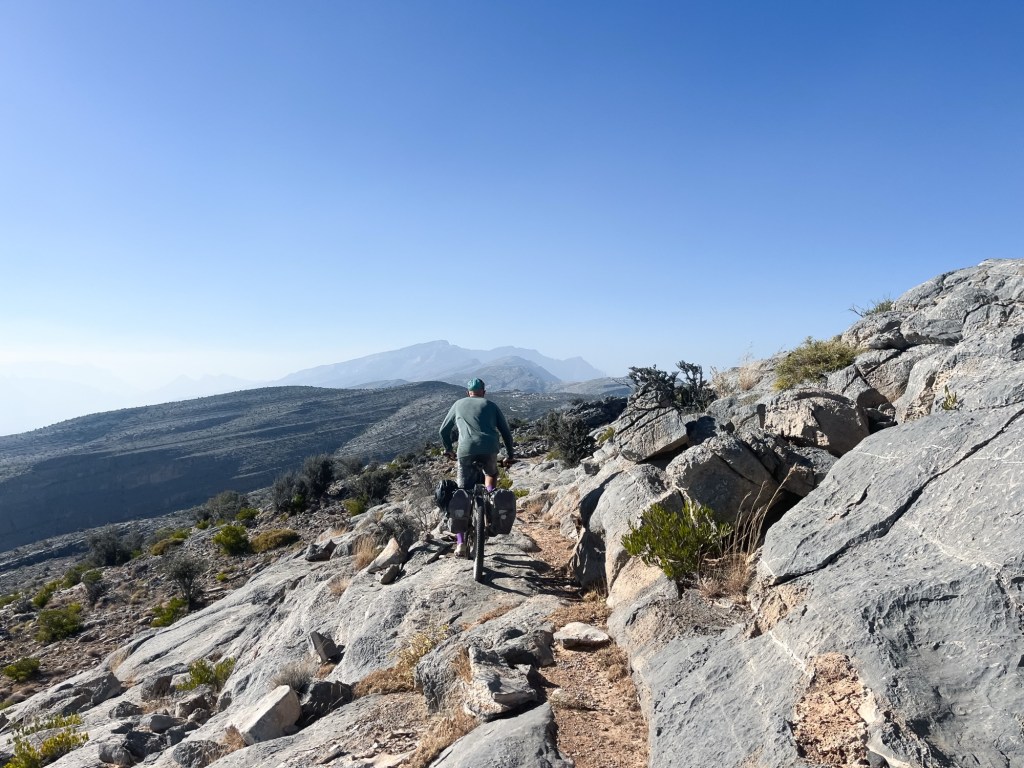
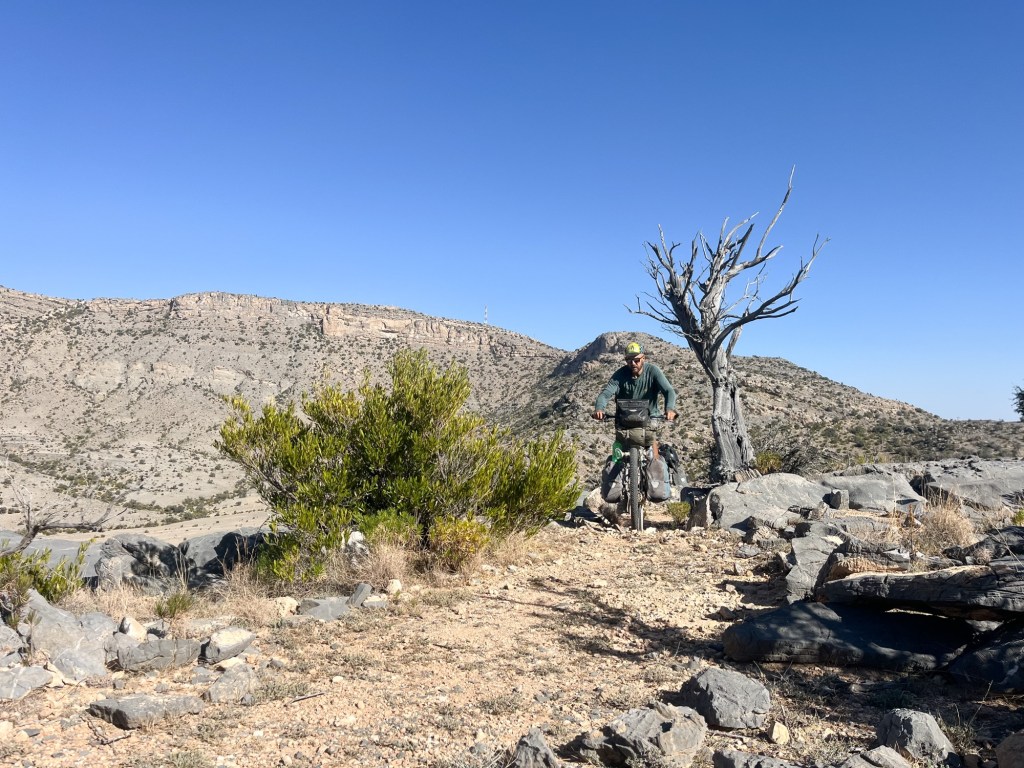
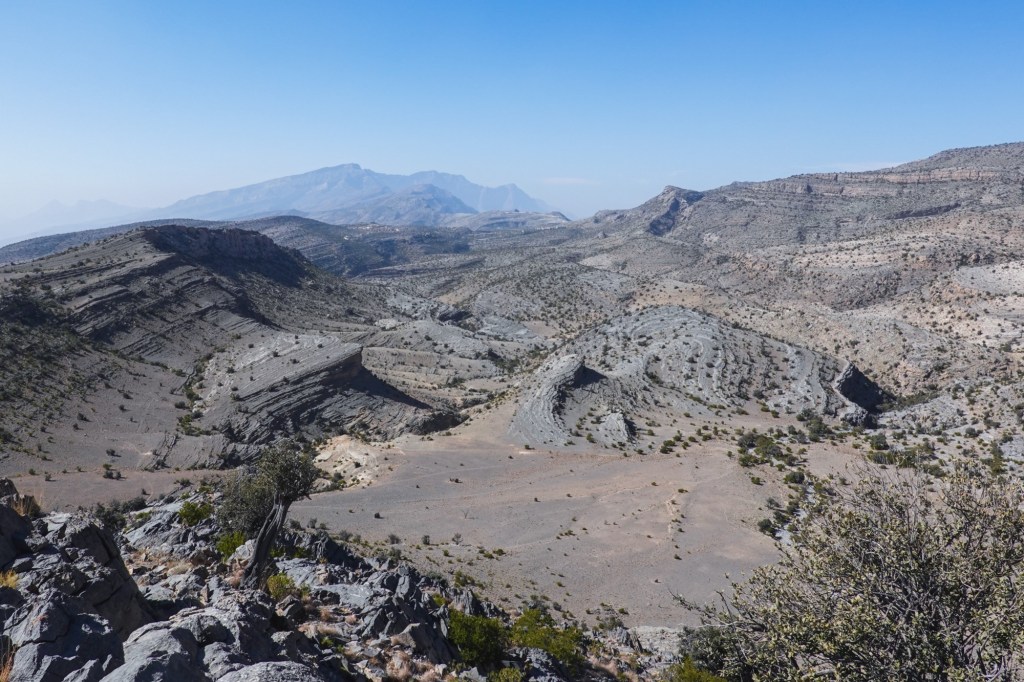
In the valley next to us some rocks appear to swirl from the ground, dancing a silent tango.
Later on a steep 100 altitude meters carry a bike awaits us.
Balcony of two worlds and dreamy Bilayd Sayt
And then the adventure is over as we reach the asphalt road. With marks on our shins and a heart filled with another adventure, we cruise towards the north to Sharaf al Alamayn.
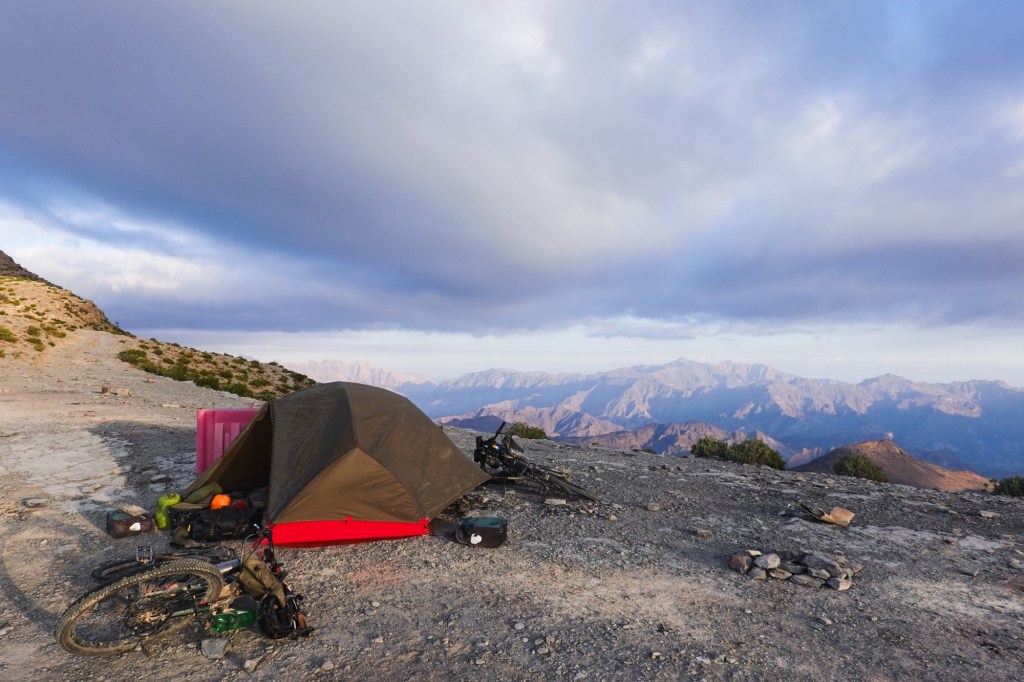
The plateau encompasses both sides of the Hajar and the night on the so called “balcony of two worlds” was stormy and we thought the tent will break down. Our morning starts with garlic paratha in the tent and then a chat with the nice dutch couple who offered to share their two person pasta with us yesterday, if the restaurant would have been closed. Time to leave and head back to Muskat – the road is dusty and steep. Our tyres are piercing through the sand which lies as a fresh layer of powder on the road.
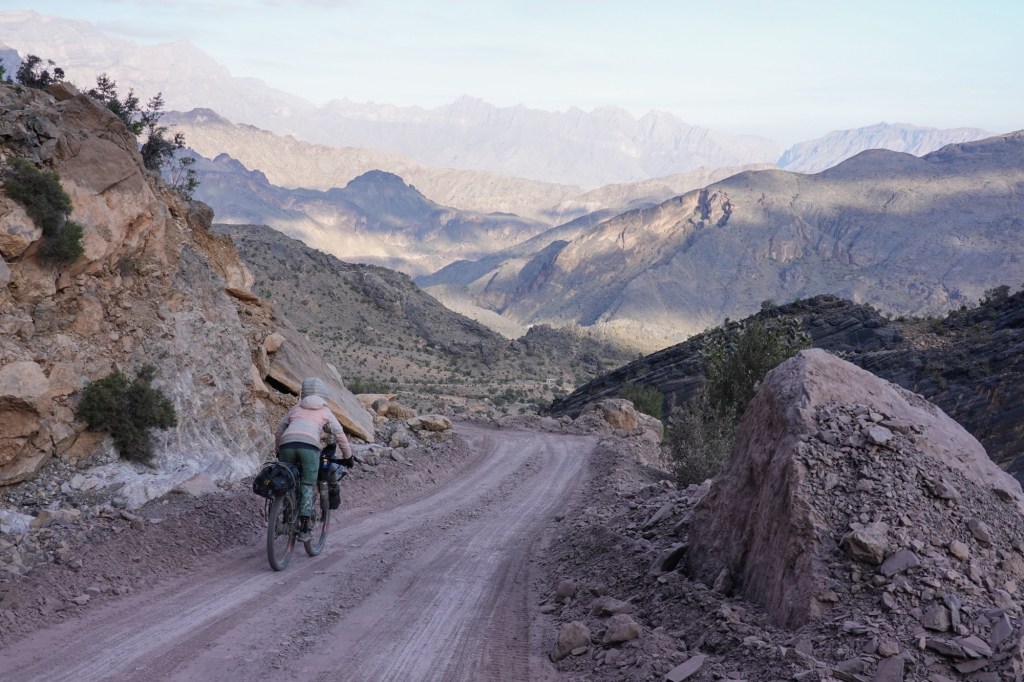
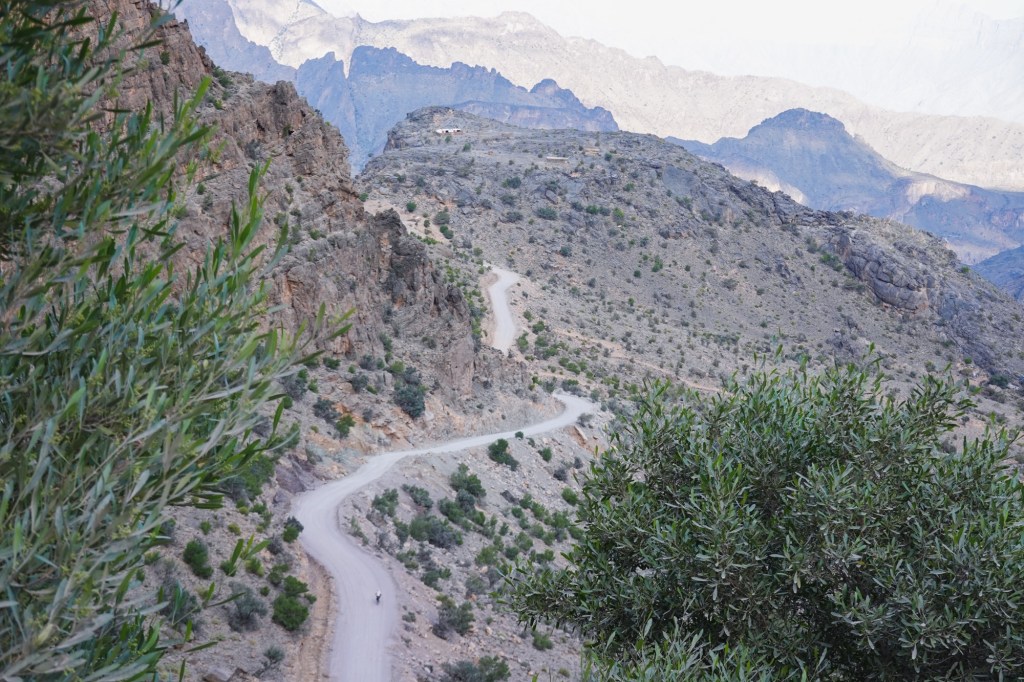
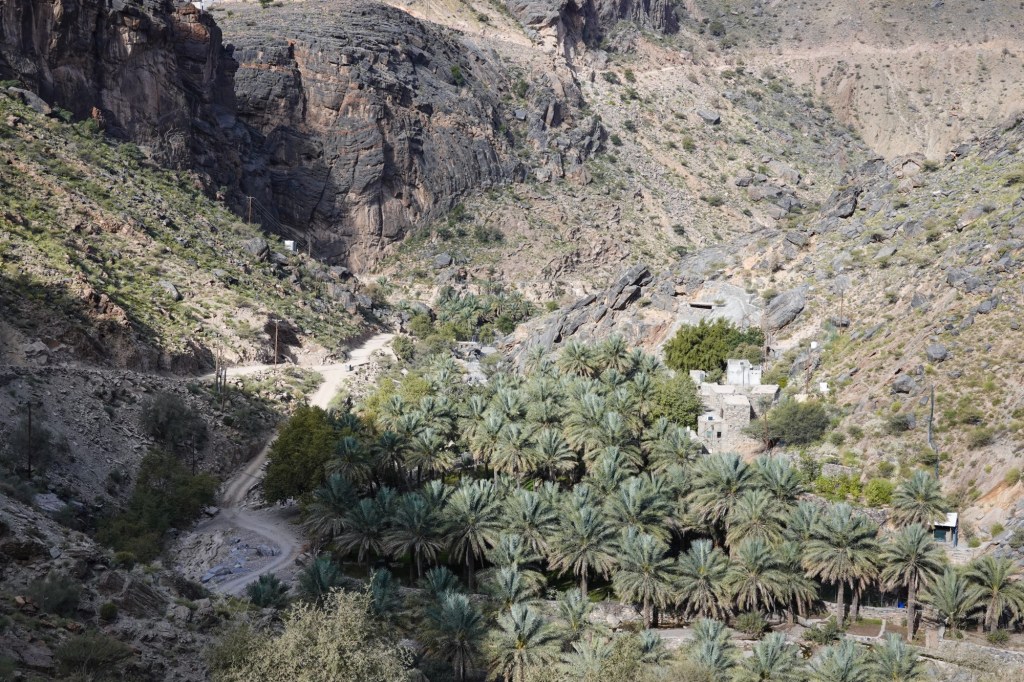
In Bilayd Sayt we are hoping to get some snacks but surprise suprise the shop is only open after 4pm.
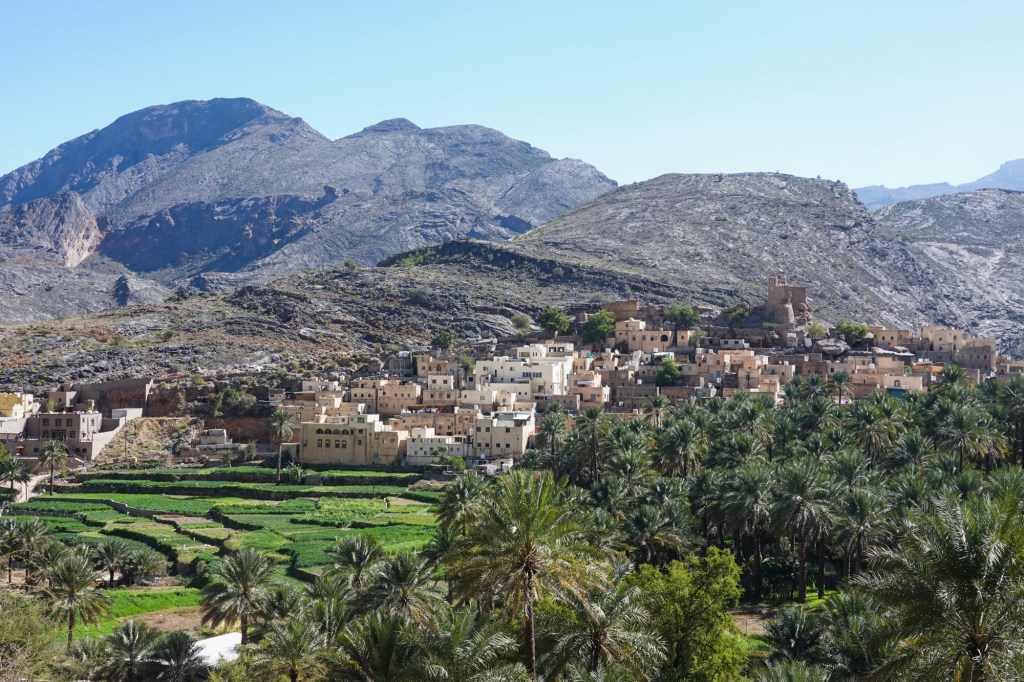
The village is beautiful and even without the shop worth the detour. A few boys race with us on their foldable fullys through the narrow and steep village tracks.
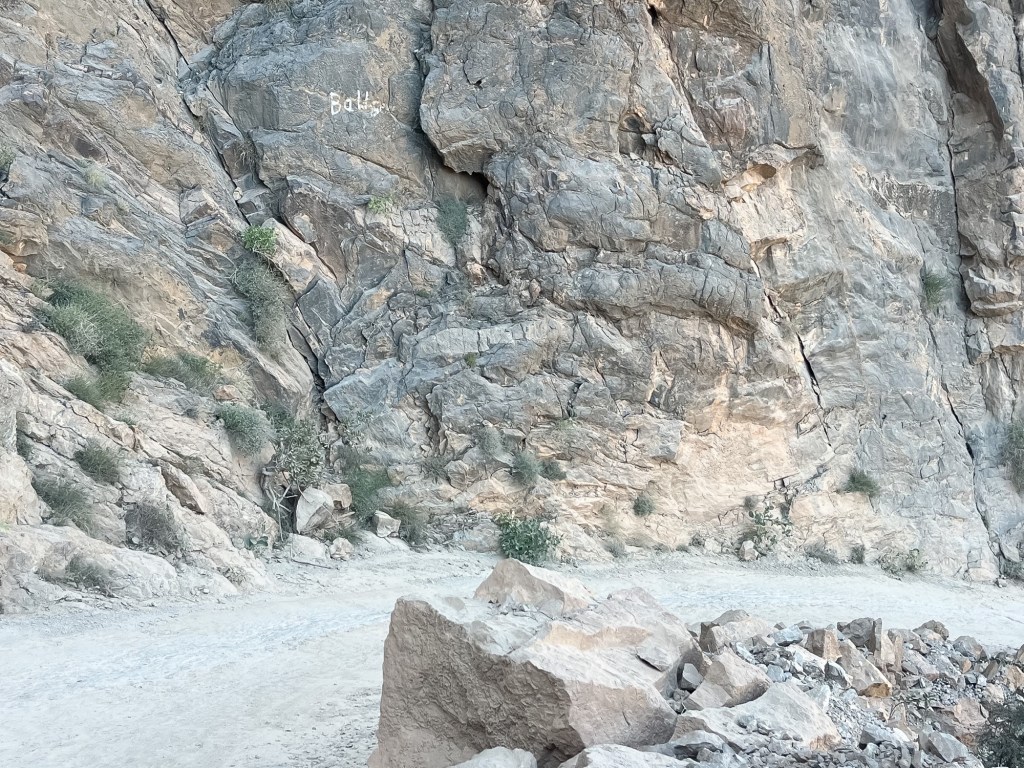
After passing many many tourist cars we arrive on a main road. Our next destination: hotsprings pool, which we are looking forward to so badly after this frosty morning. The evening is spent soaking in the warm waters and turning into fish food – literally. Some fish, eager to nibble on our toes and hands, join us for the bath. Behind the crowded pools, after dragging the bikes over some boulders, we find some small lonely pools and a nice camp spot next to it. What a perfect last camp spot in Oman!
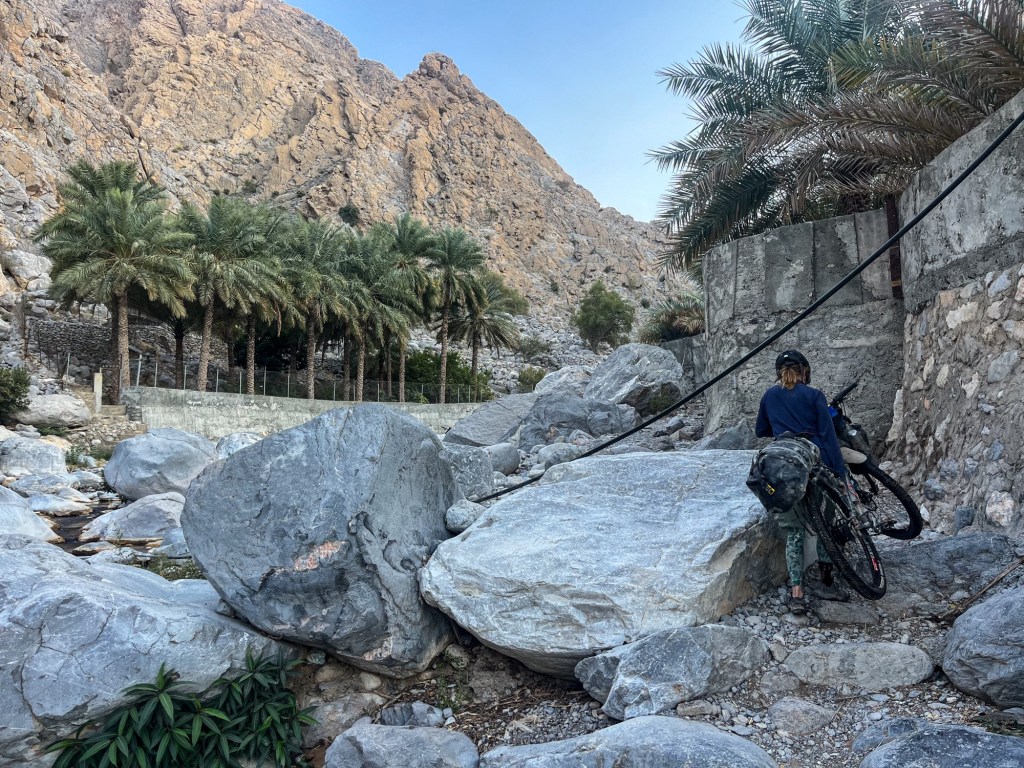
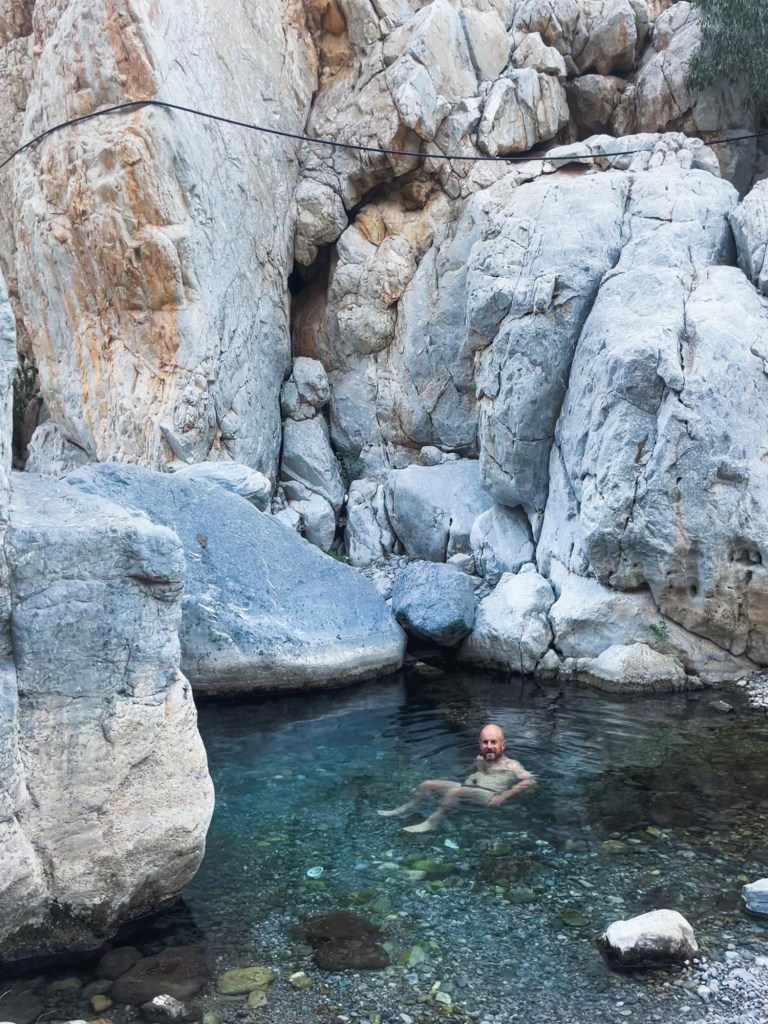
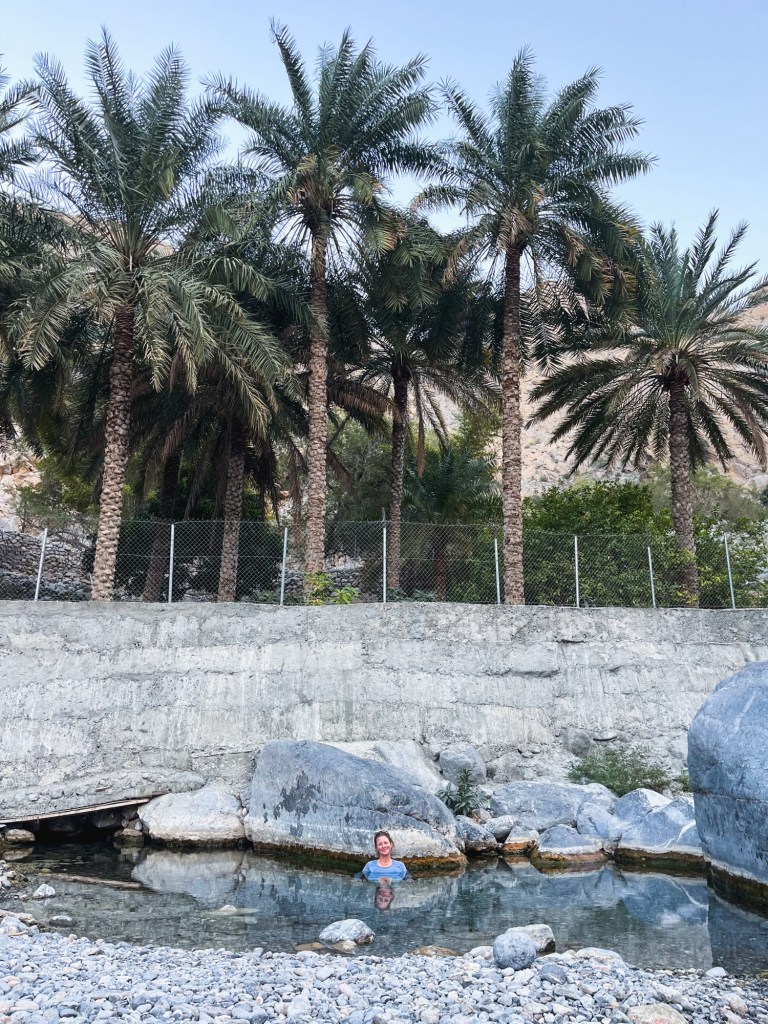
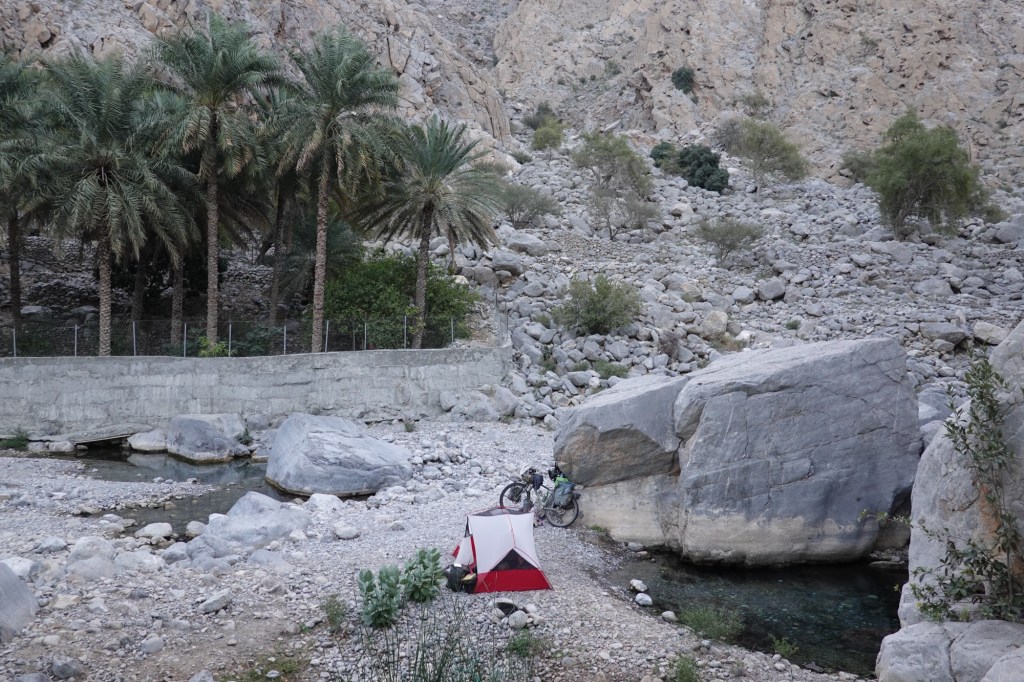
Cruising through our last Omani Wadi and the Tomb Raider trail
Then the last cycling day has arrived and we pass by a castle and head to our last Wadi leading almost all the way to our end point at the seaside. Clothes are wrapped around the bushes and drift wood and branches cuddle with trees.
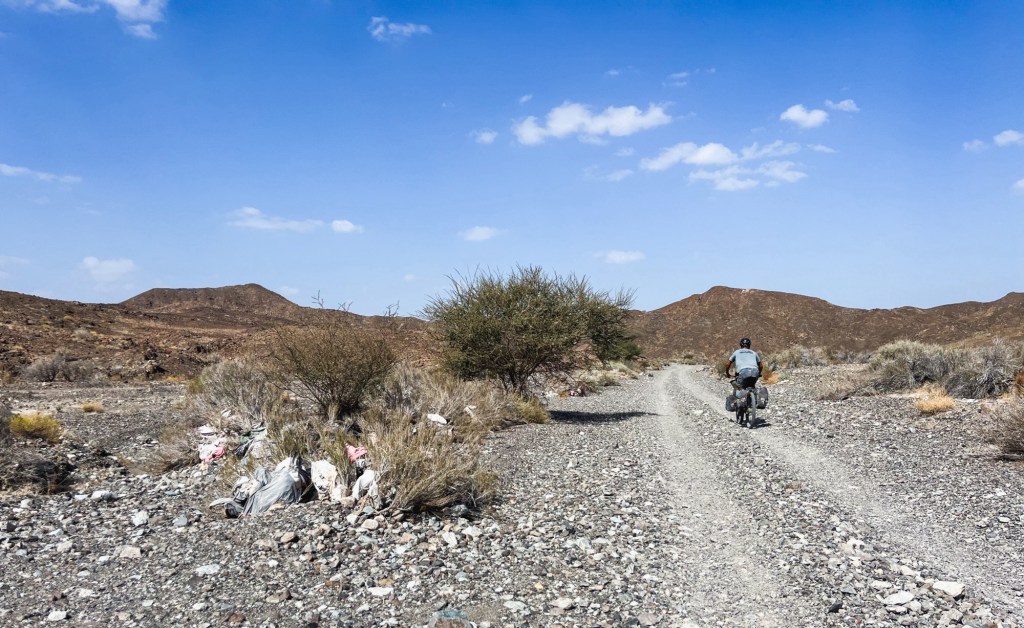
Last year’s rains caused floods in this valley and the affects are still visible – the nature has recovered yet the garbage remains. The final few kilometres trying to find the right cadence and speed in the loose rubble of Omani Wadis. At the end of the valley a little trail park awaits us and we choose an easy flowy trail called Tomb Raider. As the name suggests, we pass old ruins while hopping and curving around the hills behind the town of Al Khawd. The track is in very good shape although it doesn’t seem like many bikes have been on it in the past weeks and is very much travel bike suitable.
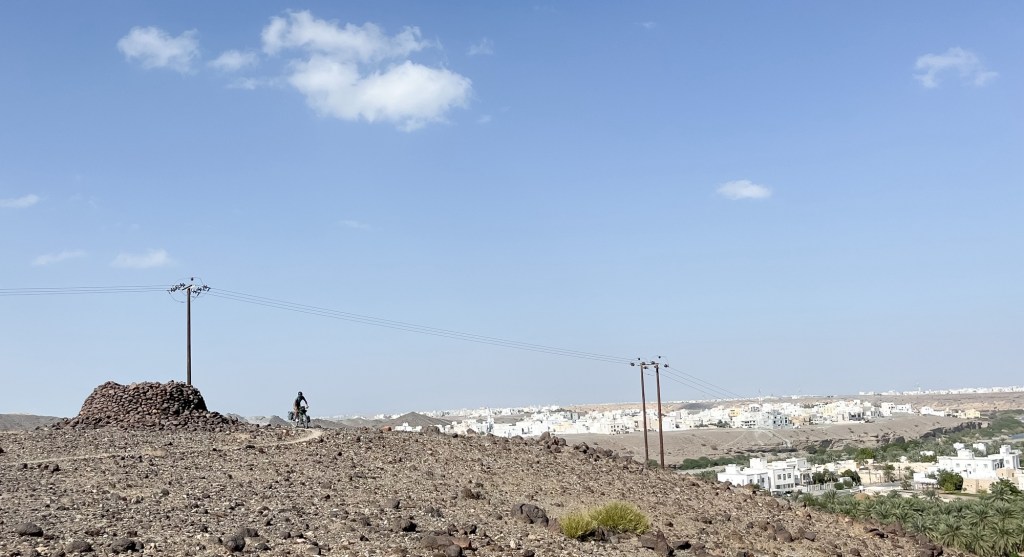
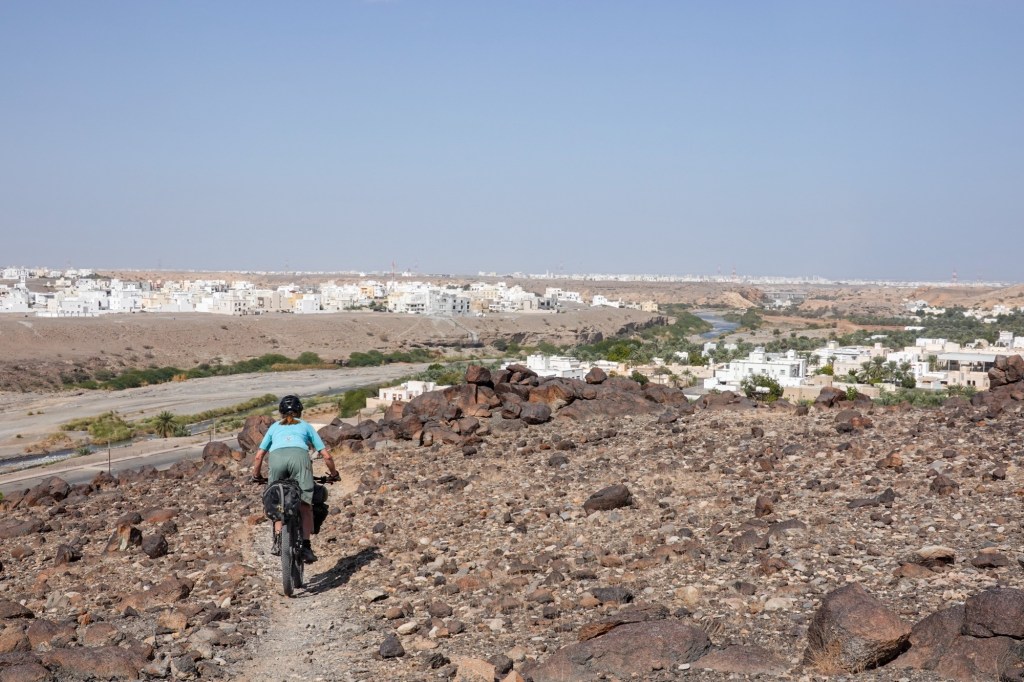
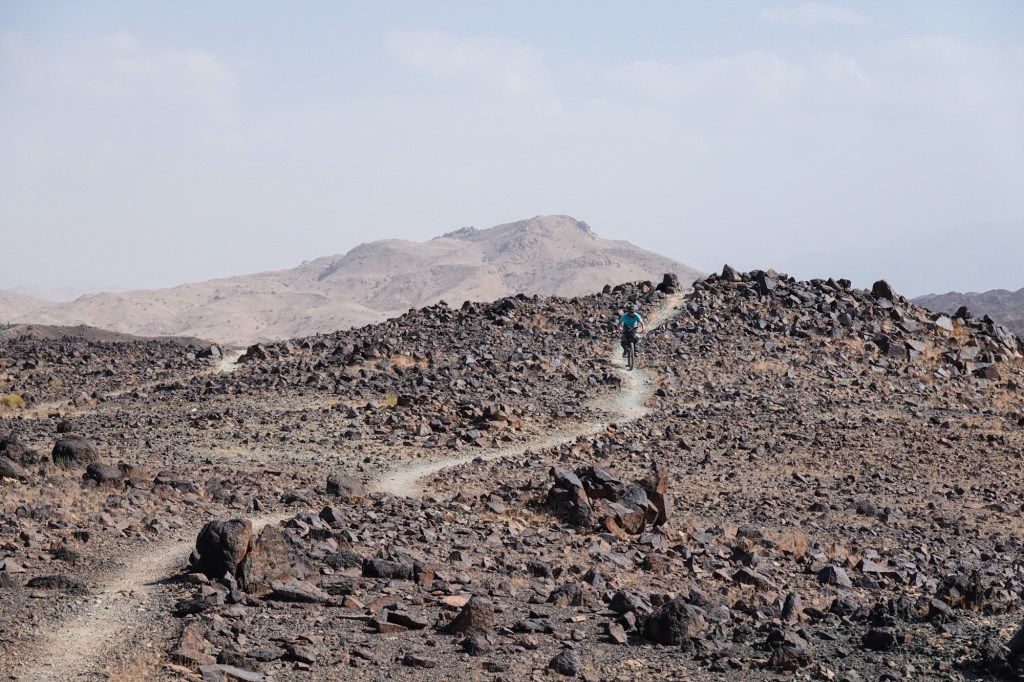
Another 10km through the city huzzle and we are back at our starting points. Bikes get a wash – us as well. Lots of food, a tiny bit of sightseeing and coffees at the beach!
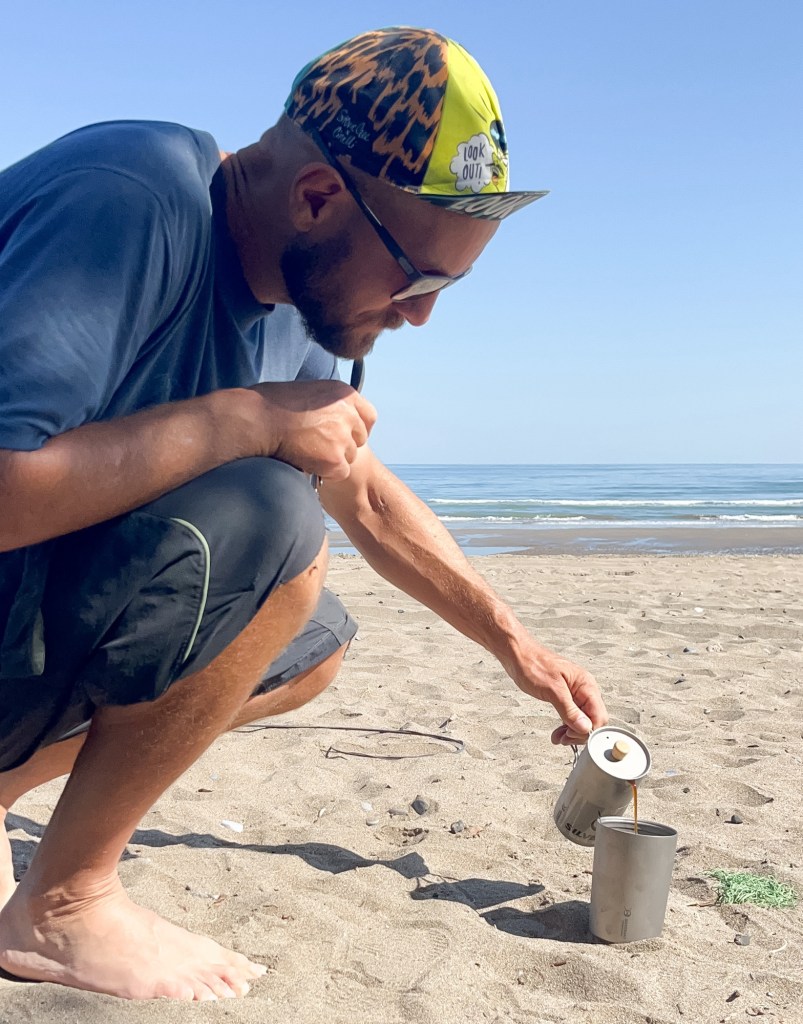
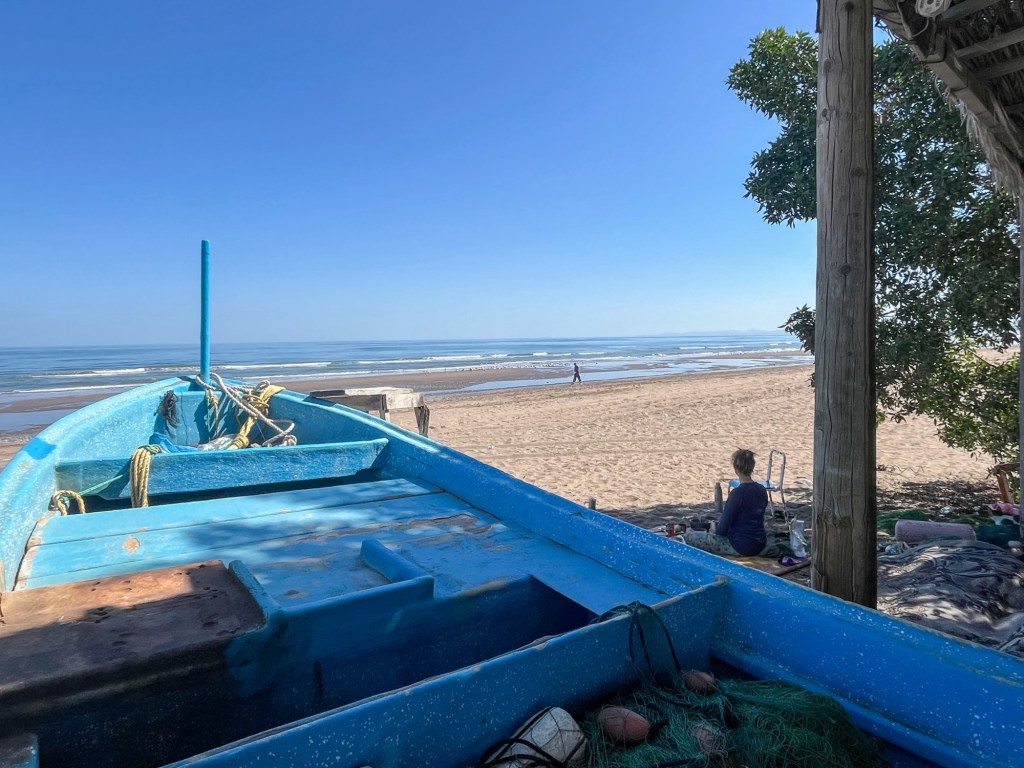
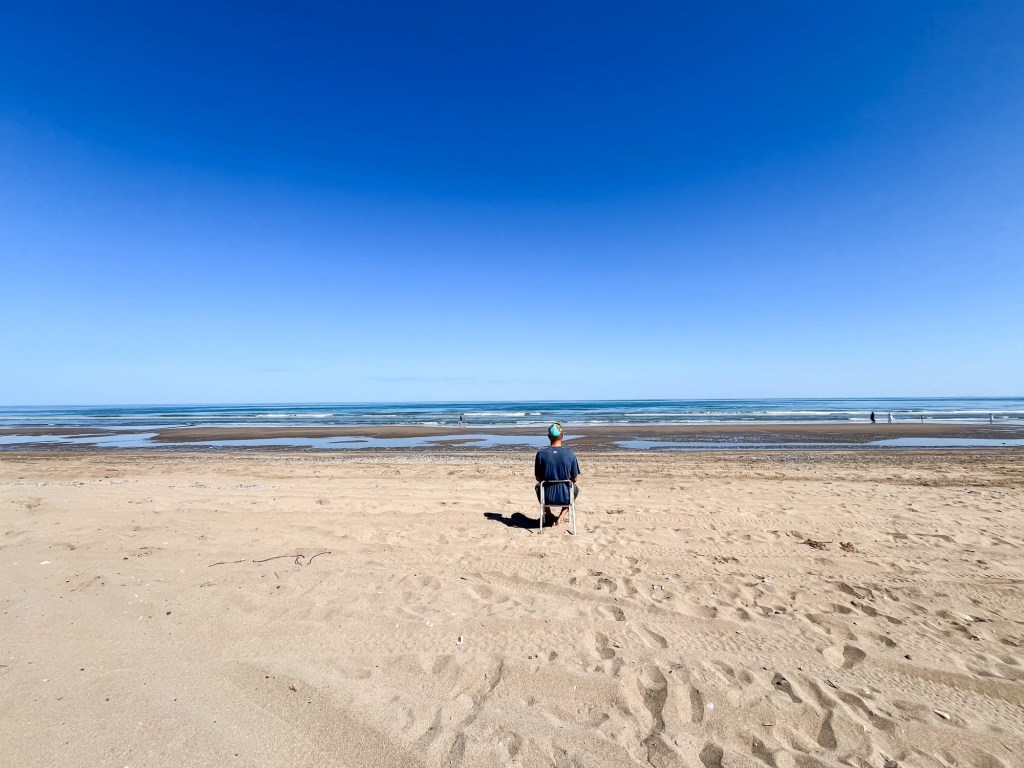
Two parcels await us in the hotel – we were lucky that other travelers could bring some gear from Germany. In one of the parcel are the much needed replacements for our broken tent and in the other one is our coffee upgrade: a Silverant French Press and an Insulation Cup for Rolfi. In the past months we took turns, who gets my insulated cup for the morning coffee.

Then it is time for packing, repacking and organising. At the bike shop, where we pick up our boxes to pack the bikes, they have a tool which may get Rolfis seatpost to move again. It is stuck since China: steel frame + aluminium seatpost – grease = problem! Many sweatdrops and 3 exhausted men later the post did move, but only a few mm. Our long and unplanned detour to India comes to an end. We wouldn’t want to miss a single moment of it. Oman will stay in our minds for its breathtaking and diverse nature, a super interesting geology lecture, the steepest tracks in the world and the refreshing waters.
Our Path
Oman: 1600 km| 21300 altitude meters




Leave a Reply