
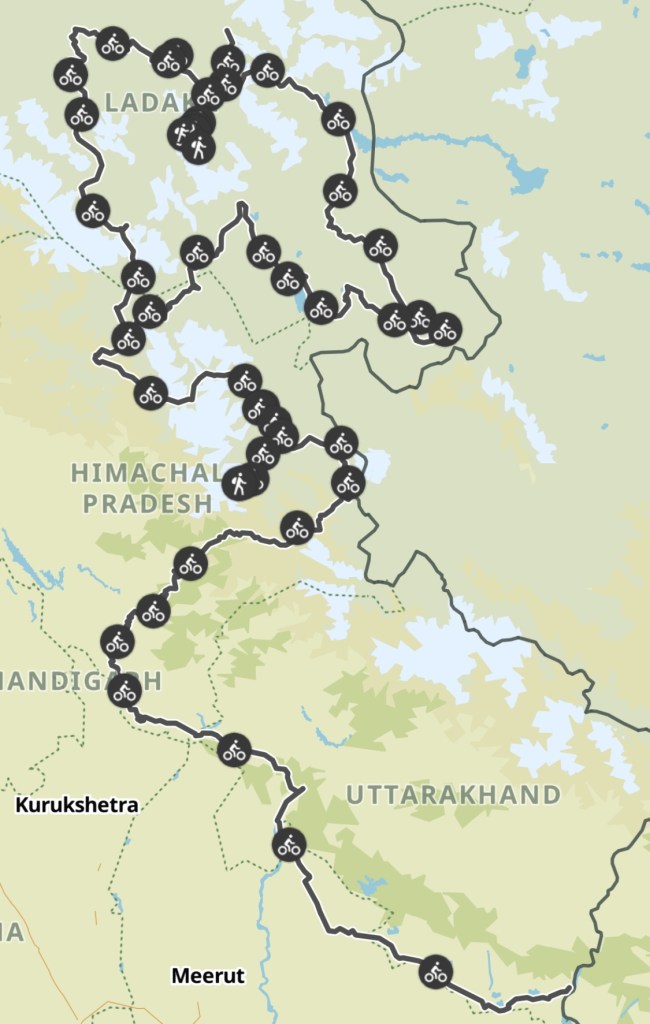
North West India – Spiti, Zanskar & East Ladakh
July 2025 – We are heading to the regions of Himachal Pradesh and Ladhak!
Traffic, Heat and other Obstacles
India greats us with amazing food on the rooftop of a hotel during a roaming thunderstorm, where the air is filled with the rich aromas of spices. As we savor each bite, the sky lightens up in a purple light every other minute, illuminating the clouds in a dramatic display.
We know that the next few days will not be our style of cycling. A few hundred kilometers have to be covered on flat tarmac through populated areas in the heat in order to reach the mountains, where we hope to find respite from this relentless heat. We discuss if taking a bus is the better option, acknowledging the ease it would bring, but we didn’t have the nerves for yet another bus hassle, especially after the last experience was so chaotic. So sweat is dripping on the handlebar, a constant reminder of the rising temperatures and our exertion. Eardrums are about to burst from the honking, a cacophony of noise that saturates the air as cars weave dangerously close. Adrenaline is rushing as we try to avoid collisions with what seems to us suicidal driving on the crowded roads, each moment an exhilarating mix of anxiety. Fun times!!
Haridwar and Rishikesh
Haridwar is one of the holiest places for Hindus, nestled on the banks of the Ganges river at the foot of the majestic Himalayas, where spiritual energy seems to permeate the air. During this time of year, it is pilgrims’ season, and the streets are bustling with crowds, each person seeking solace, purification and divine blessings in the water of the Ganges. We decide to stay for a short while, soaking in the deeply spiritual atmosphere before we continue our journey to Rishikesh.
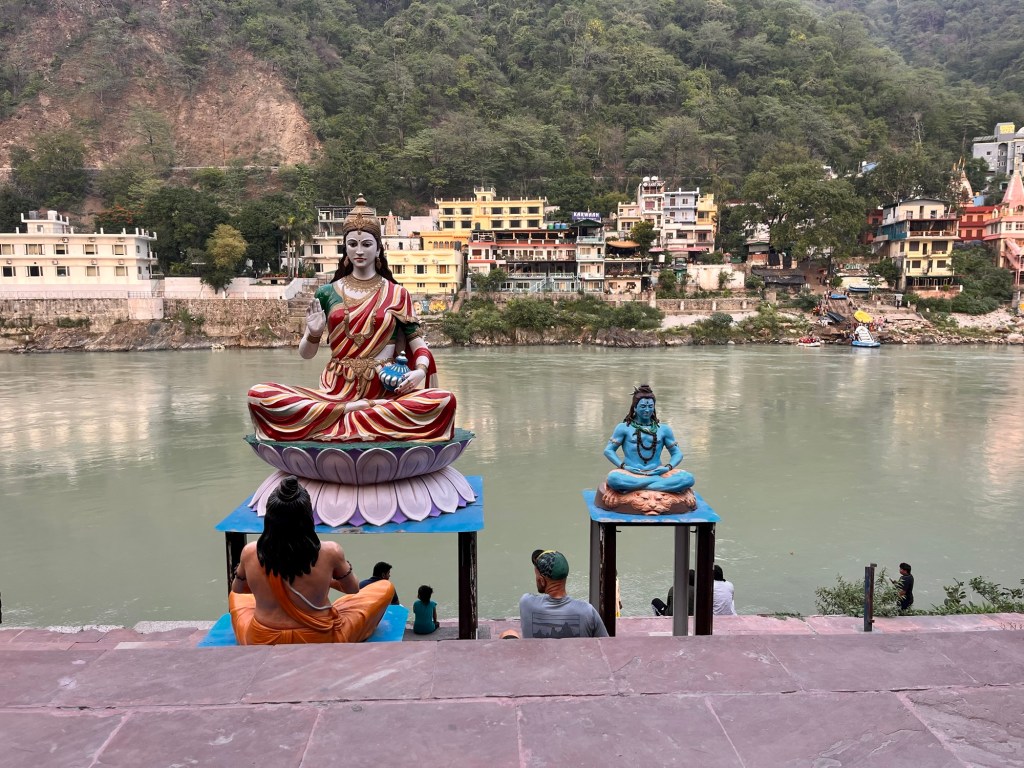
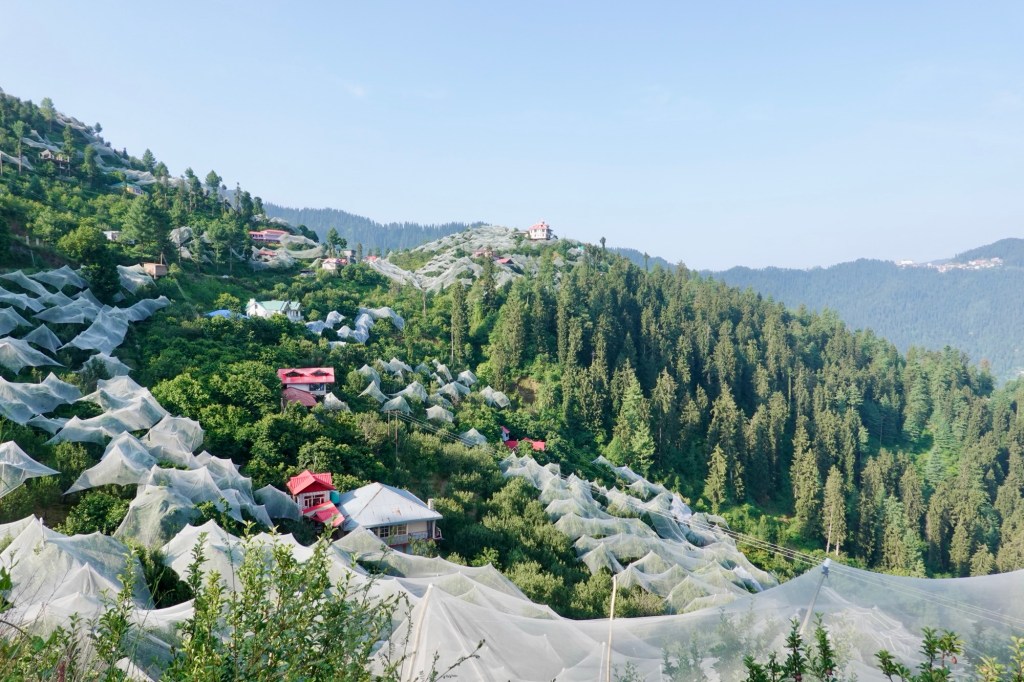
Once there, I join a yoga class, while we both indulge in a variety of delicious vegan food. After savouring our meal, we take a short dip in the sacred waters of the Ganges. We set off once more, navigating through a few quiet forest roads that lead us gracefully to the enchanting hill station of Shimla, where a cool(er) breeze awaits us and David, an indian friend we met in Kyrgyzstan before, invites us to his lovely house.
Spiti Valley – The middle land
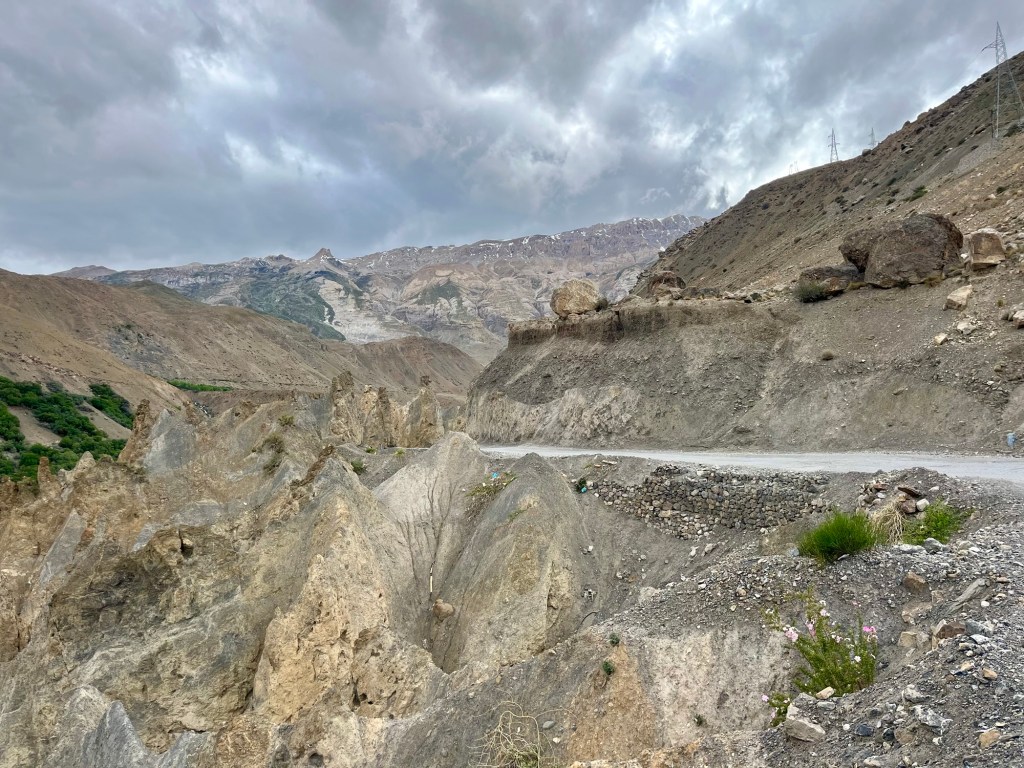
Once a hidden gem, Spiti valley borders with Tibet; and is also called the land in the middle. Now it is a very well-known place among indian motorcyclists who seek the thrill of the open road against such stunning backdrops. A few more hot kilometres until we finally reach a bearable temperature at about 3000 m, where the cool mountain air provides a refreshing contrast. The high altitude arid desert is characterized by its rugged terrain, striking rock formations, and stunning vistas that change with the shifting light of day. Here, ancient monasteries perch precariously on cliffs, adding a touch of spirituality to the beauty of the region.
Tabo Monastery
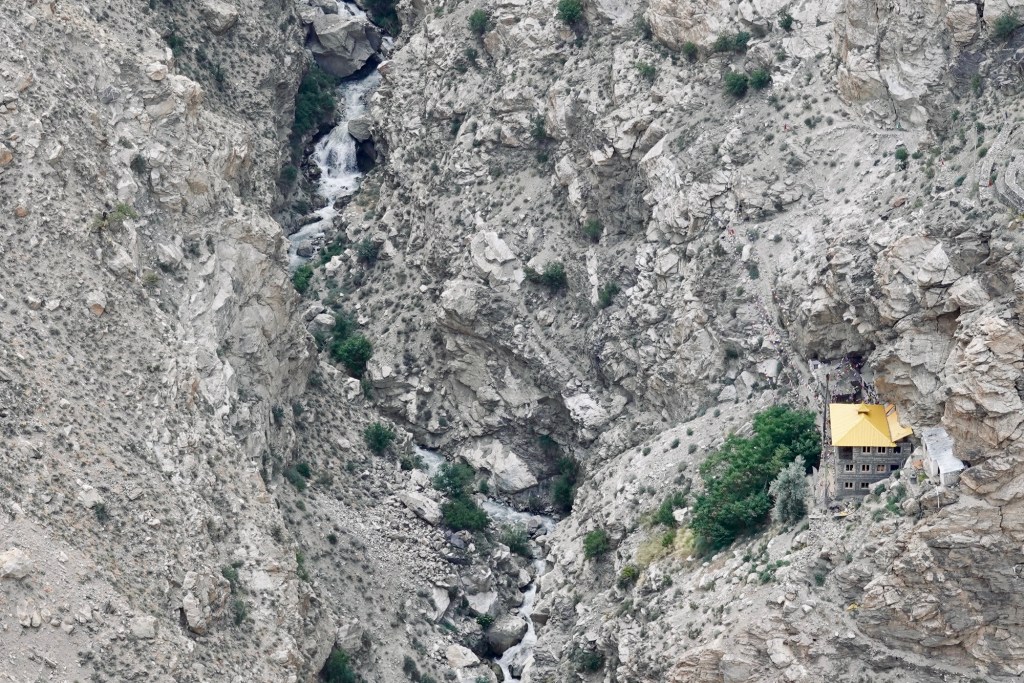
The Tabo monastery, built in the 10th century, is known for its ancient relicts and beautiful wall paintings, which depict various aspects of Buddhist teachings and history.
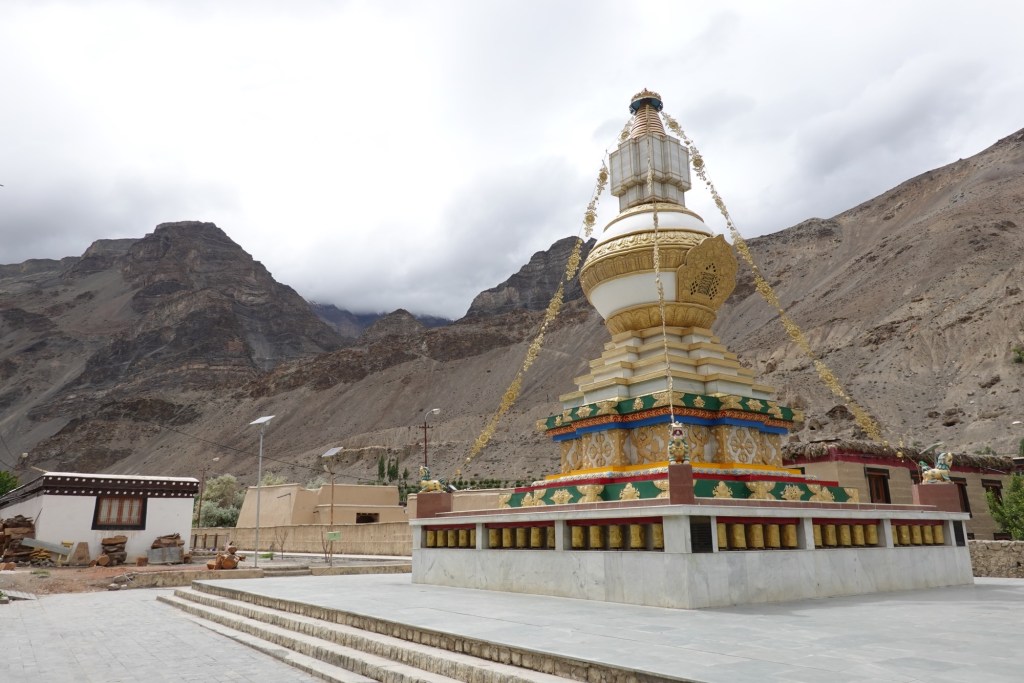
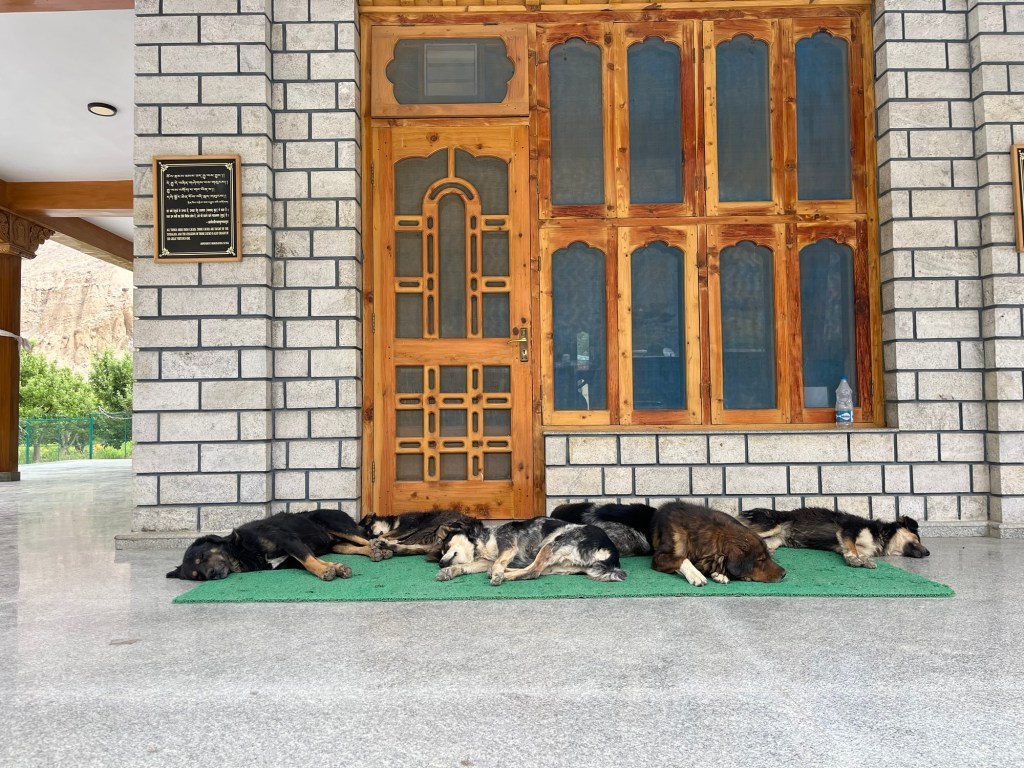
The monastery has withstood the test of time such as an earthquake, preserving its rich cultural heritage and spiritual essence, while the surrounding mountains add to its tranquil ambiance.
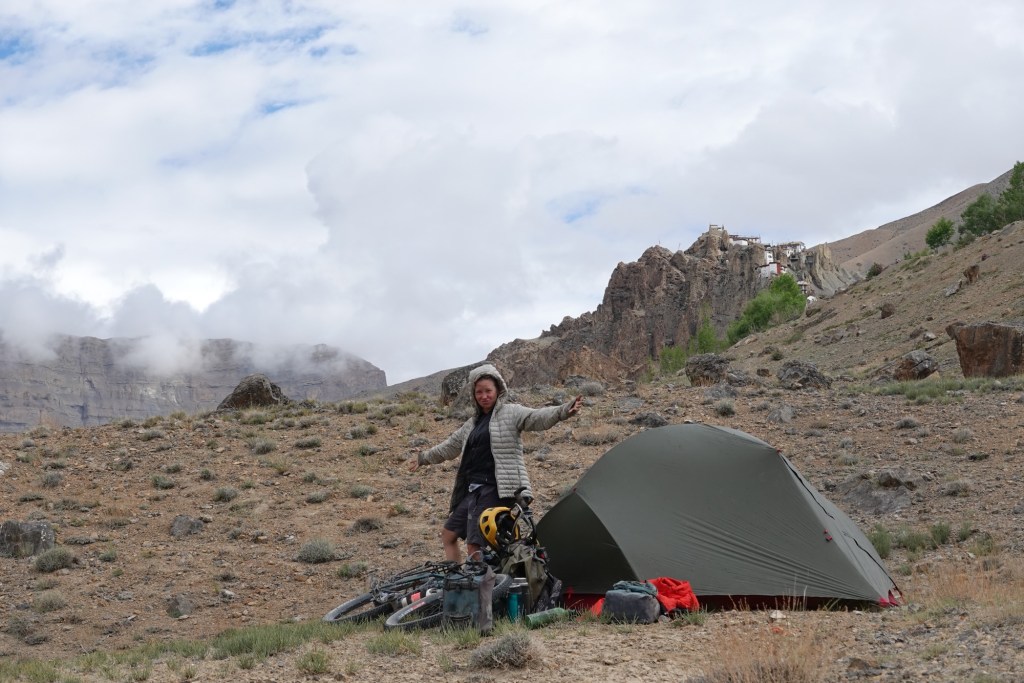
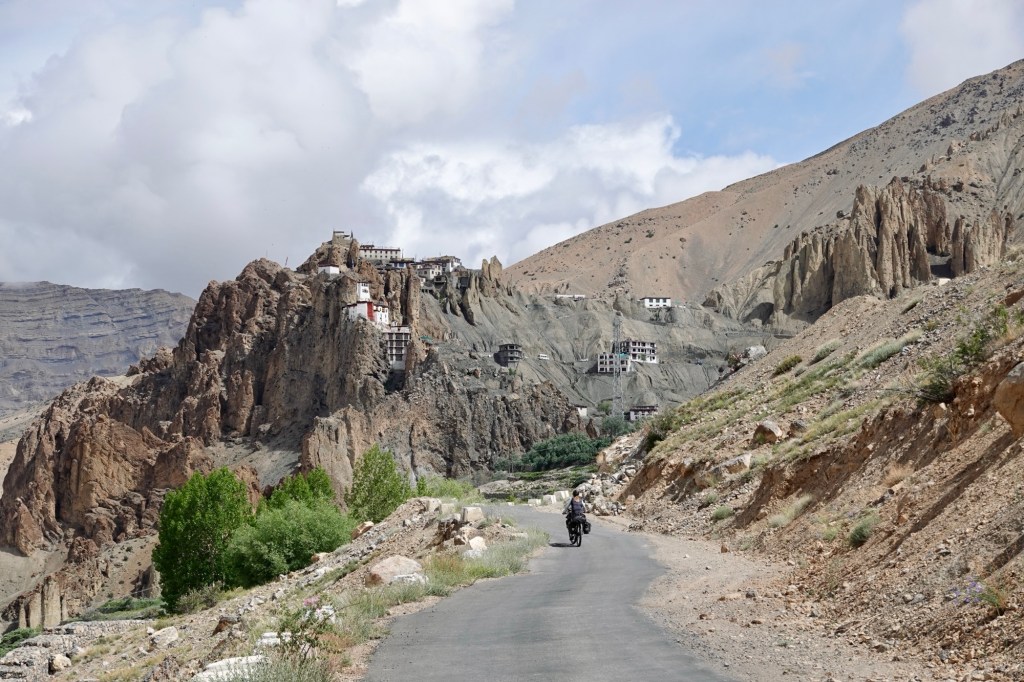
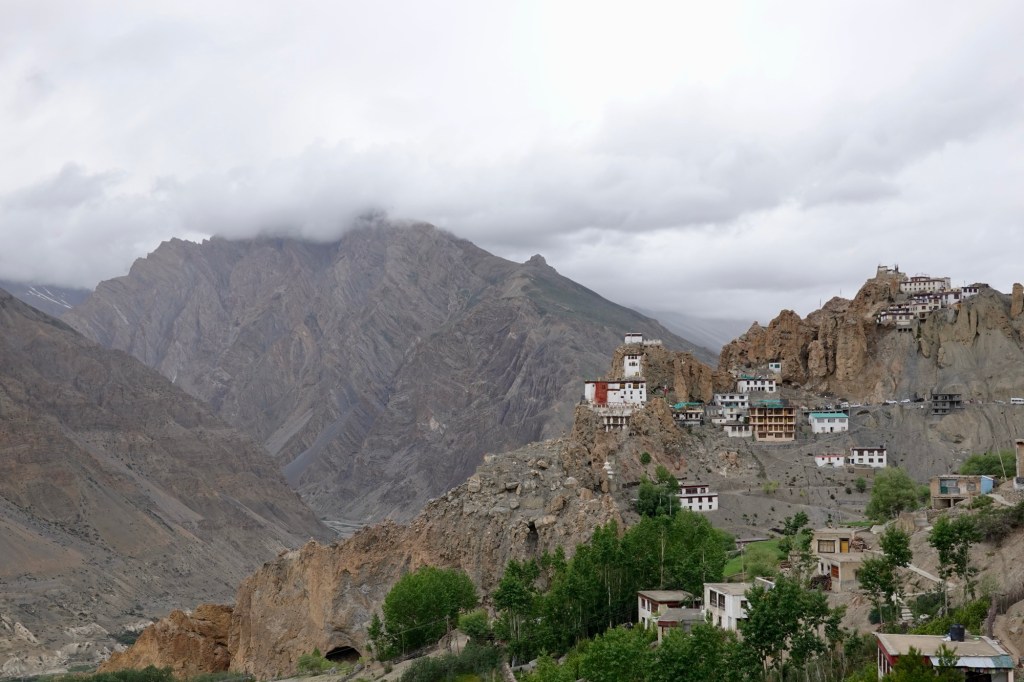
We take a detour to Dhankar monastery, which was built in 12th century. The monastery lies on a cliff and is overlooking the confluence of Spiti and Pin River.
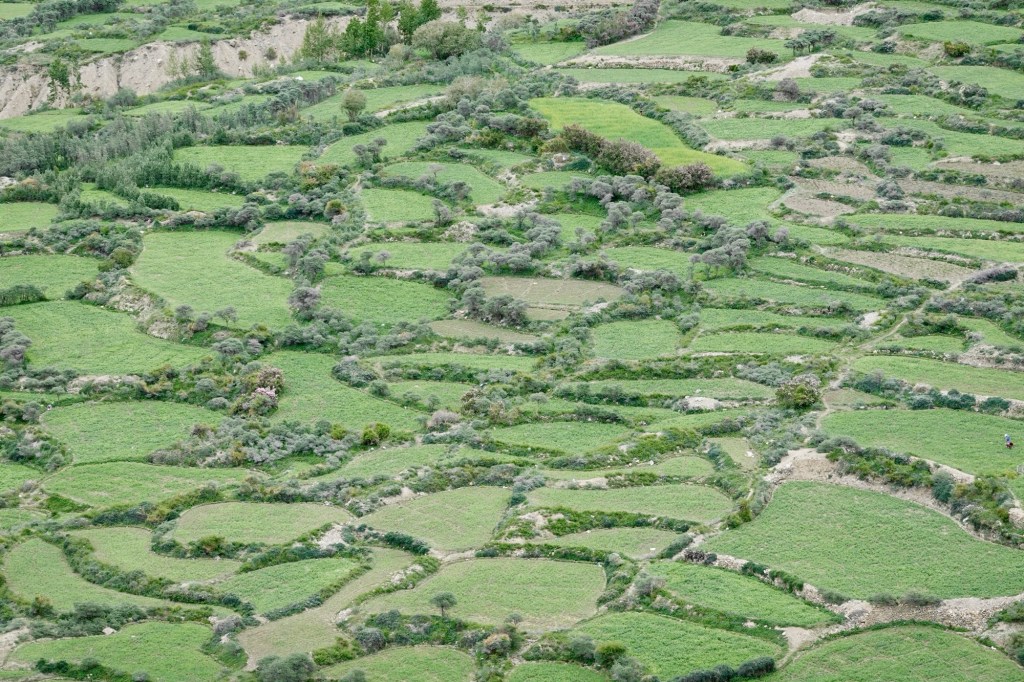
Afterwards we head to Lhalung a quiet village away from the main road, framed with beautiful farm terraces.

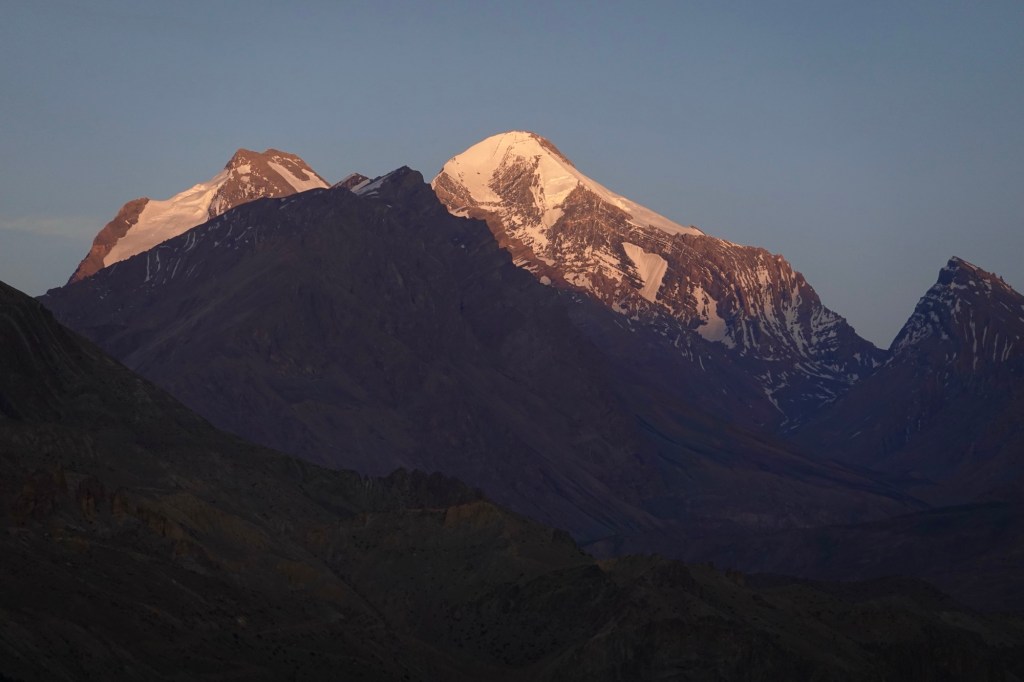
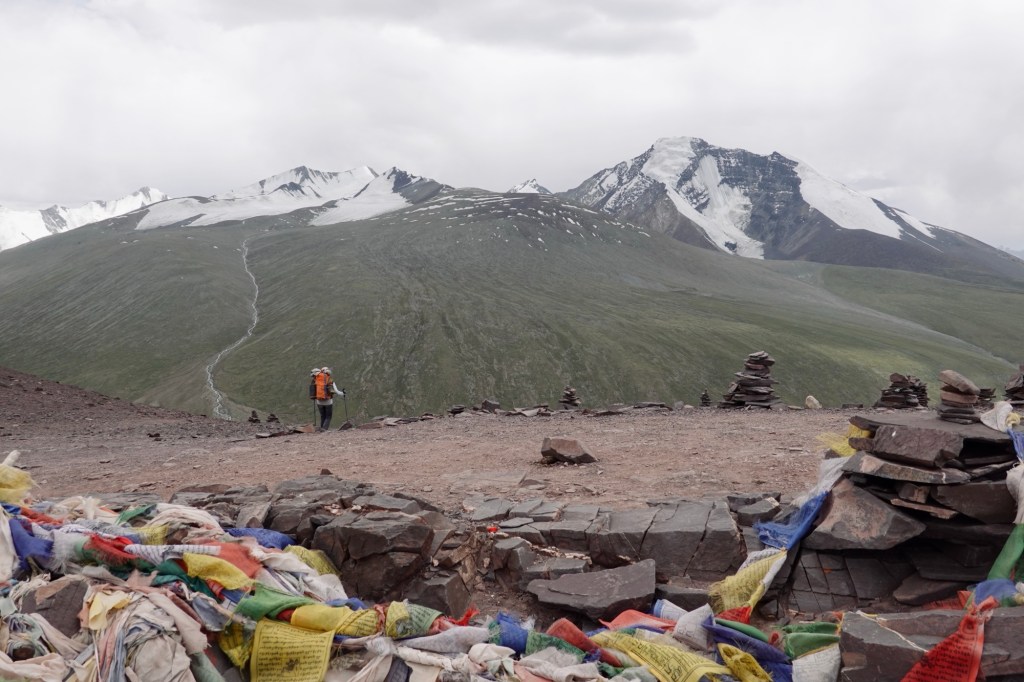
Afterwards we head into Pin Valley. As we embark on this journey, it’s a bit early in the season; rivers run high and fast, making the biking and hiking a refreshing undertaking. The scenery unfolds infront of us, with breathtaking views that change with each turn. New roads are everywhere in the making, linking high villages nestled in the mountains, extending to remote mountain passes, and connecting military bases.
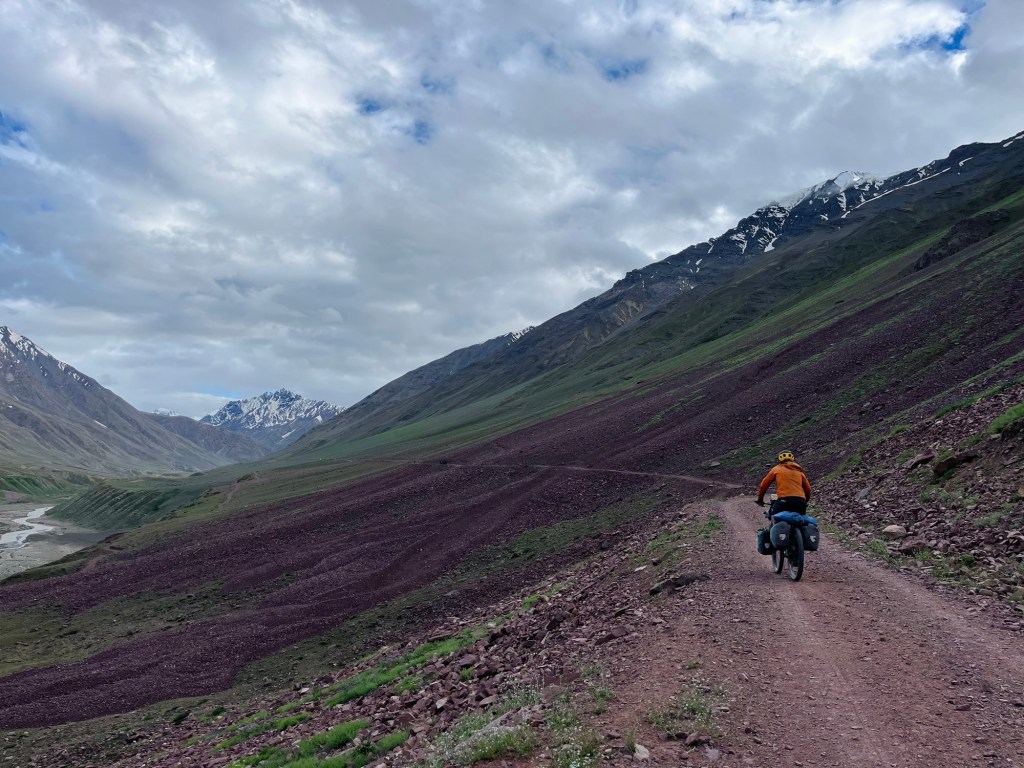
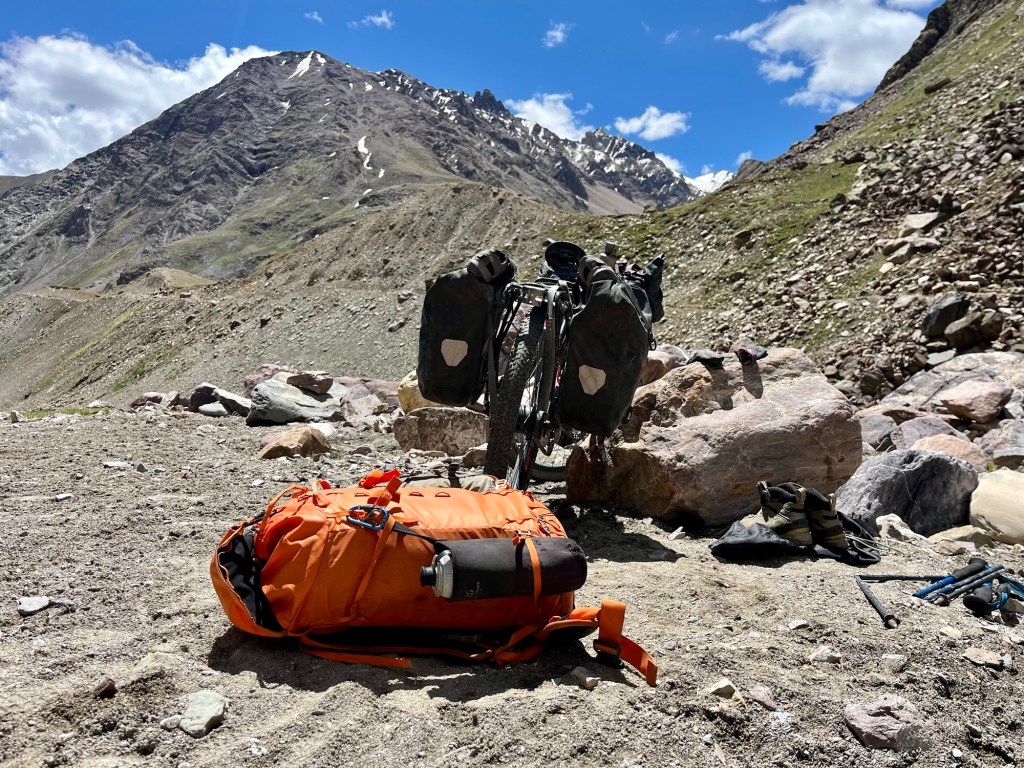
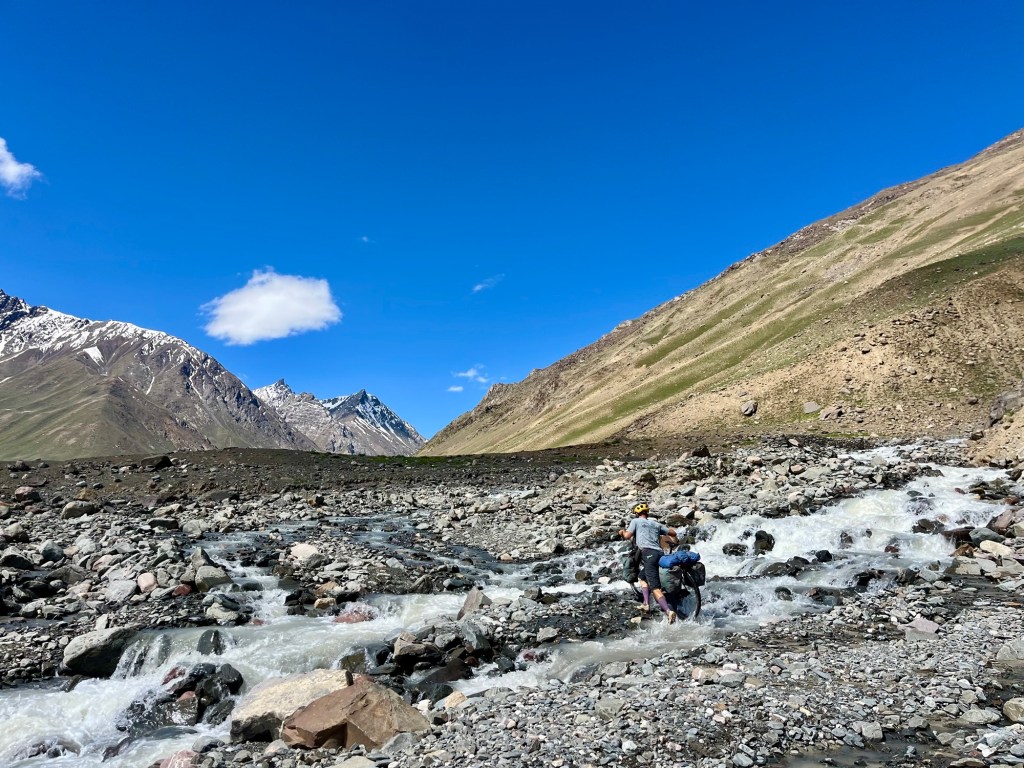
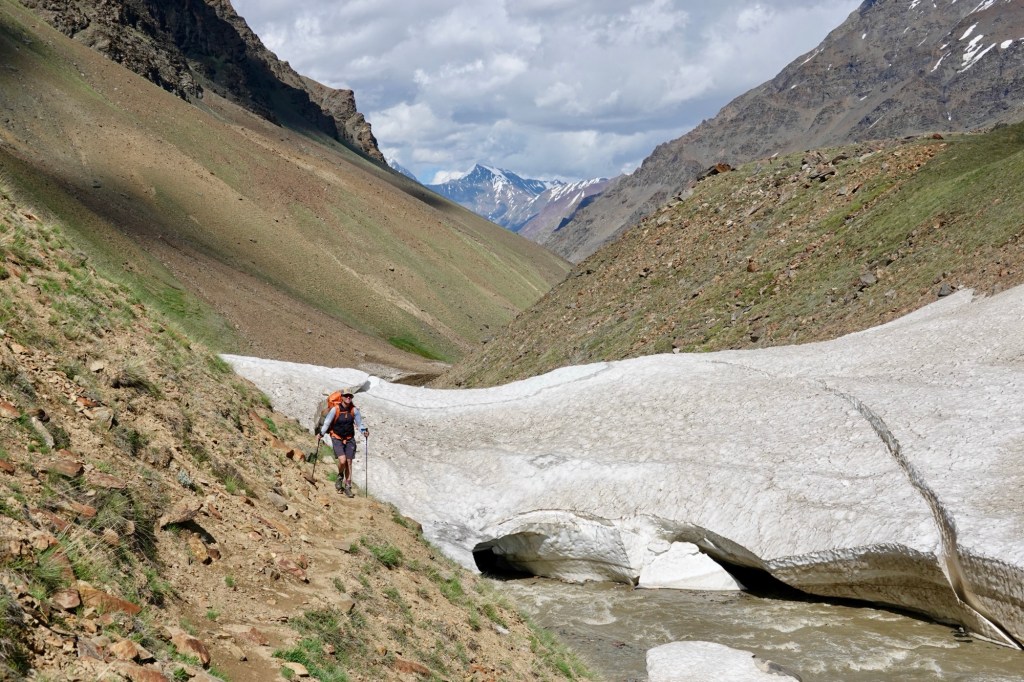
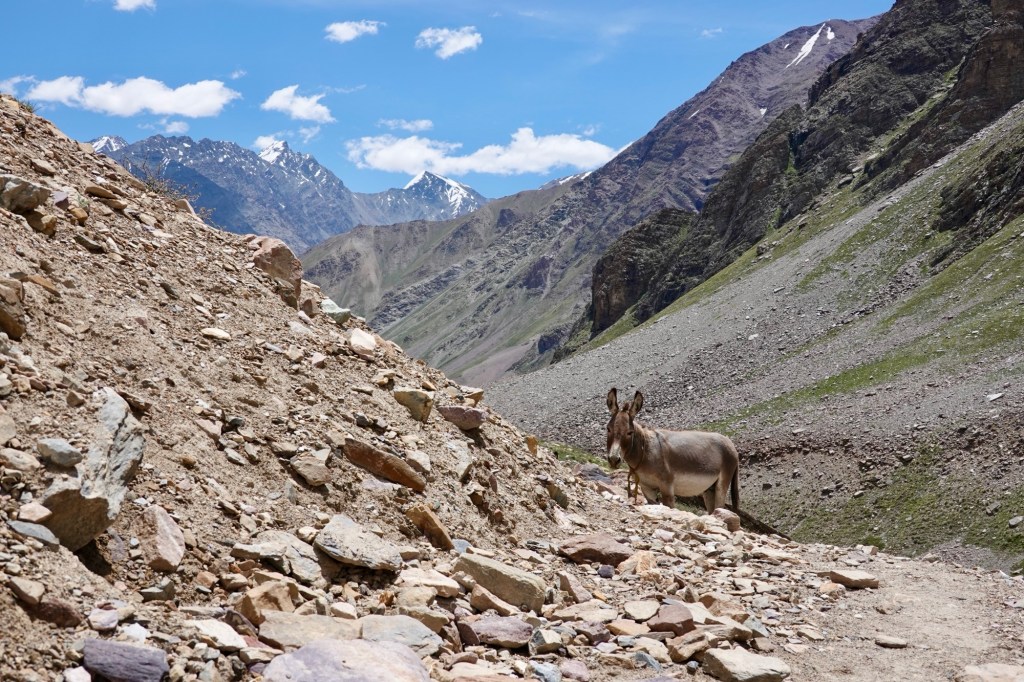
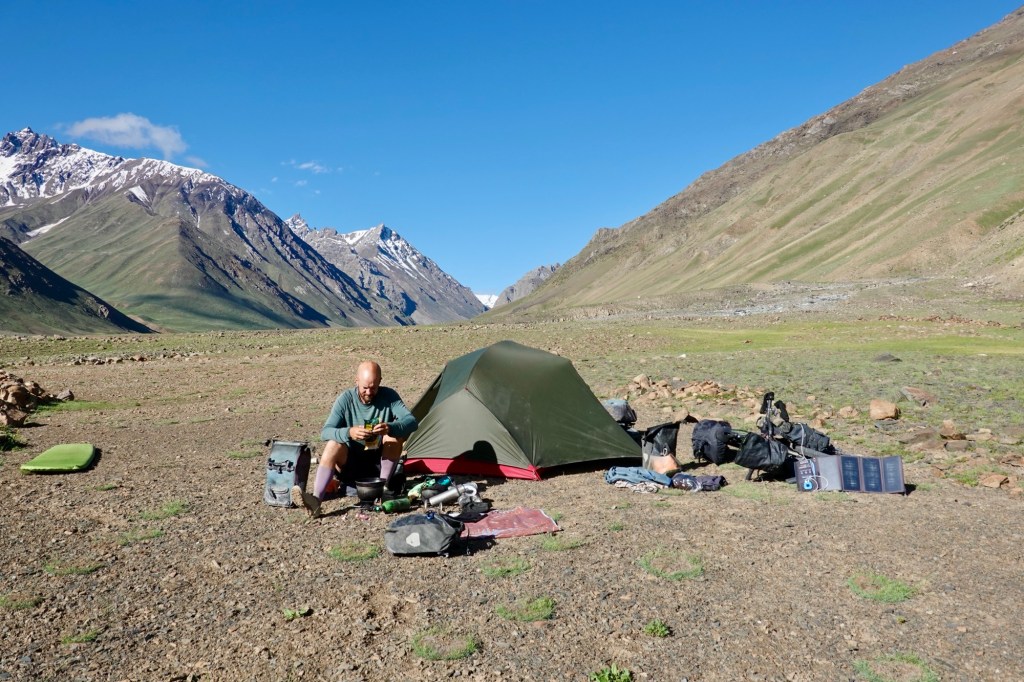
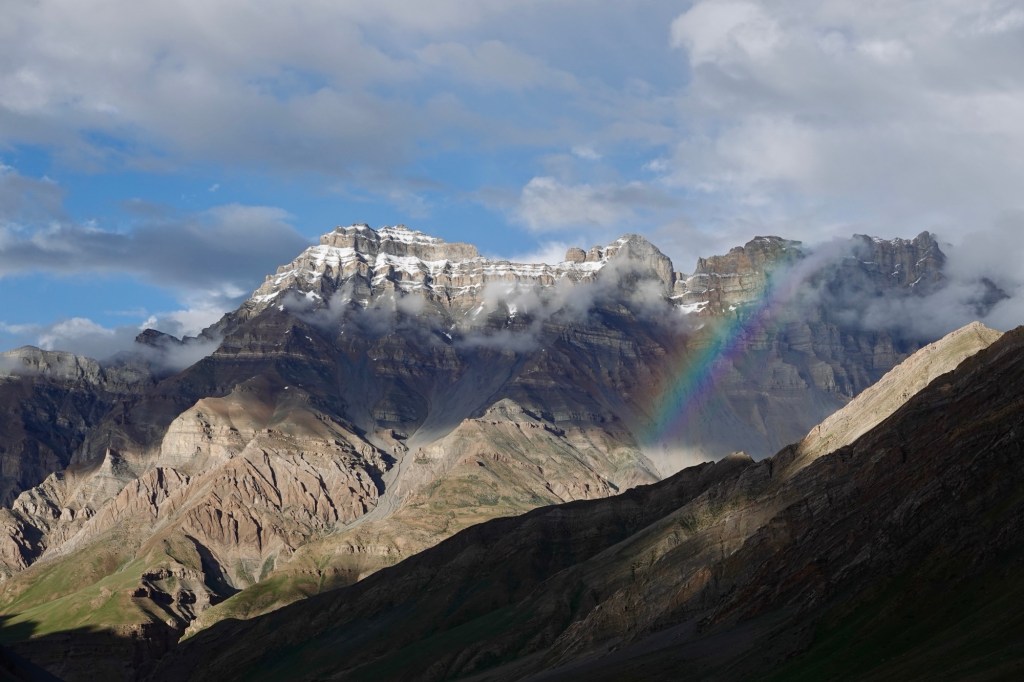
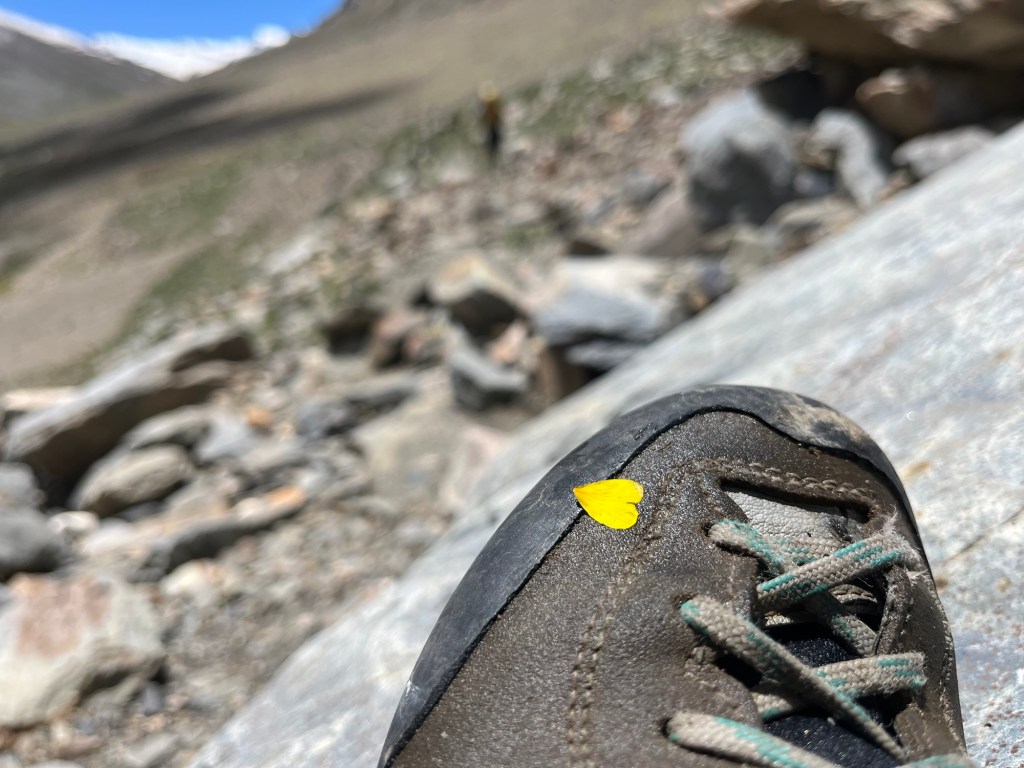
We choose another small detour over small villages that are located higher up in the valley.
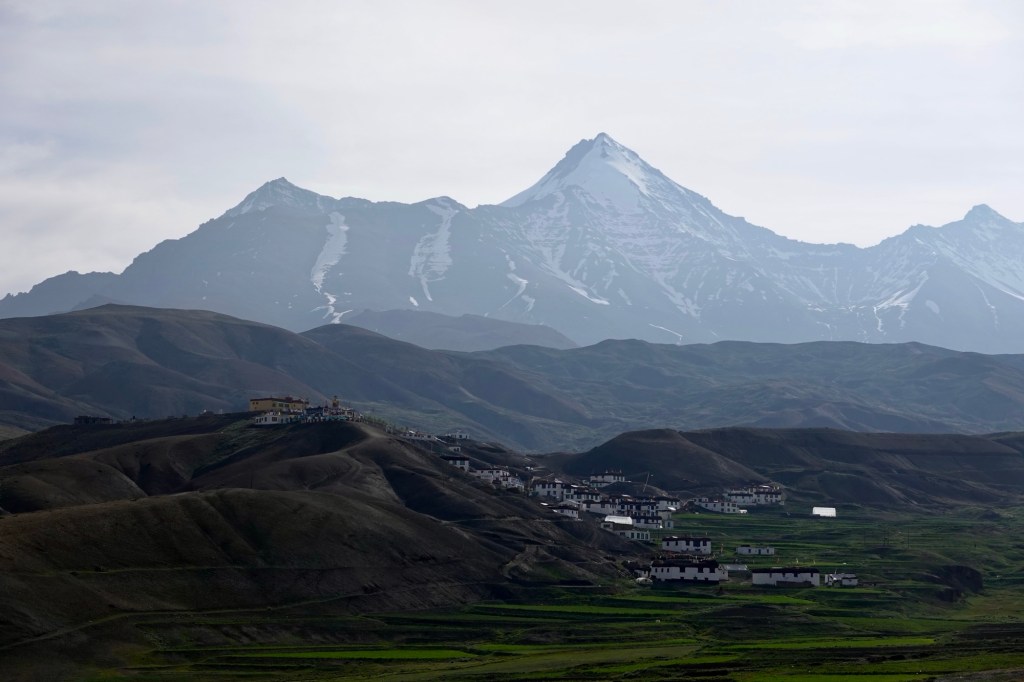
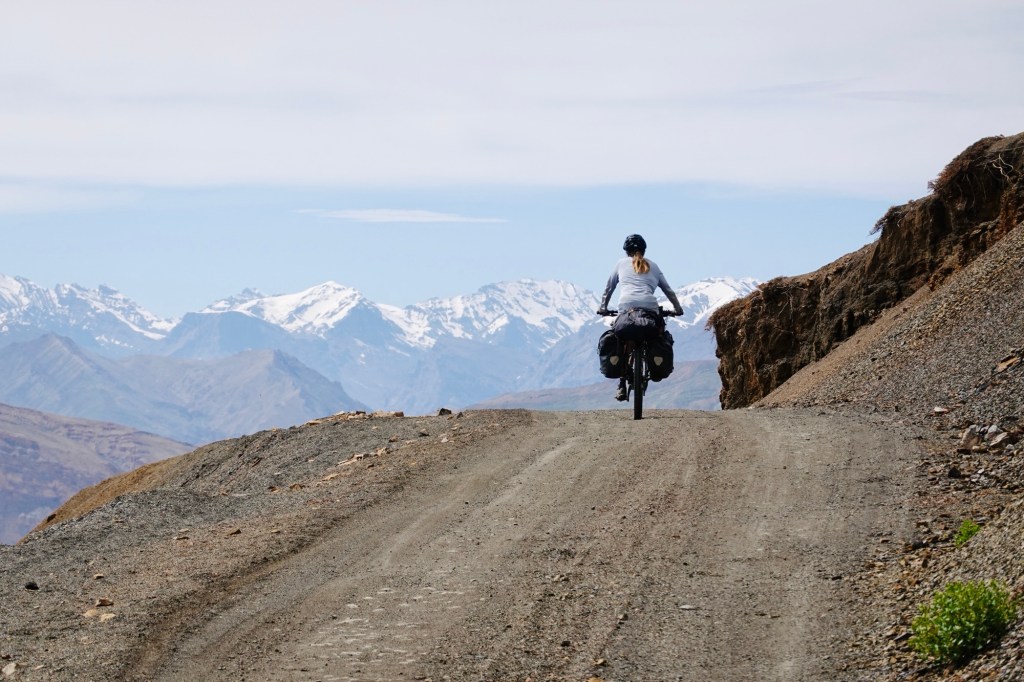
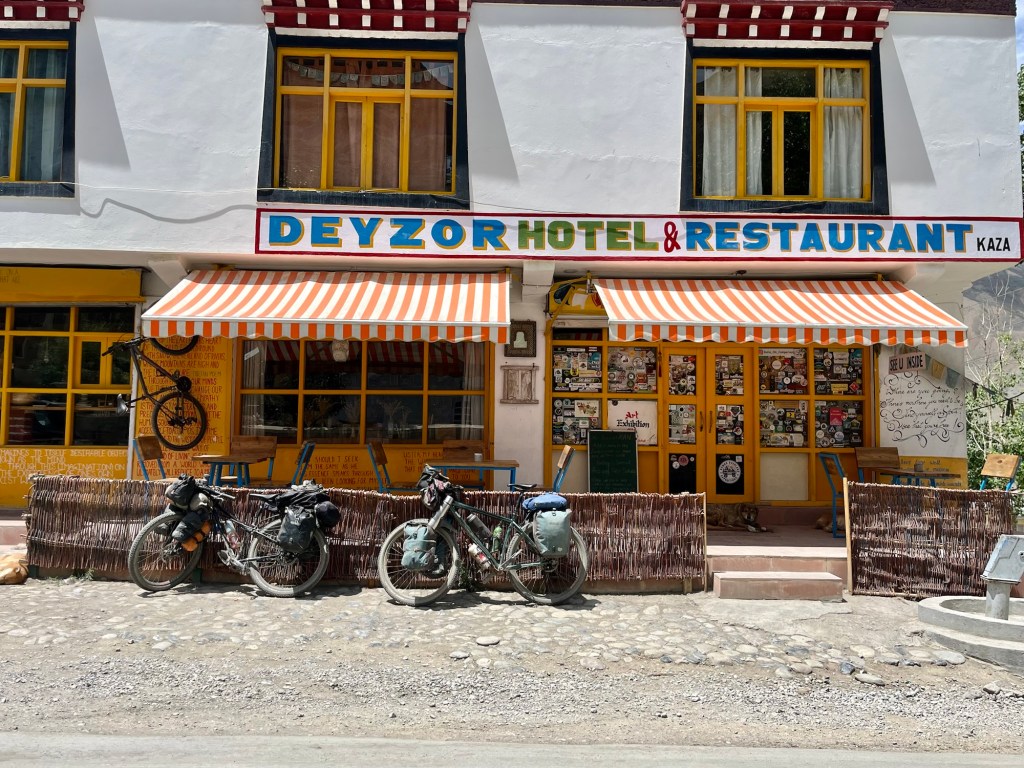
In Kaza, we get to visit the hotel of a passionate cyclist who has explored many fascinating places, particularly in Africa. His spirit and experiences make it captivating to listen to his stories. While he operates one of the best-visited hotels in the region and boasts a well-run restaurant that serves delicious, locally-sourced cuisine, he still endeavors to keep the genuine spirit of slow traveling alive.
In a village close by, we get to visit the fascinating project of his partner, a visionary who has dedicated her efforts to preserve sustainable architecture. A small group of dedicated individuals is working tirelessly to maintain the local, well thought-through natural architecture, which seamlessly blends with the surrounding environment. They engage in various activities, from using locally sourced materials to implementing traditional building techniques, ensuring that their work not only respects but also celebrates the natural landscape.
Some local tourists stop us, asking for directions, shops, and guesthouses. A few even ponder where this “Spiti Valley” is? Well, it was kind of hard to explain that we are currently in the middle of this Spiti Valley.
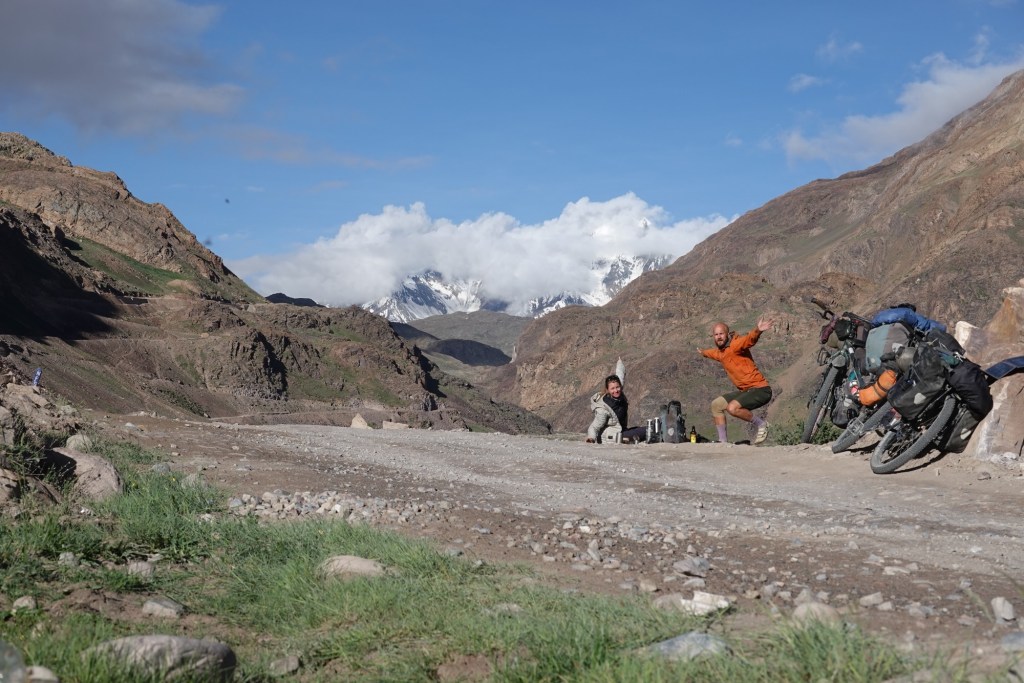
One minor food poising later, we head to the pass and are on our way to Zanskar via the lush and green Lahaul valley. As we traverse the winding roads, we are greeted by the majestic peaks of the Himalayas towering above us, their snow-capped summits glistening under the clear blue sky.
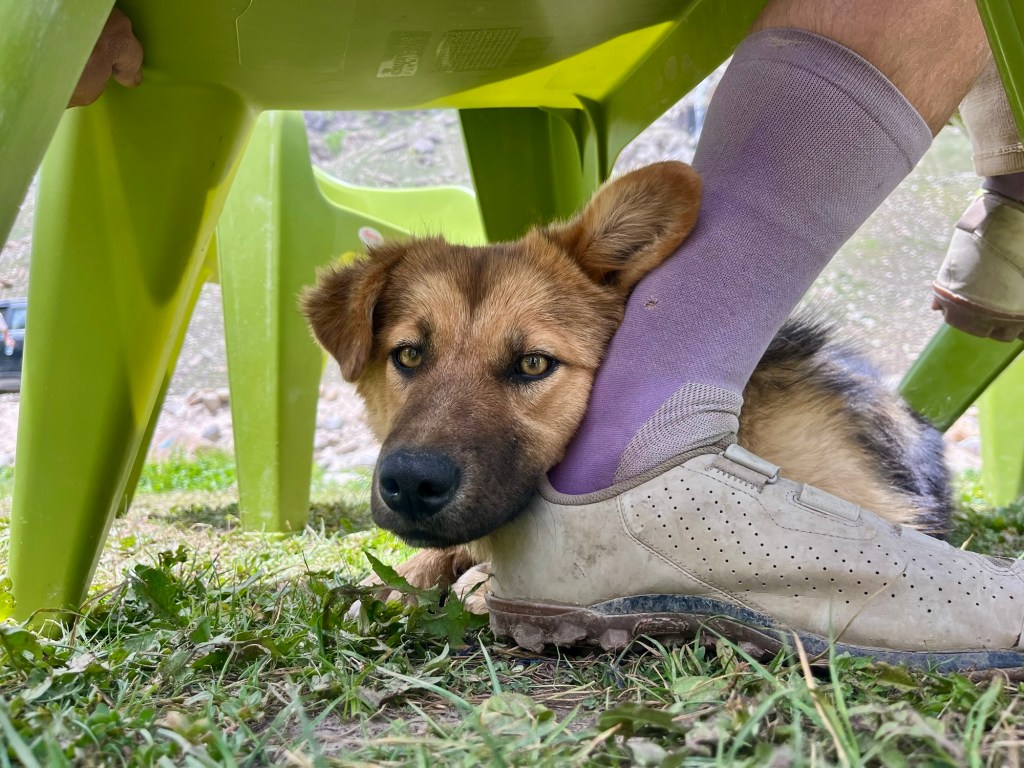
Entering Zanskar
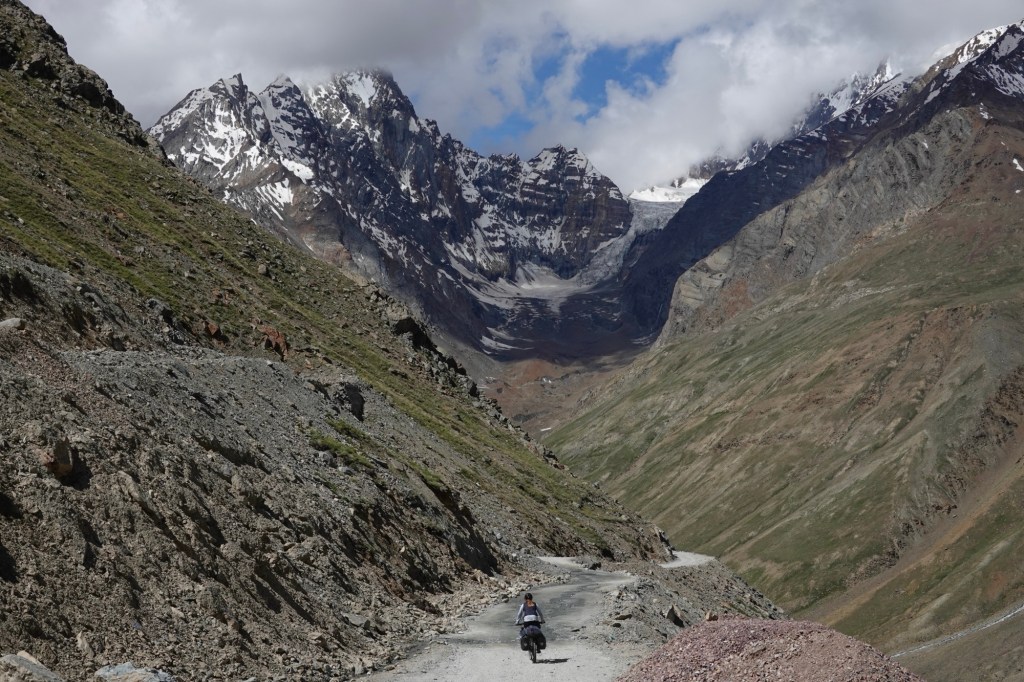
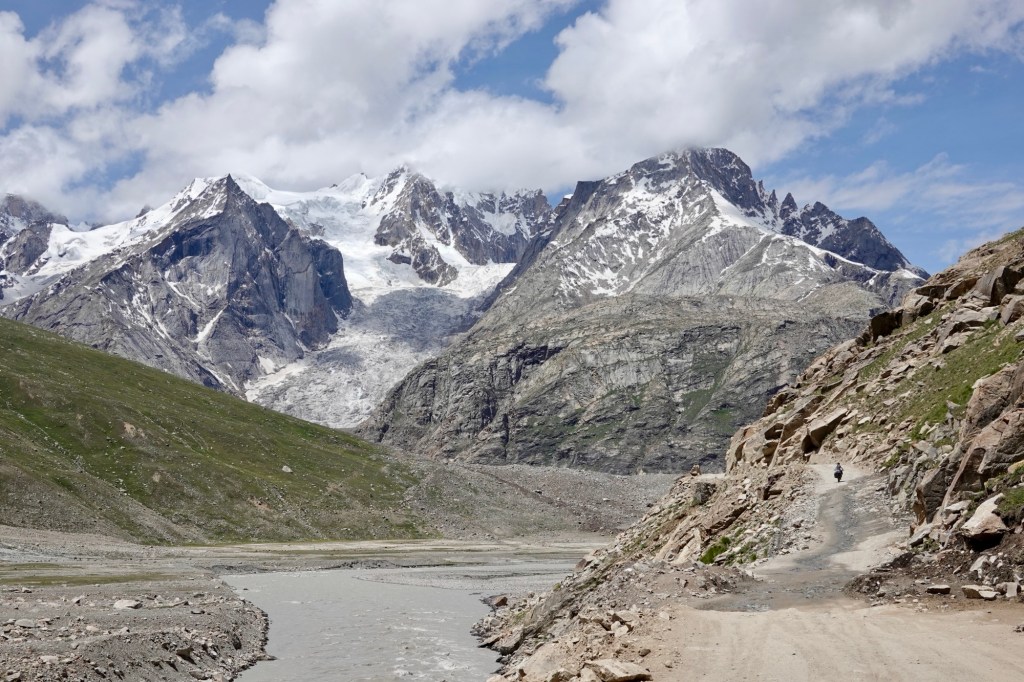
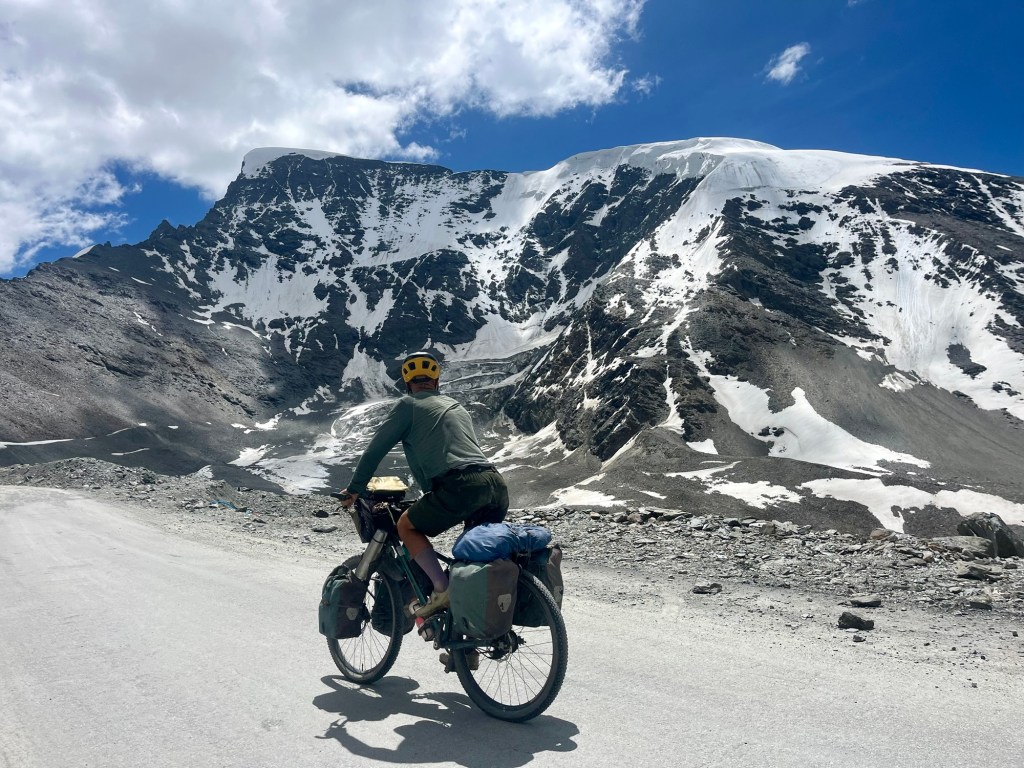
The mystery of Zanskar, with its frozen rivers and remote villages, crumbles with every stone that is blasted for the new roads being constructed to improve access to this untouched paradise. On the way to Shinku La, we find ourselves overtaken by many cars, and we join the throng of tourists whose eyes are glued to their cellphones eagerly capturing the moment as they pose next to the towering 5054 meter sign marking the pass. Oxygen bottles decorate the snowy slopes while on the other side road works are ongoing.
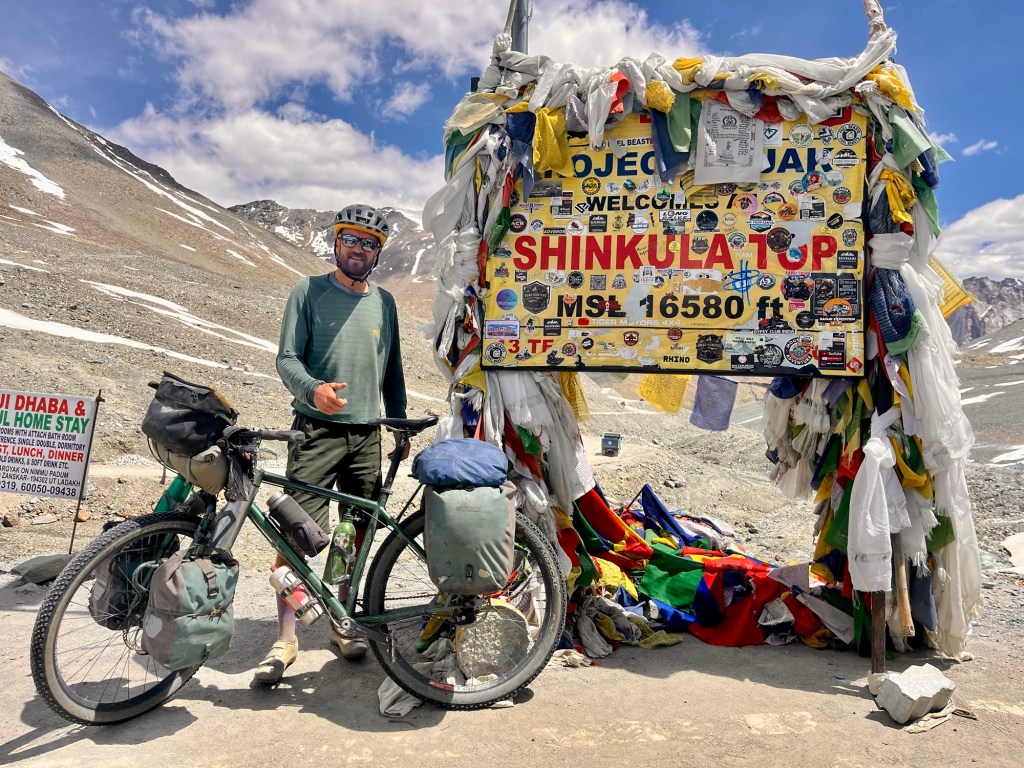
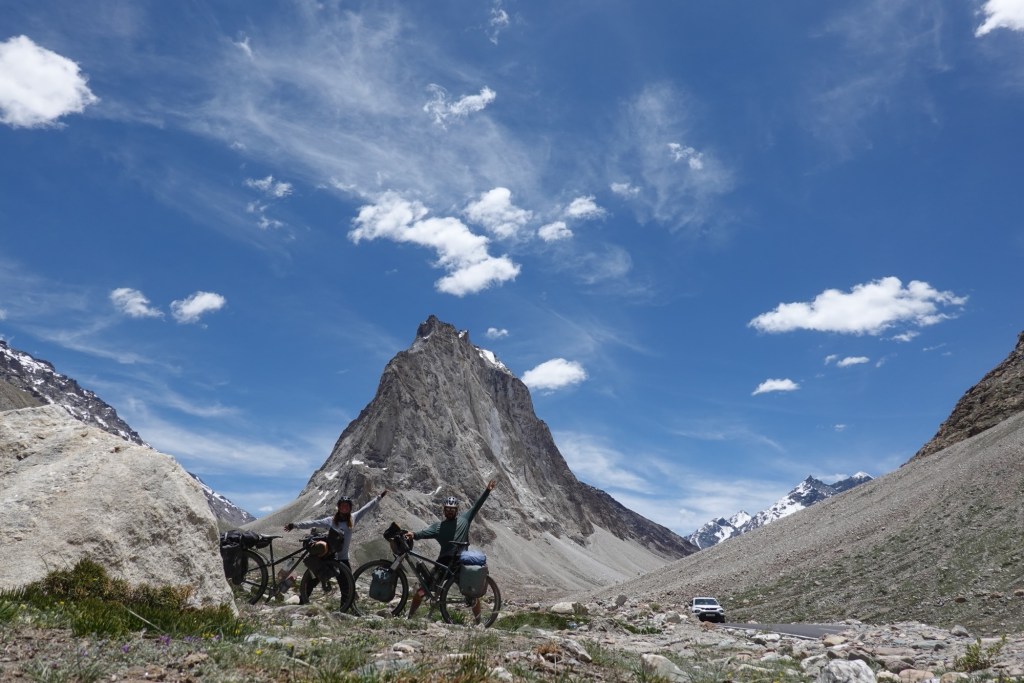
The excitement on the high pass is damped, yet on the way down, we become blissfully alone as we pass by the holy, very impressive Gonbo Rangjon mountain. The road here is fairly new and partially still under construction.
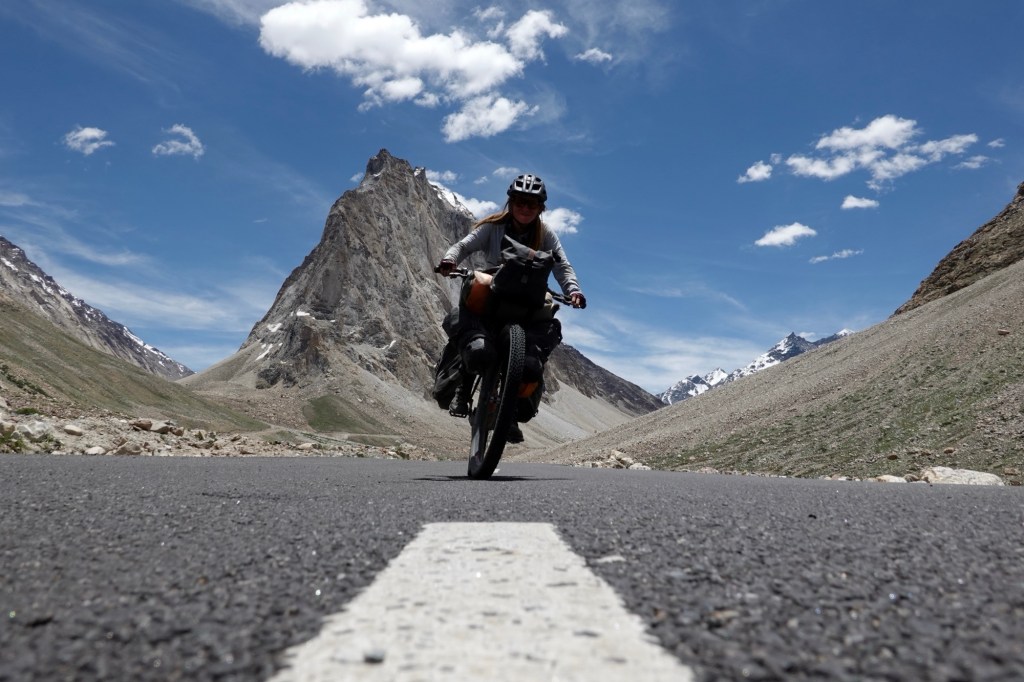
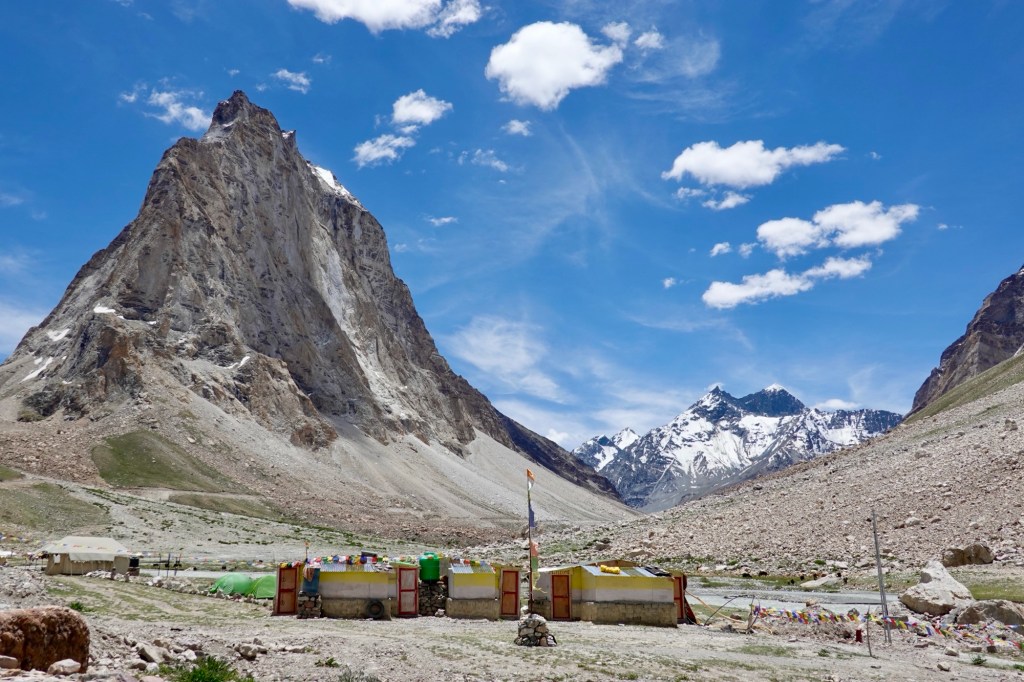
Hiking guides who formerly led the multi-day excursion through Zanskar now own teahouses. As they reminisce about the adventure by foot they embarked only a few year ago. Now they take other opportunities with increasing tourist influx.
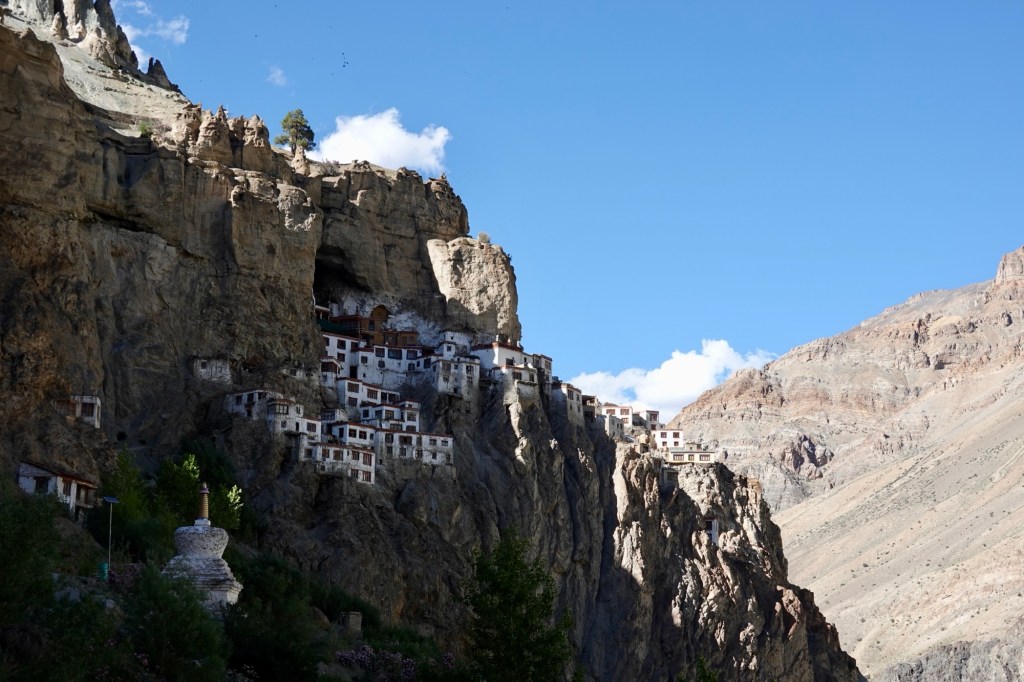
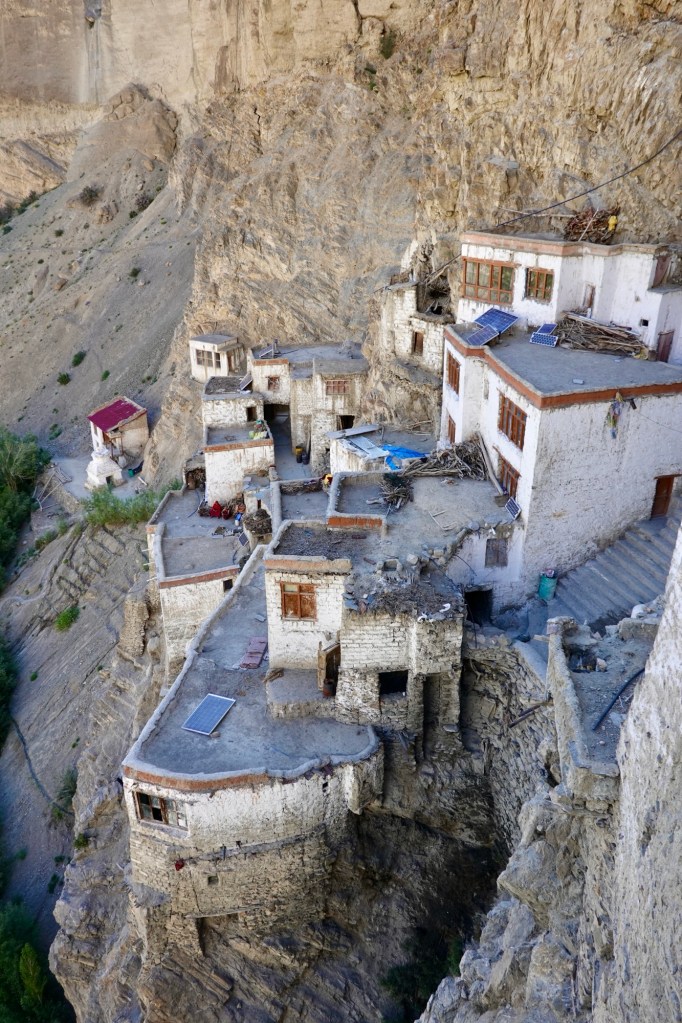
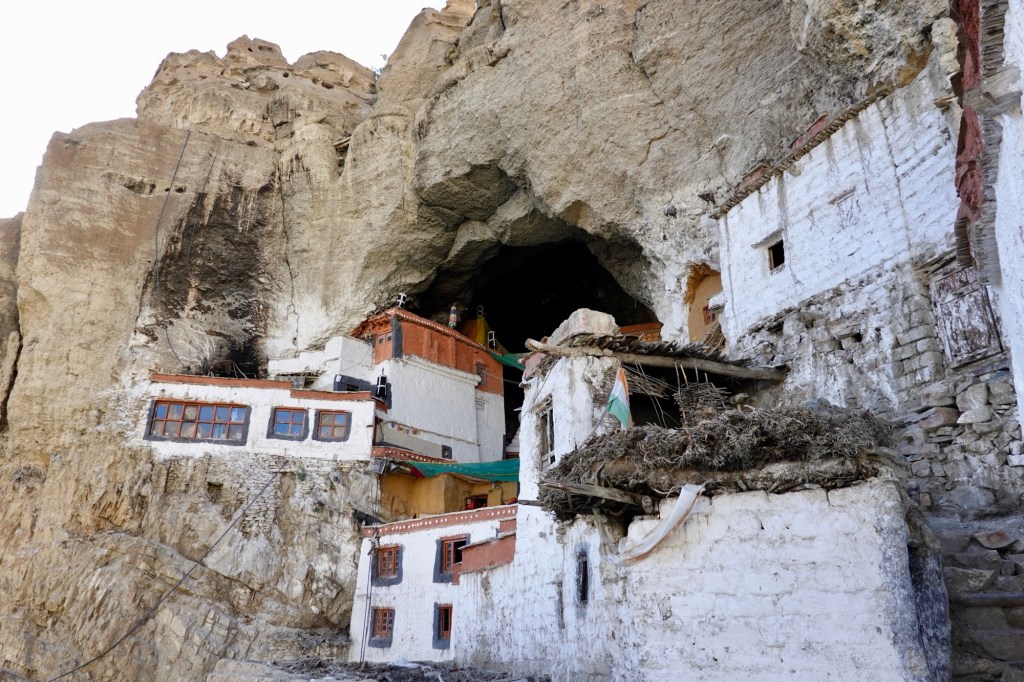
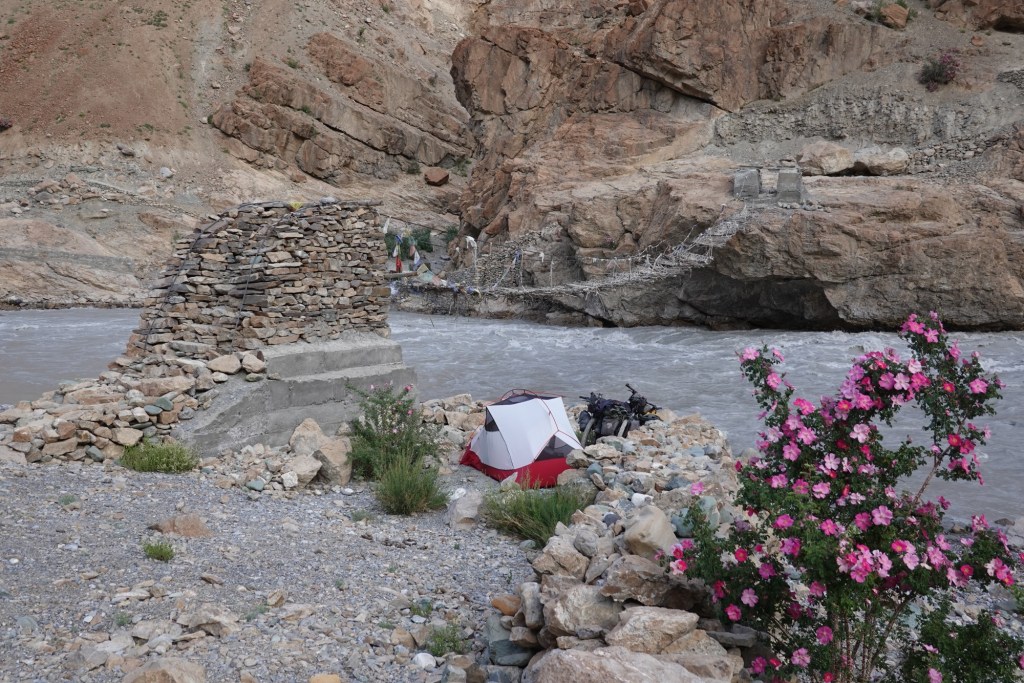
In the evening, we visit the Phuktal monastery, built around an ancient meditation cave that has stood for centuries. It is believed that the cave was used 2,550 years ago as a mediation retreat. The gompa was set up in the 15th century and serves the Gelug school of Buddhism. Just few years ago it took several days of walking to get there, now we just pass by on the newly built road.
Our journey takes us to Padum, a crucial junction where roads diverge towards the east and west, connecting to the regions of Kashmir and Jammu.
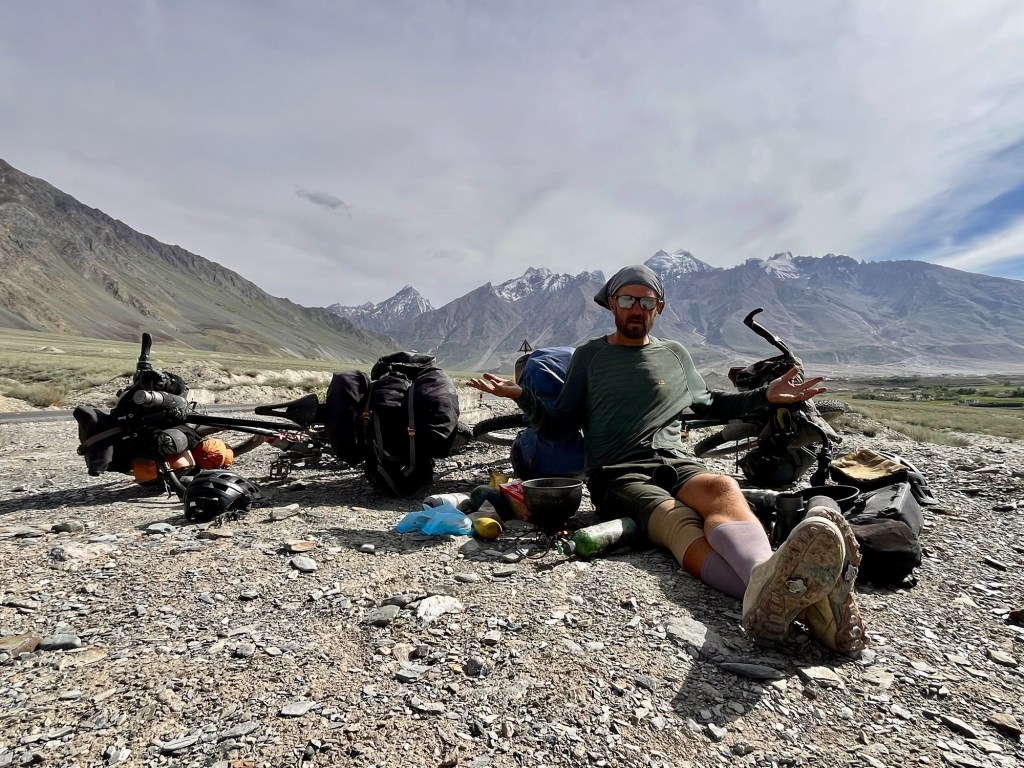
The view towards Padum is spectacular, with the mountains rising in the background like silent guardians, their snow-capped peaks glistening in the fading sunlight. From here, the road becomes more thrilling as it winds its way through newly constructed stretches, transforming from paved roads to gravel pathways alongside the rushing river. Massive amounts of rock are blasted to carve out this route. As we travel here, we can’t help but reflect on the past mysteries of traversing these mountains, a route once taken by explorers and traders who navigated the frozen rivers and high mountain passes.
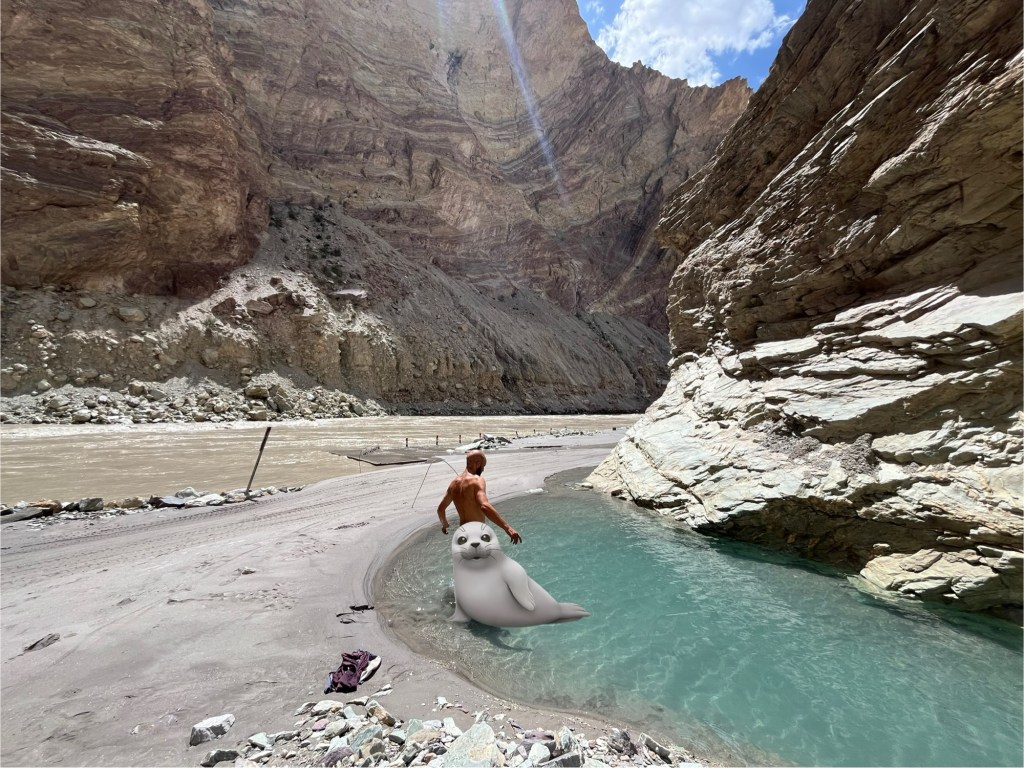
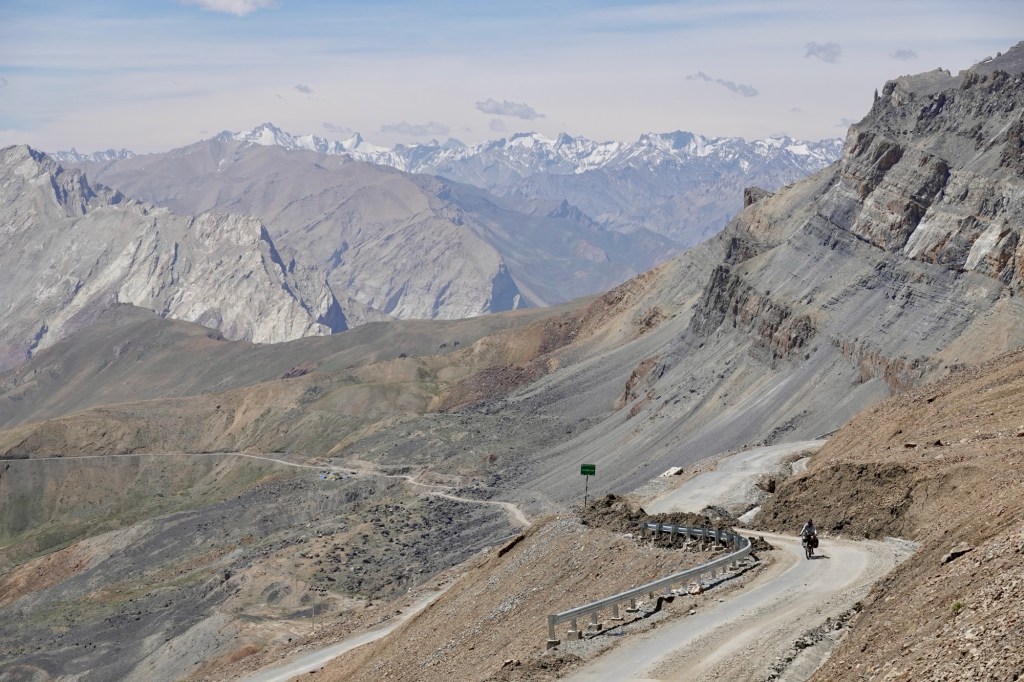
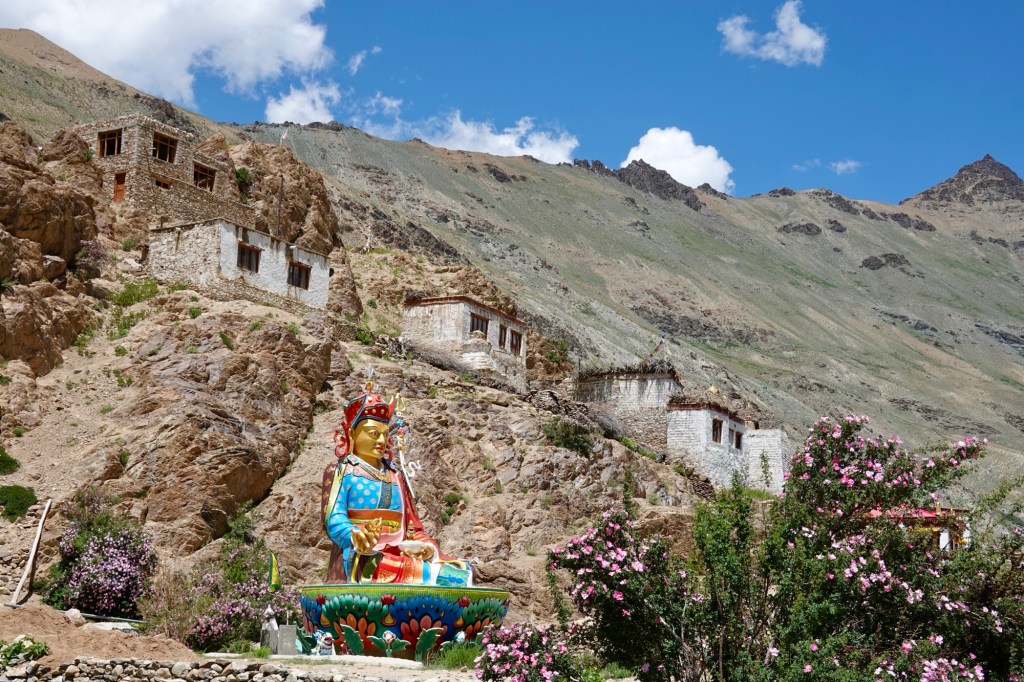
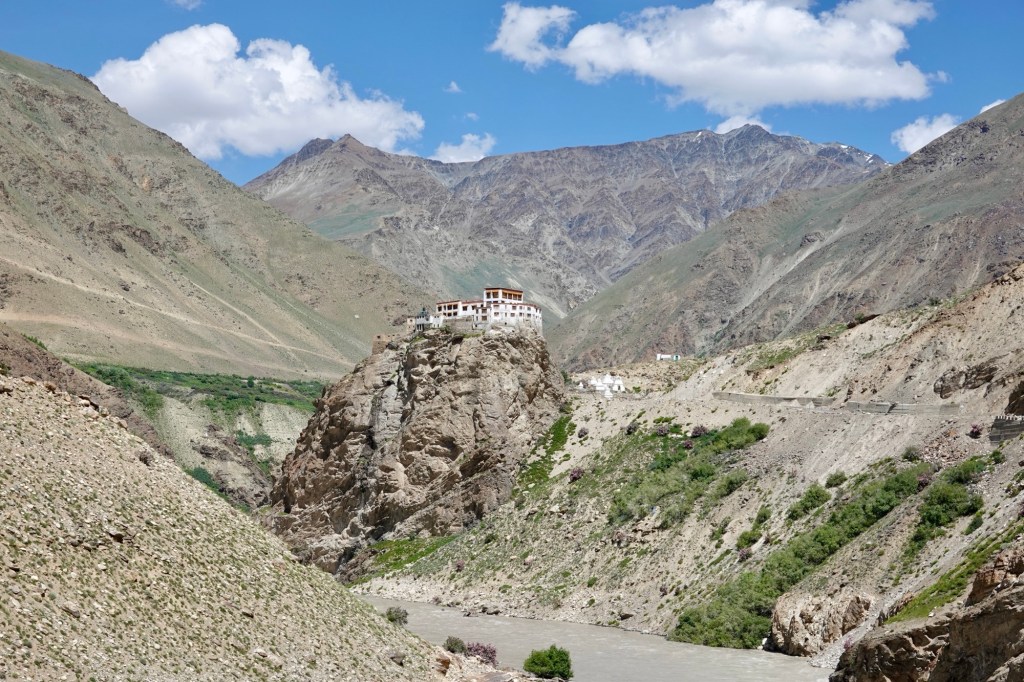
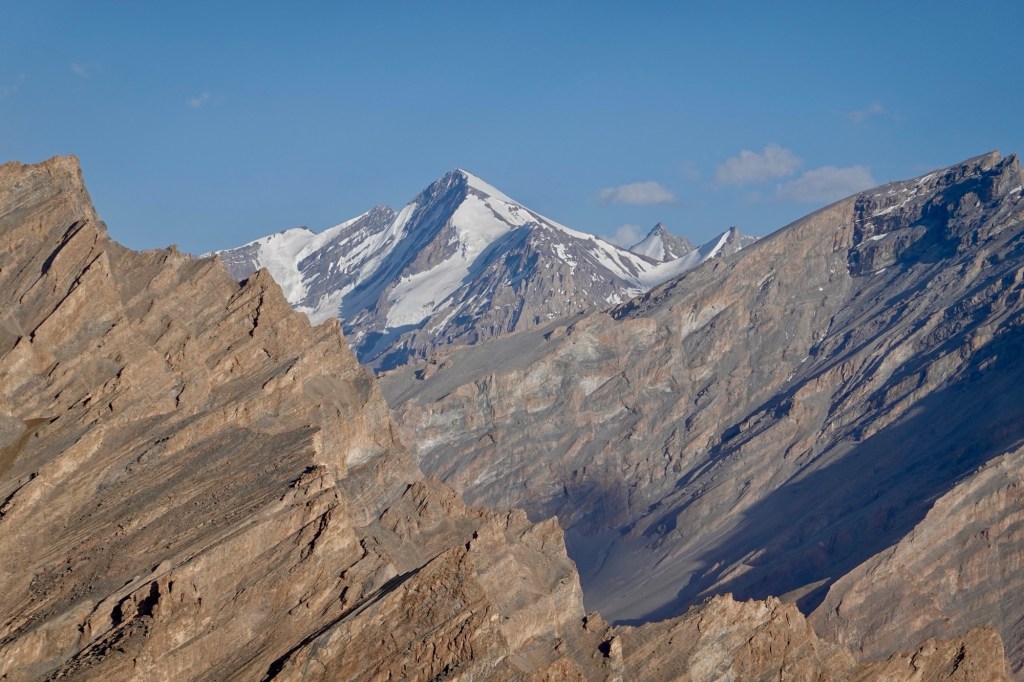
A few 5000m passes later we are one a fun downhill towards the mighty Indus river, which we met in Pakistan last year alteady. On the way to Leh we stop at Alchi monastery, with impressive murals and wooden sculptures (no pictures allowed so you’ll have to believe us)!
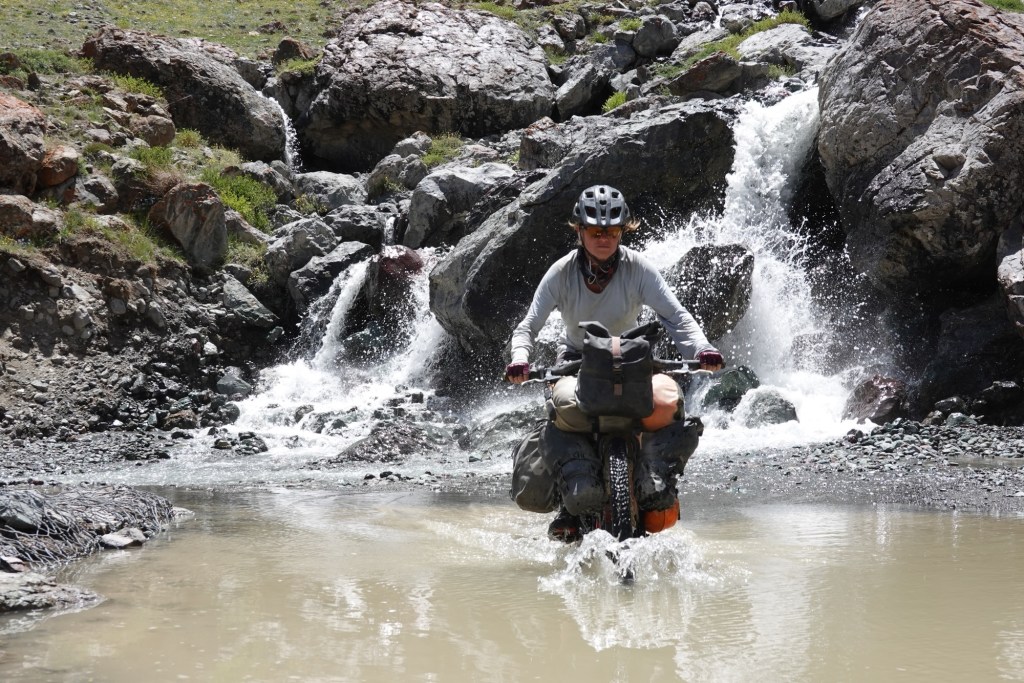
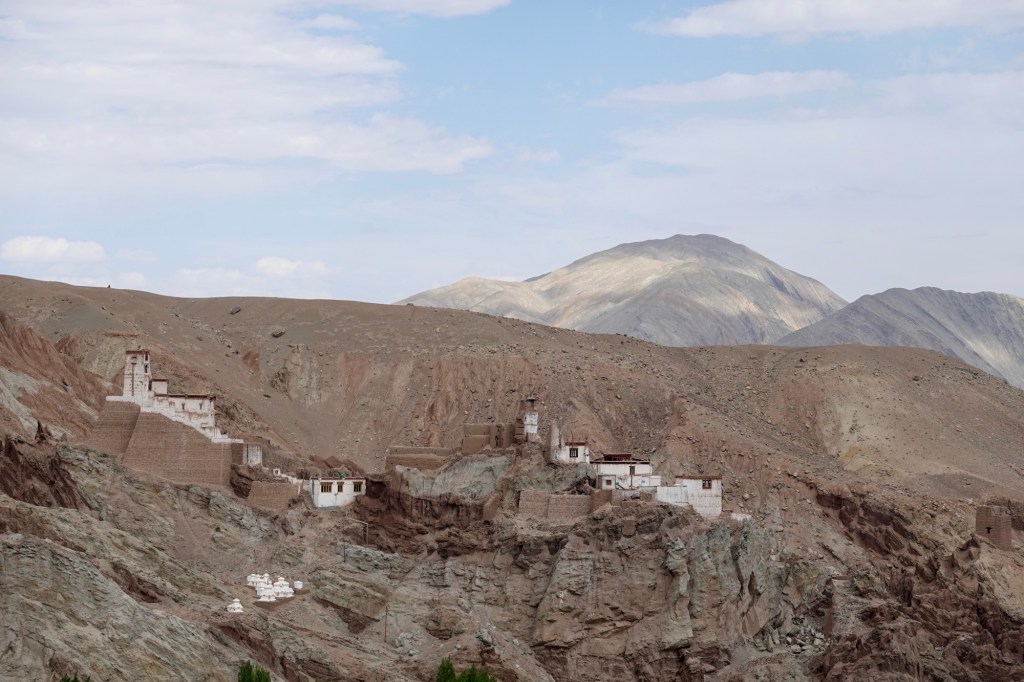
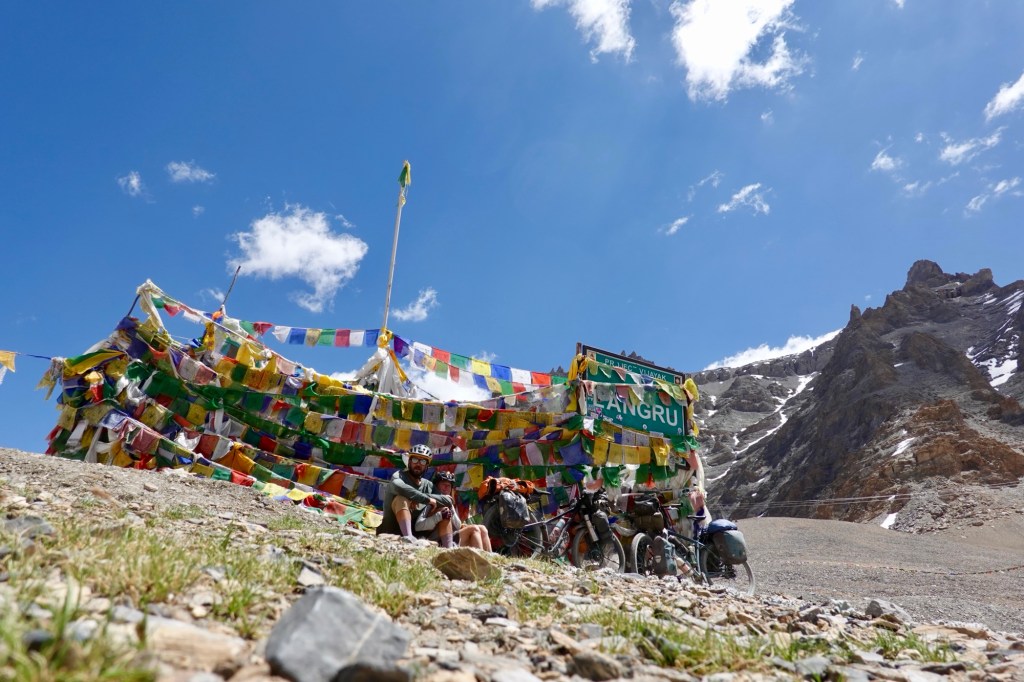
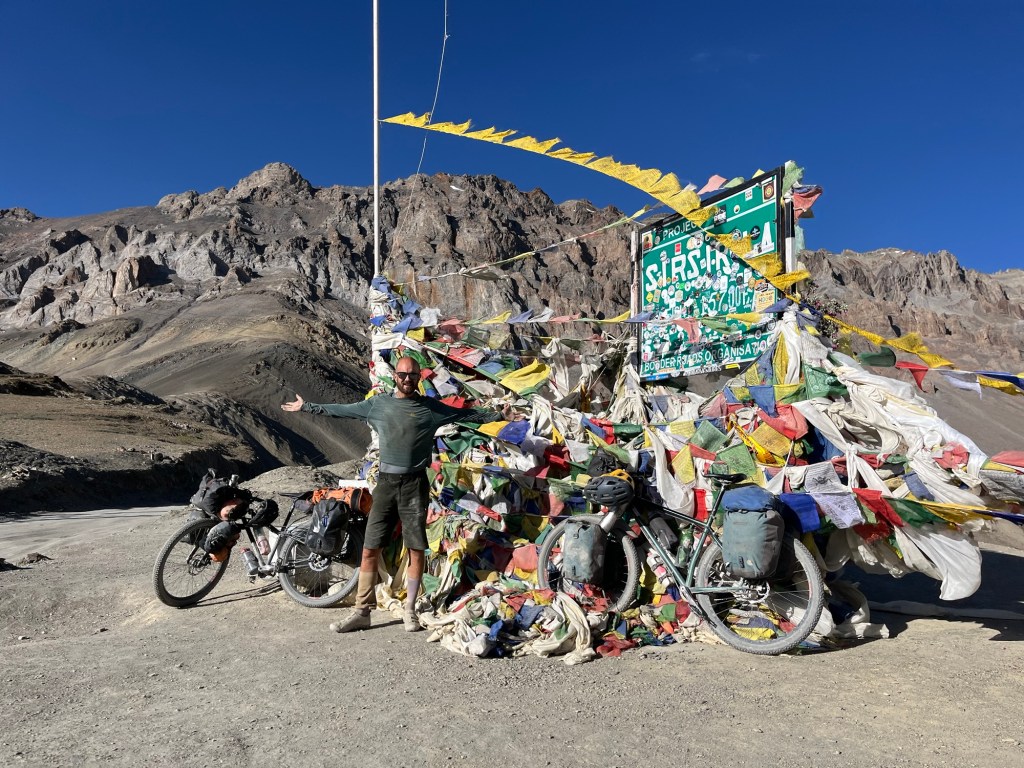
Thereafter we finally reach Leh, the center of the region and capital of Ladakh, where breathtaking sceneries and vibrant touristic infrastructure await us.
Hemis Festival
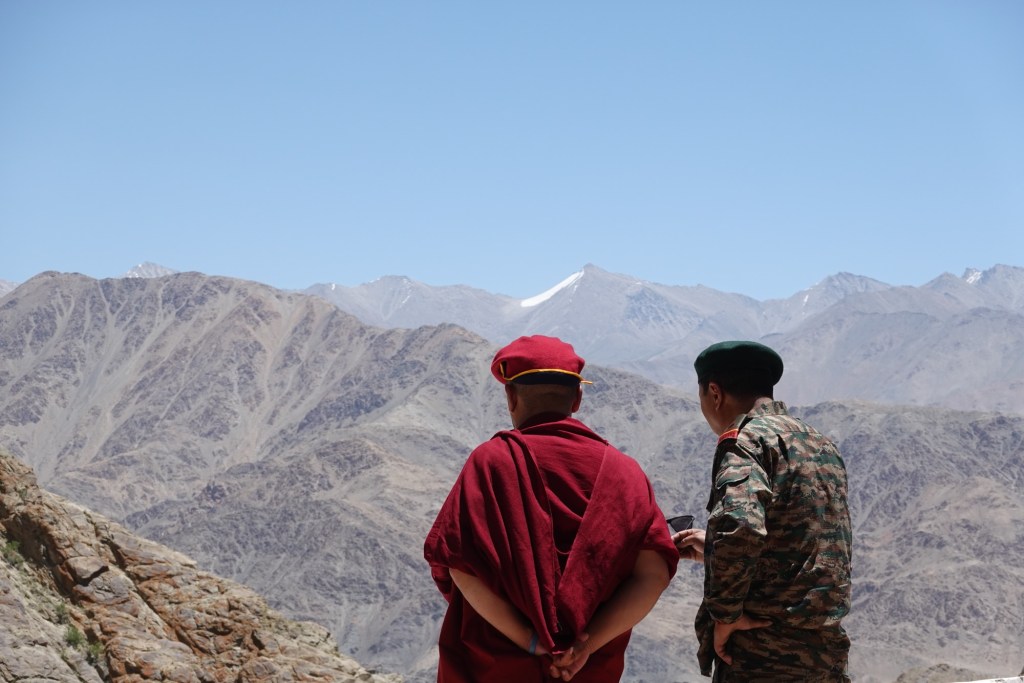
Equipped with our mountaineering gear, we are excitedly heading towards a little expedition – the cycles stay parked in Leh. Our first stop is the Hemis Monastery.
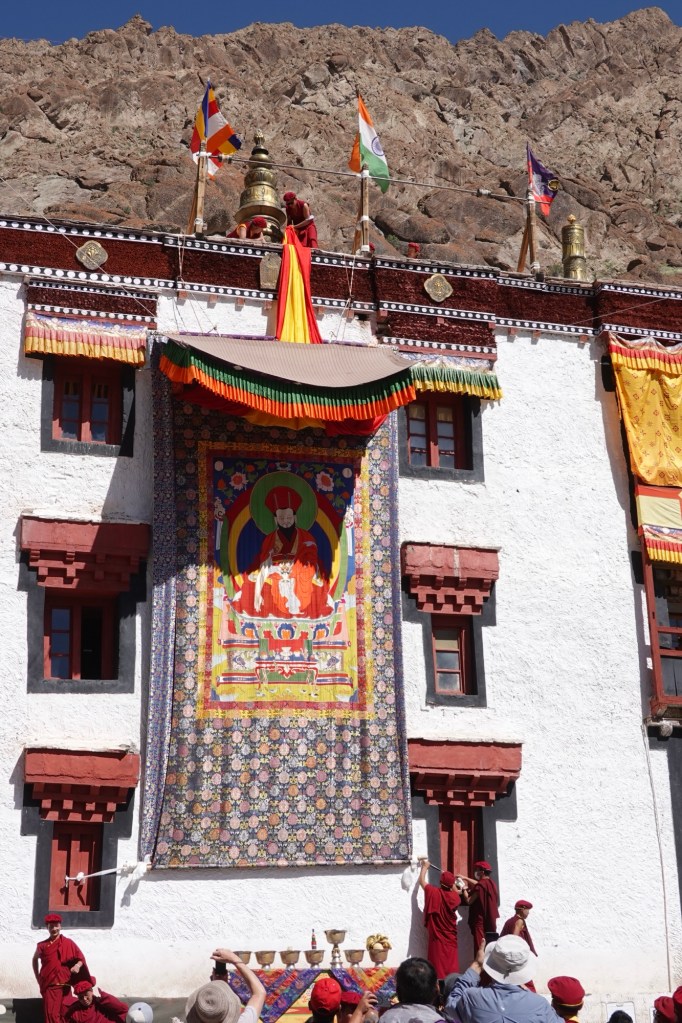
Here a traditional festival is currently taking place, attracting visitors from all around.
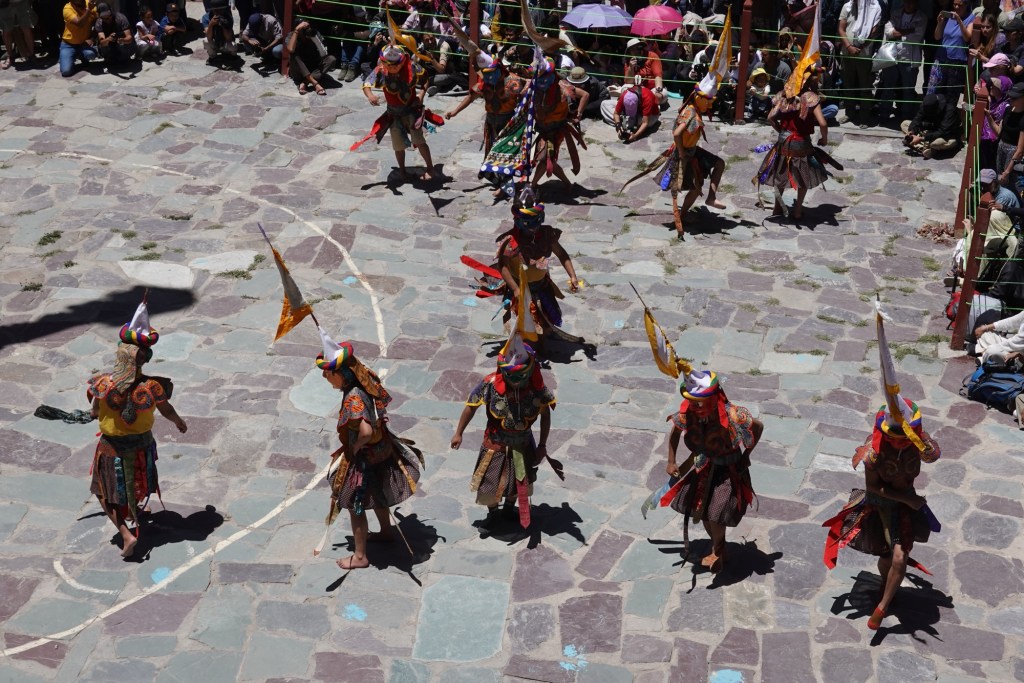
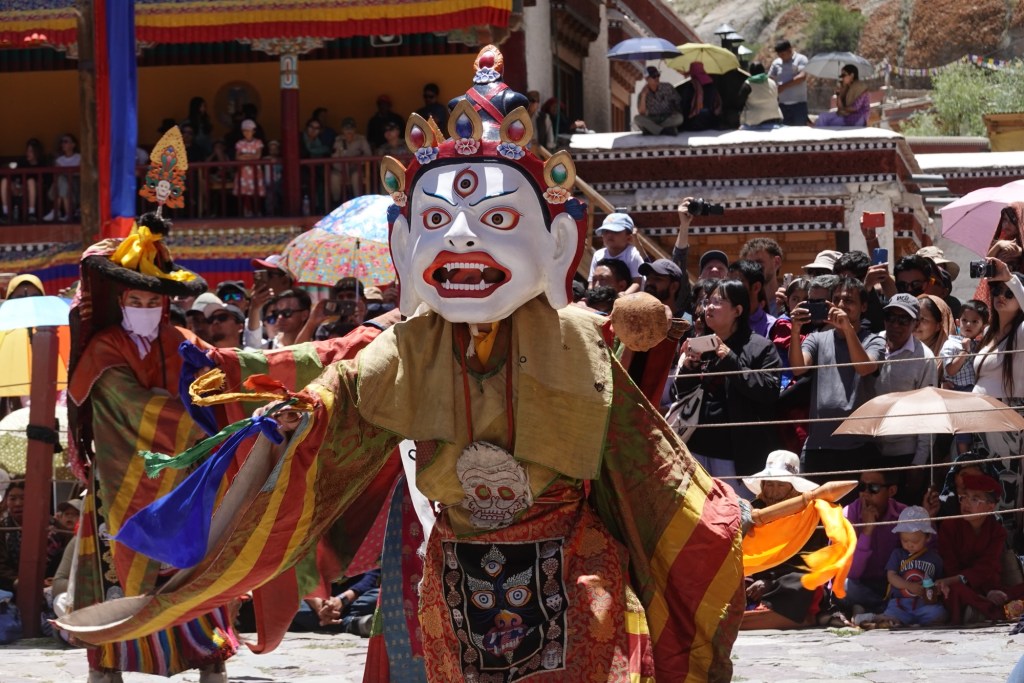
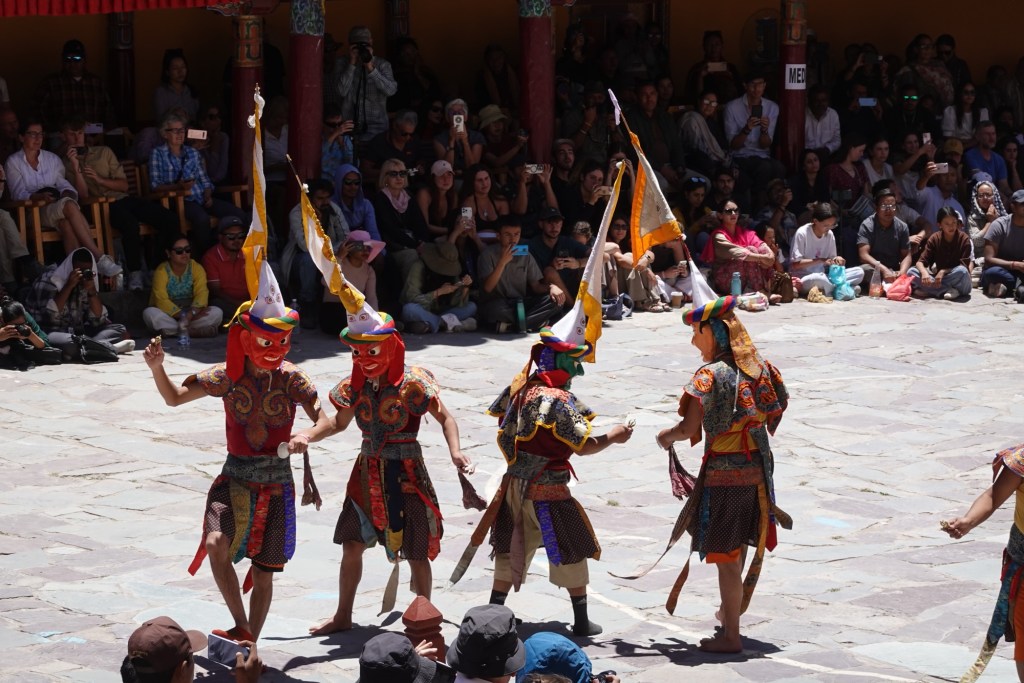
During this event, the traditional cham dance unfolds over the course of two days, beautifully depicting the deep-rooted history and captivating legends of the monastery.
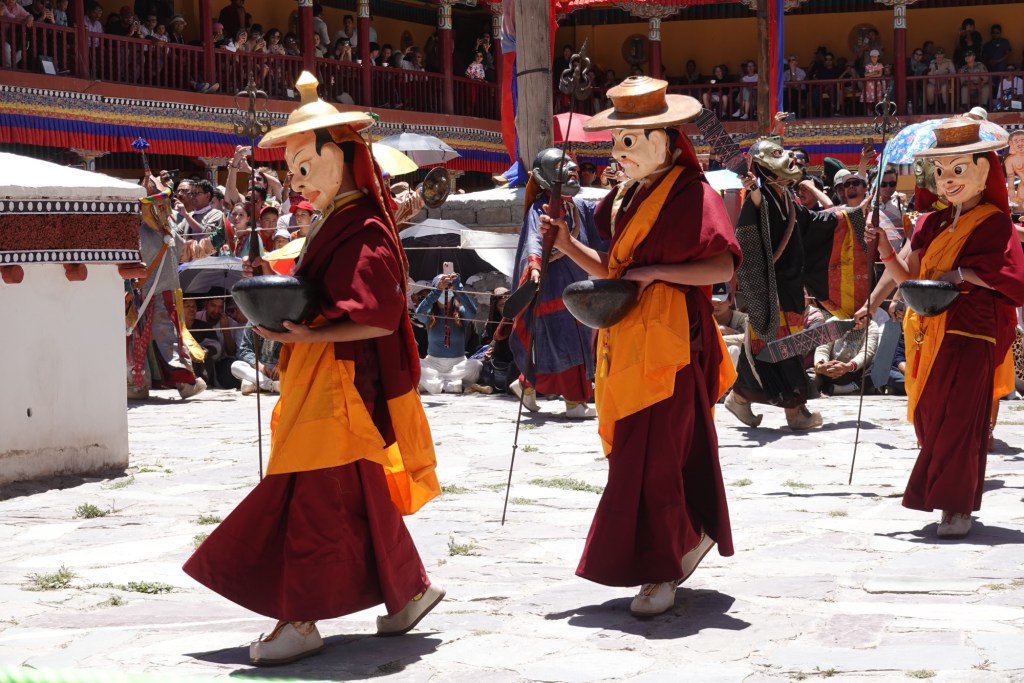
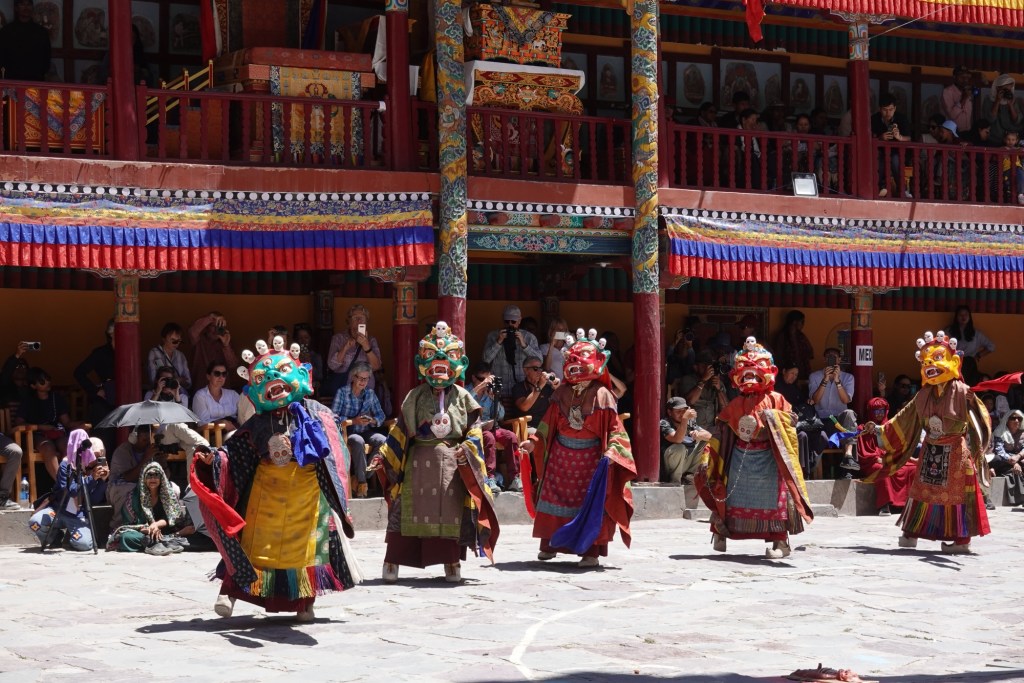
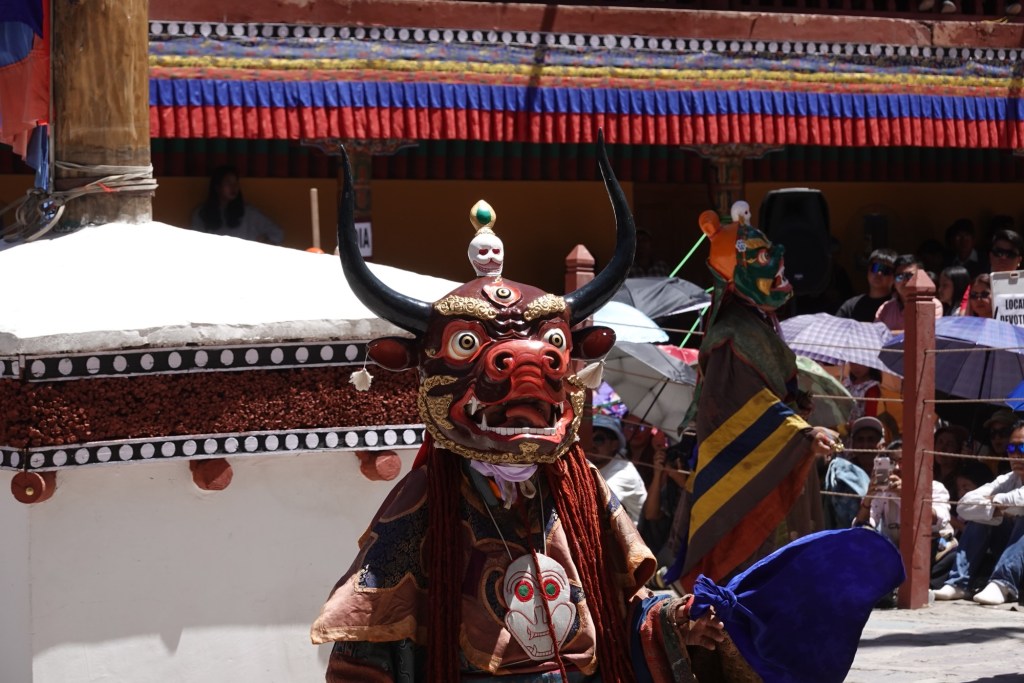
The colorful costumes, crafted masks and rhythmic music create an unqiue atmosphere under the burning Ladhaki sun.
Kang Yatze II
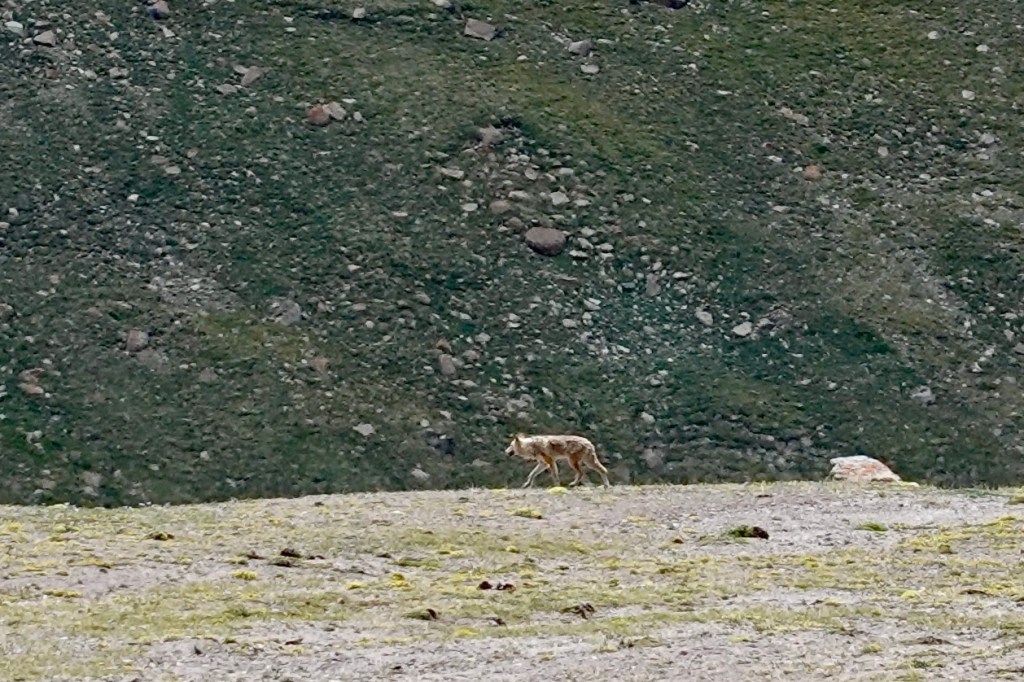
A little later, we are off to the base camp of Kang Yatze II, a well known and relatively accessible peak standing at 6200 meters. On the way we spot an animal hushing via the plains – way too big for a marmot and no deer. After zooming in with the camera it turns out we spotted a wolf on 5000 meters. Just before the basecamp! What a great moment.
We set our alarm for 3 AM the following morning; however, we soon realize that the relentless rain/ snow and ominous thunders and clouds are not the best conditions for this tour, forcing us to stay grounded.
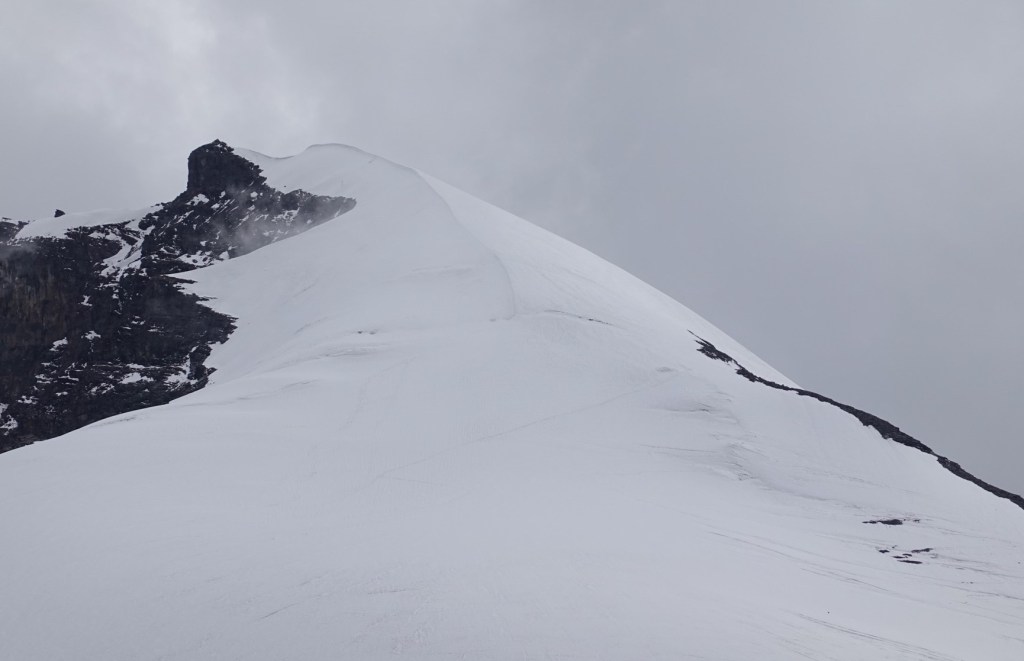
After a long day cooped up in our tent, we try our luck again the next day. After 500 altitude meters over jagged rocks, we finally reach the edge of the glacier. The route is straightforward – a steep ascent that seems to push us nearly vertical to the top. The air grows thinner as we ascend past 6000 meters, making every breath feel like a challenge. Shortly thereafter, we find ourselves at the peak.
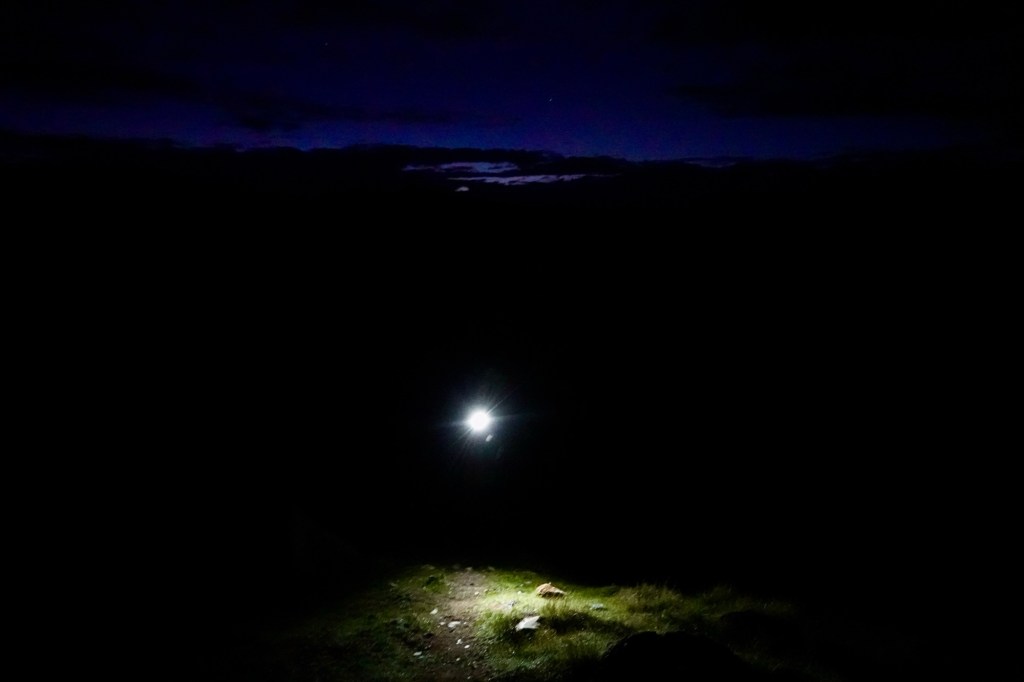
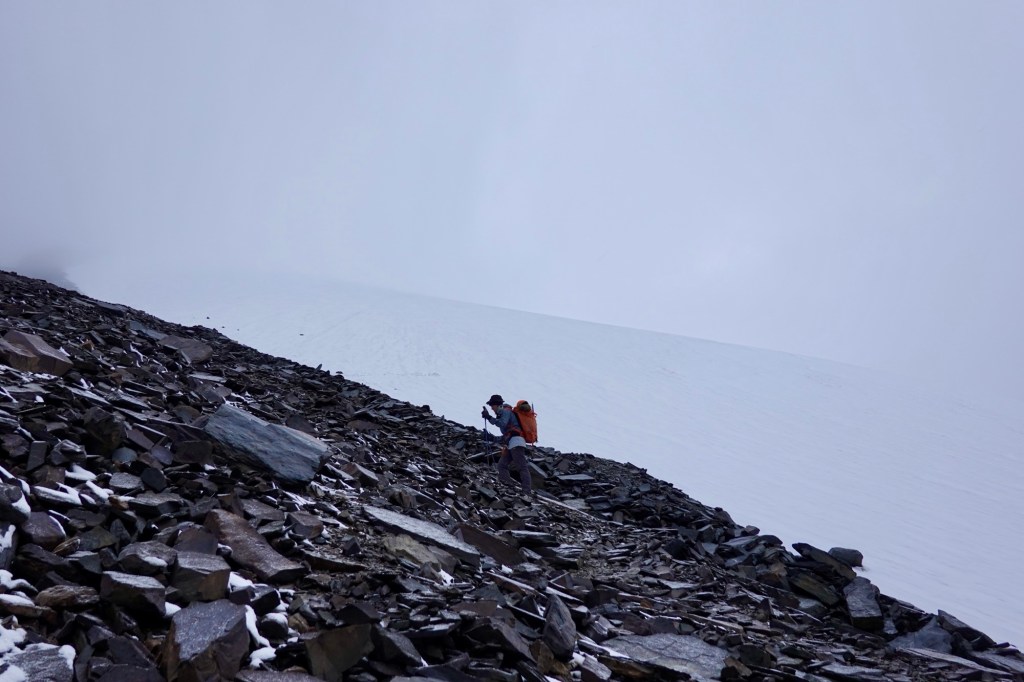
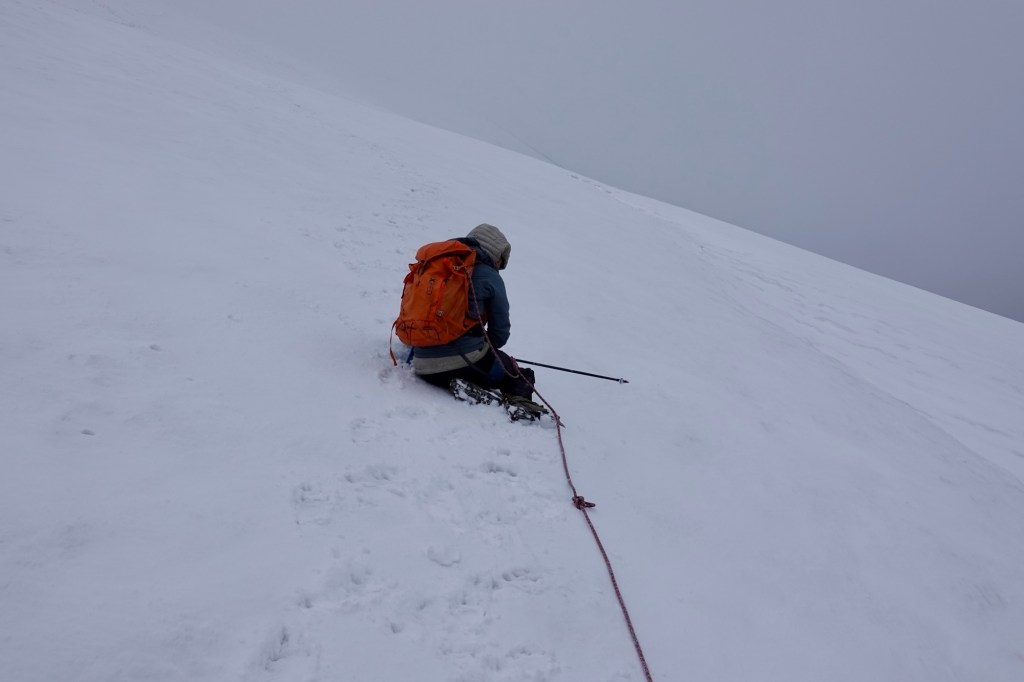
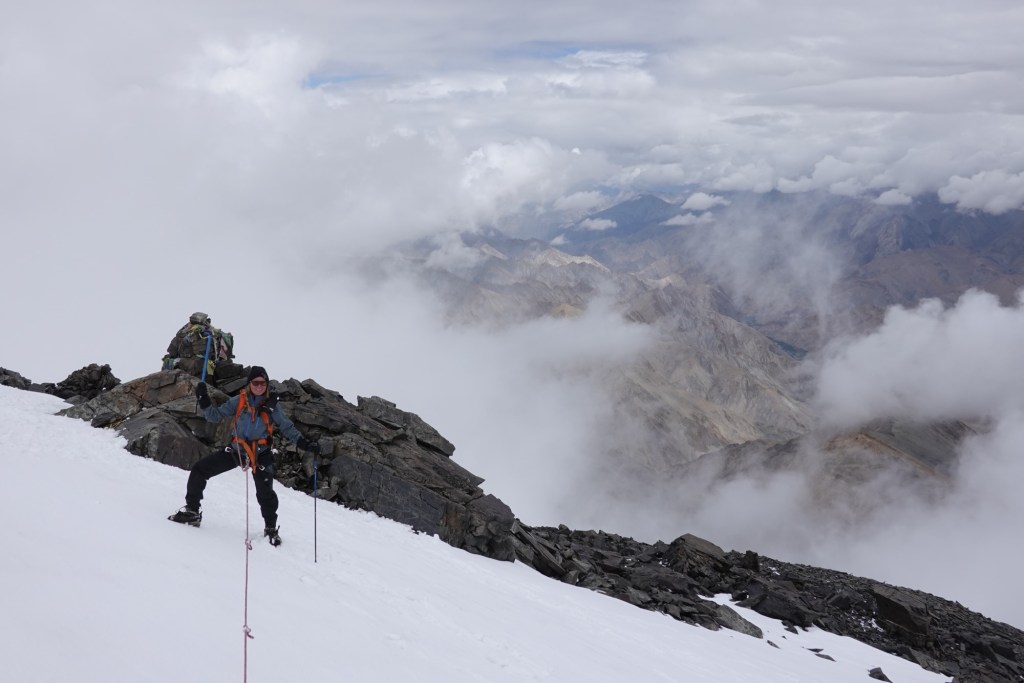
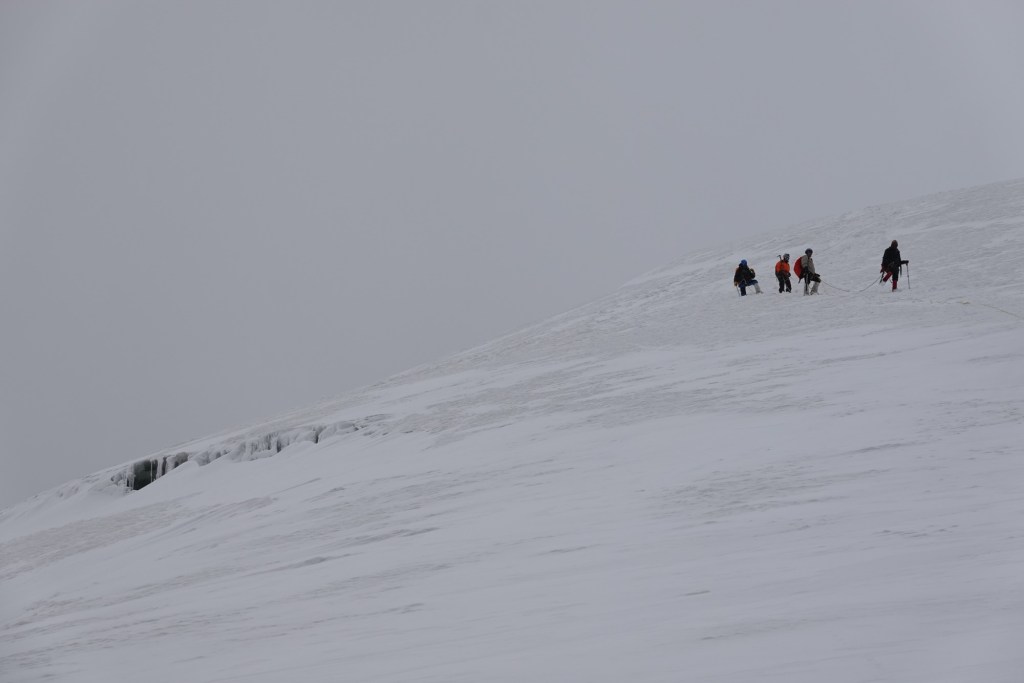

Although we are met with no breathtaking views, we are thrilled to reach the peak – second 6000m peak, this time around as a team of two. As we make our way back to camp, thunder rumbles ominously in the distance, and we fortunately return just in time, to enjoy one sip of celebration coffee before retreating back to the tent because of a hailstorm.
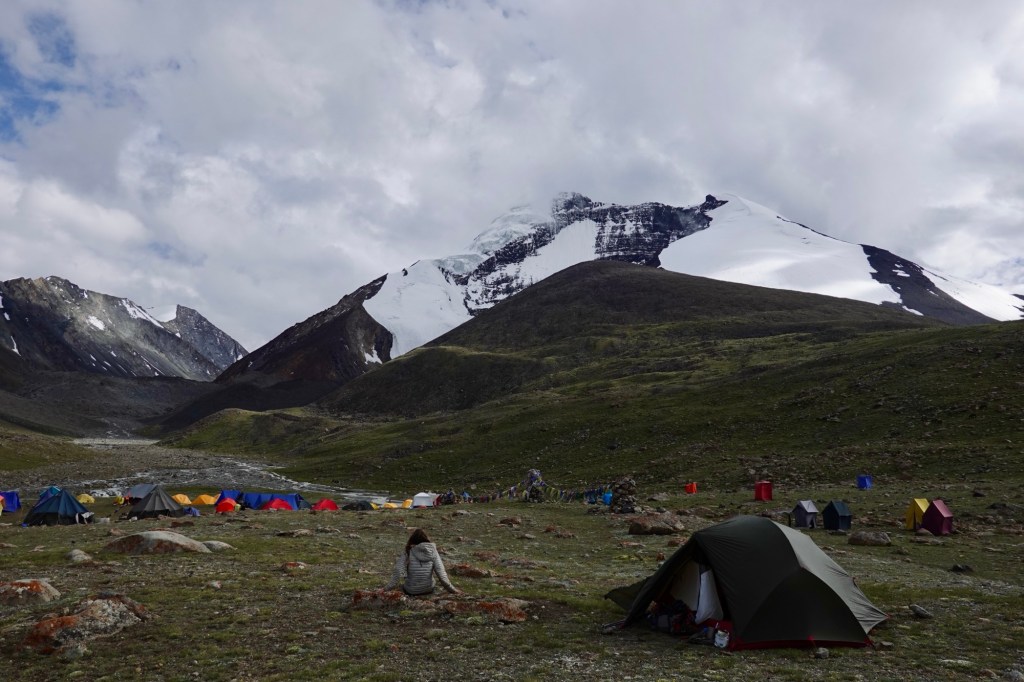
Later, we prepare to move on to the next base camp of Dzo Jongo, but the snow fall during the night dictates our decision to forget about the summit.
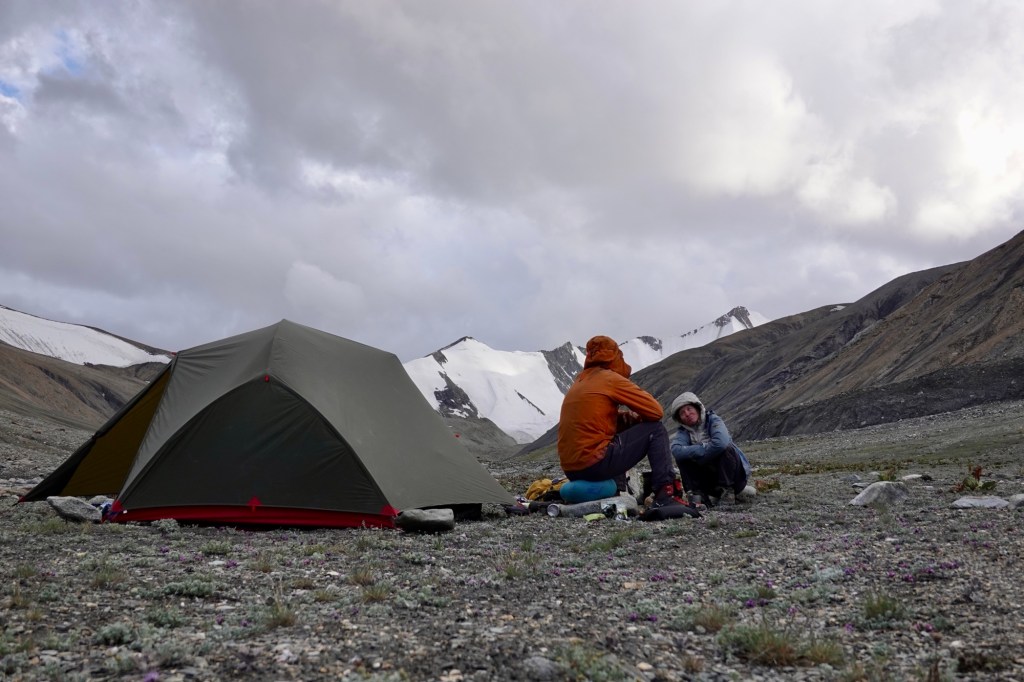
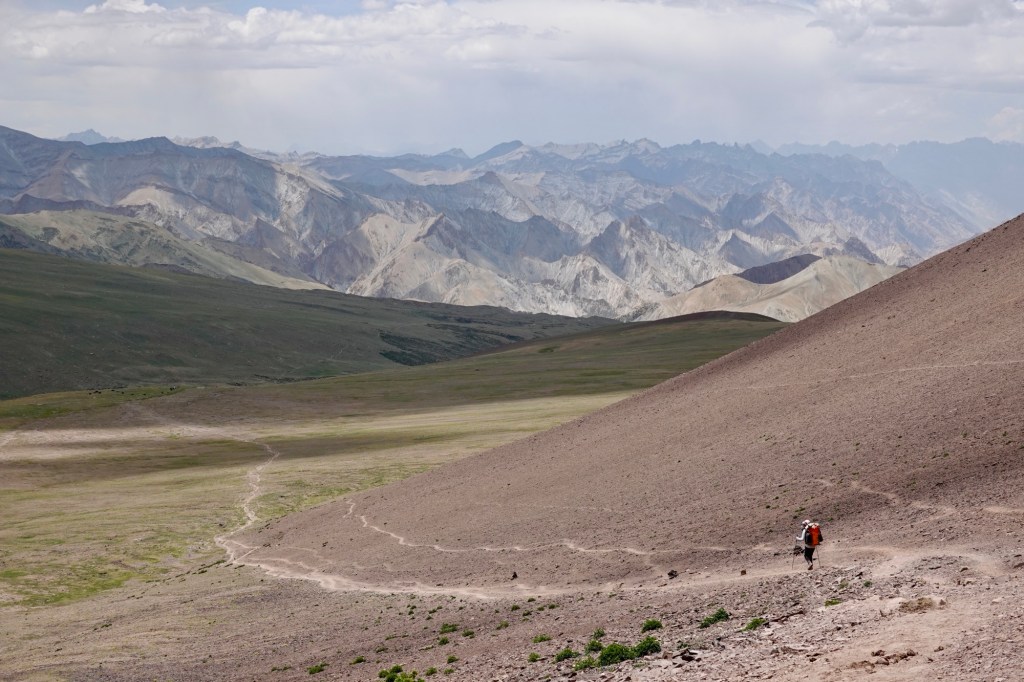
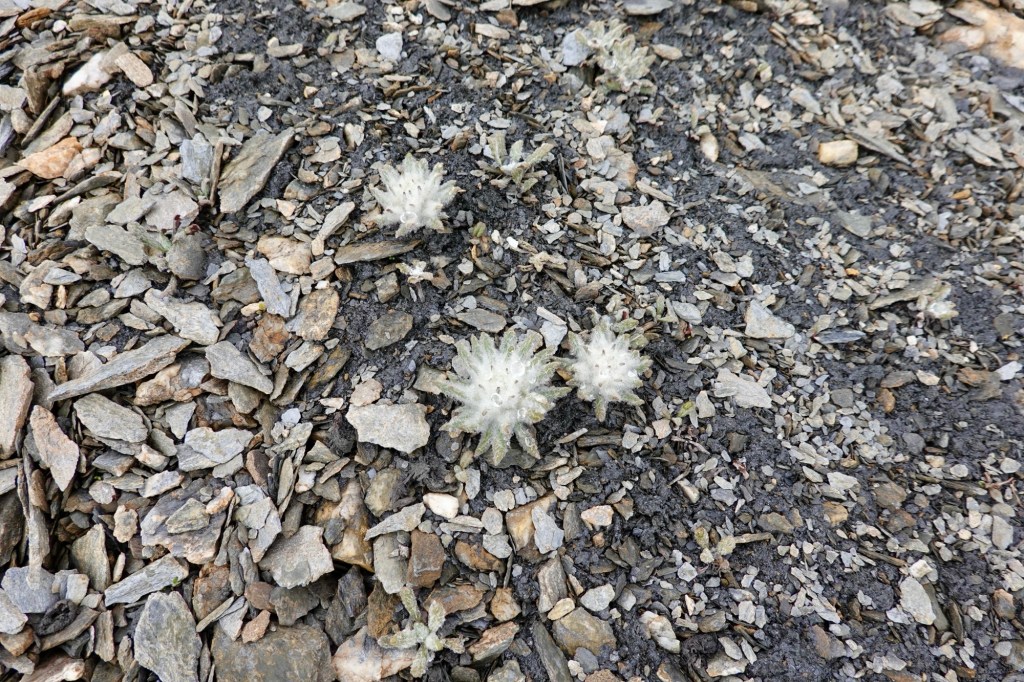
So we continue our trek via an alternative route that we have carefully chosen. Leading us through Pobe La, a little-known pass that cuts through a majestic valley filled with towering peaks over moonlike landscape before entering an alpine flower garden. The trails are not marked and vanish at some point, leaving us reliant on our GPS to navigate this unfamiliar terrain.
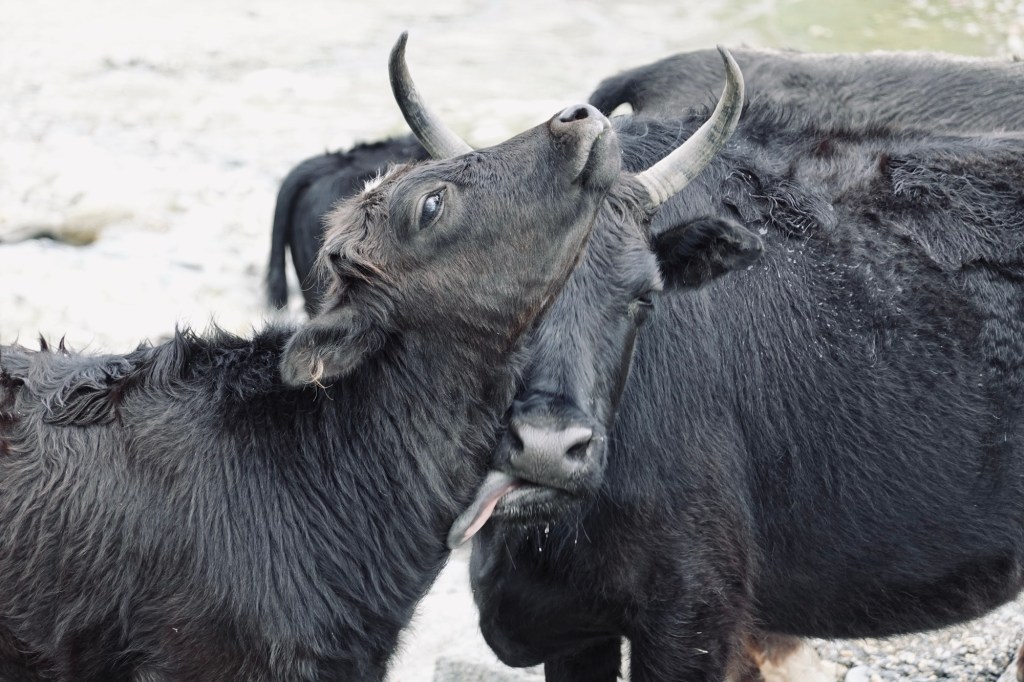
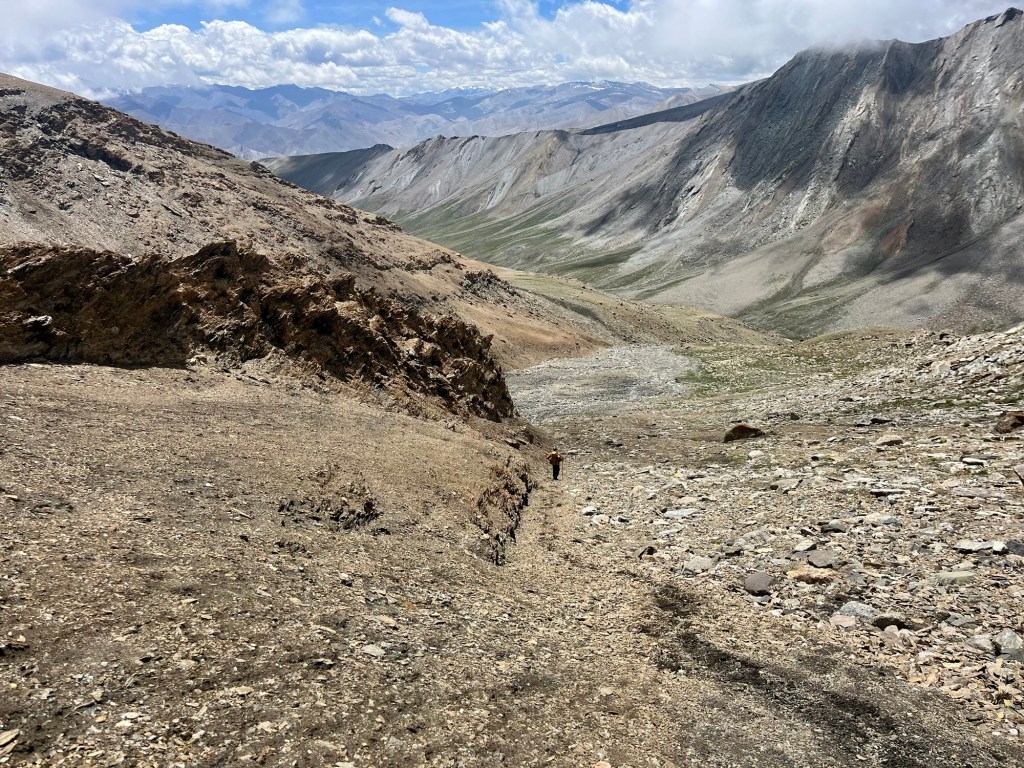
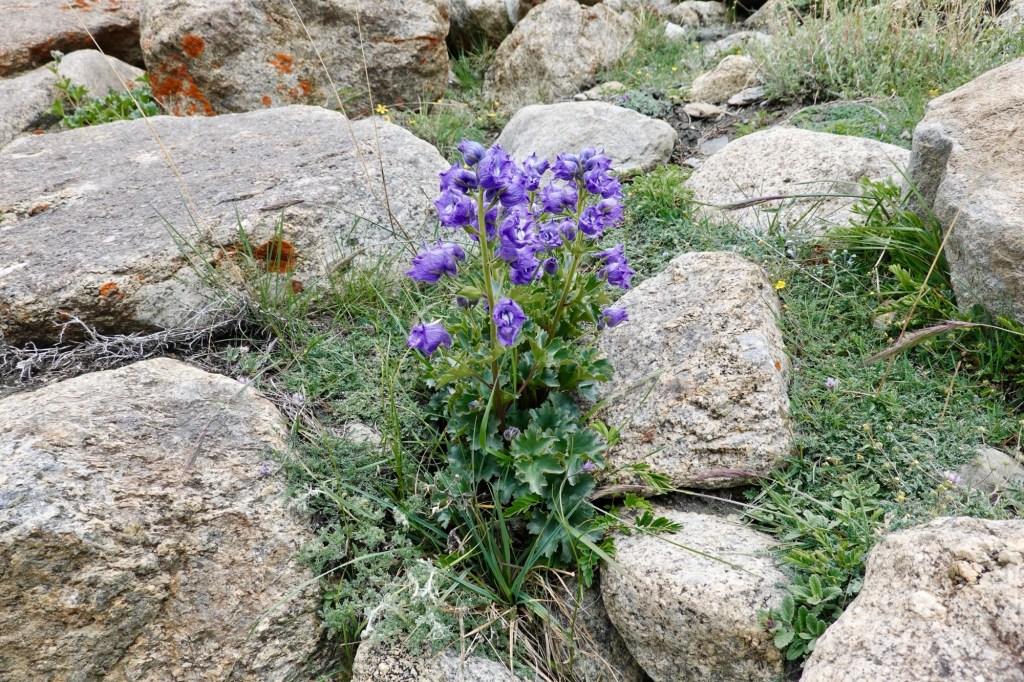

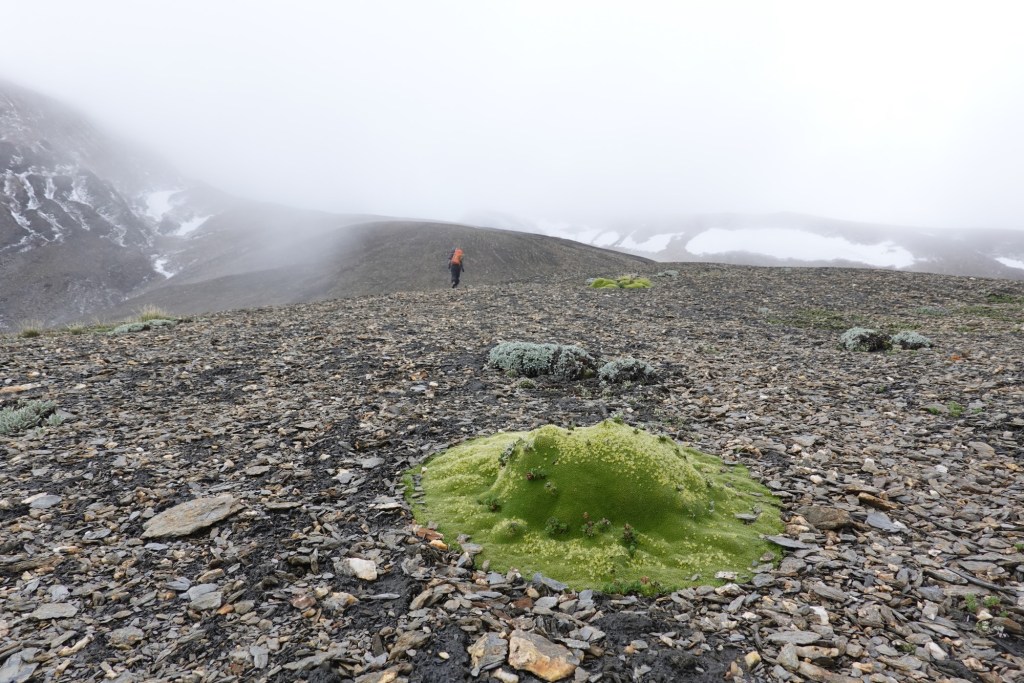
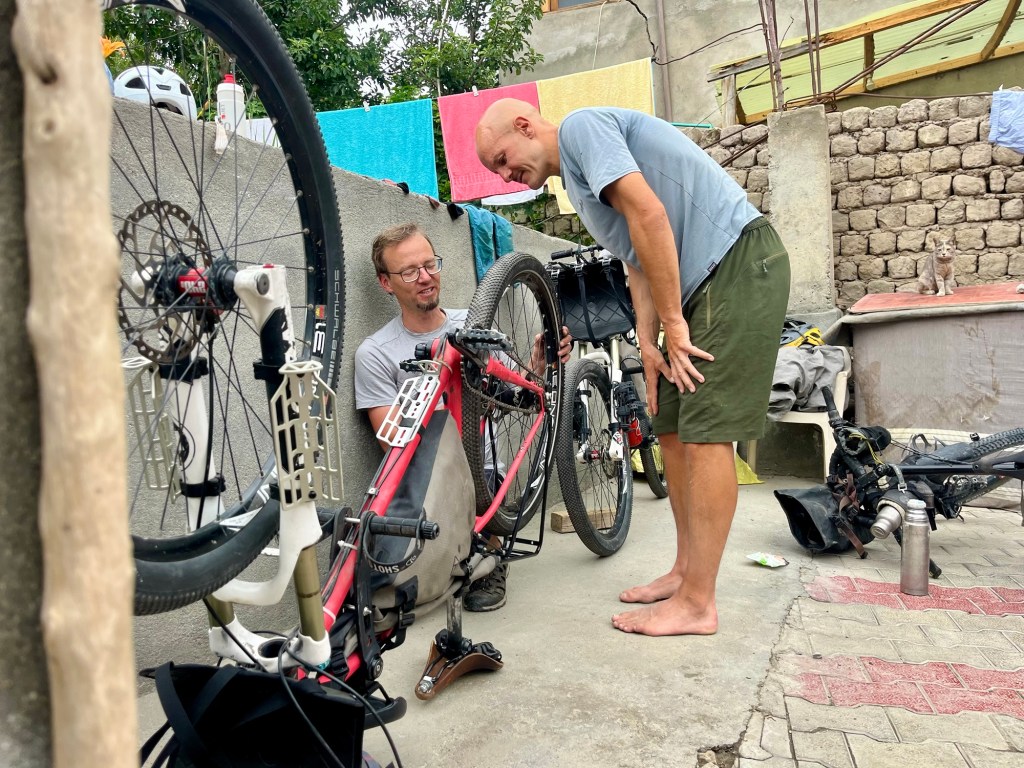
As we continue our trek to Lato village, which lies on the Manali Leh highway. From here we plan to hitch a ride back to Leh. Our stay in Leh ends up being longer than we initially intended; the food is simply too good to resist! Amidst our culinary delights, we discover that fellow cyclists, whose routes inspired a significant portion of our Mongolian adventure, are urgently seeking a specific Rohloff spare part – one that we have fortuitously been carrying for many kilometers.
We head to Wari La, from where we are rewarded with another spectacular view of Kang Yatze II.
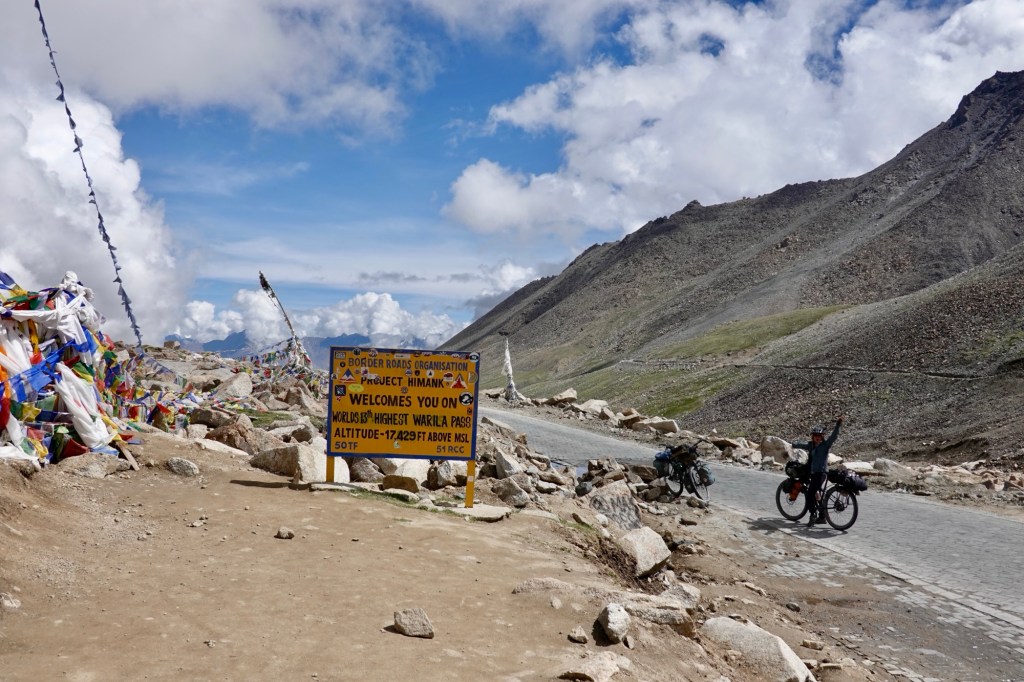
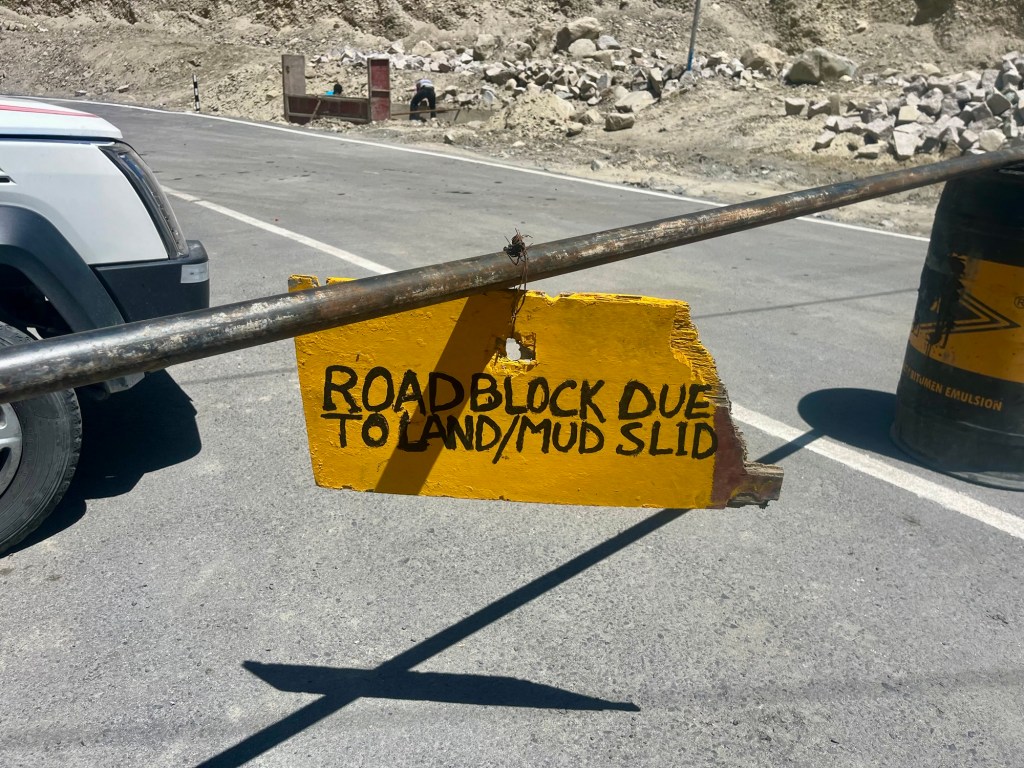
After the downhill at Wari La we find ourselves at a roadblock due to a glacier eruption. So we hitch back up to take an alternative route and make our way to Chang La.
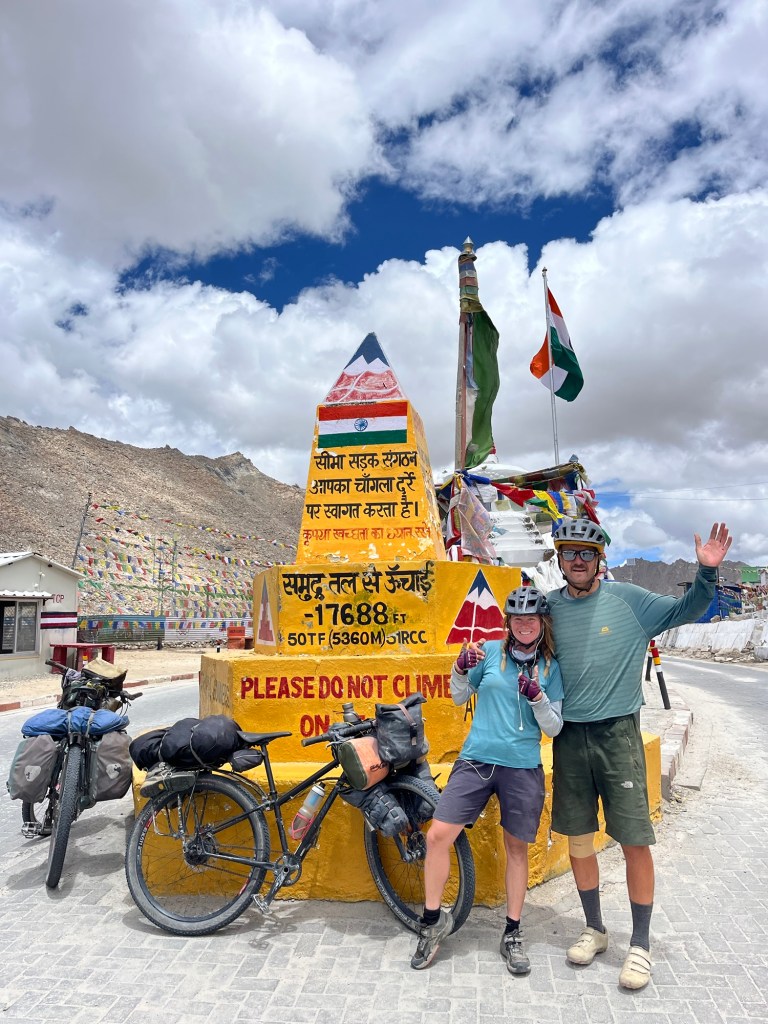
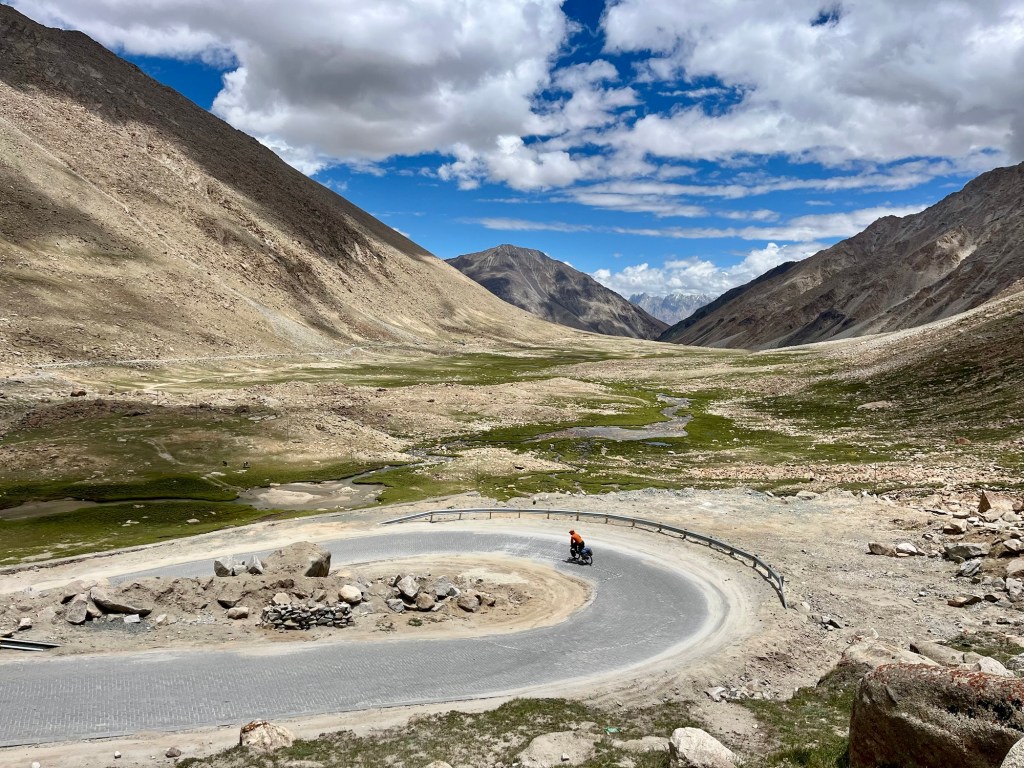
We traverse Chang La again soaring above 5000 meters. A brief stopover at carribean like Pangong Lake. China and India share the lake. Wild horses/ wild arse are roaming around its shore and a good amount of birds bath and feed in the lake.
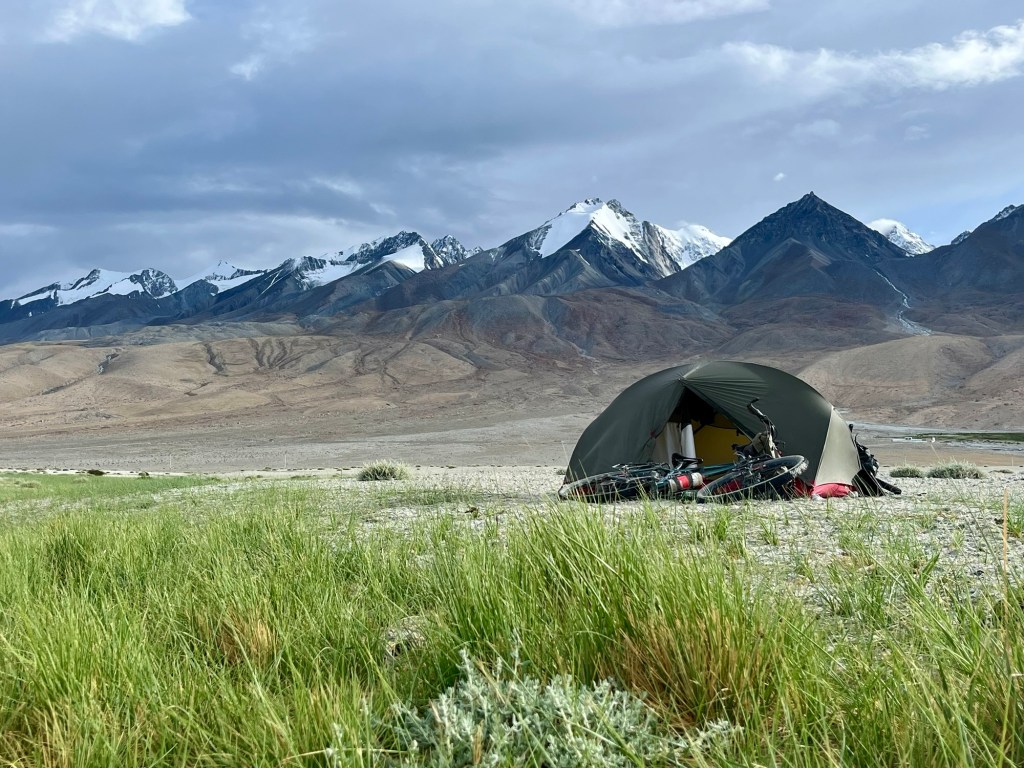
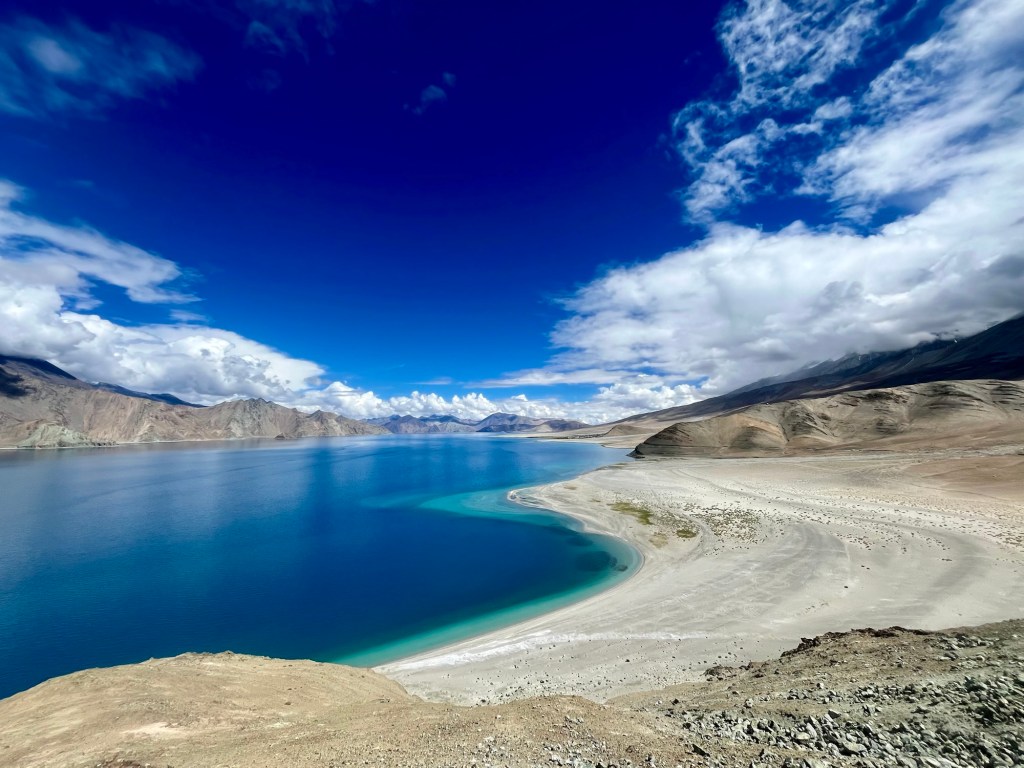
Thenafter we head to Kaksang La, which until now was our favorite pass.

Before we continue on our adventure, we make a stop in the quaint village of Hanle. It is here that we meet David – he is guiding a Swiss cycling group, who are on their high-altitude training trip. Hopping seemingly effortlessly from one pass to another.
Umling La 5800 meters
Thereafter, we make our way to Umling La, which is currently recognized as the highest motorable pass in the world, reaching an astonishing altitude of 5800 meters. The climb, surprisingly, feels easy and once we reach the top, we take a moment to reflect on the other “major” achievements of our tour so far. While Umling La holds the title of the highest pass we’ve conquered on a bicycle, we can’t shake the feeling that other passes, located in more remote and untouched areas, resonate with us on a deeper level, leaving lasting impressions and sensations.
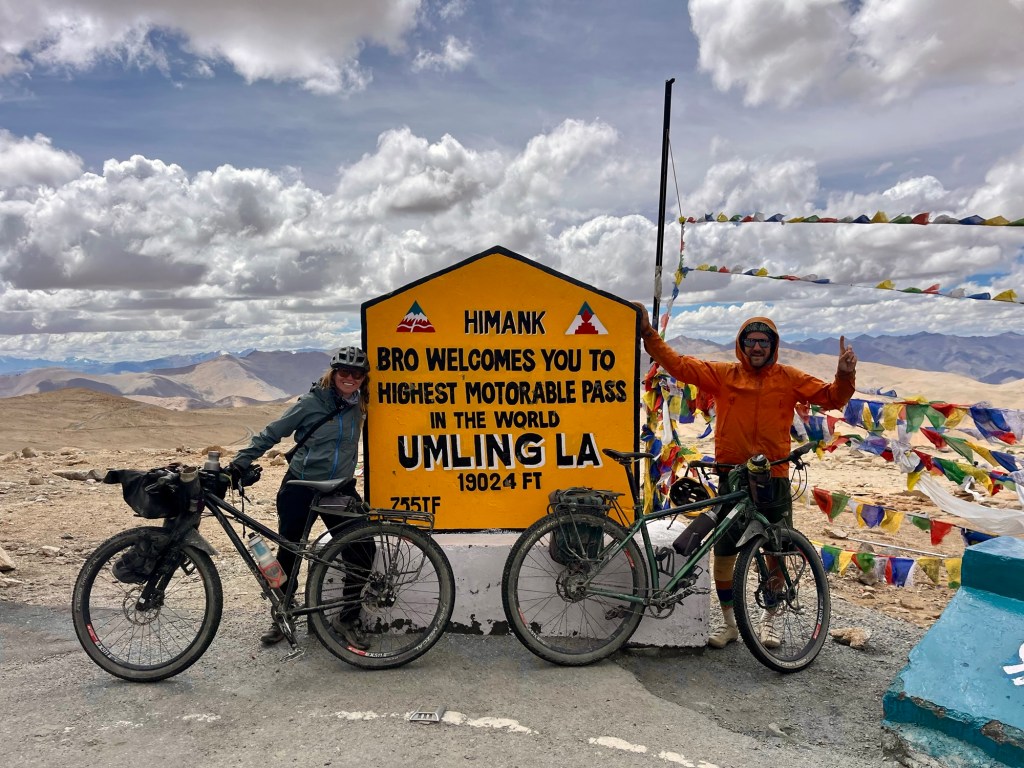

The next day, we head towards a bit of a quieter area, where I get to enjoy my birthday party at the beautiful Ryul Tso (lake).
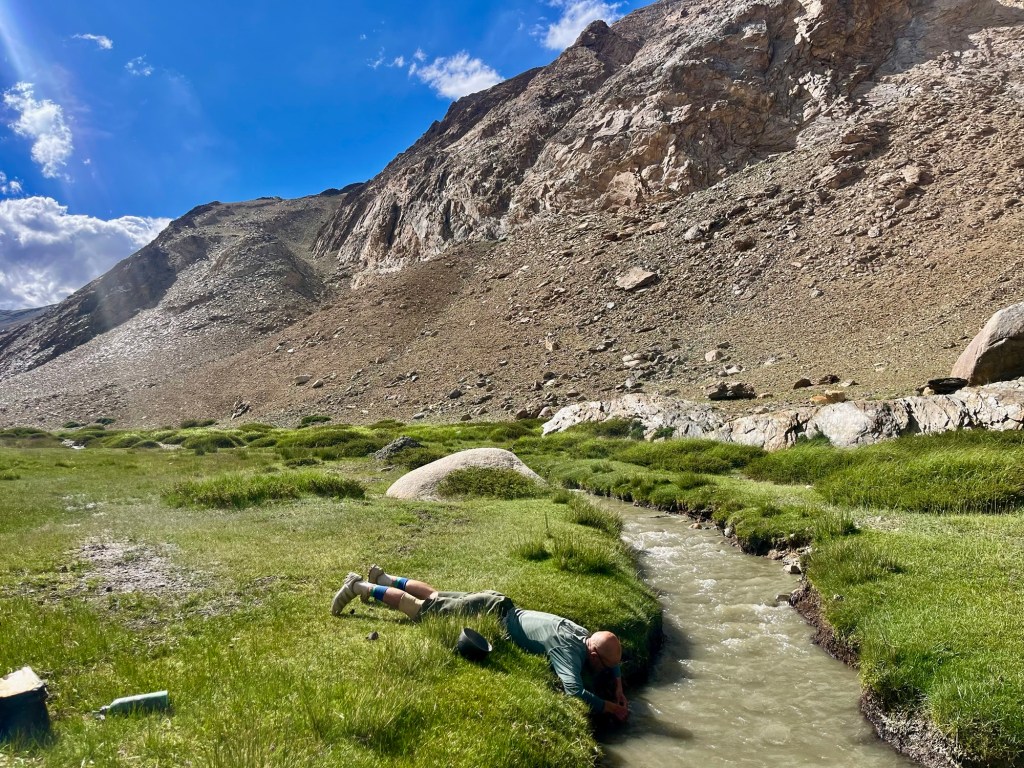
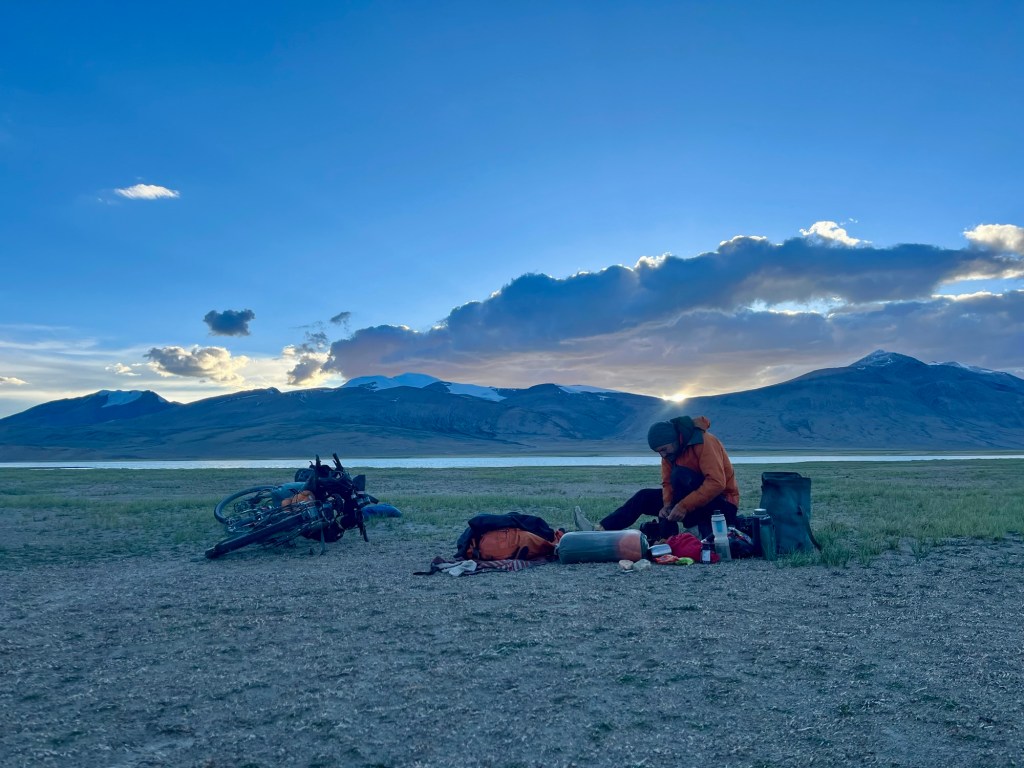
At Tso Moriri, we decide it is time once again for some long overdue hike a bike adventure, and we excitedly follow the winding hiking path towards Tso Kar lake.
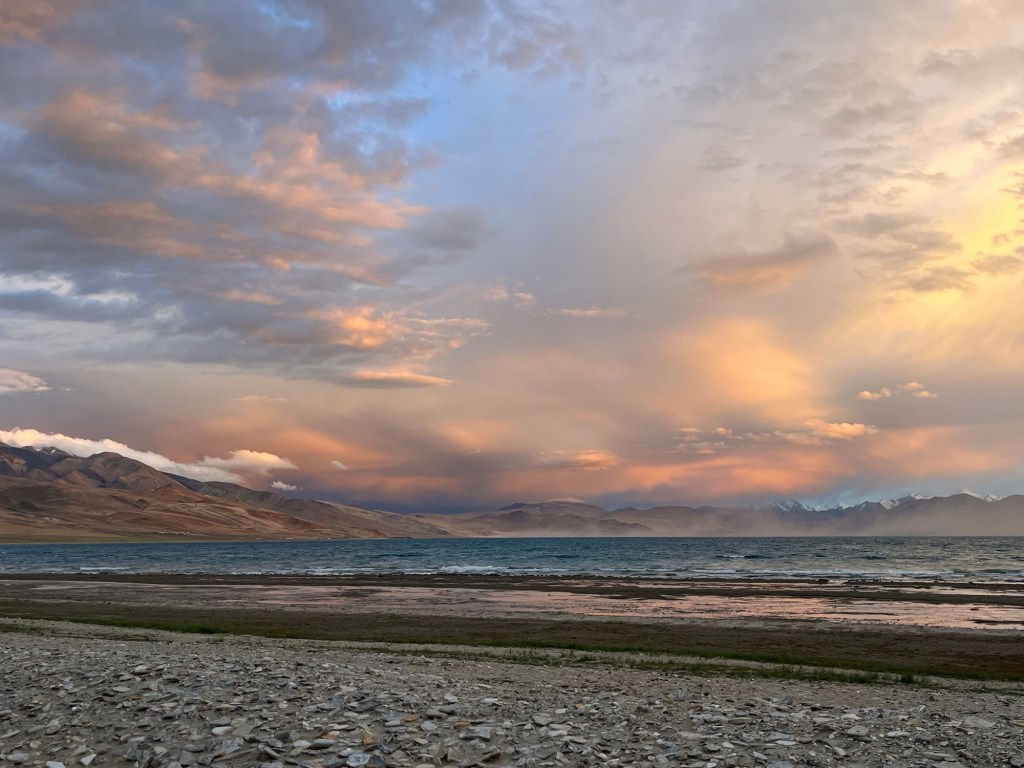
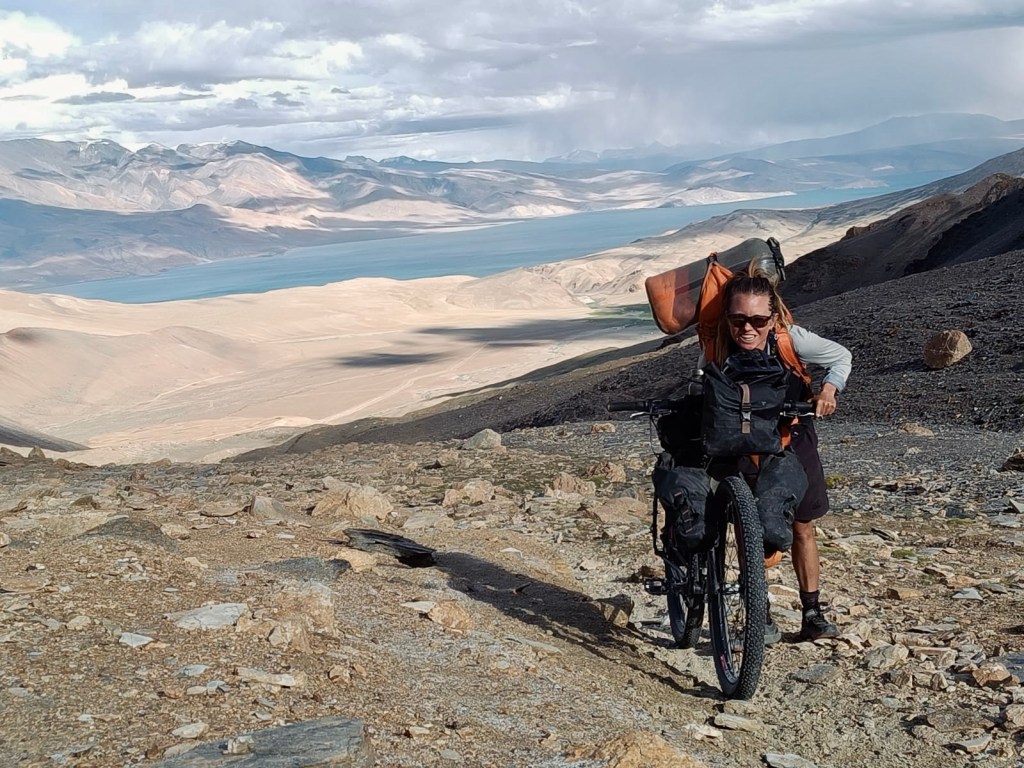
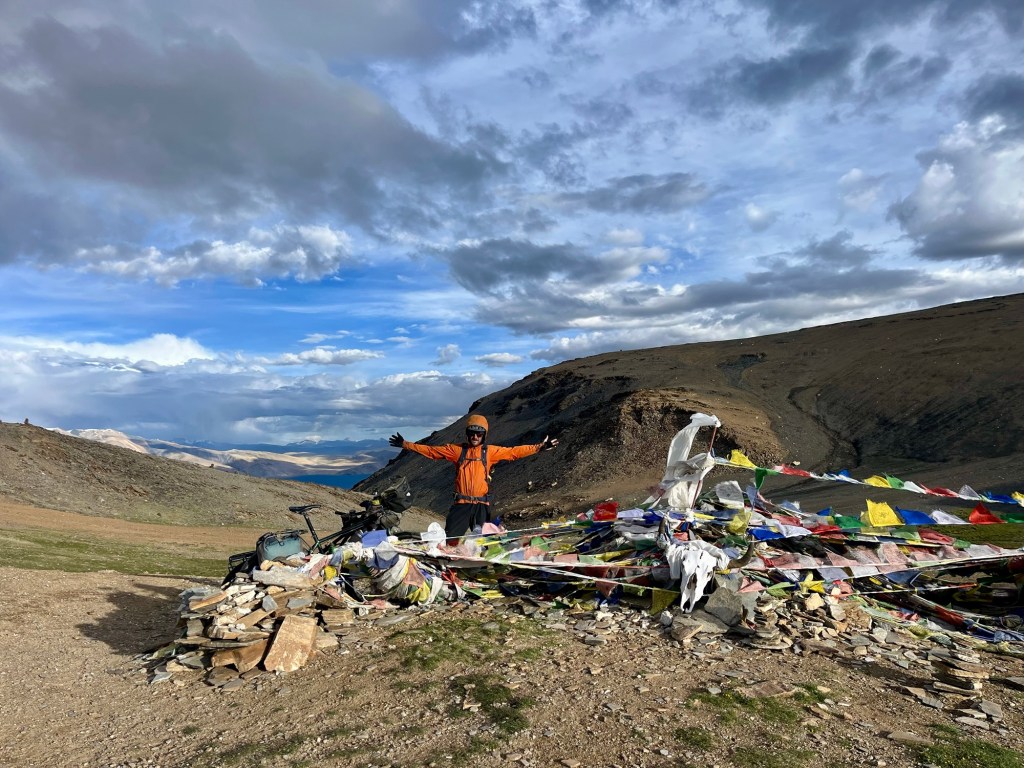
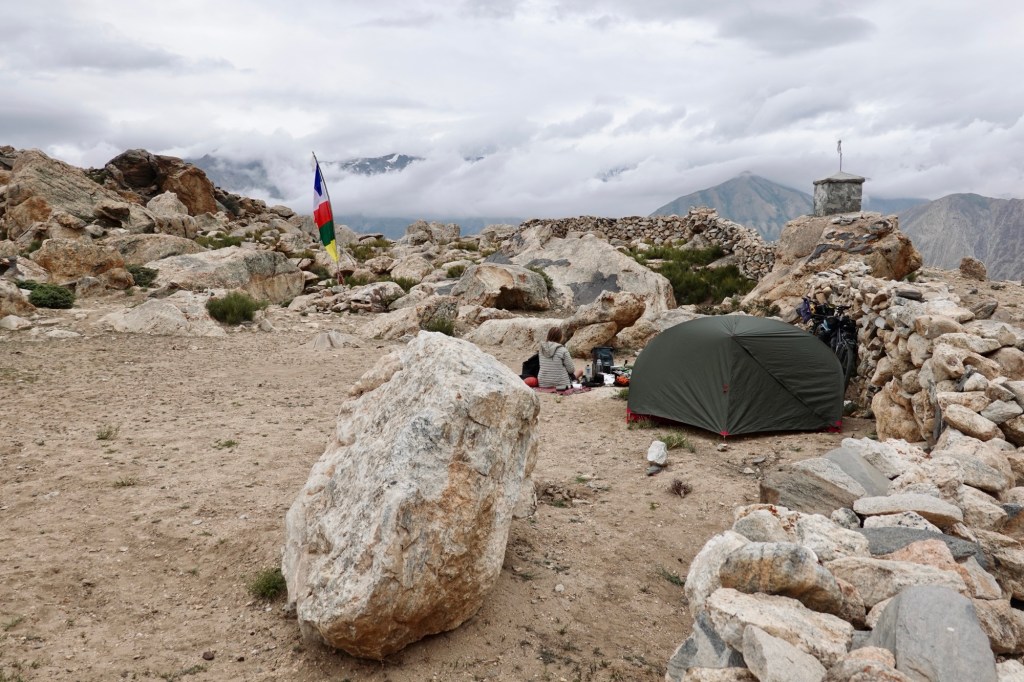
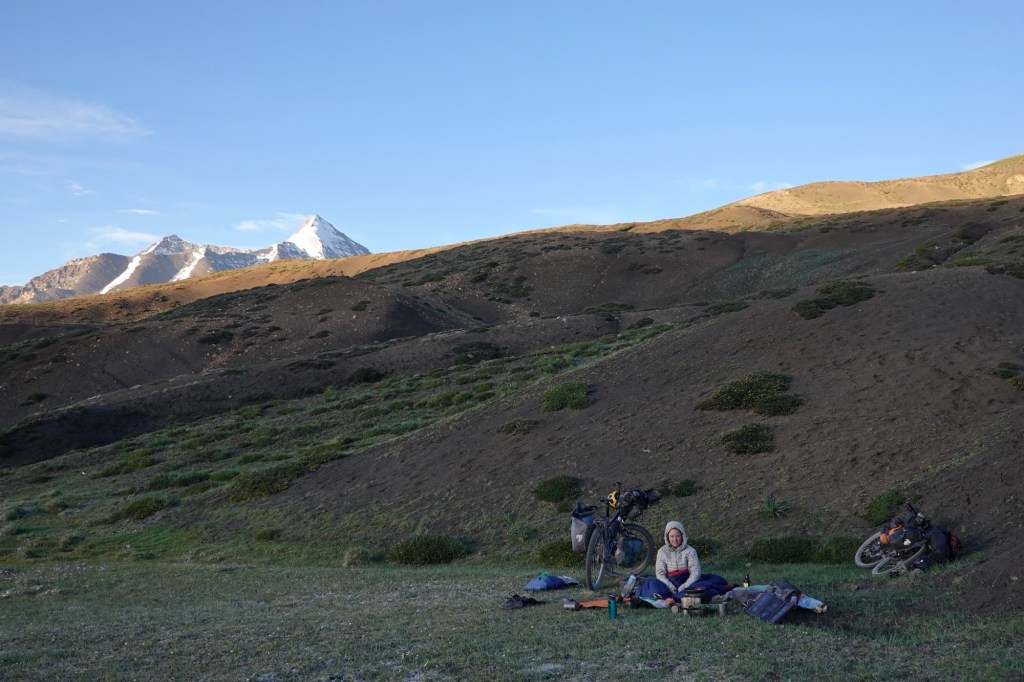
We enjoy the highest camp of our tour at 5400 meter, some technical paths and pure nature. One shepherd comes our way aside from this the valley is absolutely quiet.
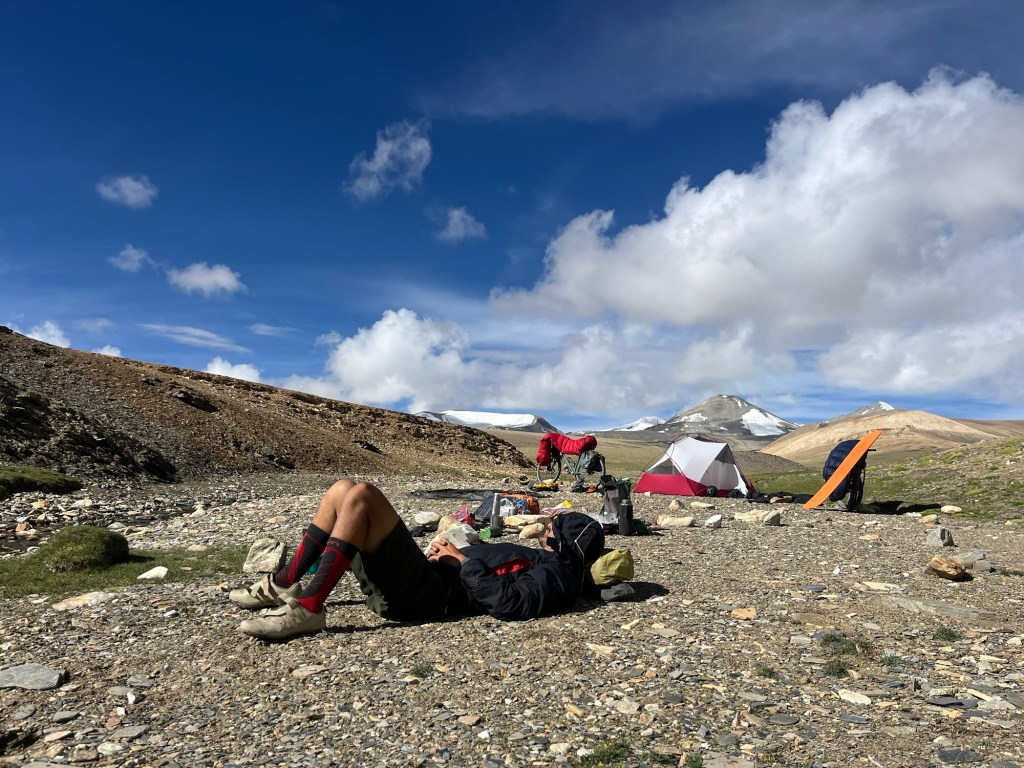
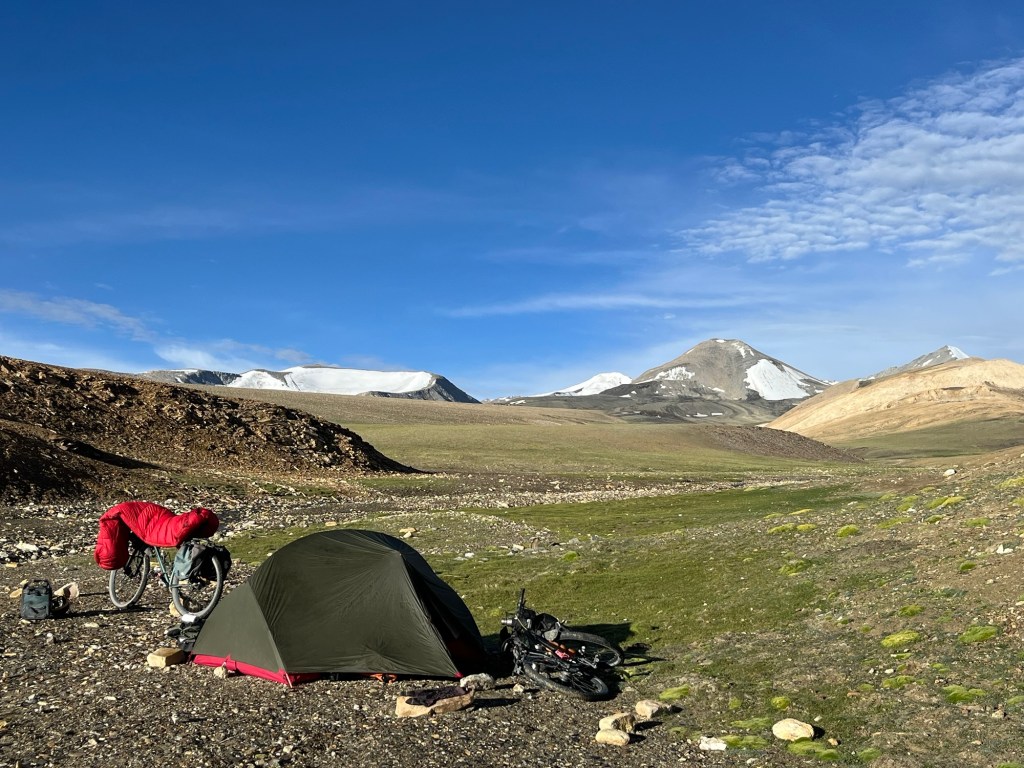
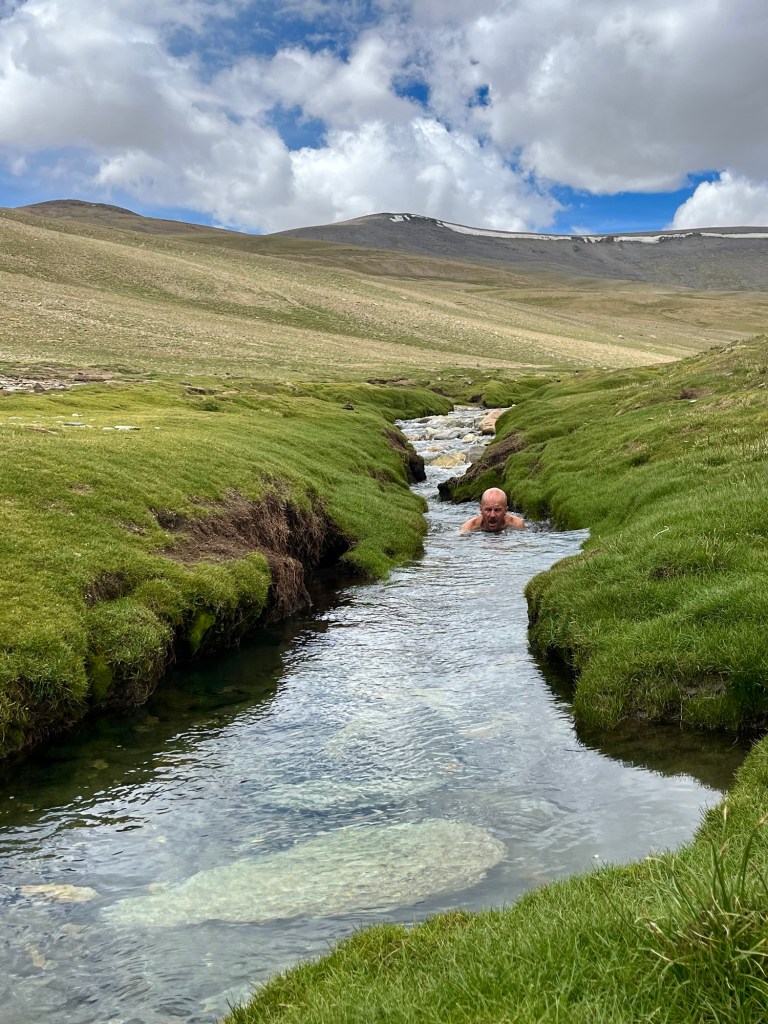
The fun track offers crystal clear rivers around every bend, and it feels so much more adventurous as soon as we leave the tarmac behind.
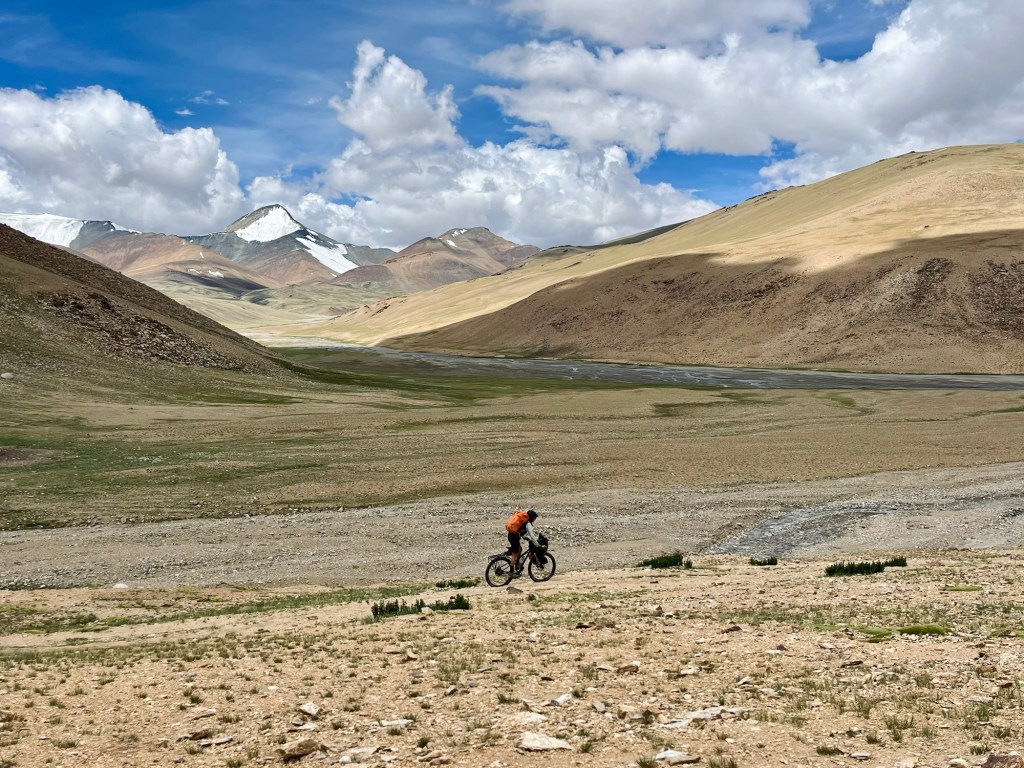
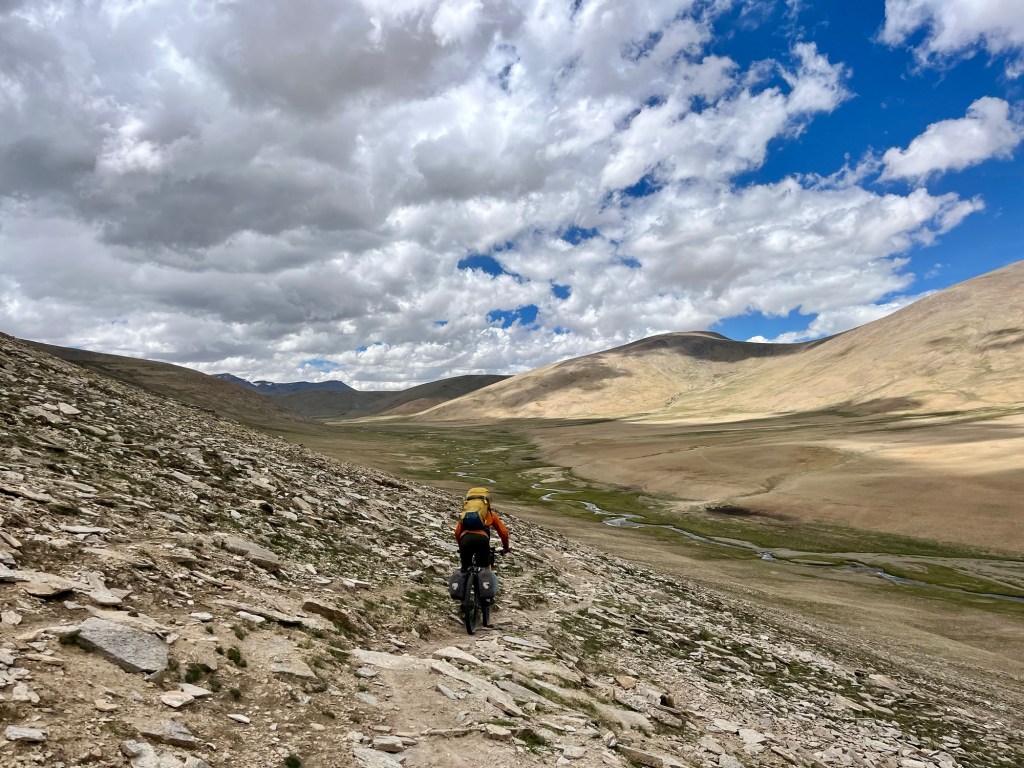
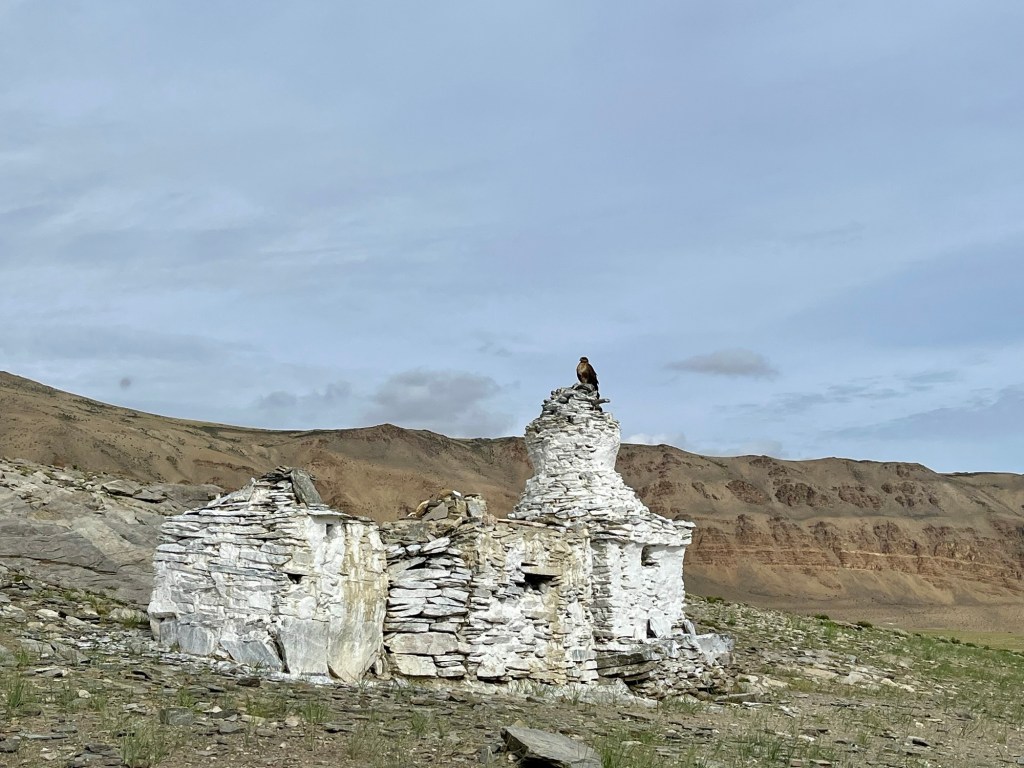
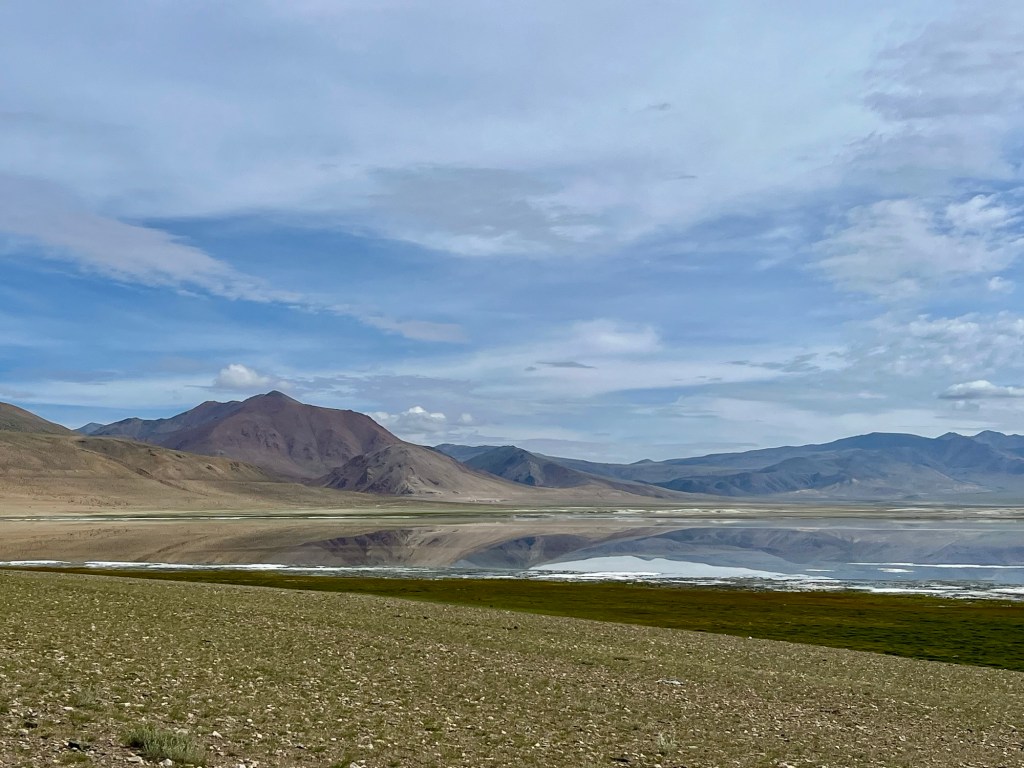
We reach Tso Kar which lies like a mirror in the barren landscape.
Thereafter, we navigate along the iconic Manali Leh highway until Keylong, where we gather to celebrate Rolfi’s birthday in the cozy warmth of a sauna, providing a perfect antidote to the chill of the high-altitude surroundings. A bad weather period is incoming, and with it comes the challenge of blocked roads, which makes it increasingly difficult to move forward on our journey. So we decide to hitchhike, an experience that turns out to be quite difficult as we find ourselves waiting for a long time, exchanging hopeful glances with passing vehicles. The rain continues to pour down relentlessly, leading to roads becoming flooded and landslides blocking our way. The area we traverse is especially prone to flooding and landslides, a reality that causes numerous fatalities and significant damages each year. After a temporary halt in Manali, we finally attempt to make our way to Delhi; however, a journey that usually takes about 10 hours stretches to a daunting 72 hours due to the extensive road damages.
Once we reach Delhi, we get some sleep and start to organise one last sightseeing trip to the city of Jaipur.
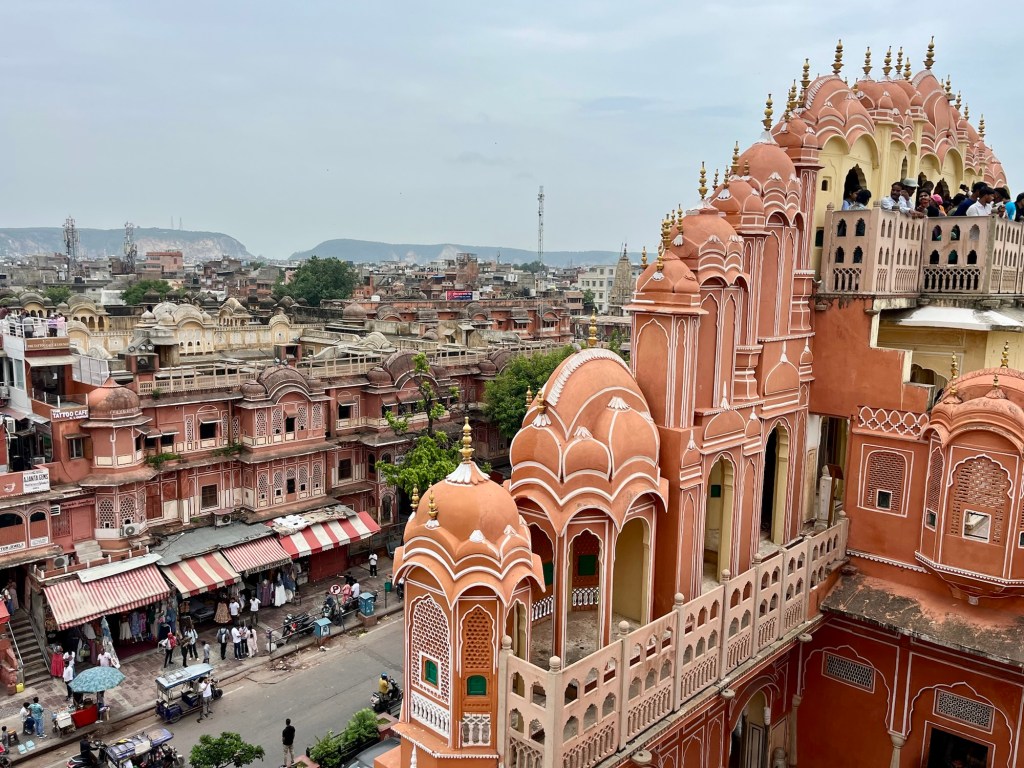
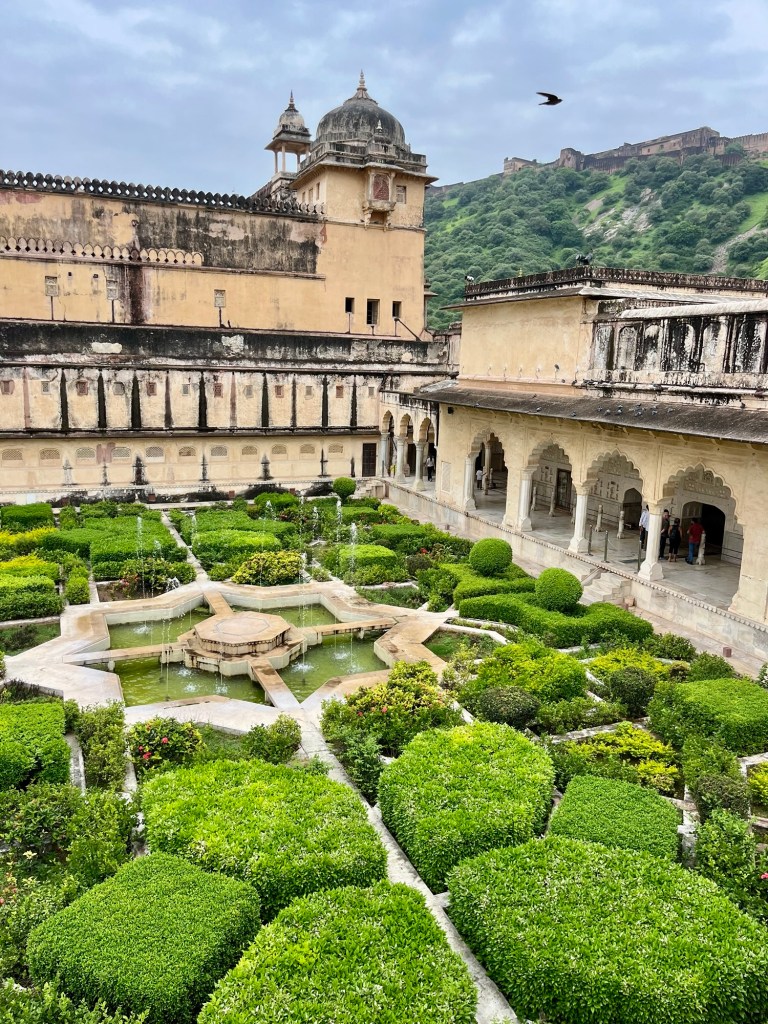
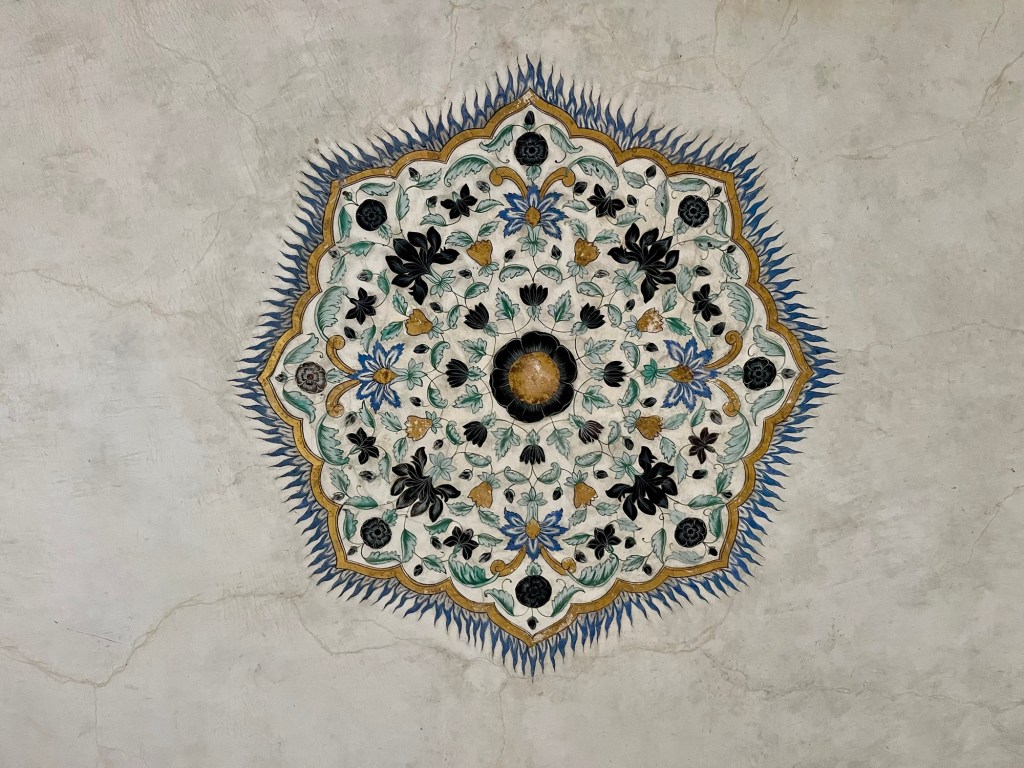
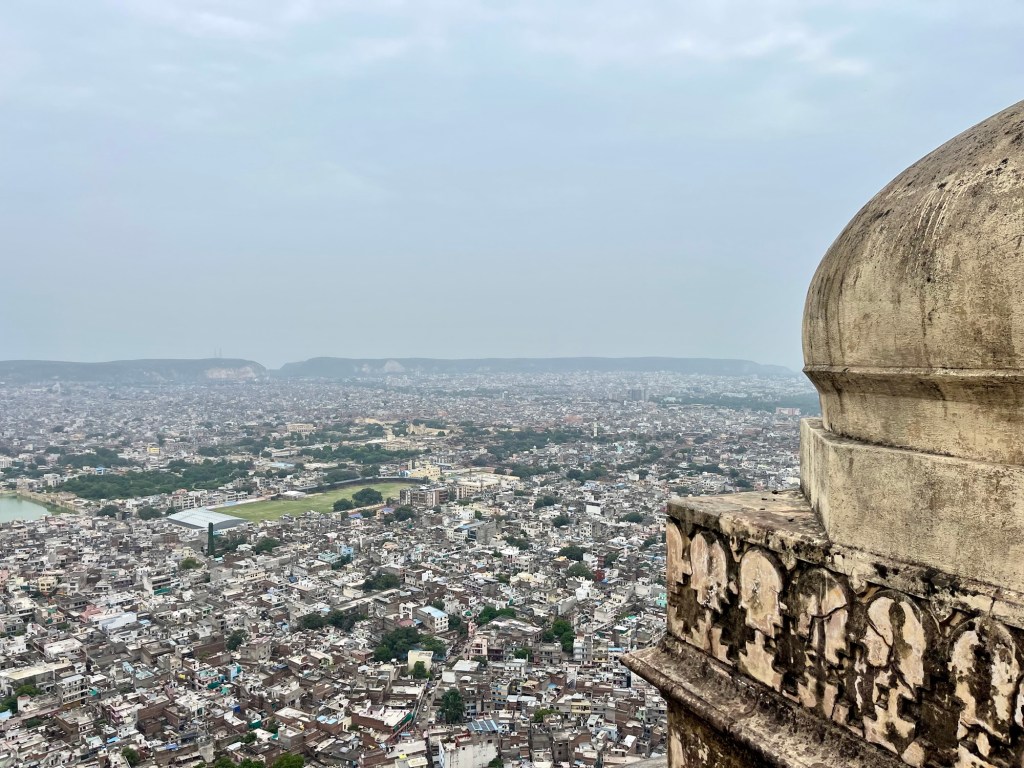
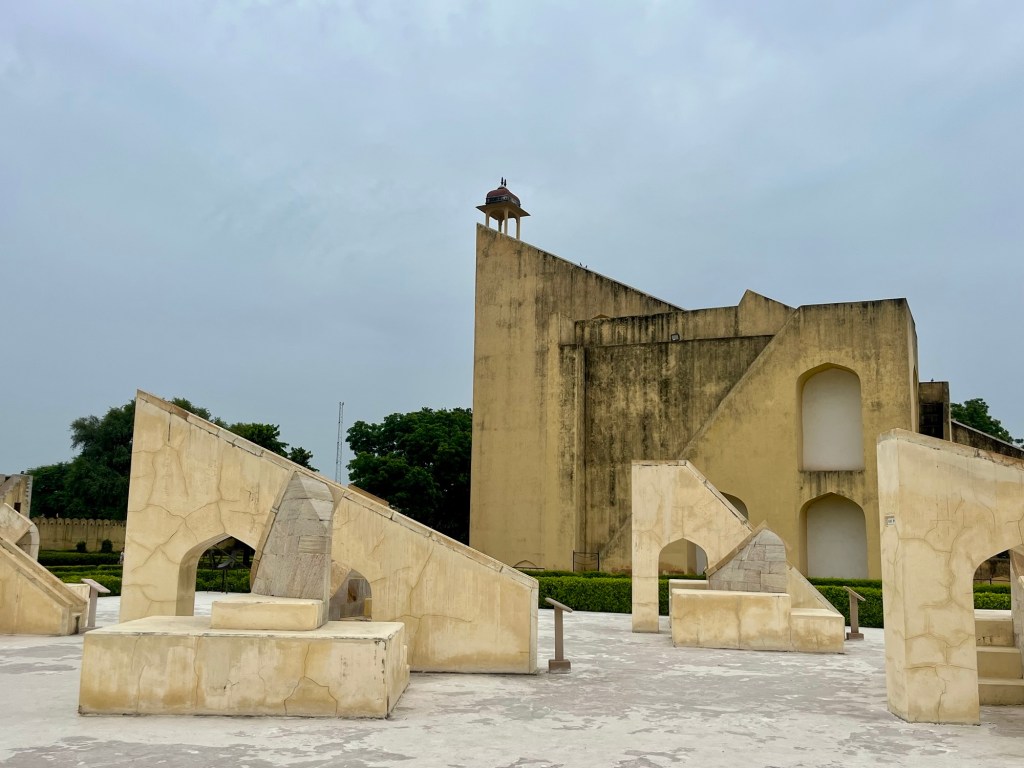
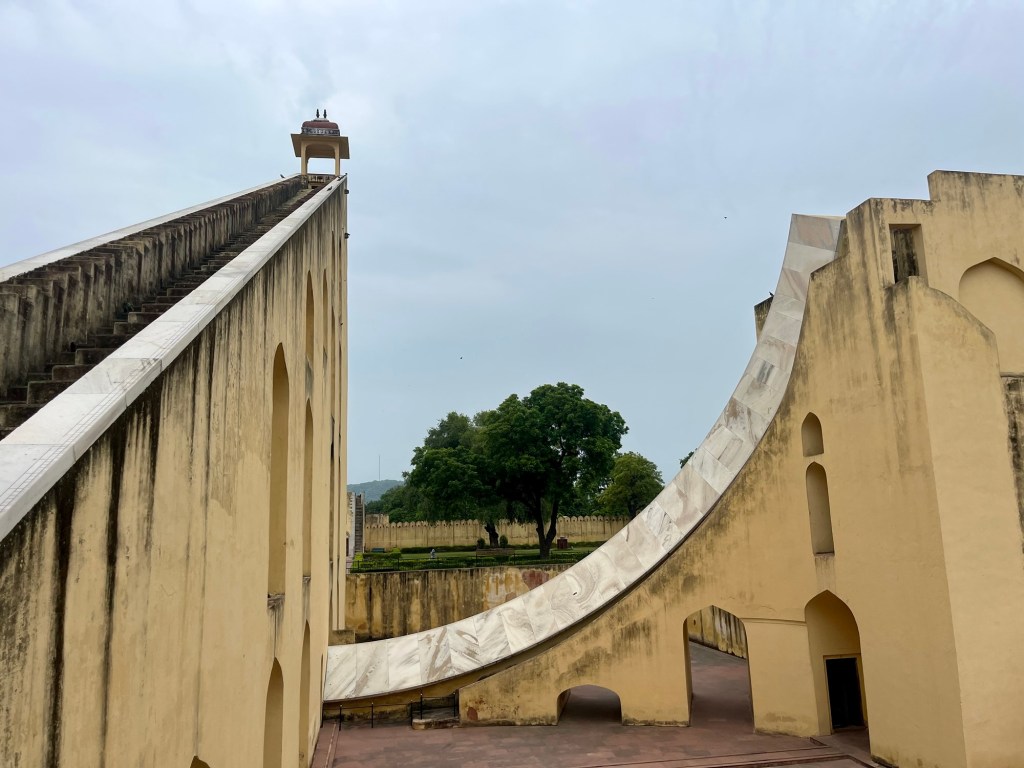
We wander through the historic forts, an ancient astronomy observatory and palaces. And we get to enjoy one of the best coffees of our trip with beans from the south of India.
This part of our journey is the only one where Rolfi and I have differing perspectives. On the one hand, it was Rolf’s dream to return to this beautiful area after he has been here many years ago; making this trip particularly special for him. This was a route he had envisioned for a few years: with high altitude passes, stunning landscapes, superb camping options available and frequent resupply points throughout the journey, it is bikepacking paradise. However, we both found ourselves yearning for a dash of more adventure. Yet while I absolutely love the stunning landscape and the majestic mountains of the region, cycling wasn’t my favourite here. The hours spent on monotonous asphalt roads tested my patience. Despite this, my desire to explore the mountains surrounding us is unwavering; to discover the trails and peaks of this region.
We leave India a second time with awe, confusion and admiration. We had many wonderful encounters and had a good share of challenging ones as well. We experienced a different type of tourism in its extremes – where youtube channels are the new guidebooks and locations are selected by views and clicks. We got to learn a lot about local spirituality, the amazing food and got to visit many ancient places. The nature; which we are usually guided by; was absolutely breathtaking.
Now a long time off the bike starts as we head via bus and train to Nepal, Tibet and China. With the goal to cycle in again in Mongolia!
Our Path
India in total: 3200km | 48000 altitude meters
 Woanders
Leave a comment