
The route in brief: Gilgit | Skardu | Kaphlu | Hushe | Masherbrom BC | Nagmar Valley | Kaphlu | Skardu | Deosai National Park | Gilgit | Shandur Pass | Chitral | Brun | Bumburet | Peshawar | Lahore | Karachi
Question and more questions
What will stick forever in our minds and hearts is the hospitality we felt and experienced here. From curious questions to warmfelt invitations. It didn’t matter where or why we looked lost, there was always someone around that would help. Tea, translations, organising bus rides, making sure we get on the right bus, tyre repairs, fruits or even meals, a bed – you name it. It feels that hospitality is a value that is deeply rooted in the culture. For us, it seems unbelievable how generous and hospitable people are, especially in the light of what they have experienced over the past decades. A mindset we wish to keep and incorporate in our lifes.
The history and present of Pakistan is complex. It was intersting, overwhelming and sometimes beyond frustrating to read about it. So we felt like sharing a few insights that we got to learn and this is only a tiny fraction any many details are certainly missing.
What will the future bring?
In 1947, after the partition of British India, the dominion Pakistan (later the Islamic Republic of Pakistan) was established. „You are free; you are free to go to your temples. You are free to go to your mosques or to any other places of worship in this State of Pakistan. You may belong to any religion, caste or creed—that has nothing to do with the business of the state.” this was Muhammad Ali Jinnah’ s (the founder of Pakistan and the first leader). He died before a set of value could manifest and it seems as if the nation is in an identity crisis from its beginning. Complex conflicts with India are ongoing. Pakistan encompasses the following regions (each of them in size and population way bigger than Austria): Punjab, KPK, Baluchistan, Sindh. And then there are Gilgit Baltistan, a region administered by Pakistan but not formally part of it, and Kashmir, where a long standing dispute is ongoing between Pakistan and India. In 1971, an internal crisis in Pakistan resulted in another war between India and Pakistan and the secession of East Pakistan, creating the independent state of Bangladesh (prior part of Pakistan). In the past half century people have seen various leaders, come and go – bringing new laws, being accused of corruption, blasphemy and human rights violations. The „west“ has used the country for strategic reasons, influencing politicians and/ or military. Which certainly had a fair share to contribute to the instability. China has heavily invested in building roads and is establishing a connection to the southern harbours. The Pakistani Taliban is responsible for severe attacks in the past years including brutal attacks on schools or school busses as well as public figures. In Baluchistan a little known civil conflict is simmering about to overboil. Aside to the political challenges they also had to face severe natural catastrophes, such as earthquakes and floods. Reading about the past leaders, every high ranking politician has spend his/her time in jail or exile or has been assassinated. Huzzling between democratic efforts, putsches, military takeover and scandals. Contrasting the tradition values the country had a female primeminister in (1988 – 1990 & 1993 – 1996). Benazir Butto, faced corruption accusations and was assassinated in 2007 after a speech during her election campaign. In these days the country is basically run by a military approved leader after a controversial election in 2024. Many companies – like the telecommunications service SCOM- is owned by the military. And then there is the imense wealth gap. While in the past 20 families used to own the majority of land and wealth the income gap is still clearly notable especially in urban areas.
How do tourists experience all of this? Pakistan is not known as the safest place. While there is a certain truth to this, there are areas which are very safe and where tourism plays a big role for the development. In the northern areas – we had the impression- it is hard to notice what is going on in other regions; aside from many many checkpoints. The tourist police will make sure that foreigners won’t experience any of the countries issues. Roadblocks may indicate demonstrations or rockfalls, escorts are provided in areas that are deemed to be unstable and in the news you get to read about demonstrations or attacks. What was very strange for us was the amount of guns that we would see.
What is the role of tourism for development? How can tourism be done „right“?
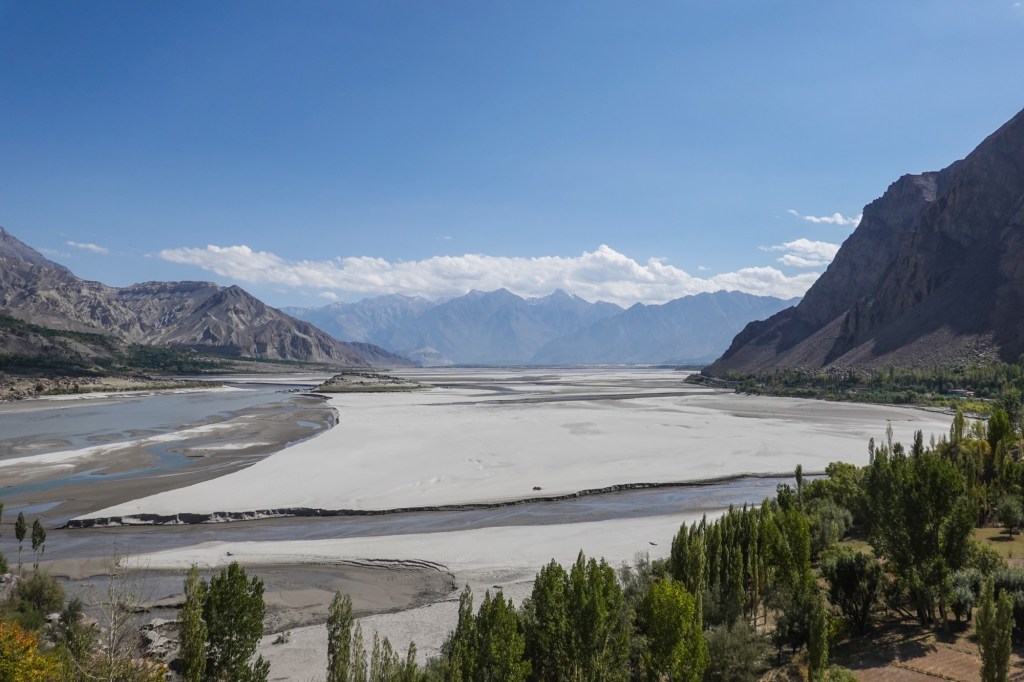
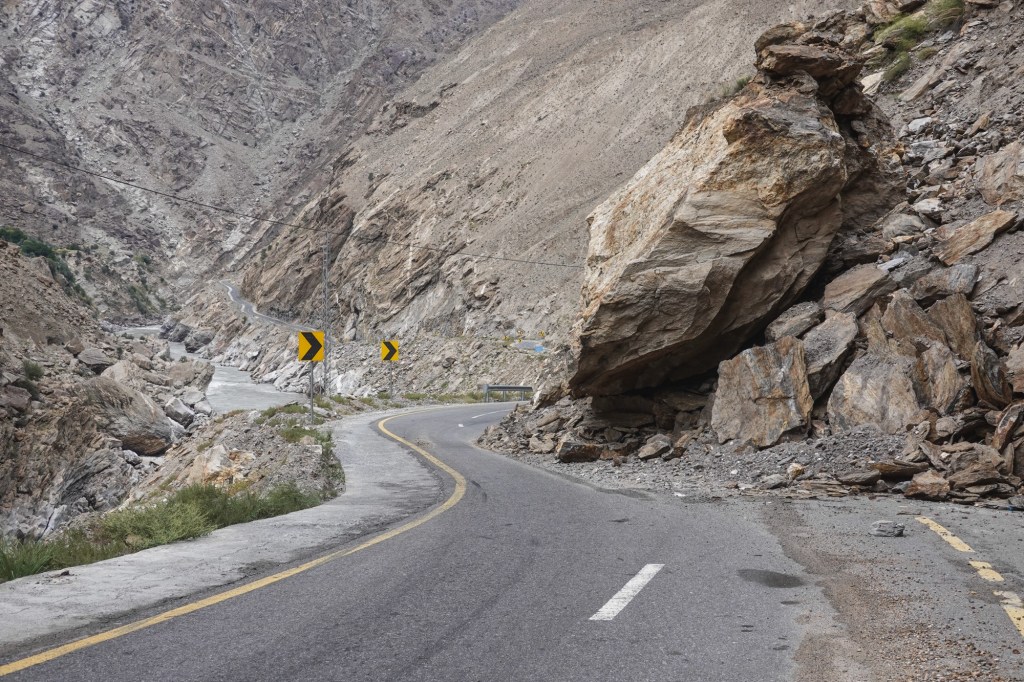
We will still stay a bit longer in the north in Gilgit-Baltistan. But it is time to leave Hunza Valley and head to Skardu. We follow the Karakorum Highway nested between the majestic peaks of the Karkorum, pass by Gilgit and follow the road leading to Skardu. The ride follows a river / canyon – winding, a lot of up and downs with no elevation gain and with a lot of rockfall. The road to the city center Skardu is currently blocked because of a demonstration after 3pm. The reason for the demonstration: a local activist was placed in prision. Something that happens every other week. A local student guides us past the roadblock via small alleys. Another location, another language and so people speak Balti here (a tibetic language also spoken in Ladakh).
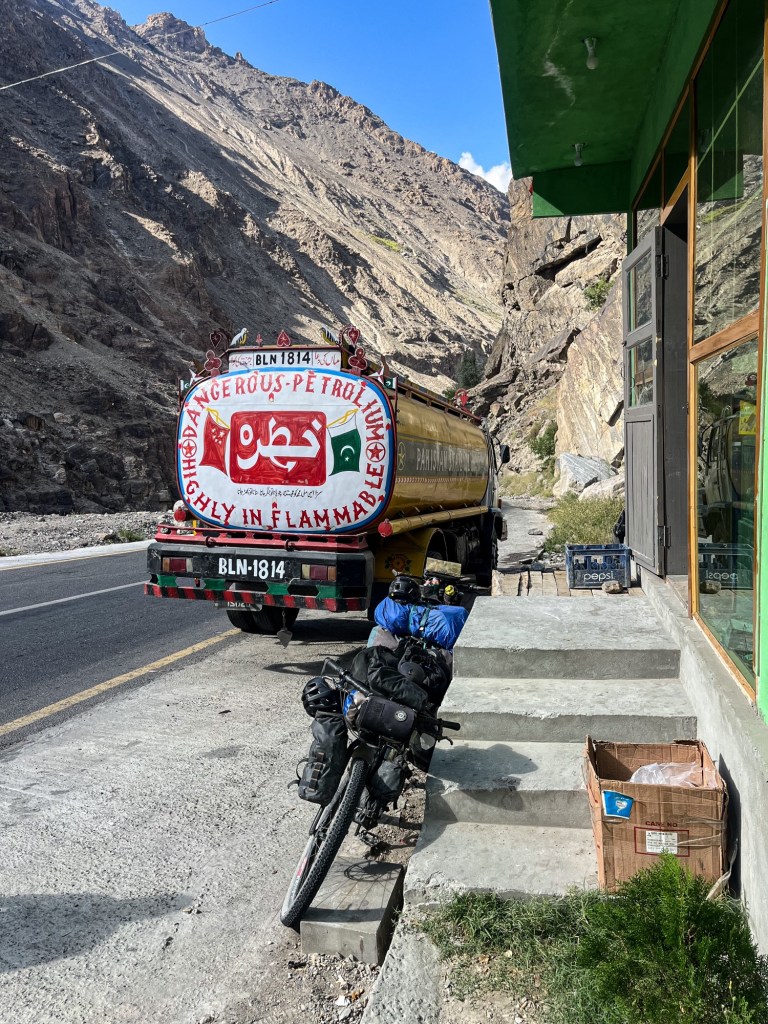
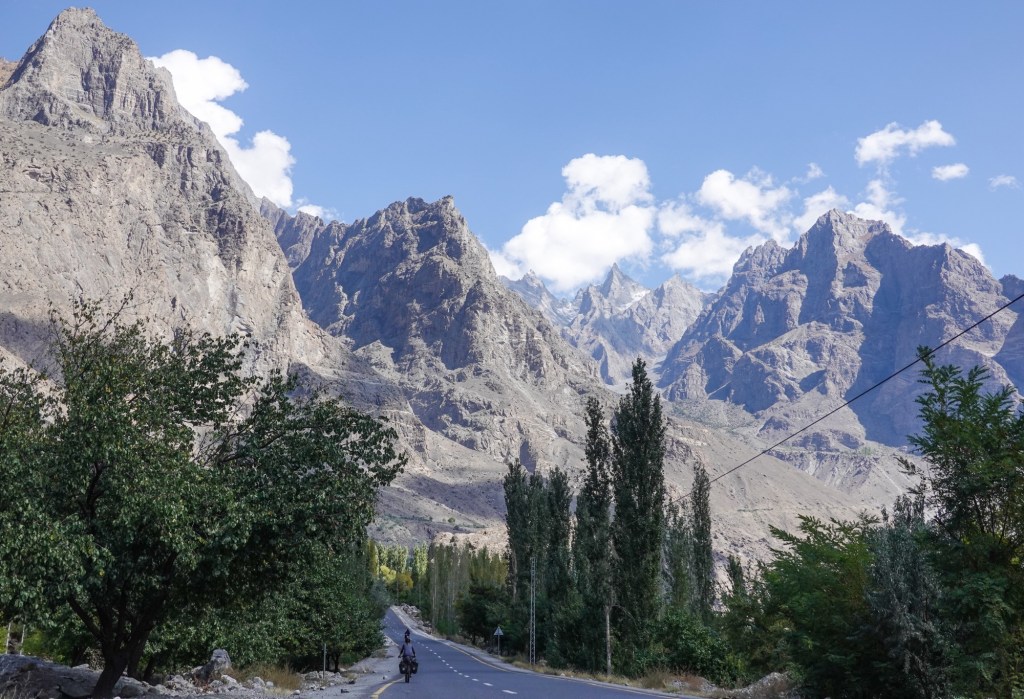
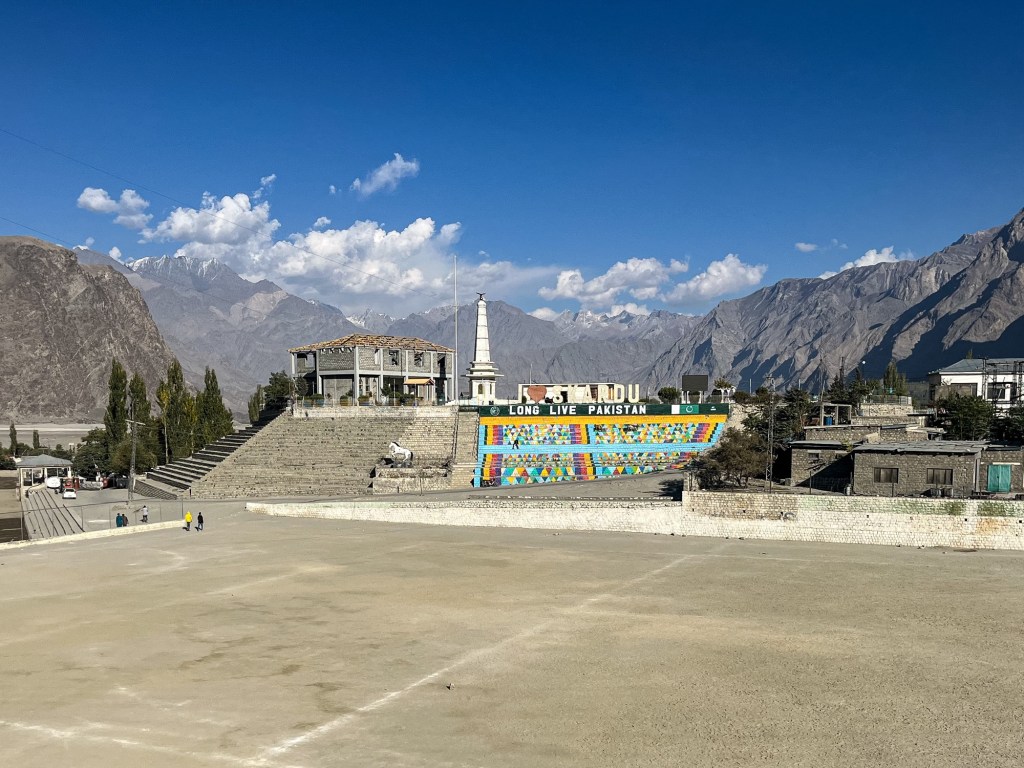
Skardu is dirty and noisy and the little sightseeing we have planned got interrupted by a minor foodpoisining. Similar to every area we have been in Gillgit-Baltistan the electricity is limited to a few hours per day and every accommodation runs mainly on a generator. While infrastructure development in Gilgit-Baltistan is not a top priority for the government, the income from tourism (permits, fees) is very much welcomed by the same. This is another area where 7000 and 8000 expeditions start. Skardu itself does not feel like a tourism hub in our eyes, aside from a Italian funded museum and faded portaits of local alpine heros on the main streets.
We follow the mighty Hindus river, which comes from the closeby Himalayas, the holy mountain Kailash. One road leads to Kargil and would lead towards the India himalayas, but this area is restricted and a bordercrossing not possible. We are so close and yet so far away.
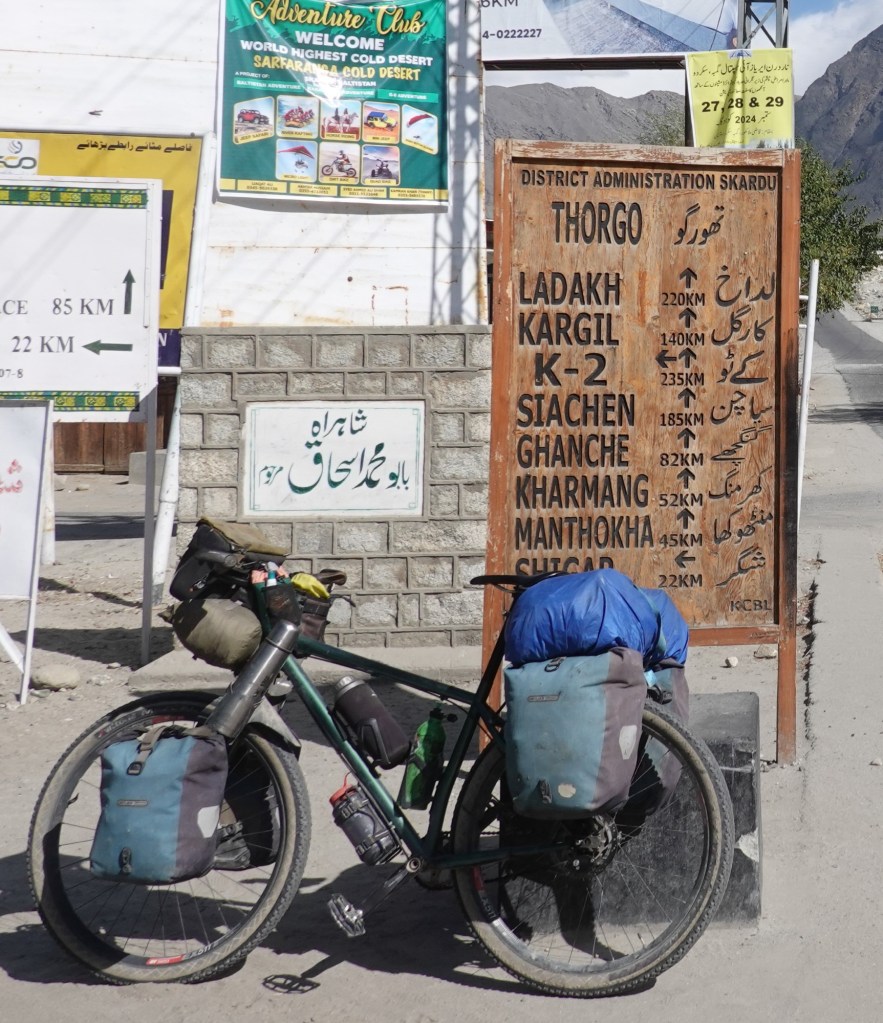
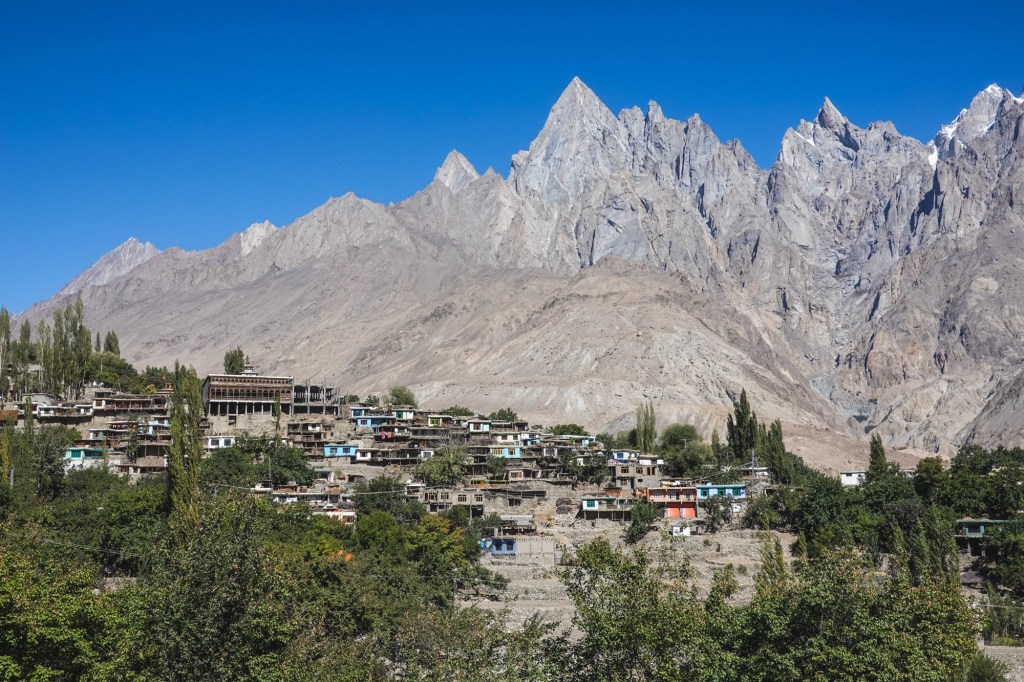
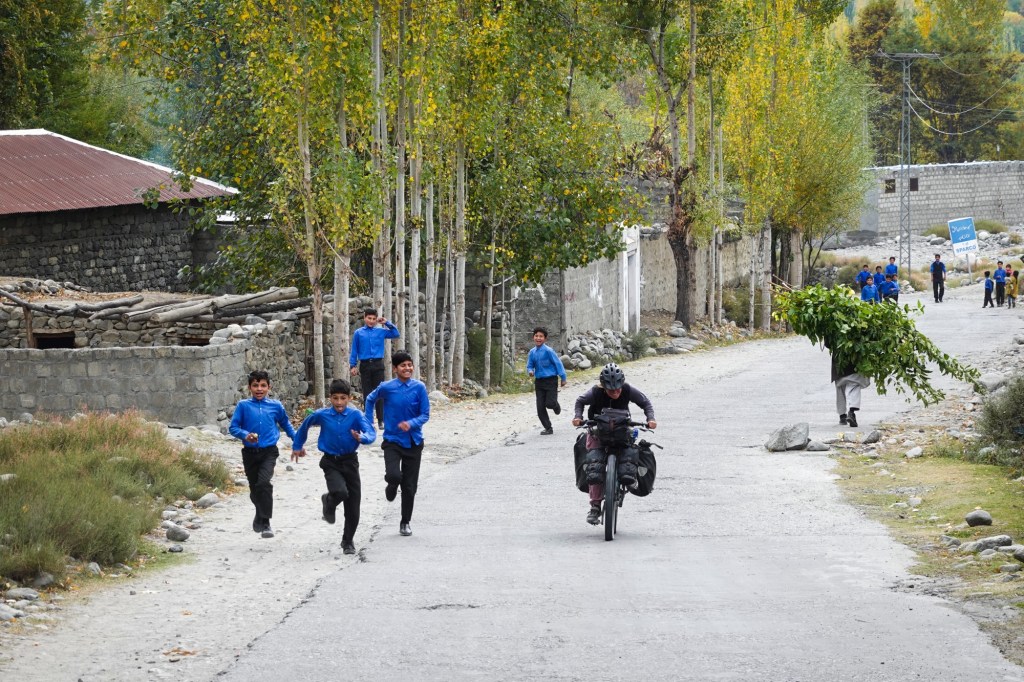
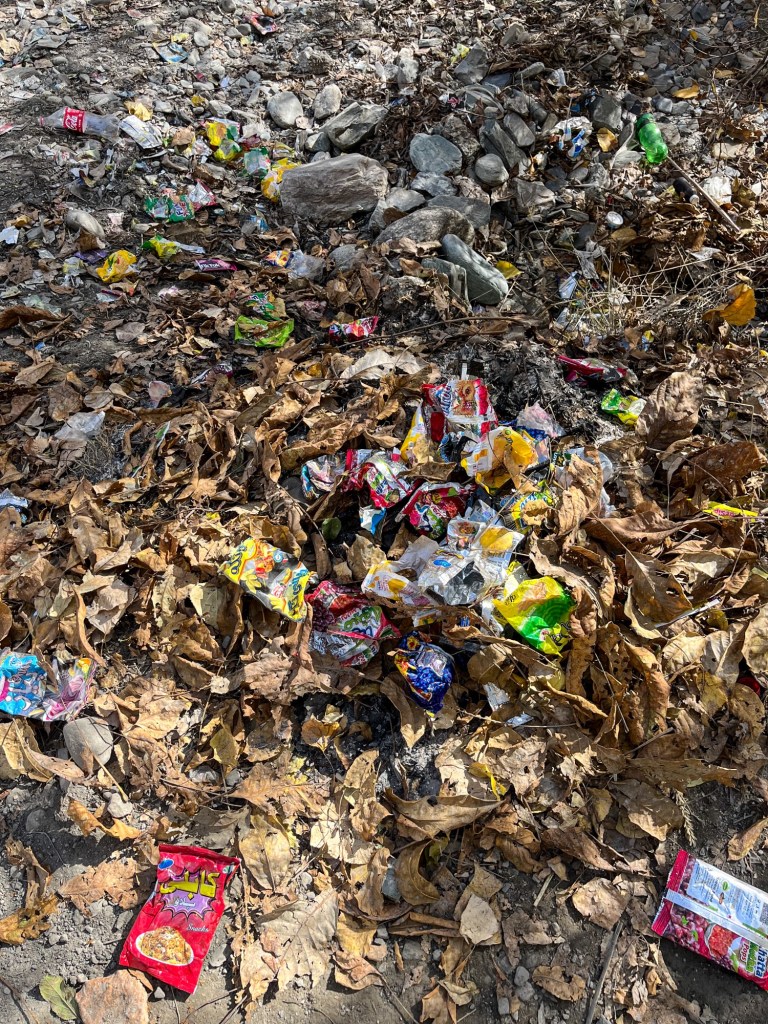
Thereafter, we head towards the valley and town called Hushe, another mountaineering base, known as the starting point for K2 and Mashabrum expeditions. The valley is narrow and dusty with tiring ups and downs. Before we get the 8000 view we pass through small villages. The idyllic valley romance of clean Hunza and Shimshal is no longer prevailing here. A carpet of packaging covers the dirt road. The downside of tourism becomes fairly quick visible. School children run next to us and greeting us with „hello how are you“ thenafter followed by „money money“. We only realise here how many children live in these small villages. The small village of Hushe with less than 300 households has 4 schools.
We arrive at the end of the valley at a refugio which was founded by spanish alpinists. It is slightly more expensive than we would usually look for but supposedly a part of the money goes to the community for agricultural and infrastructural improvements. At night the guard of the national park came by and told us that the nationalpark fee has tripled from what we originally have thought it would cost. It’s very intransparent how prices are made up and who will actually benefit from the fees. So we decide to only make a day tour.
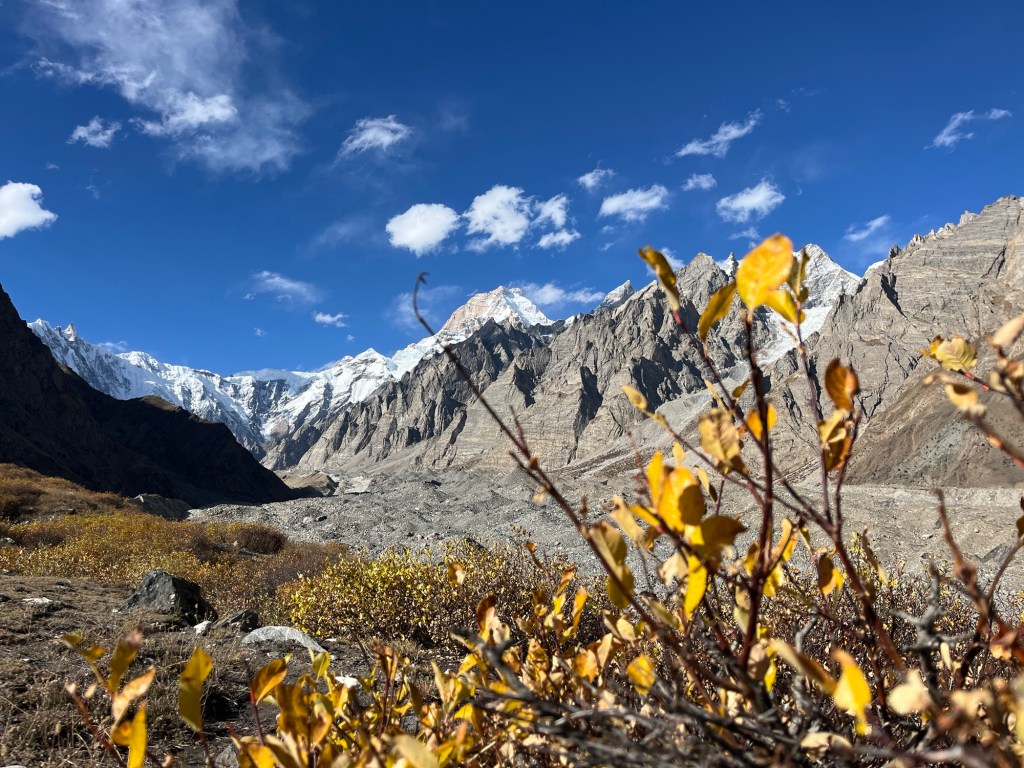
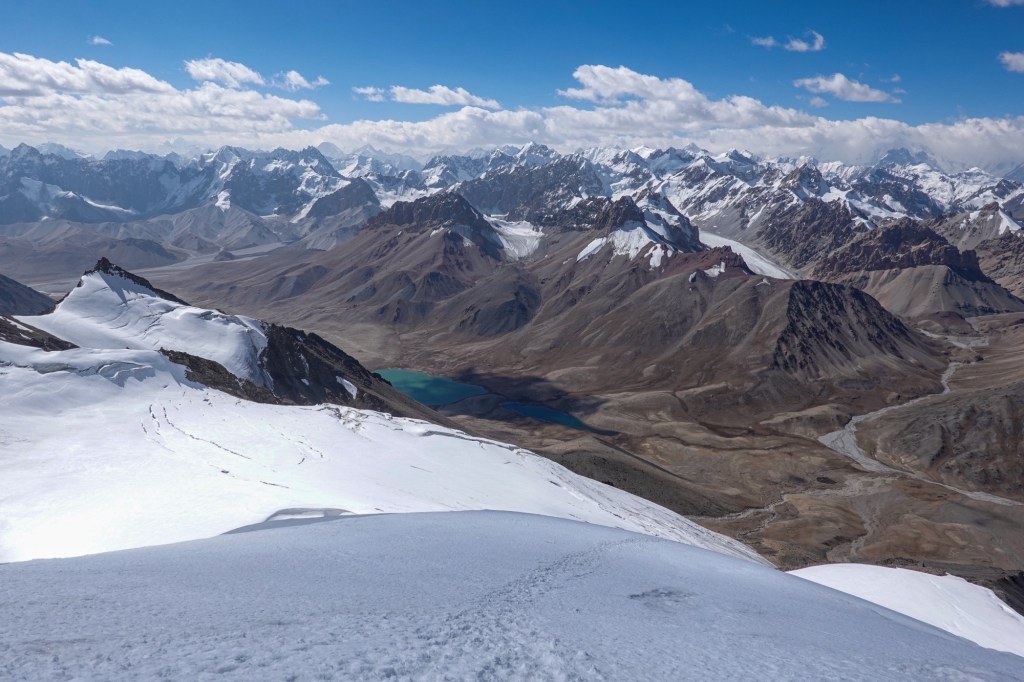
We hike towards the Masherbrum Basecamp. At about 3200m some trees appeared and after crossing the glacier moreen Masherbrum presented itself. We also get a glimps of Laila Peak, deemed to be one of the prettiest mountains with ist unique shape.
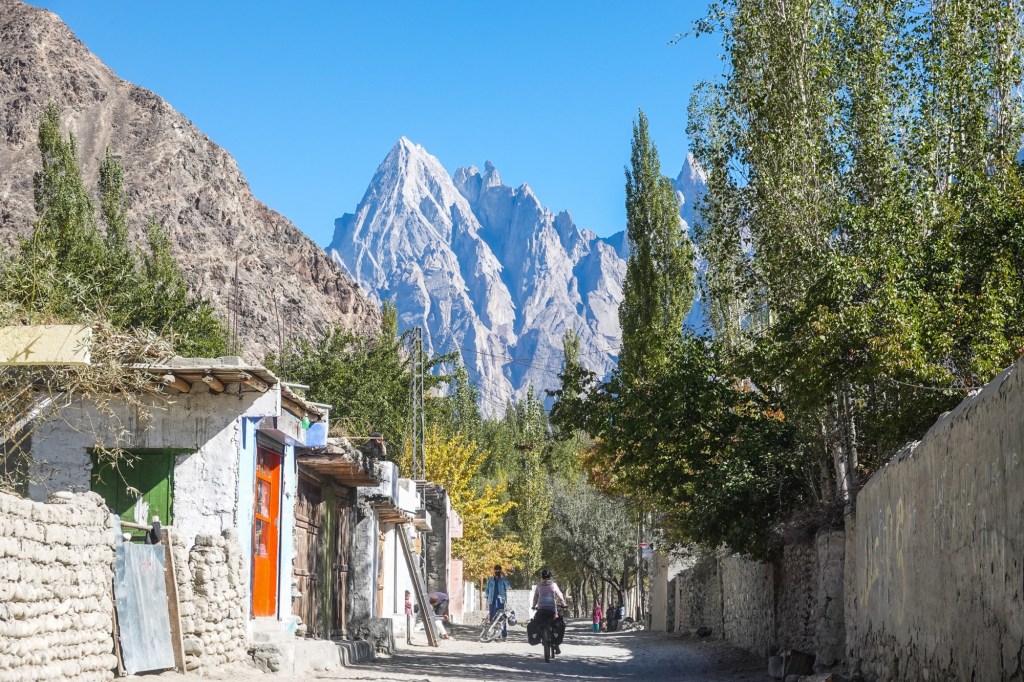
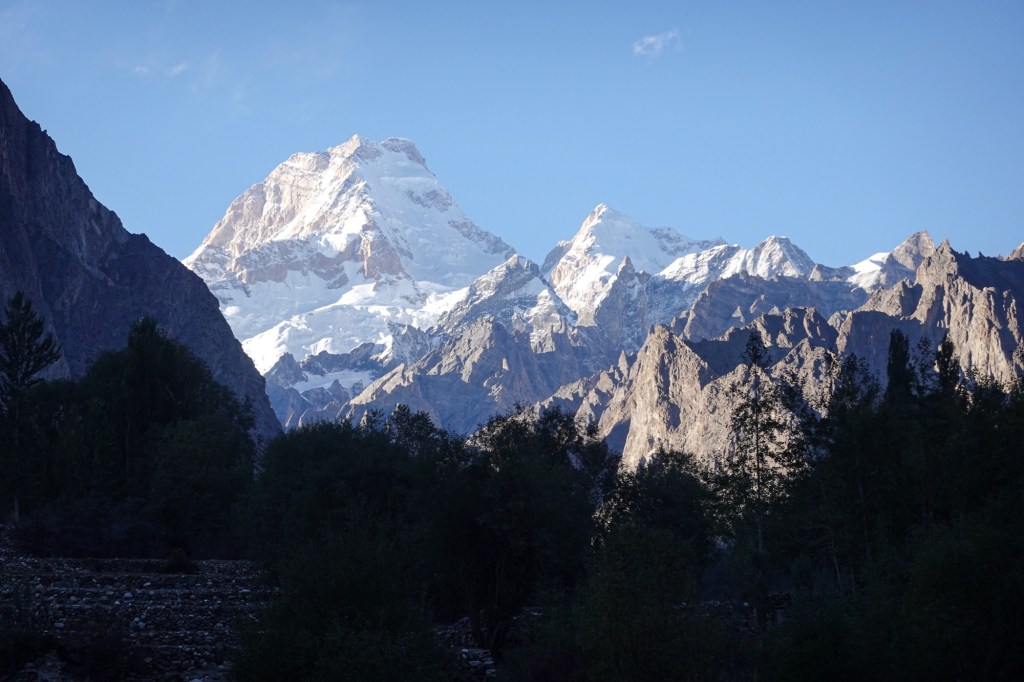
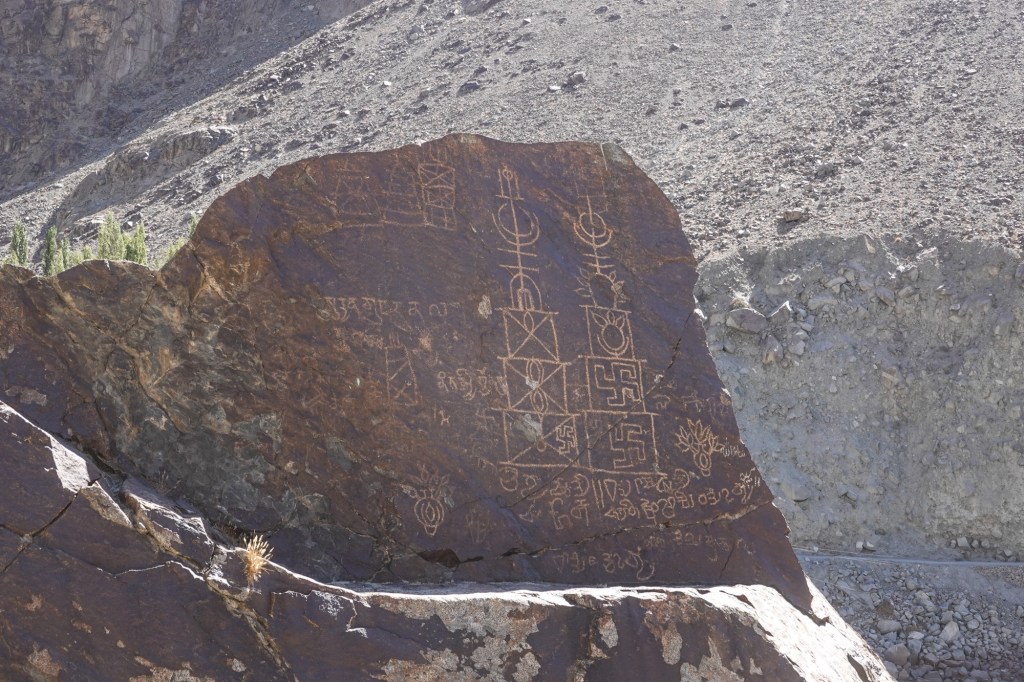
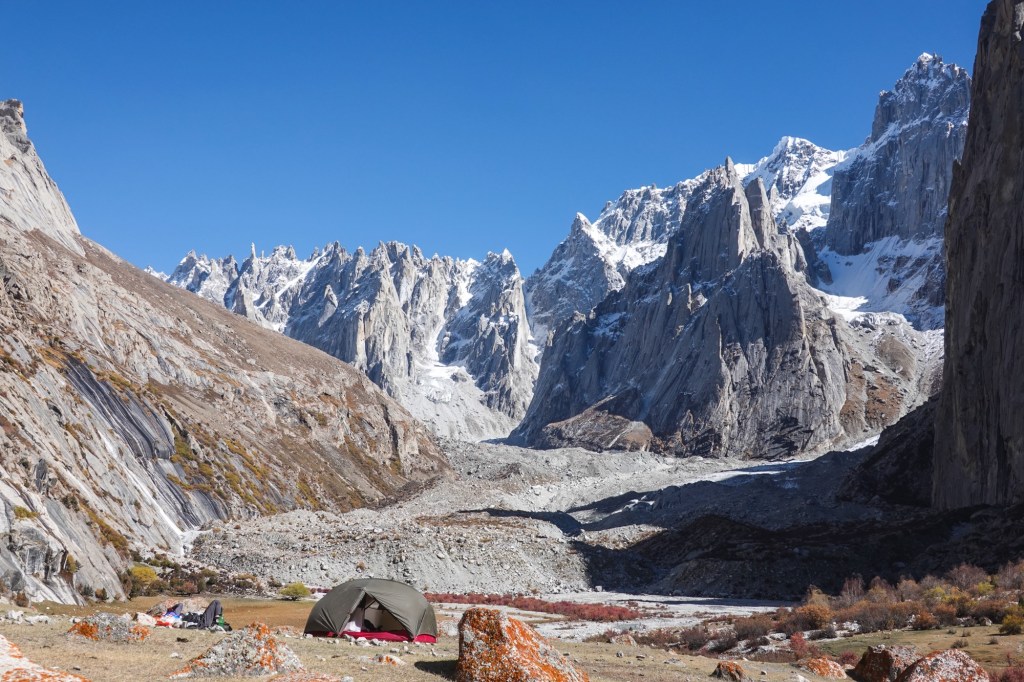
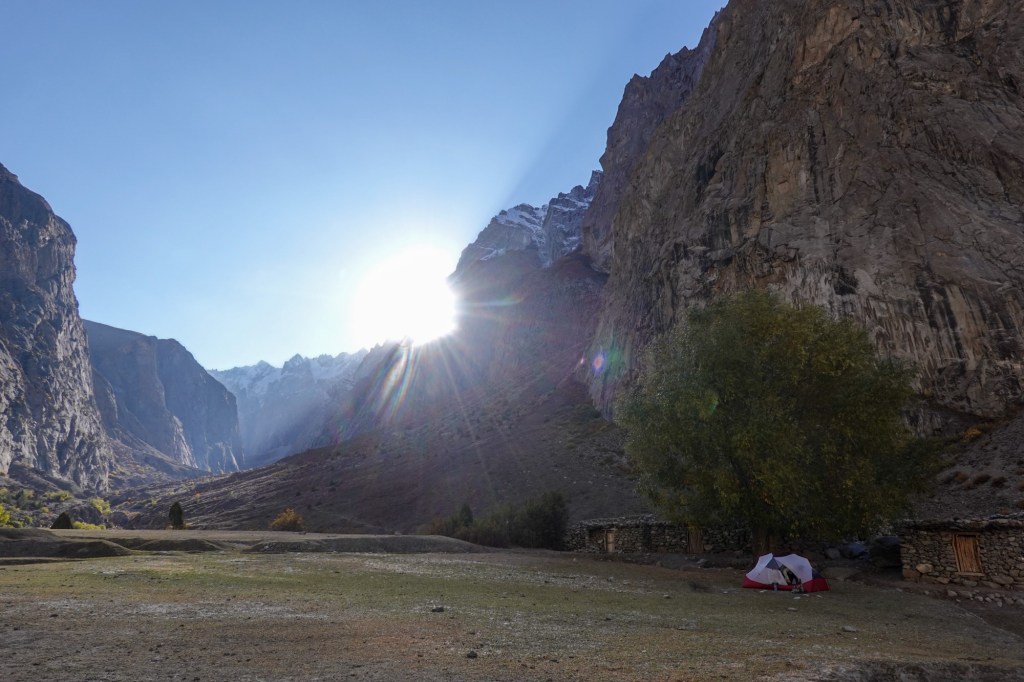
Afterwards we head towards Nangma valley – the so called Yosemite of this region. A beautiful valley with sharp cliffs and glaciers. The valley is narrow and so the sun often hides behind the walls. One freezing cold evening, sitting by a bone fire we decide to make our own „tent sauna / hot-stone massage / heater“.
Our best camping hack for cold nights so far:
- heat some smooth stones at the fire
- !let them cool down a bit!
- place them in a T-Shirt or Buff & test if they are not too hot still (skin and tent might not like it)
- Voila – Hot stone treatment! Wonderful

Back in Skardu we meet up for dinner with the owner of a tour company and „major of Hushe“ who helped us transport our bikes back to the village. (We didn’t really have the motivation to cycle the same way out). During dinner we learn more about his effort in tourism and he shares his vision of the company. At the core lies the development of the valley and sharing the beauty of the country. A charity supports various causes and supports the local community . After dinner a team of young IT- students work on the website of the charity. People seem to be eager to showcase the beauty of their country and hope to change the image Pakistan has outside. Yet little support is provided by the authorities and so each region is working on their own ideas/standards and tourism/hiking/ mountaineering education.
In Gilgit we stay one day in the “Ibiza of Pakistan”, a beautiful guesthouse run by a gentle Pakistani with his mindset sphering somewhere between his past hippie life in Ibiza and trational life in Pakistan. We meet up with my former colleague and his „wife“ for cafe and dinner. (Yes we are all married here as the concept of a partnership, significant other or girl/boyfriend is rare or non existent.) They are also living in Innsbruck Region and cycled to Pakistan. The meeting was really nice and an unexpected surprise. We exchange stories from home, stories from travelling and plans and ideas.
It reminds us of the role tourism played in alpine villages in Austria but also of the downsides and overtourism these fragile environments had to face.
Where to go?
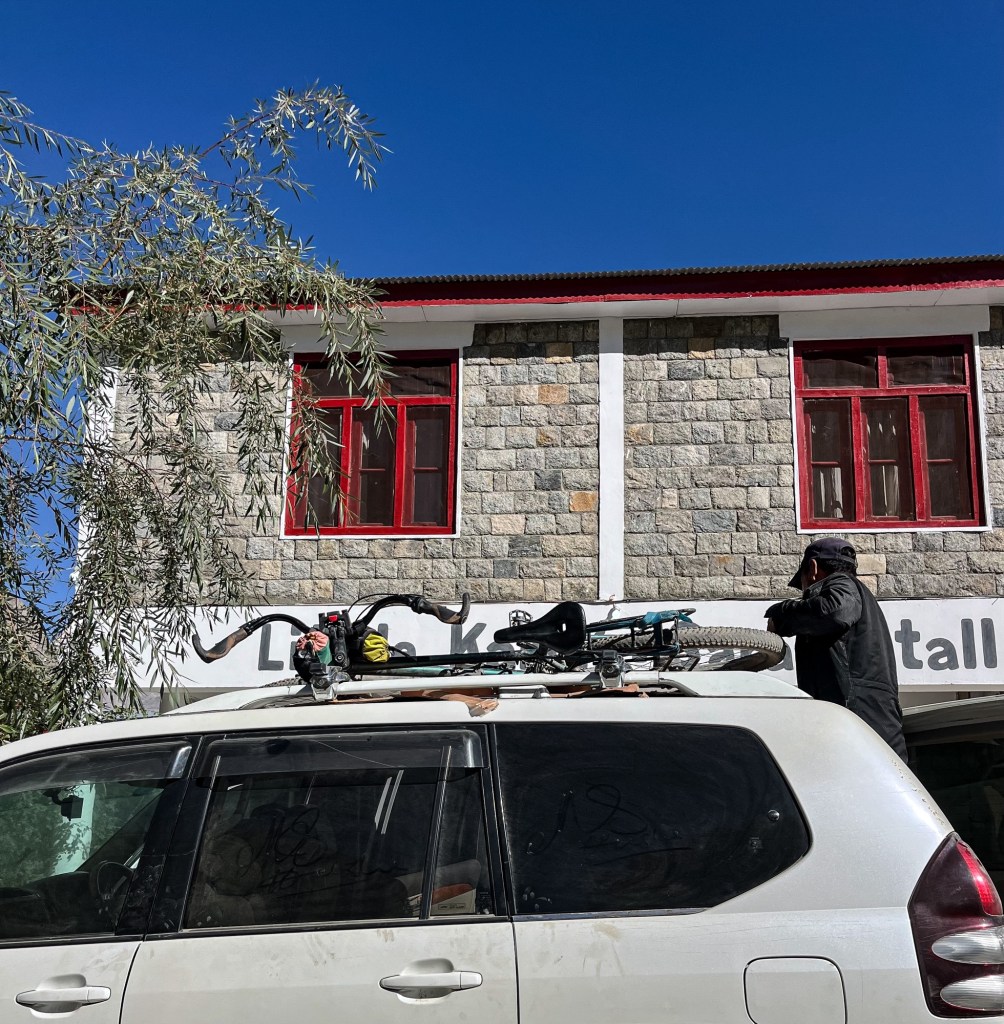
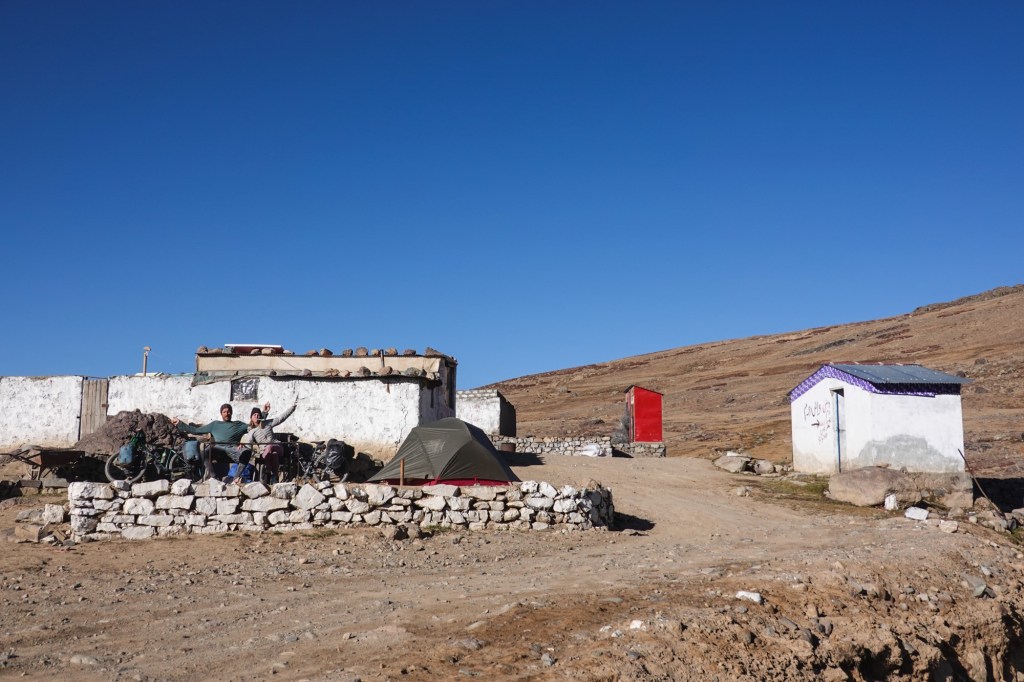
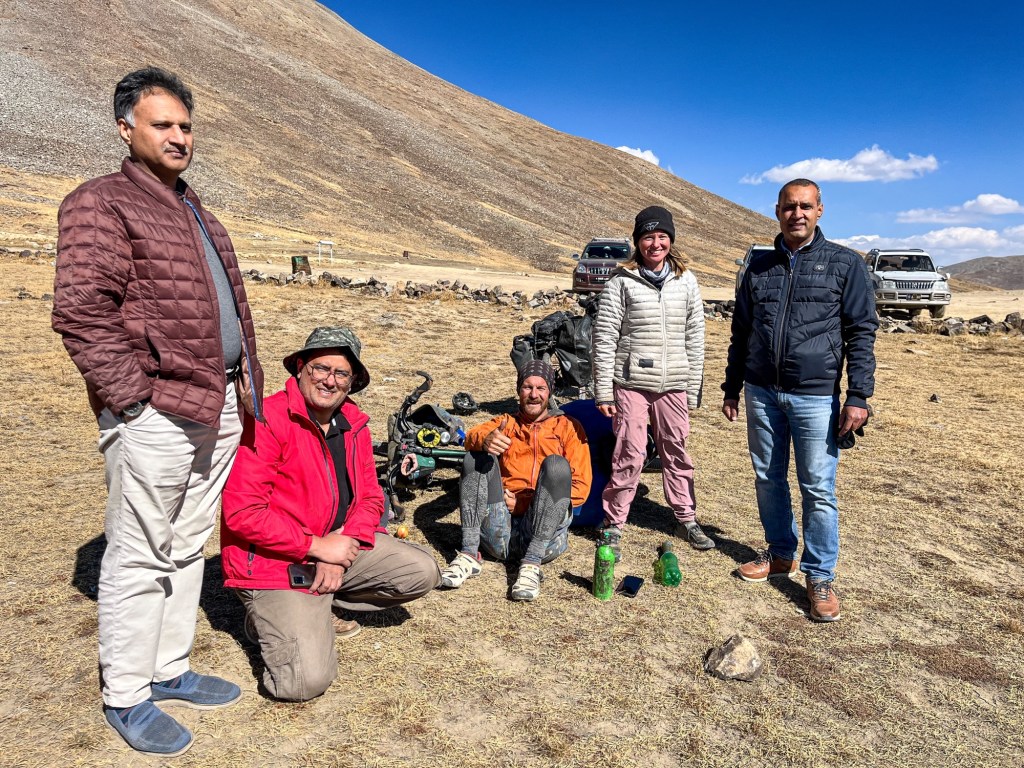
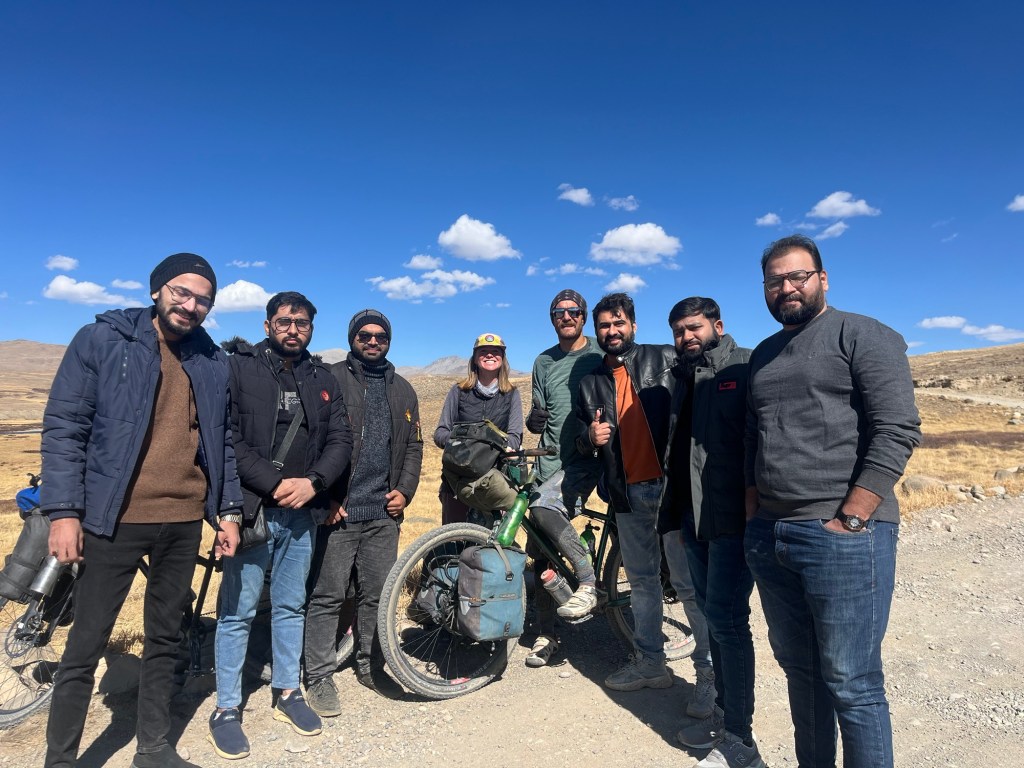
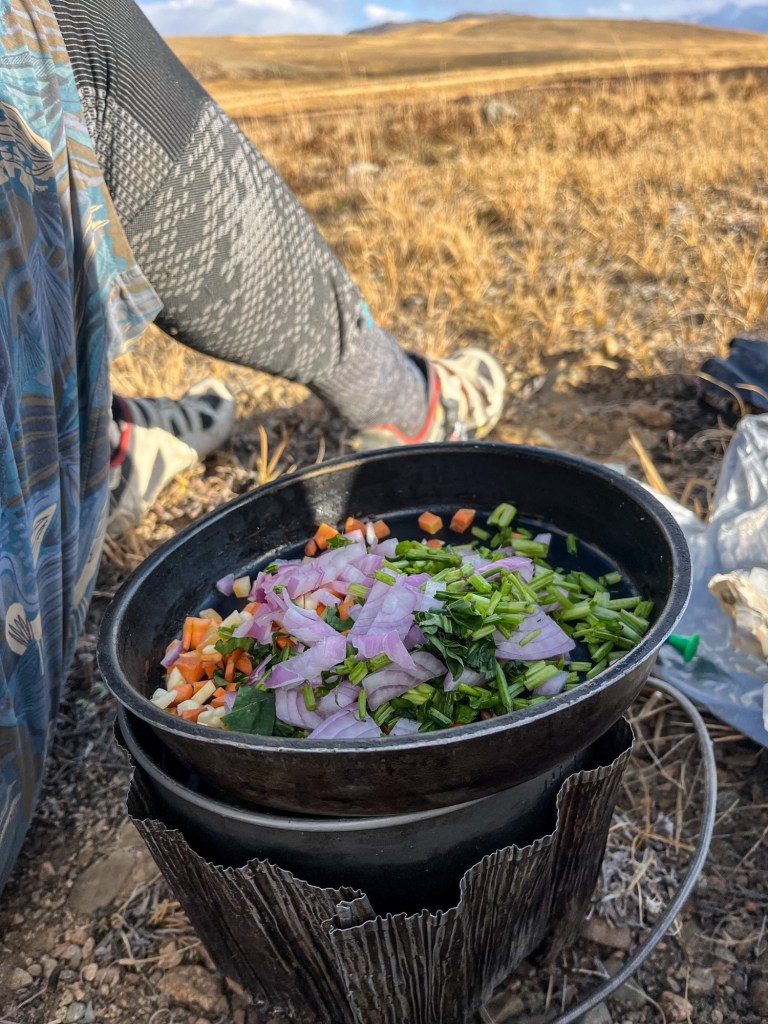
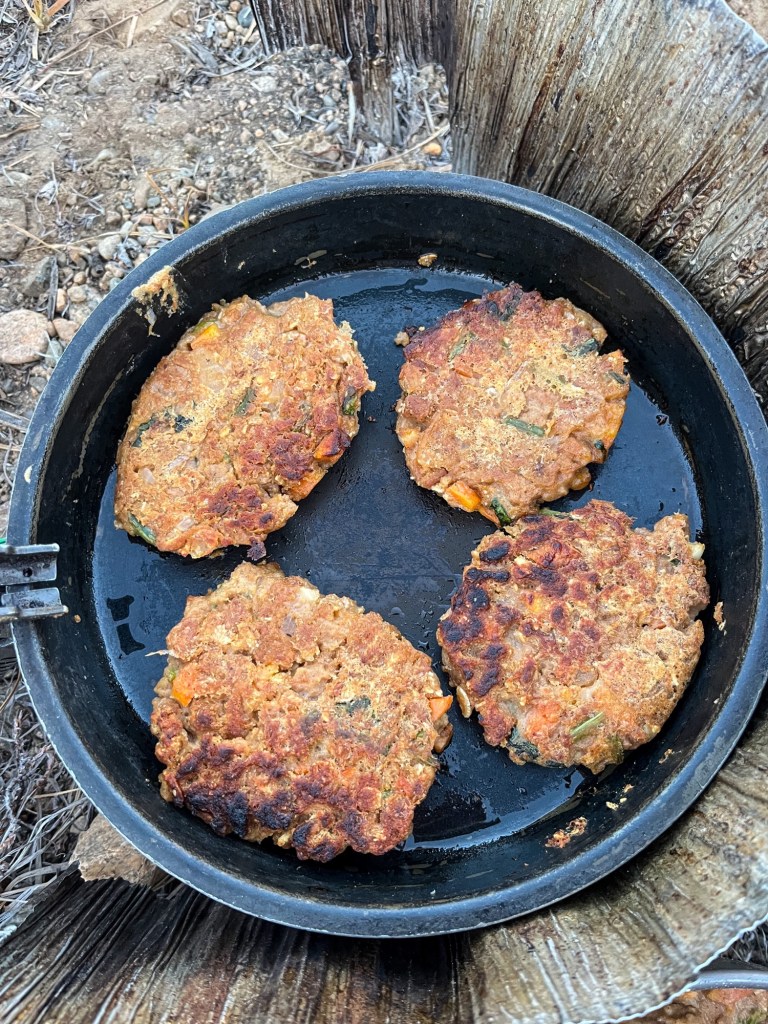
Another foodpoising related break later we leave Skardu and head towards the Deosai Nation Park – known as „the second highest plateau of the world“. We love these alpine plateaus and are super excited to cycle this loop. The ascent to the first pass is steep and the 1800 altitude meters feel heavy and exhausting. Maybe we should not have bought another kg of potatoes and soya protein. Dirt tracks, clear rivers, mountains that frame the golden shimmering grass landscape. We are in a cycling heaven! Nevertheless cyclists don’t go unnoticed and we find ourselves in many pictures posing with Pakistani tourists. „Country? Foto? Youtube channel?“ are the questions we are asked followed by an introduction to a relative that lives in Germany or Austria (or Europe). There are days where we feel too exposed and stressed on the bikes.

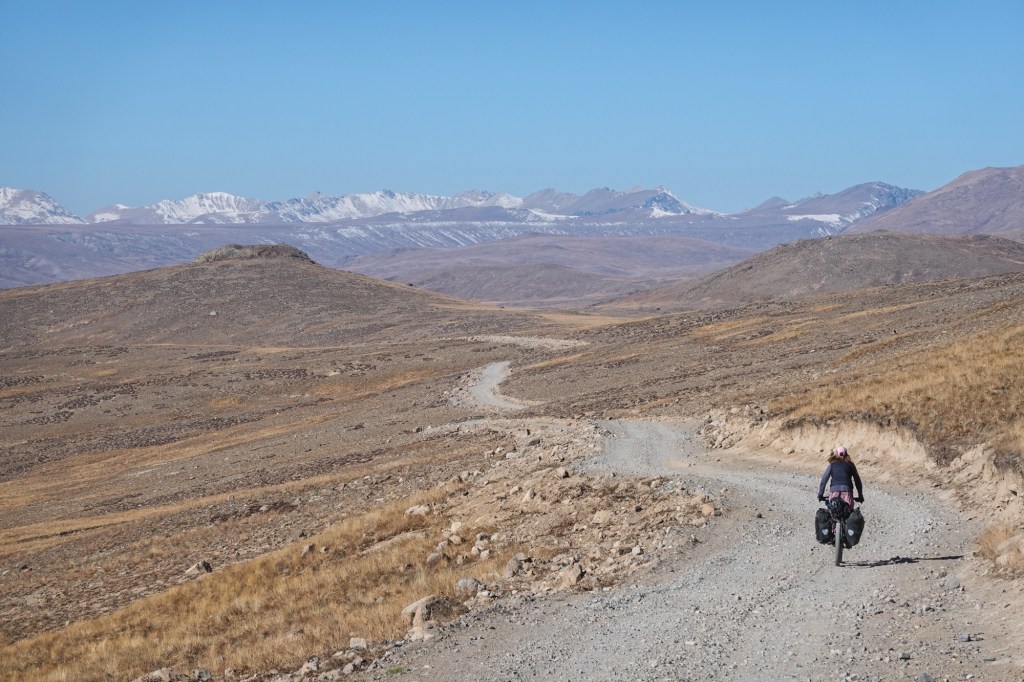
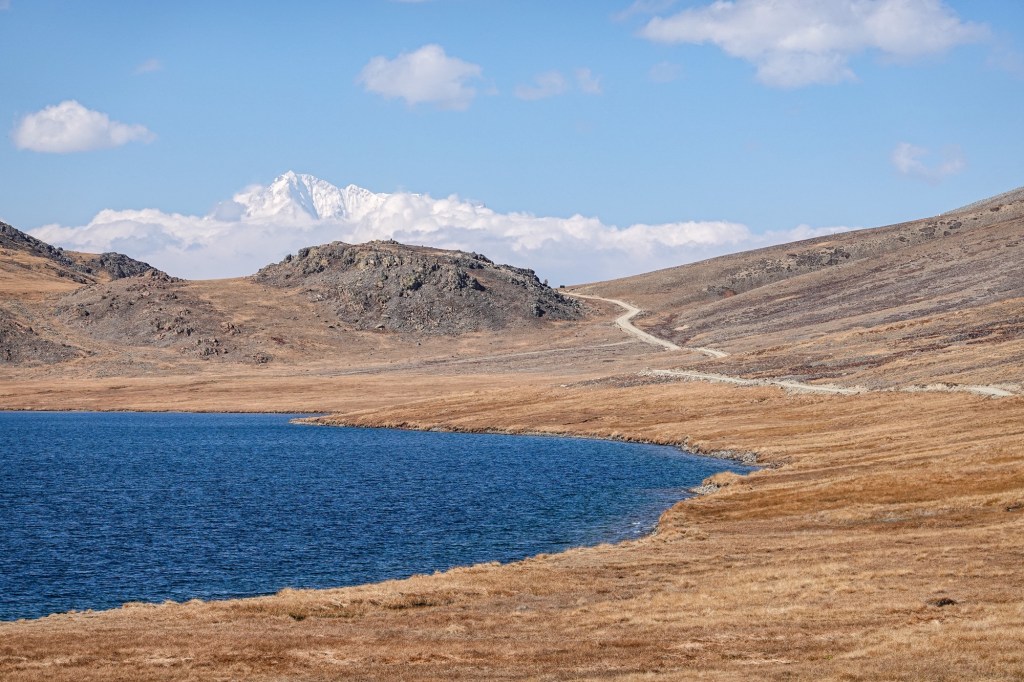
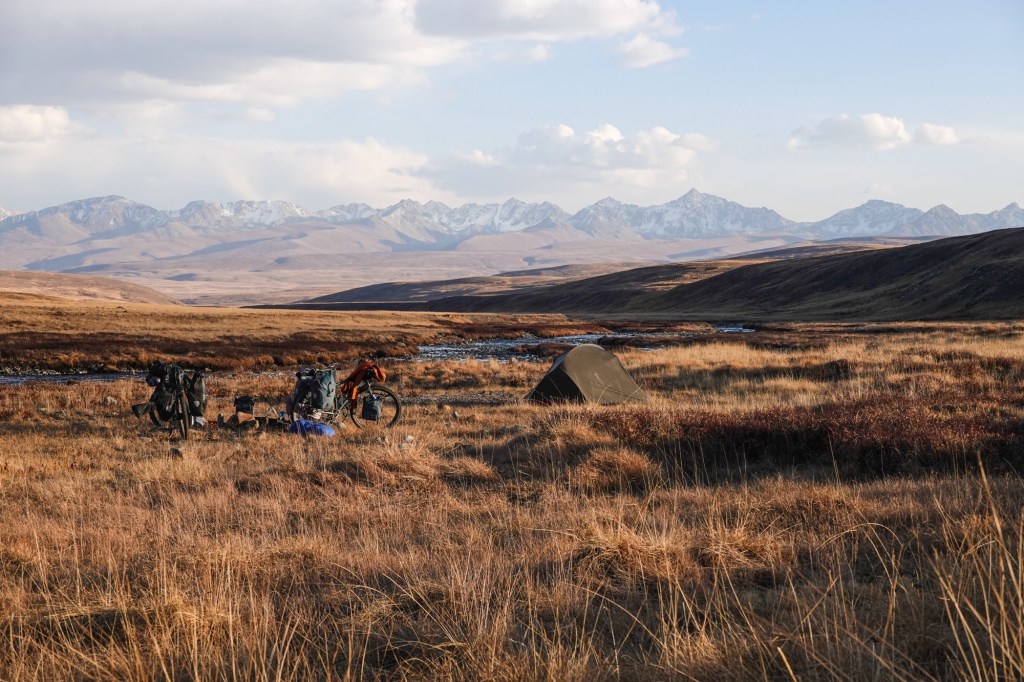

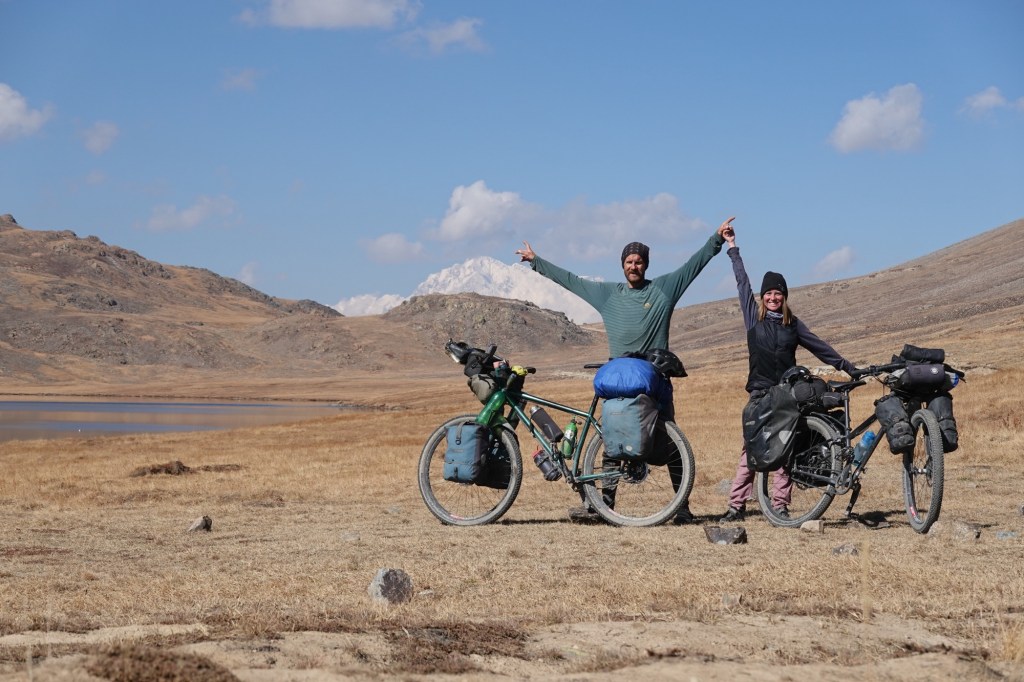
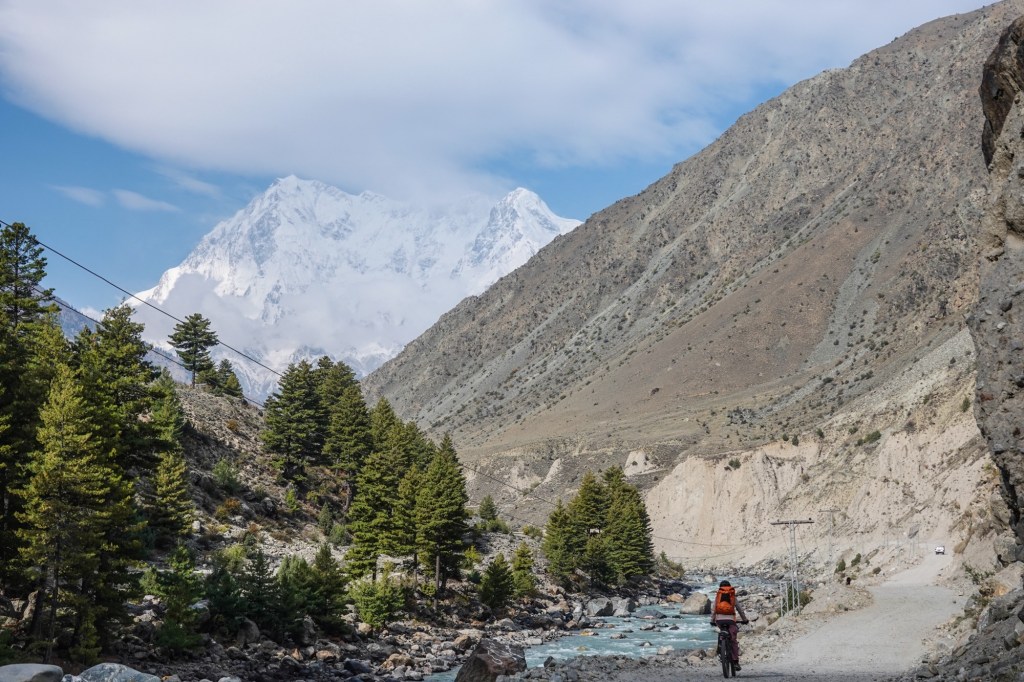
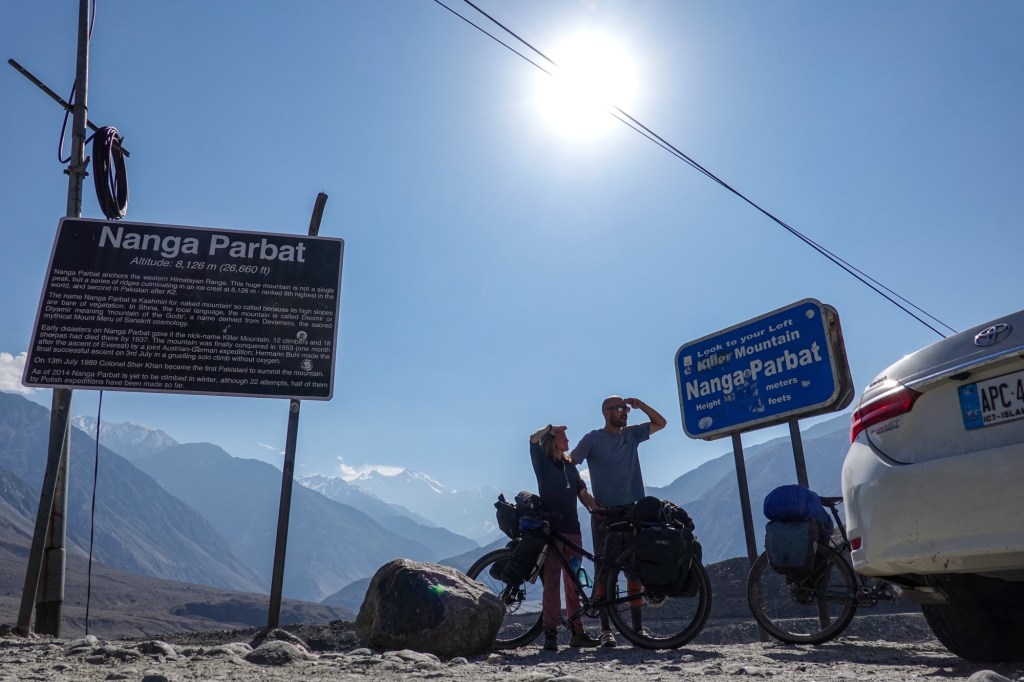
After taking our time on the plateau we descend towards Astore valley with view of the majestic Nanga Parbat. A winding road, framed by golden trees and beautiful wooden huts flows into the valley. Nanga Parbat – the Killer Mountain as it is called, due to the fact that it is statistically the deadliest 8000er – seem gentle and peaceful from the distance. It feels unreal again, while we are used to see 3000 peaks, up here the dimensions are completely different.

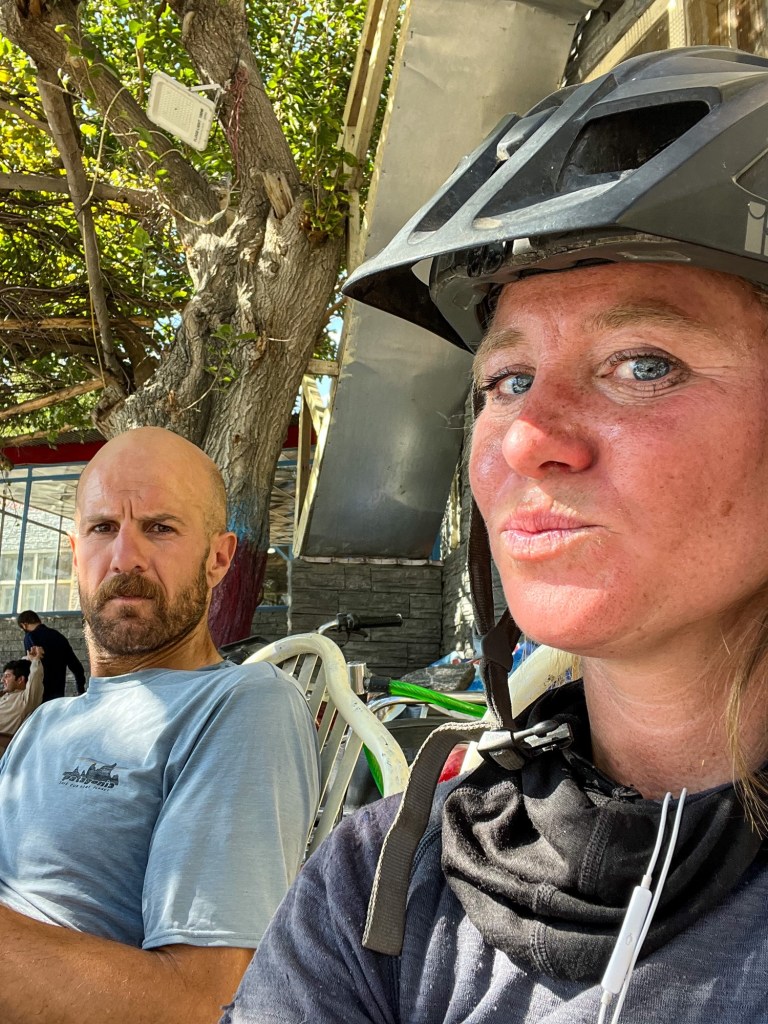
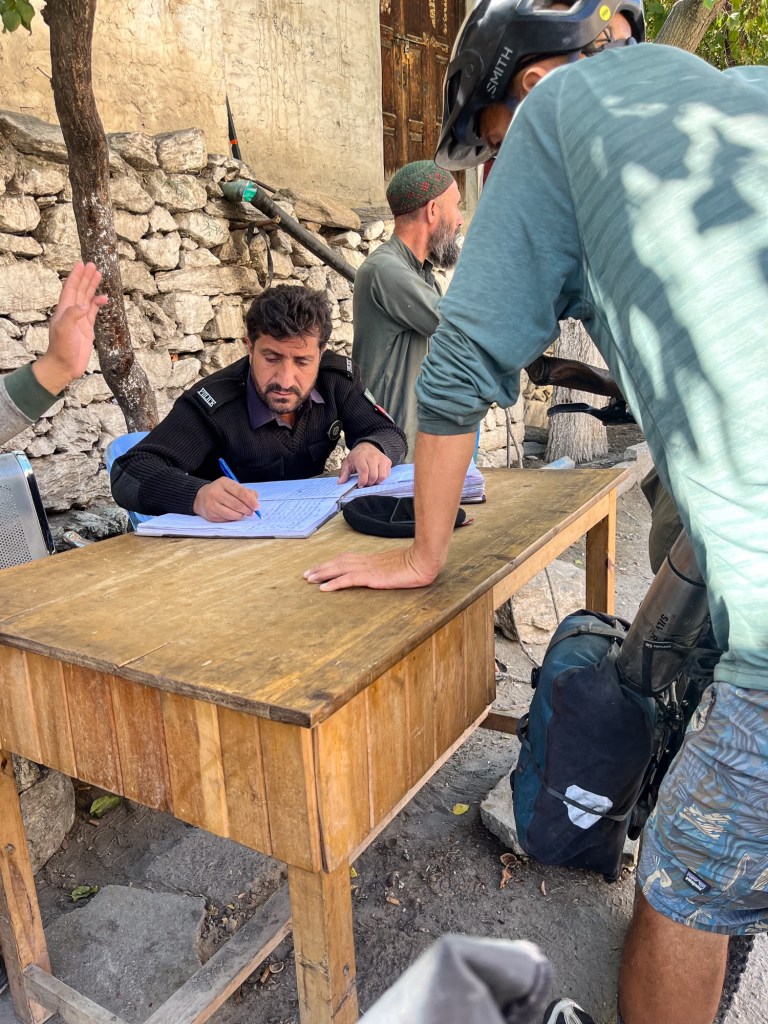
We had one rather curious encounter with the „tourist police“. A special police force, whose task it is to make sure tourists are safe. He looks at me worried: „What happened to your lips, do you drink enough, do you wear a mask?“. (I have a small bloody crack in my lips from the cold). Afterwards Rolfi is asked to state his experience with the tourists police on video and of more selfies.
During the past days (and weeks) the question on how we should go on with our journey after Pakistan is nagging on us, our motivation and mood. While a few weeks ago we were still hopeful that we that we could be granted an India Visa in Islamabad – by now we gave up on this idea. For a few months now – it is no longer possible to obtain a paper visa which allows to cross the border by land. Many people take a flight via Dubai to a town close to the border to India, then go back to Pakistan, take their bikes and continue to India (once the e- visa is valid; you can cross via land back to India). Taking 2 flights for a 50km distance seems absurd to us. With our original goal having vanished we are left with a few options to continue on land which all include „troubled“ areas with escorts. We have a lot of talks about our route and our options and change our mind every other day.
What risk would you take for education?
We will leave Gilgit-Baltistan and head towards the „actual“ Pakistan and the region KPK. While leaving the town Gilgit in the morning many nany schoolkids are on the roads, on the back of trucks or even in the shovels of excavators who are heading to school – for kilometers. Everyone nicely dressed in their smart school uniforms.
The road to Shandur pass is under construction and super bumpy and dusty. They are building a super highway connecting Chitral (capital of KPK region) and Gilgit (capital of Gilgit Baltistan) and so we have to face various roadblocks on the way. The waiting time is spent with lots of frustration, nice chats, selfies and bike repairs and some fun with the guys in the first line at the roadblocks battling for the kick start.
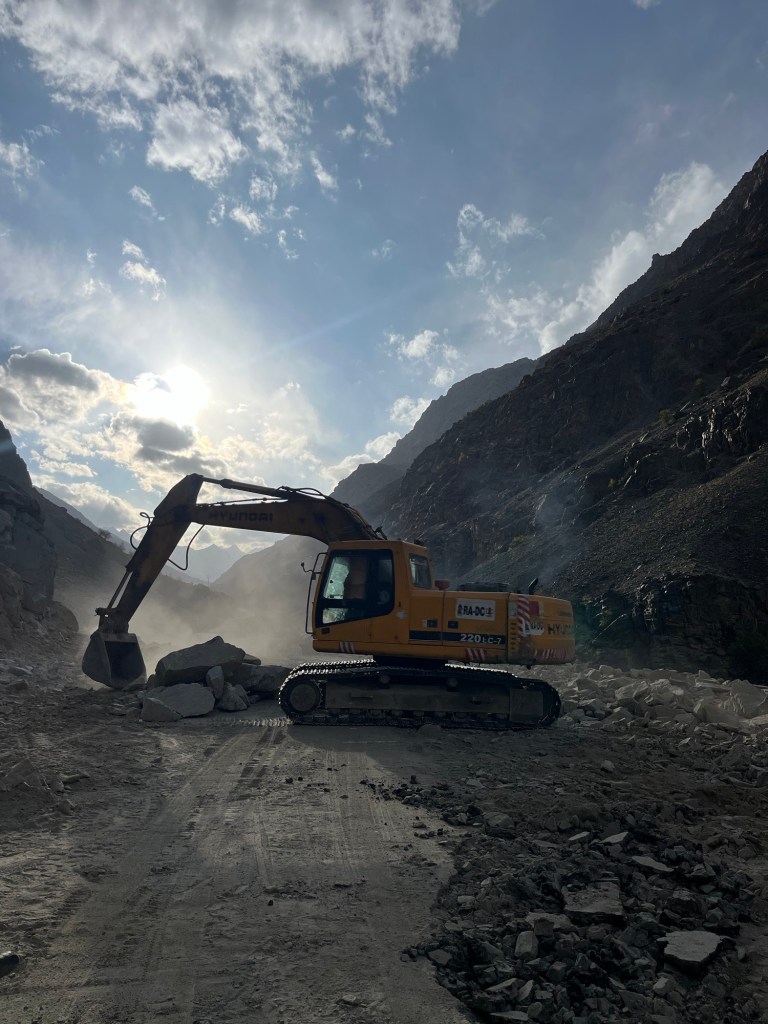


As soon as a road block opens up, the cars and busses rush off !on both ends of the road block! and – guess what – get stuck again. At every stop both ends start at the same time, uncoordinated, causing another blockage as on the narrow road there is hardly space for one big truck. Cycles and bikes have it easy and are able to sneak through. The excavators drag massive boulders around and we don’t dare to look up on to the walls where the boulders appear to be hanging on a string, ready to drop on the track any time soon.
The roadworks leave a mark on our bikes – a stretch of 200km we count 5 flat tires.
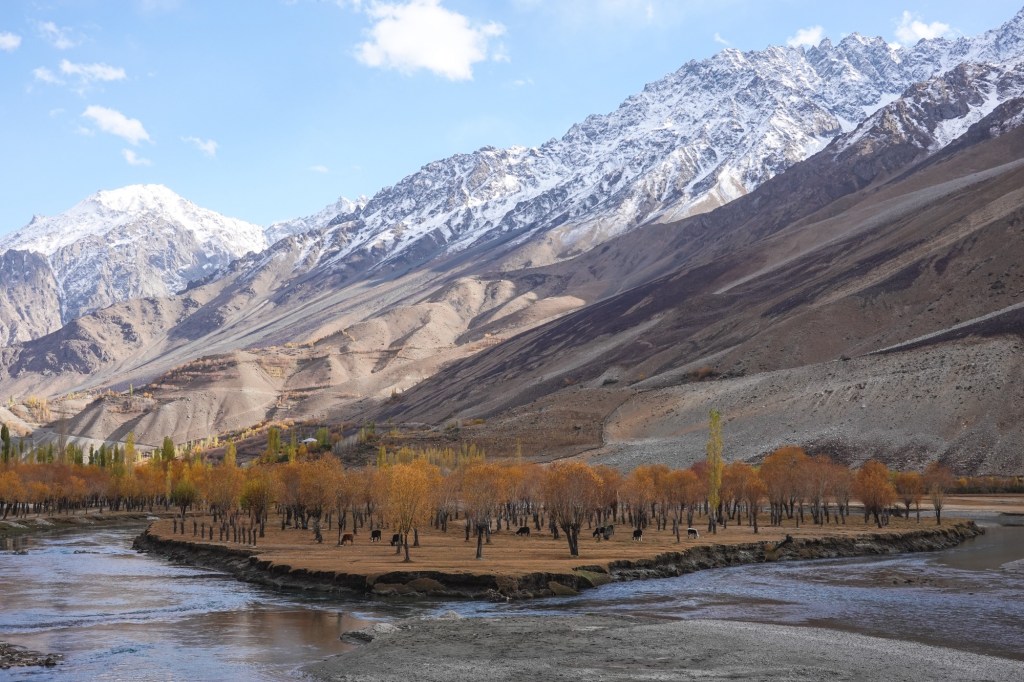
Yet the valley is beautiful. The crystal clear river outshines the golden leaves of the trees. At Shandor pass 3738m there is the biggest cricket field of the reagion. A game between KPK and Gilgit takes place every year. Currently the area is quiet. Only a few toilet houses and buildings are leftover from the big events.
As we head further into the KPK region we realise that schools start to look more and more like prisons. While in GB they were colourfully decorated with quotes and painting, here barbed wire decorates the walls. It is not long ago that school were targeted and destroyed. During the Taliban period many schools were attacked. We recently listened to the audio book of Malala and while passing the fenced schools sadness overcomes us. Education (among many other things) are taken for granted at home and are seen as a necessity. Would we stand up for our right for education as strongly as people did here in the past?
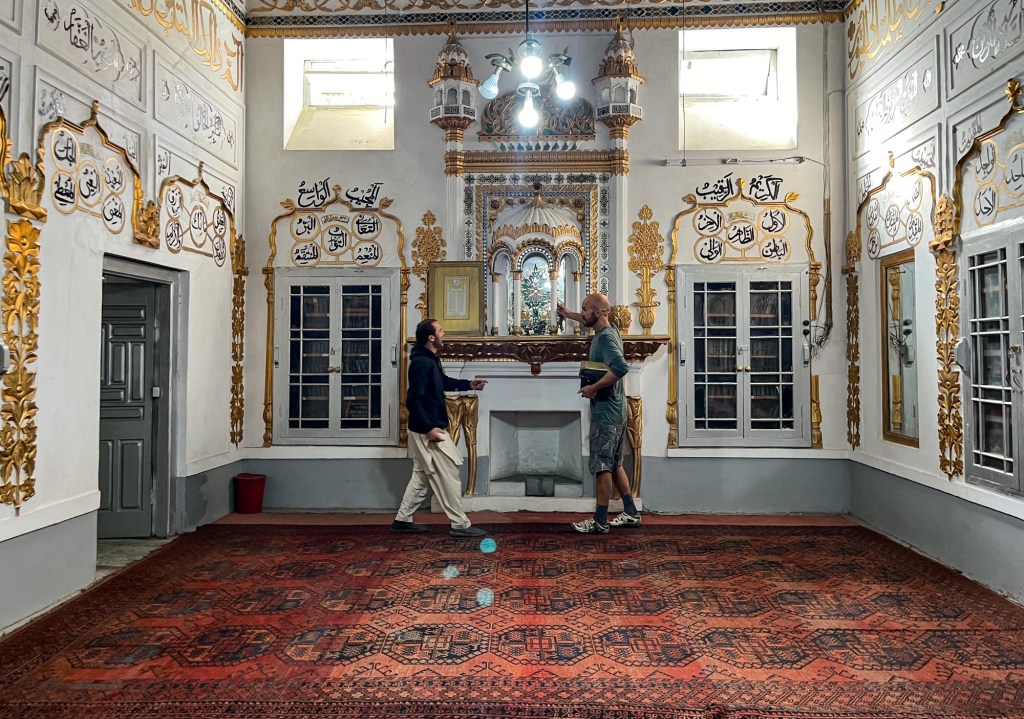
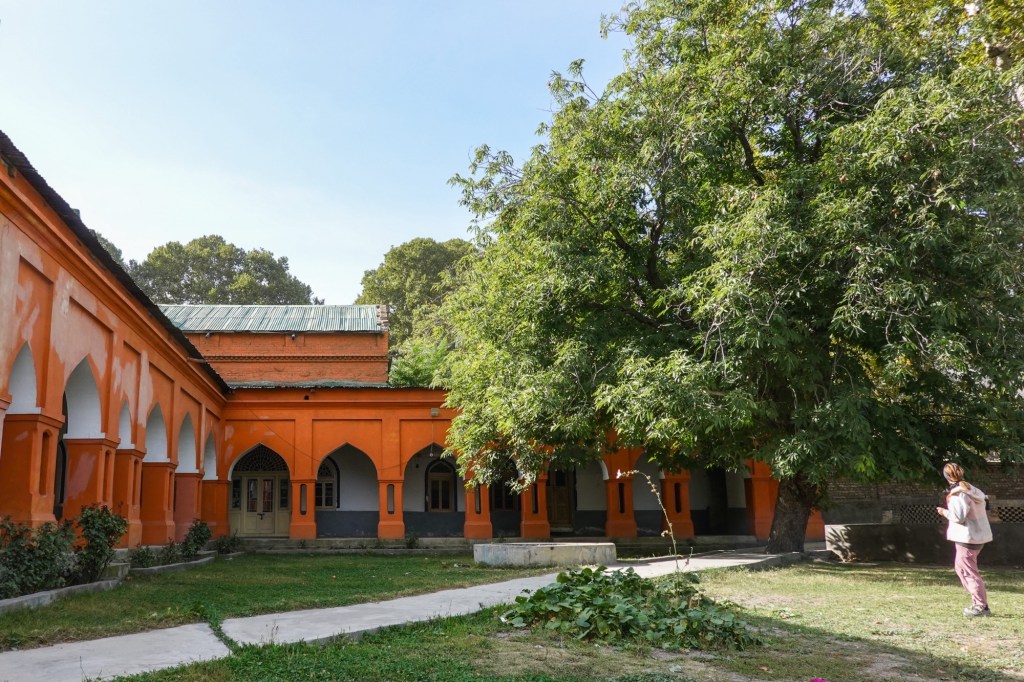
In Chitral we accidentally have a meet and greet with one of the ancestor of the former princely regent of the region or as the staff of the fort would call him: the current king of Chitral. because Rolfi was once again impatient to wait for our tour guide through the castle. The castle has a collection of items from the kingdom of Chitral and the battles which took place in the region.

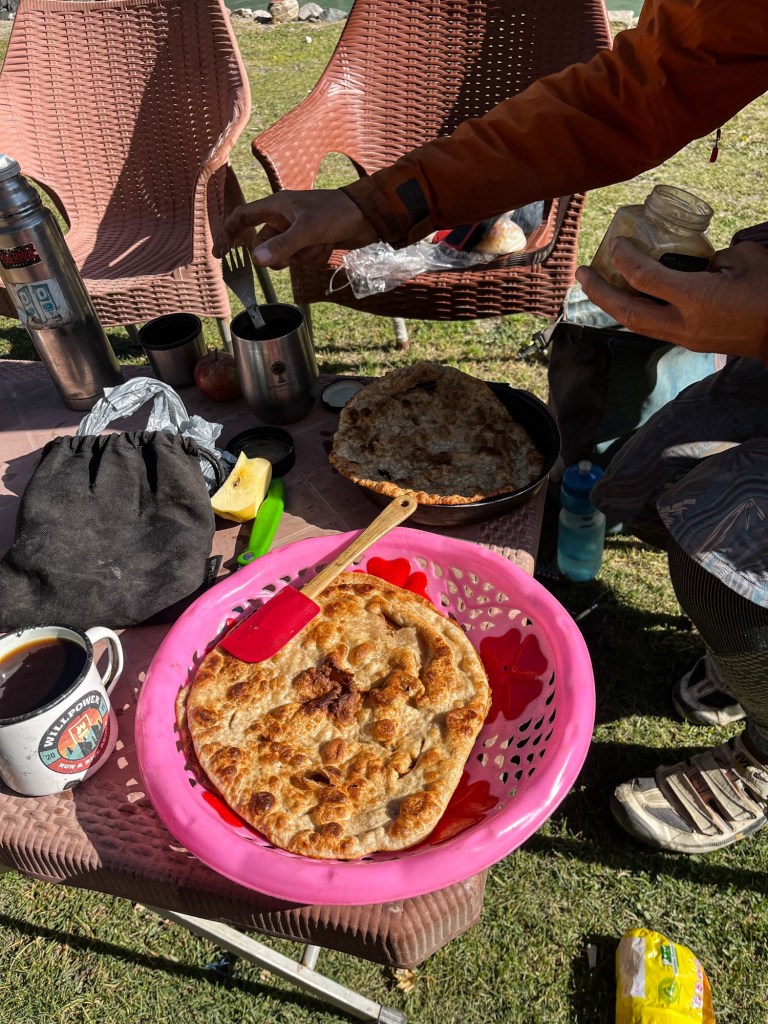
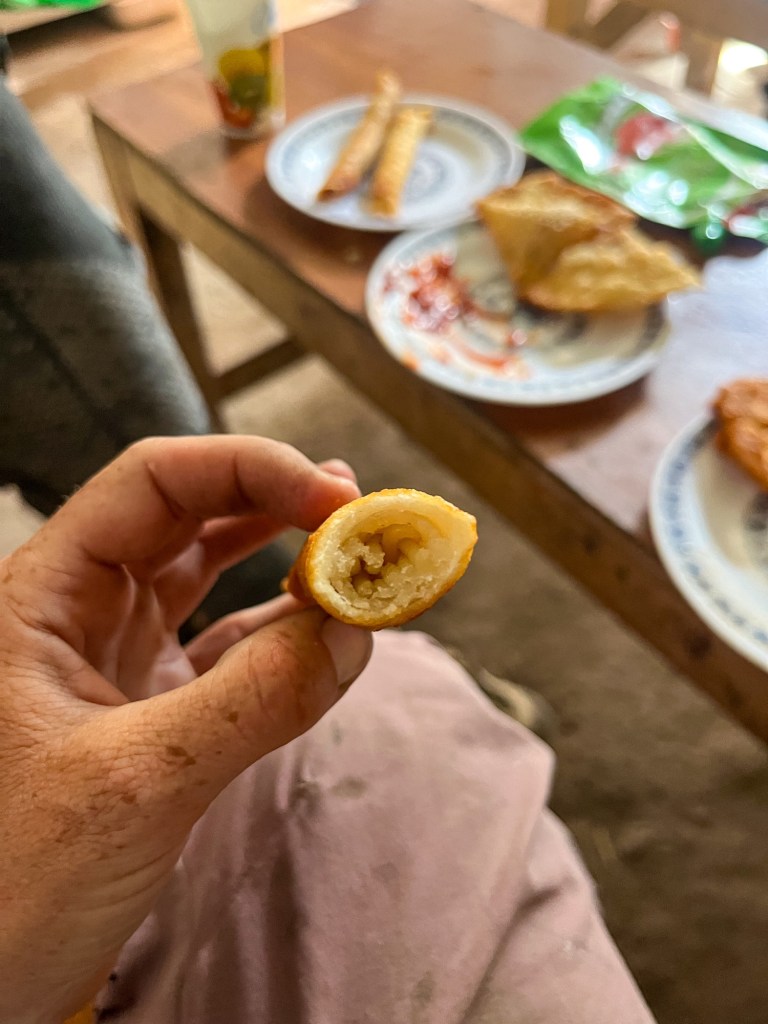
Aside from all the delicious veggies, fruits (fresh and dry) we also make some new fast food encounters. Any Italian should now skip the next sentence. Next to samosas and pakora we get to taste „Rollis“: it looks like a spring roll but is filled with Spagetti. Little guilty pleasure during the dusty cycling days.

One evening we enjoy a meal in a small restaurant with a group of local men. The TV is on, after some traditional music the channel is switched to – wrestling. I became used to being the only female in a restaurant, however watching half naked men bashing their heads in, for fun, is nothing I would like to watch over dinner. While I am irritated by the situation, Rolfi is puzzled by the fact that „Heartbreak Kid Sean Michaels“ is the referee.
How to behave consciously in a tourist hotspot and sensitive communities?
We leave Chitral and head towards the valley where most of the descendants of the Kalash ethnicity live, who speak a dardic language (indo-european). An ethnicity connected to nature and its cycles, known for their unique traditions, colourful dresses (and the fact that they produce wine). Estimated 4000 people are accounted as Kalash. Once Kalash inhabited most of the Chitral area but have been driven to three valley in times of persecution. Local as well as international tourists flood to these valley especially during the festivals season turning the area into something like a human zoo. Festivals become TikTok virals, false information is spread and used against the people. With this in mind we leave cameras behind and choose questions carefully asking ourselves if it was „right“ to come here at all.
A dusty dirt road leads to these valley, even with a buff the dirt and the particles sting in the nose and the lungs. We arrive at a guesthouse run by a Kalash family which someone recommended to us. We are irritated by the divergence between the guestbook entries and our impression but can relate to their indifference to tourisms. Tourists coming in expecting the unique „Kalash“ experience and expecting stories about their lives, having to tell the same story again and again.
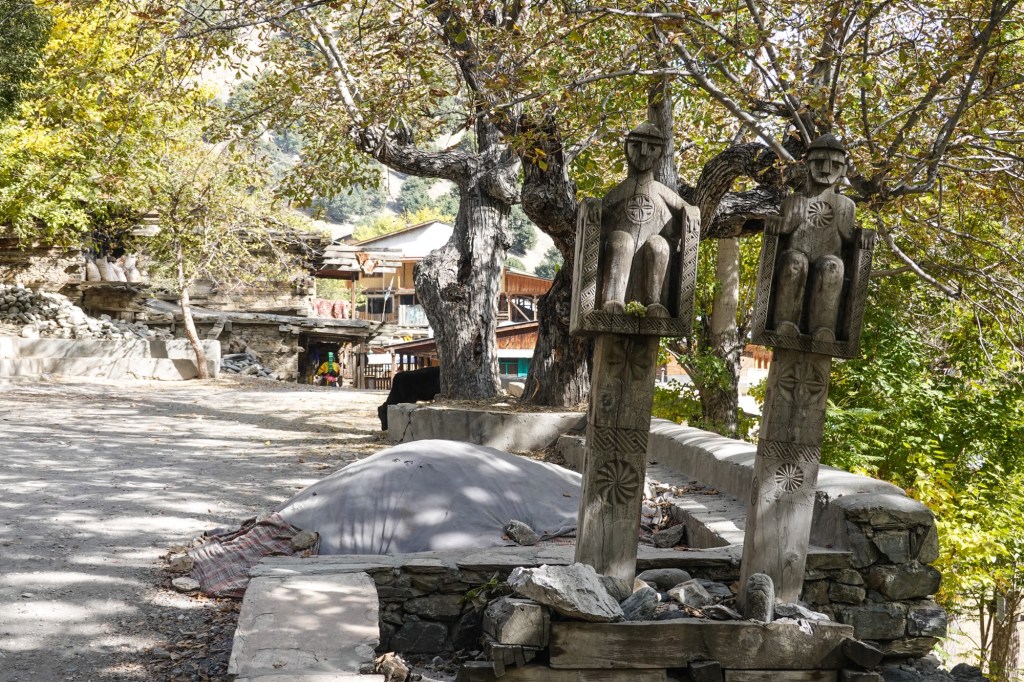
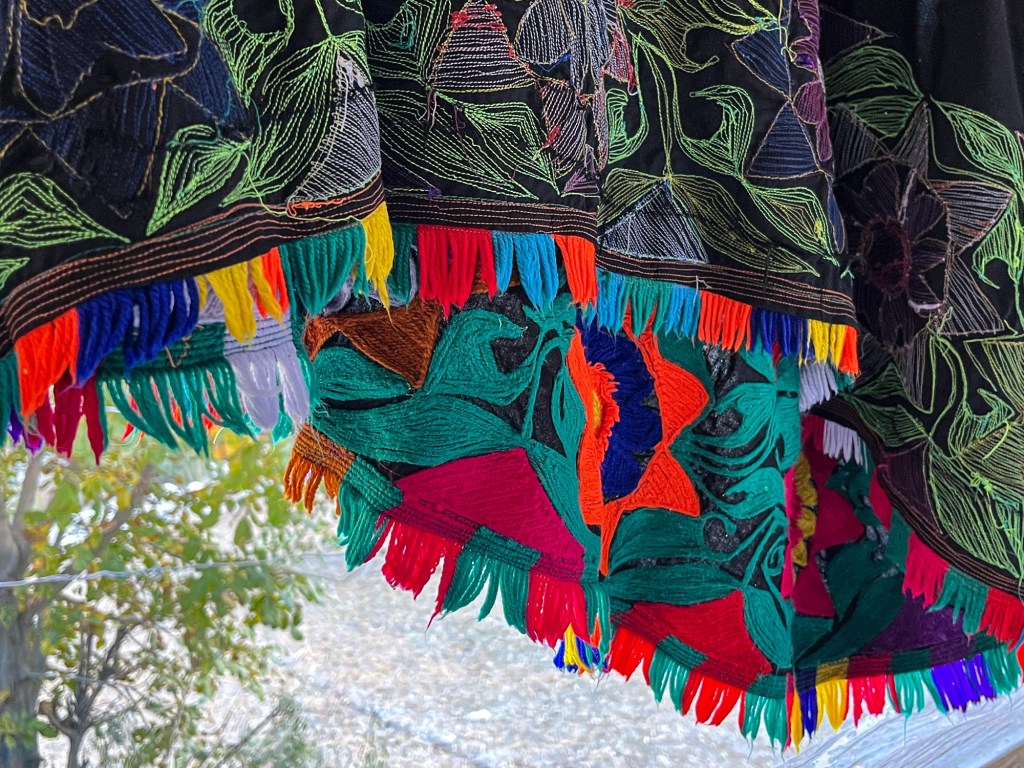
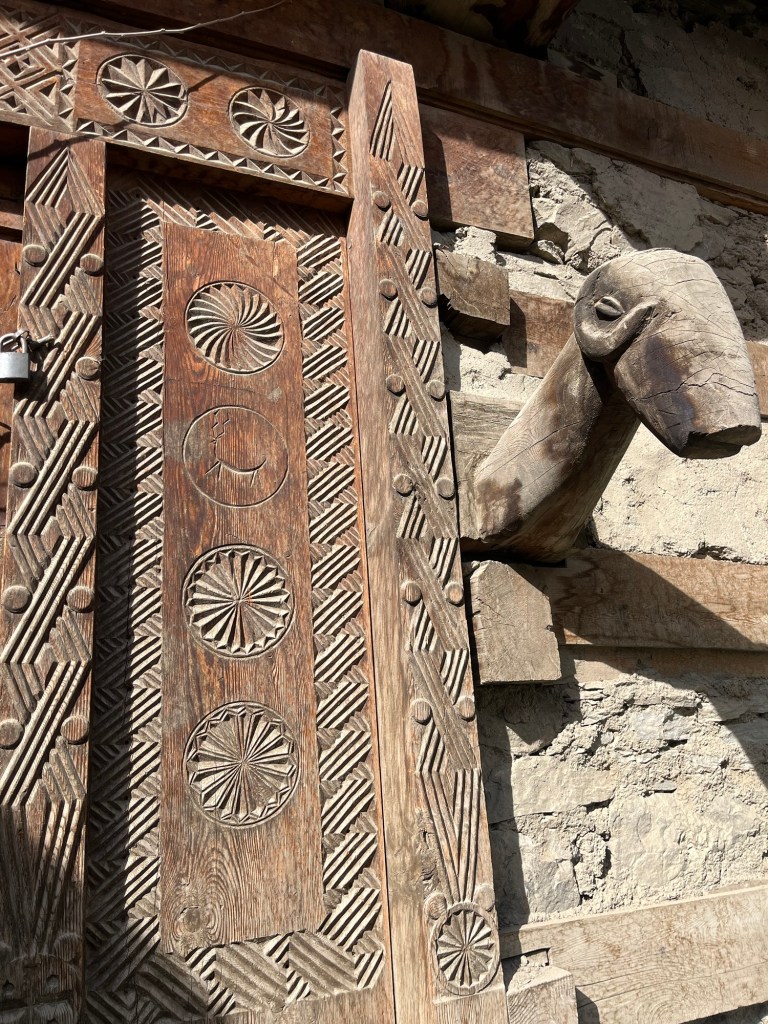
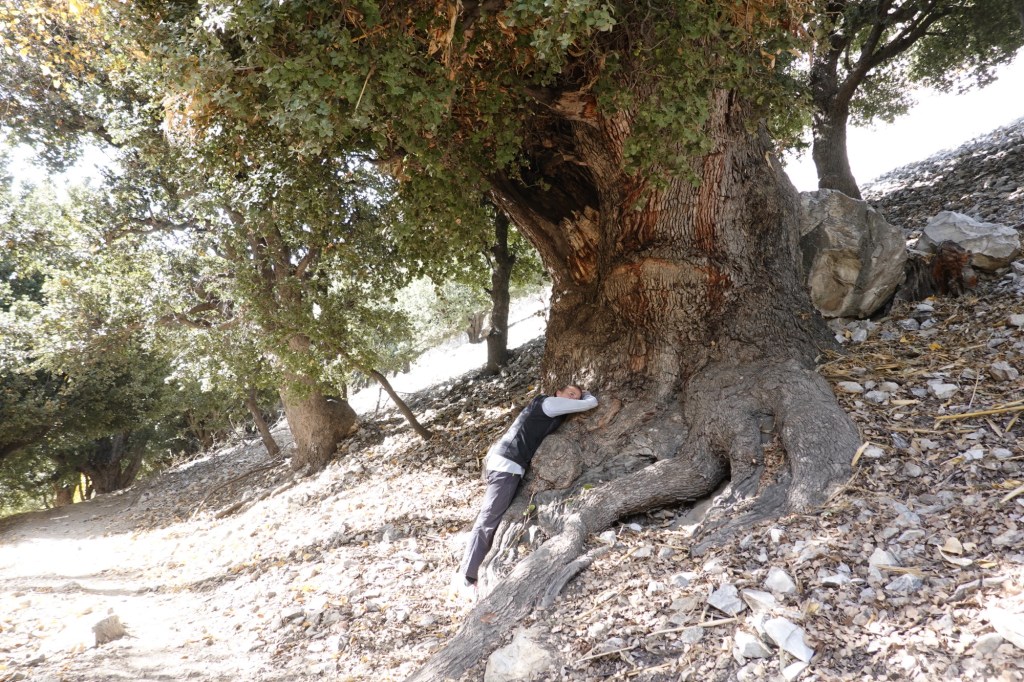
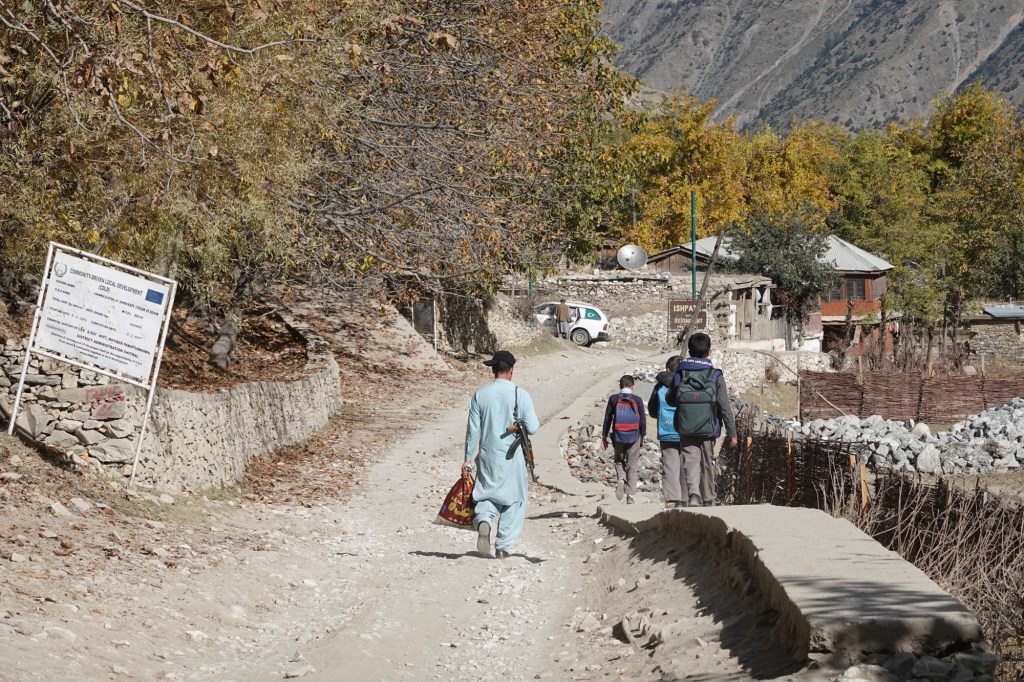
One highlight (for me) was the local traditional walnut bread. We head out for a walk. The population of the village is a colourful blend between (Kalashi head jewellery) and hijabs – as many Kalashi converted to Islam. Apparently men from major cities roam to the areas to look for potential partners. We get to know a soon-to-be husband. He cherishes the beauty, cheerful nature and openness of the Kalash but emphasises on the importance of his soon to be wife to have converted to Islam. Irritating and strange to think about.
In the village we cross a bridge were younger women wash the colourful dresses in the river and observing us with distant looks. Colourful traditionell blankets and clothes dry in the sun next to a playboy towel. Further down in the village we part ways.
I follow the track next to the river find myself invited by a nice men and his wife in a small stone cottage. They live a few months here and a few months in the village. Over tea he introduces his father and grandfather who are both Kalash. He, himself, converted as a young adult. The question „why“ he answers by shrugging his shoulders. Now he is is retired but he used to work in Chitral in civil service. His children live in Chitral and the villages. His father joins for tea, a elderly men, shaky ob his feet but with a gentle look of curiosity. One mystic around the Kalash is the age they reach due to the healthy nutrition, especially attributed to walnuts. From the amount of packaging on the ground and the snacks in the shop this has changed dramatically in the past.
The grandfather of the host lies on the bed in the cottage sometimes looking outside with curiosity and waving his thin hand. Guessing his age, by the fact that his grandson is already retired, he must be older than 100 years.
Rolfi was invited to tea in the last town of the valley by nuristani men for some tea where a „heated“ discussion took place about the role of the „west“ in Pakistan. The last village is close to the border to Afghanistan and a track leads over the mountains to the afghan region Nuristan. Hence the last village is no longer inhabited by the Kalashi. The valley itself is 20km long and is an example of the cultural diversity in many Pakistani Areas.
We decide to visit the other valley called Bunburet. The Museum together with a school was funded and established by greek NGO and is run by Chitralis. The NGO took efforts in established and restoring the traditional and important Kalash places. Such as the menstruation house in which female Kalashi retreat during their period or during childbirth. Rather strange is the fact that the NGO made sure to incorporate greek hertitage on the artifacts.
A young local, helps us to push the bikes to the guesthouse and later is happy to give us a tour. He studies politics and wishes to do the civil service exam with the goal to be working in foreign politics. He is proud of his heritage and explains that Imran Kahn (a former cricket player now arrested politican) – in his first term in parliament- made sure minorities are represented in the government. Furthermore we learn that „Gender studies“ is a subject that is part of the civil service exam. We cycle out of the valley with a lot of new impressions and many more new questions.
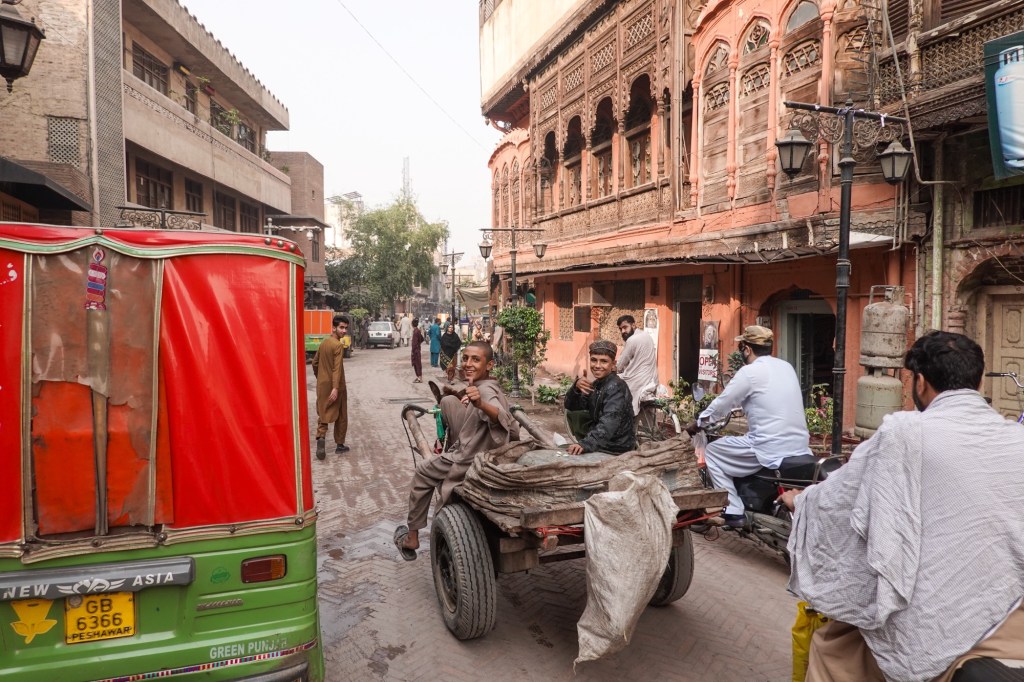
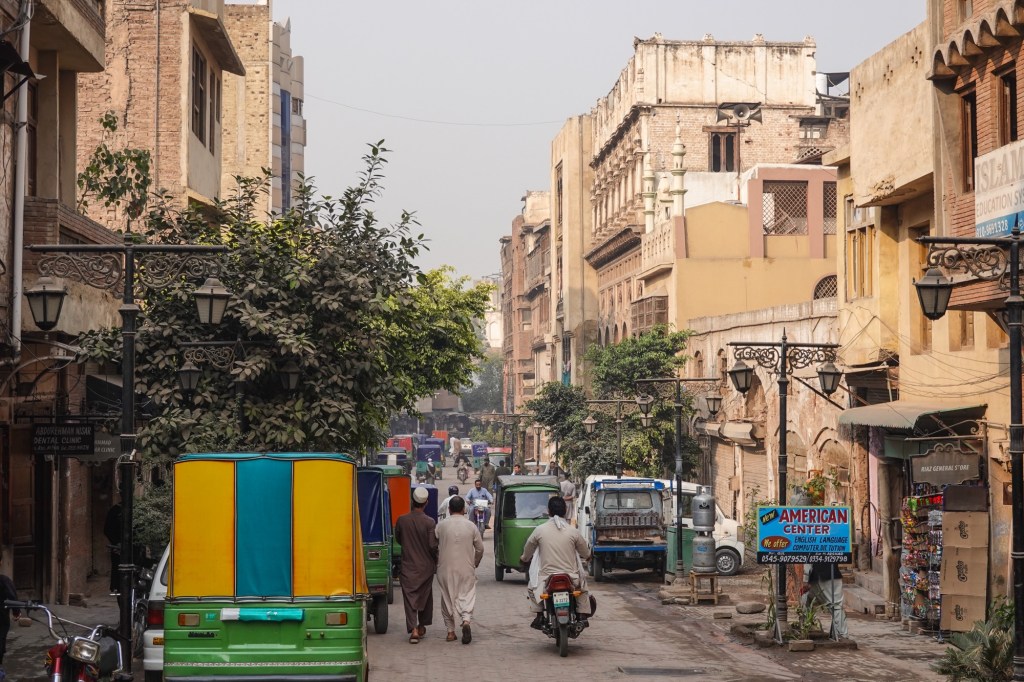
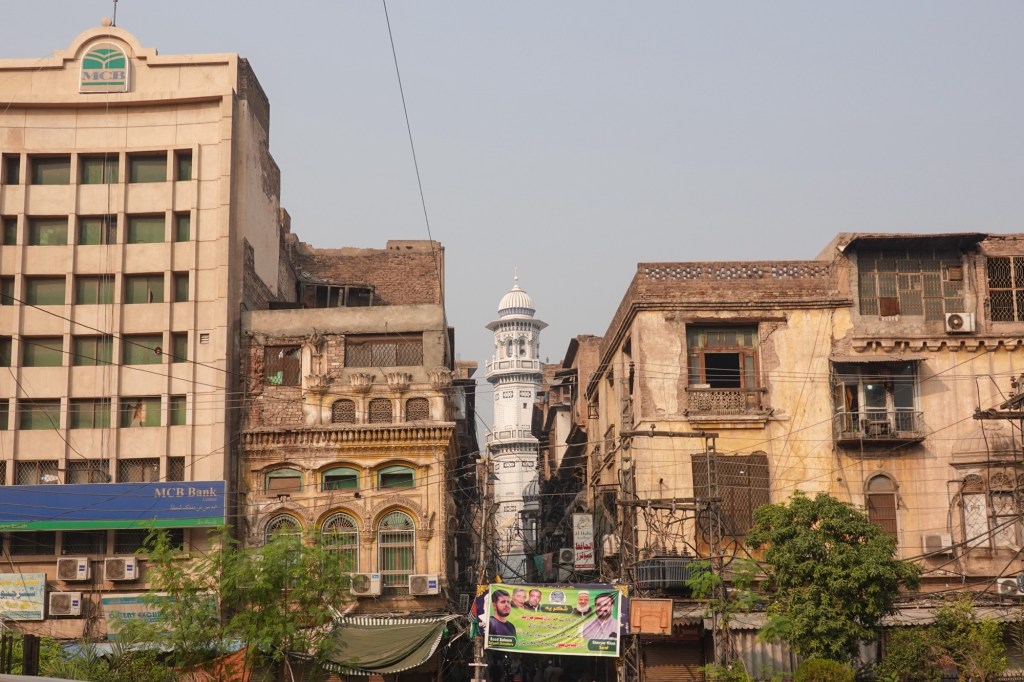
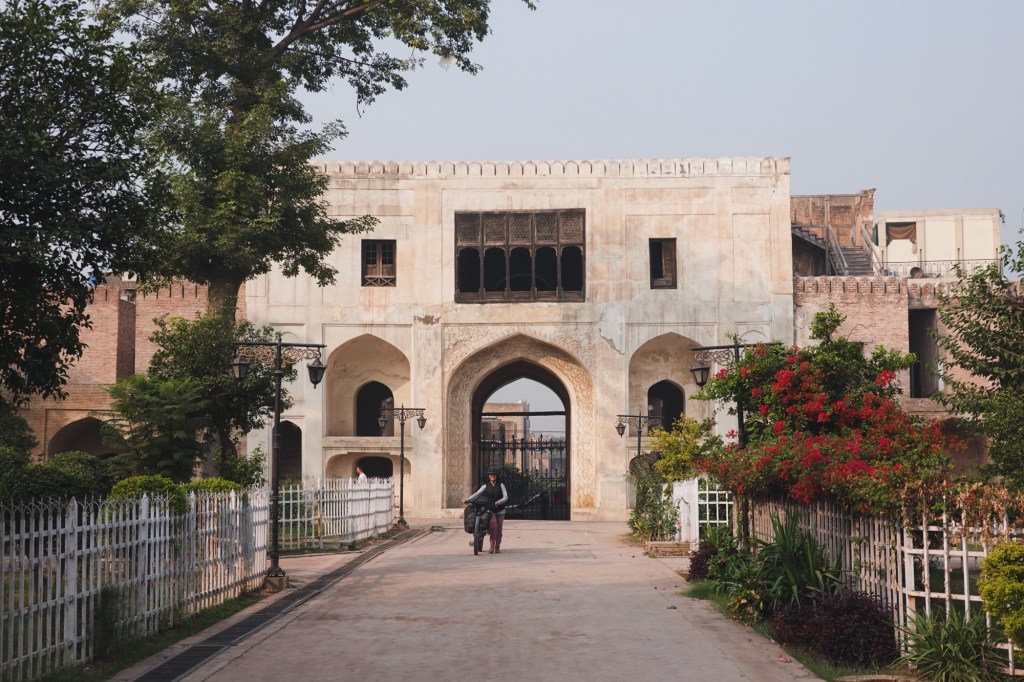
From here onwards we are changing our mode of travelling. We decided to go on by bus, as we are not allowed to cycle without police escort. On the night bus to Peshawar a police escorts drives in front of the bus, just because of the two of us. In Peshawar we were supposed to pick up our Visa for Iran, however Ralfis Visa is still not ready. We visit the old town of Peshawar and get the impression that the city is more traditional than the other areas we have been.
Can peacocks fly?
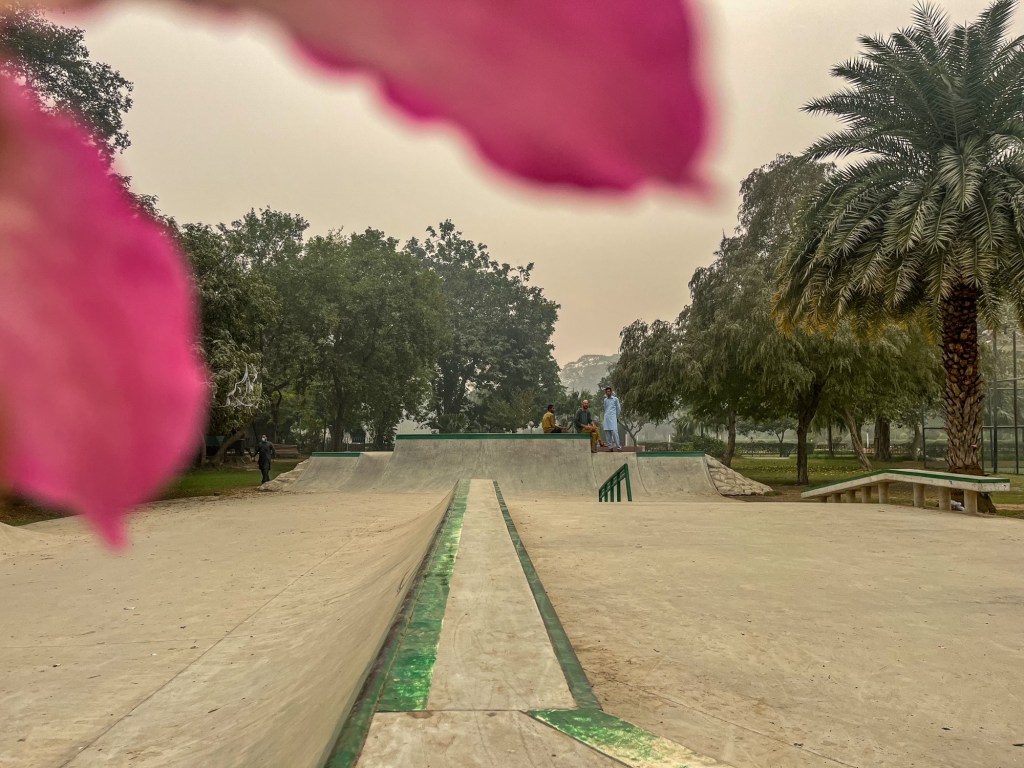
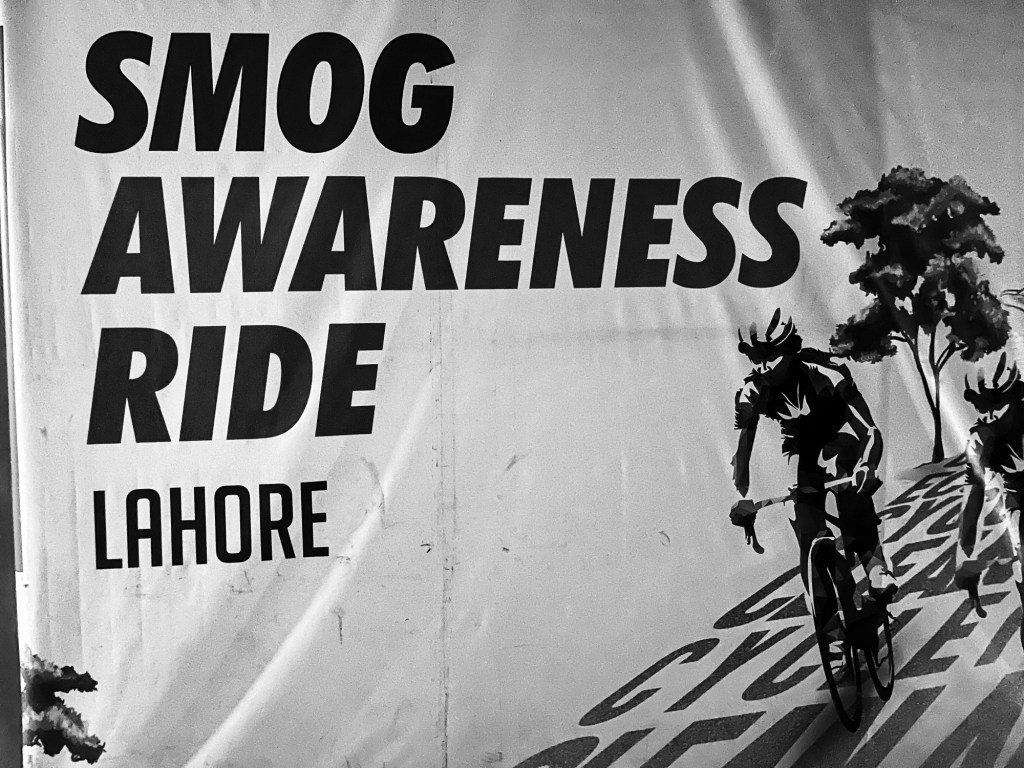
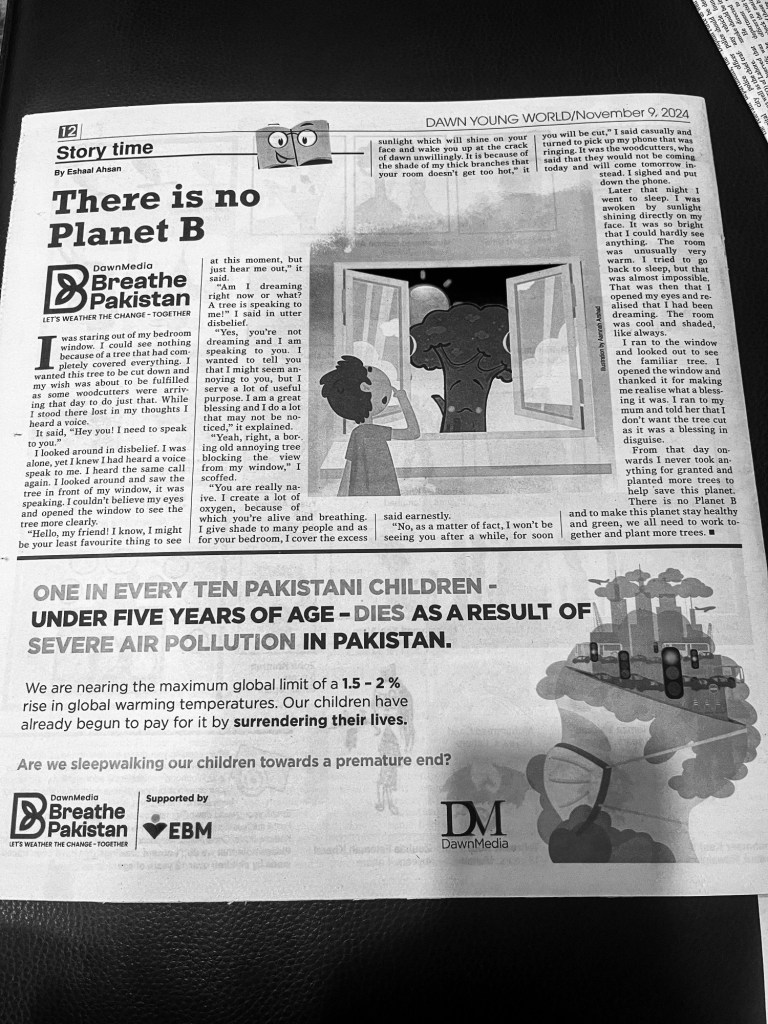
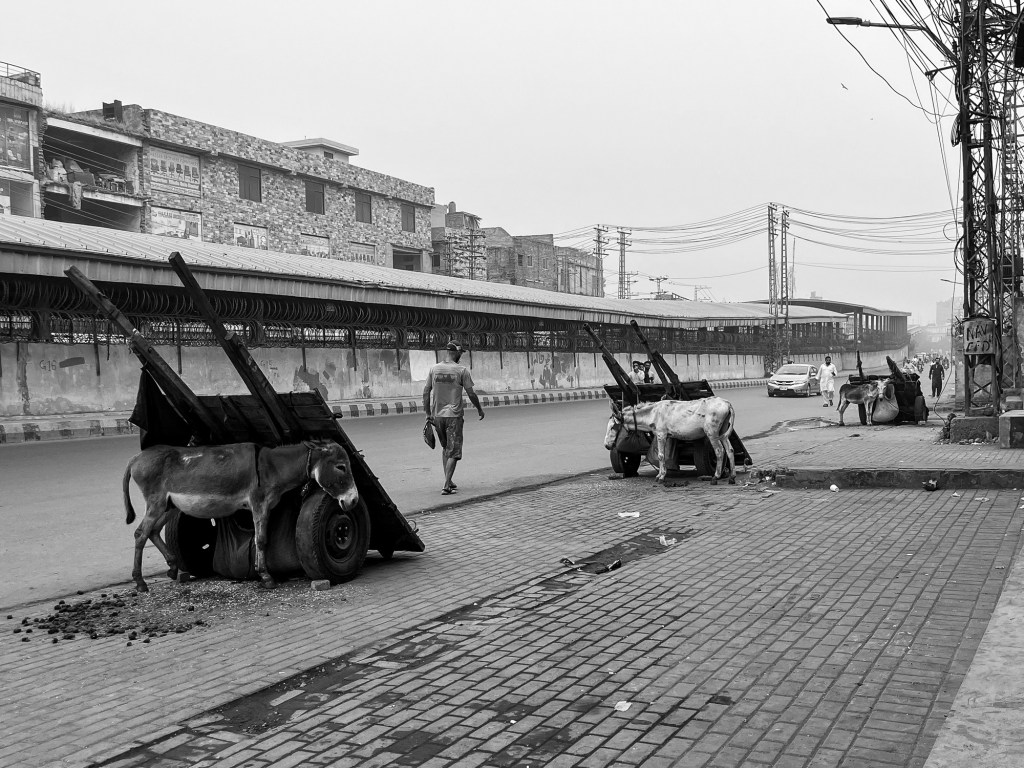
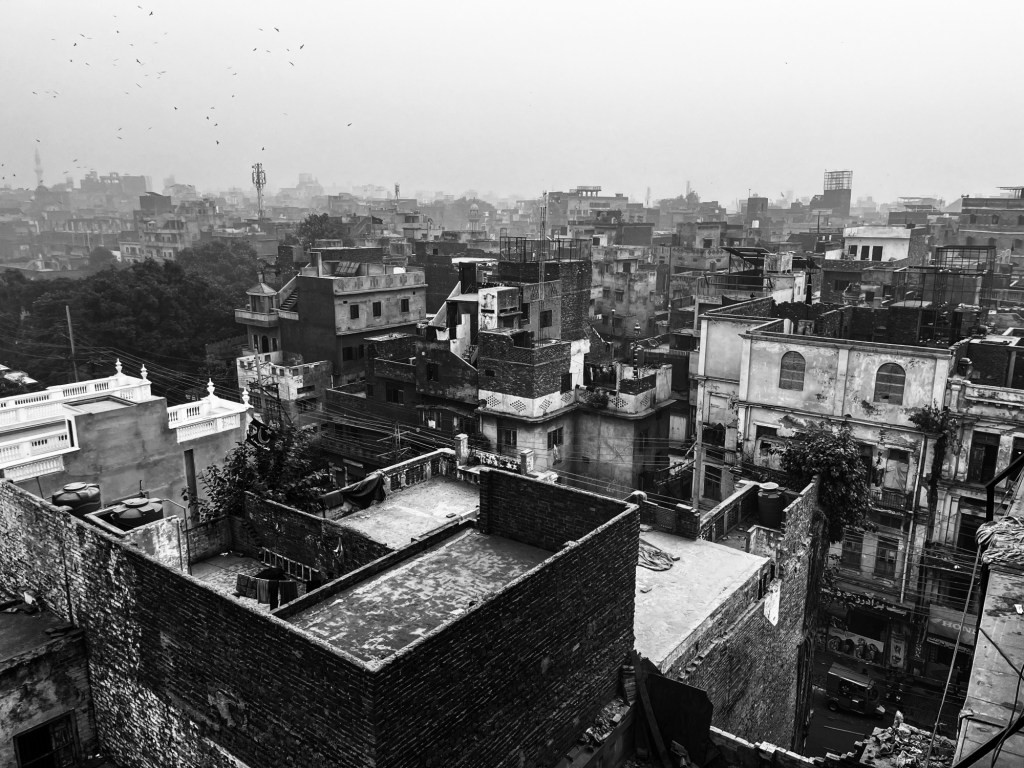
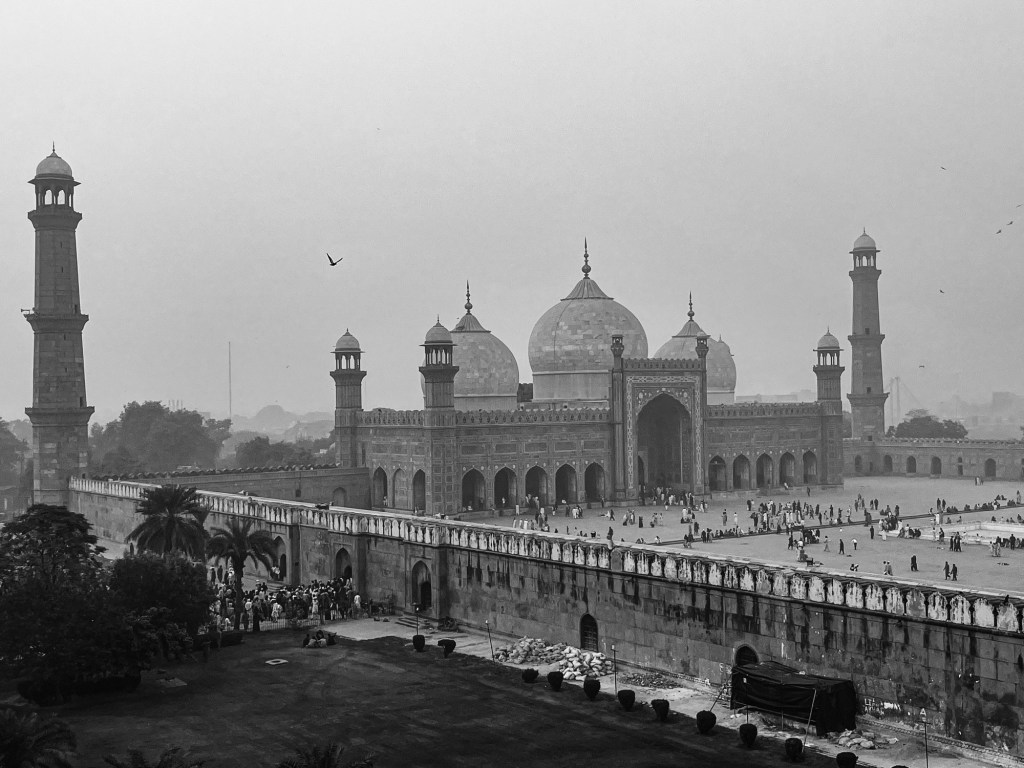
After a few hours of sightseeing in Peshawar we take the nightbus to Lahore and we arrive late night and huzzle to the hotel. The city is grey. The visibility – due to the smog – is only a few meters. We manoeuvre through an ocean of tuk tuks. While we managed to get used to driving on the other side of the road, here it doesn’t matter, just drive in the flow – no matter the speed or the direction. Our plan to spend a few days of sightseeing in the „historical“ and „art“ center is crossed by a lockdown due to the smog. Newspapers report an increase in hospitalisations due to lung issues and newspapers and stress the importance of climate action. The air of Lahore has a dystopian flavour.
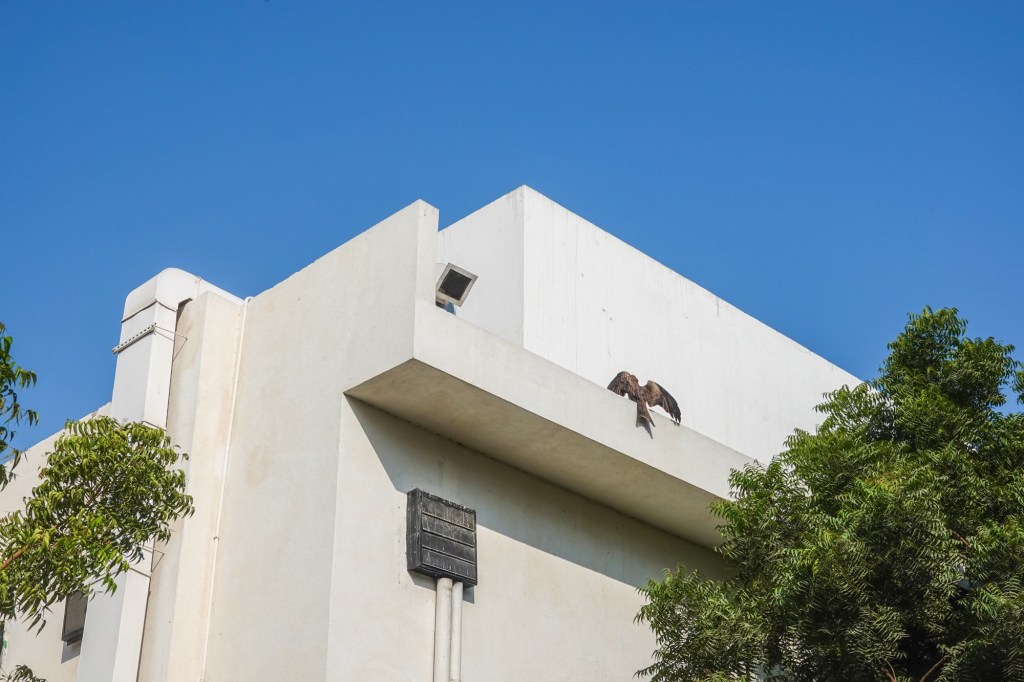
While we are not able to do sightseeing as all of the sights are closed to the smog, we enjoy an interesting conversation with a young couple on a rooftop cafe overlooking the mosque. They share their stories with us with a big smile and shining eyes. It is something special: you get to meet random people on the street and get to know them over a coffee. At the rooftop we are suprised to find a peacock strolling around in the top of a five + story building. On another building an eagle is chilling out. During a lunchbreak in the park a bird swoops down from the tree and snitches the food out of Ralfis hands. The wildlife Lahore – what a surprise.
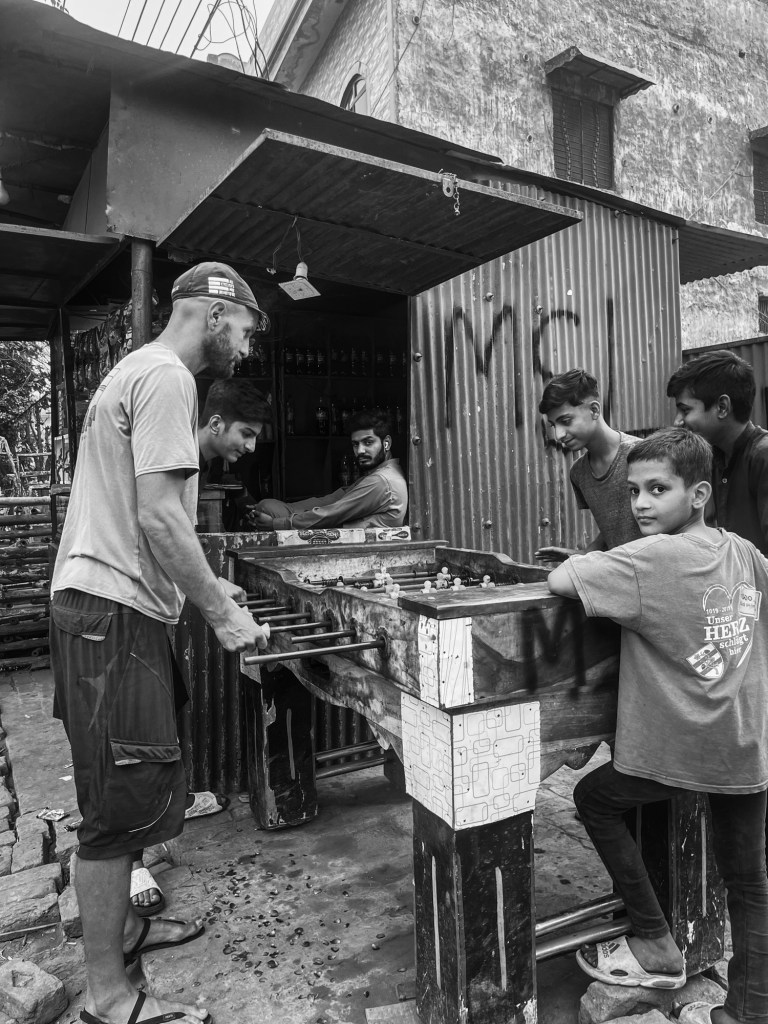
We try to visit a tomb which of course is also closed. After a table soccer game with some local teens we decide to do something we have missed dearly in the past 6 months, going to a cinema!
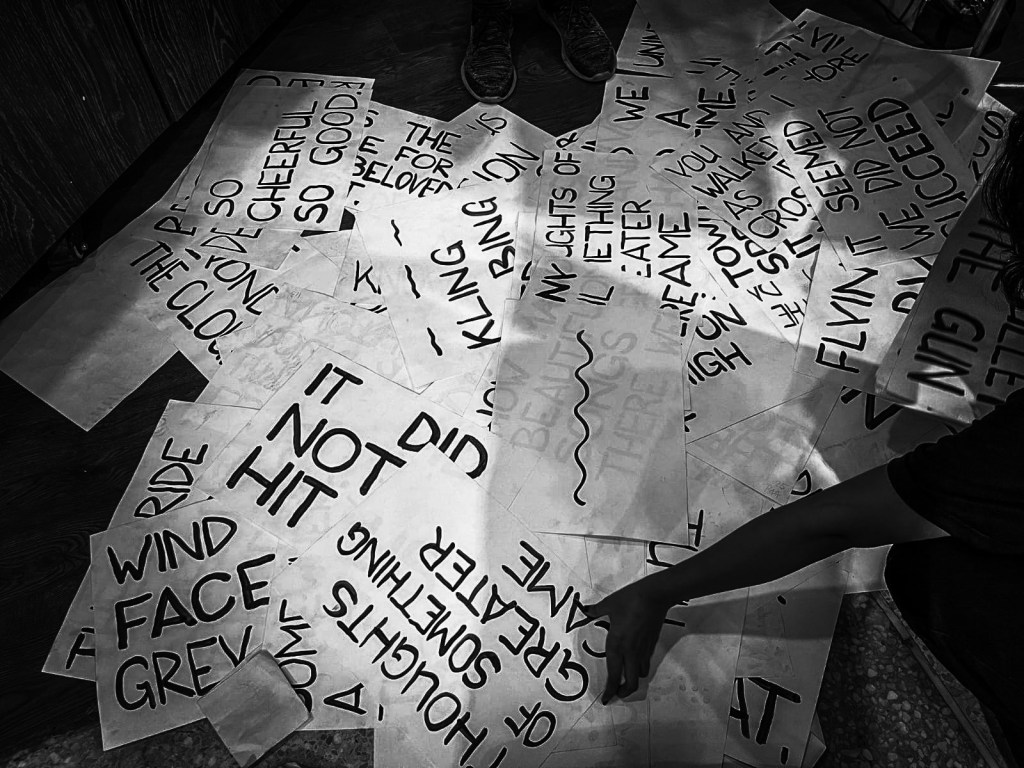
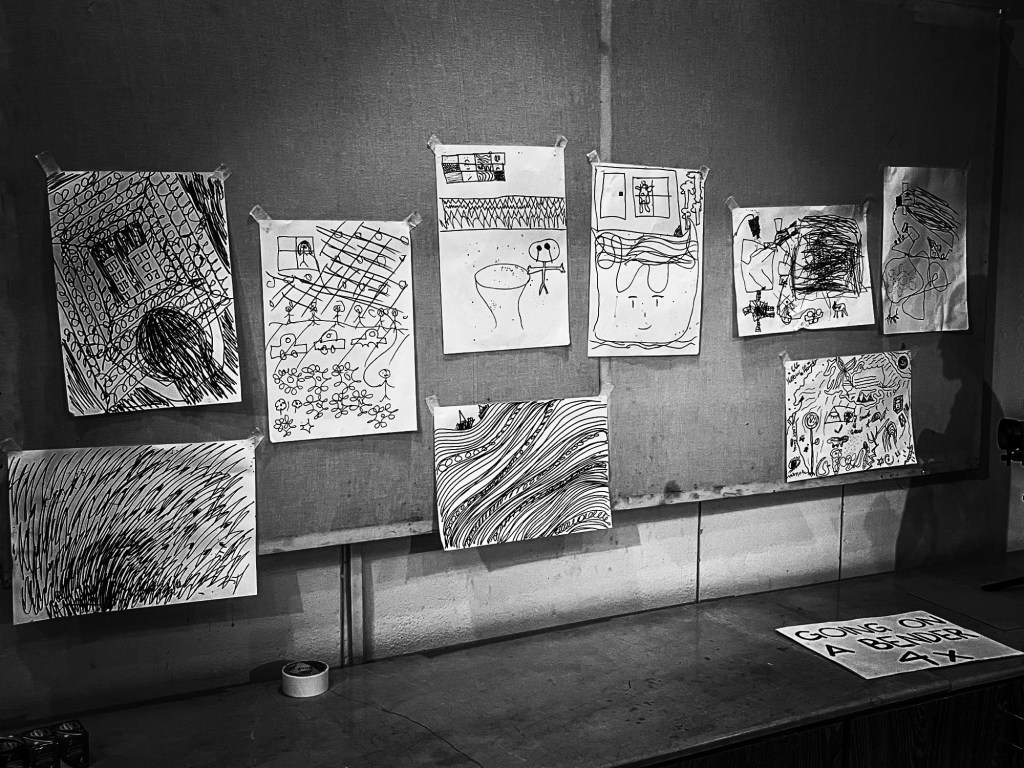
Another culture highlight is the international theatre festival were a swiss/pakistani play took place. An interactive multilingual play targeting the deep human emotion of shame.
Shamelessly phones ring and phone conversation are held during the play. We wonder if this is only for us (and the swiss performers) appears impolite? Maybe the phone call of one individual is more important than the audience and the performers?
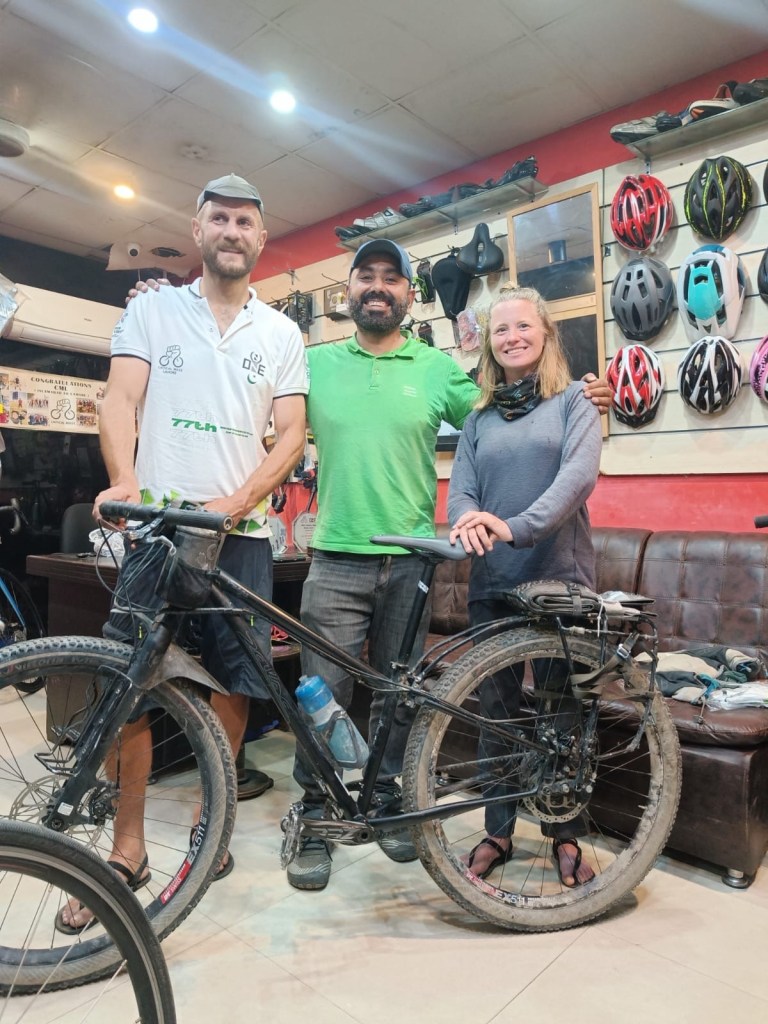
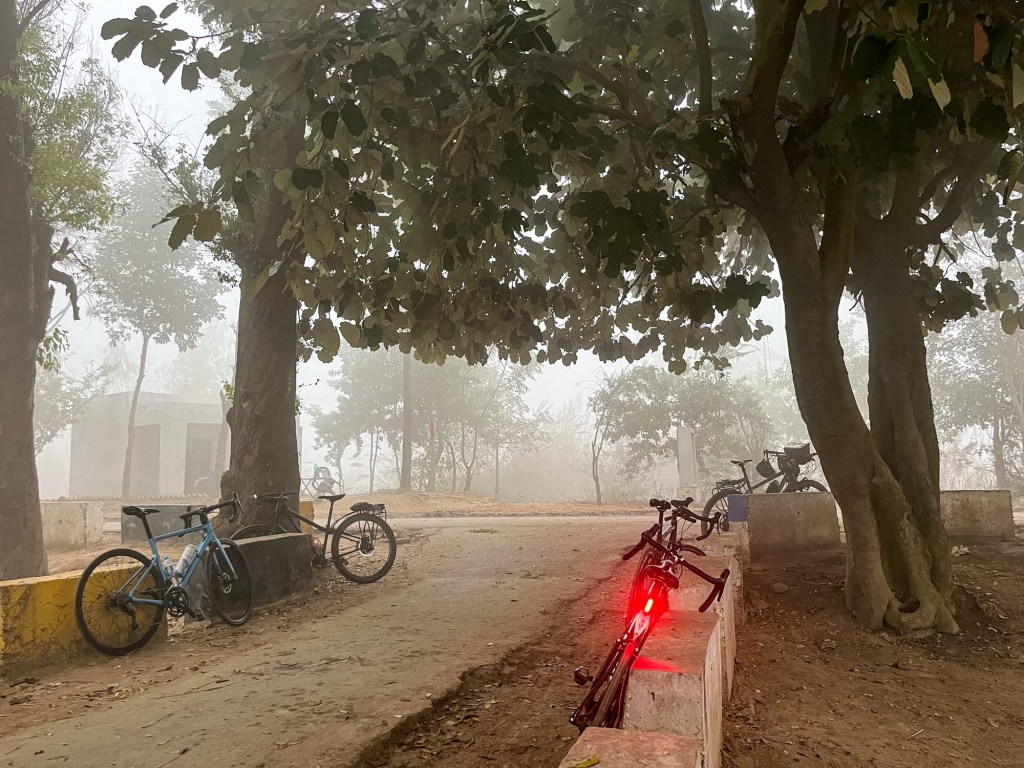
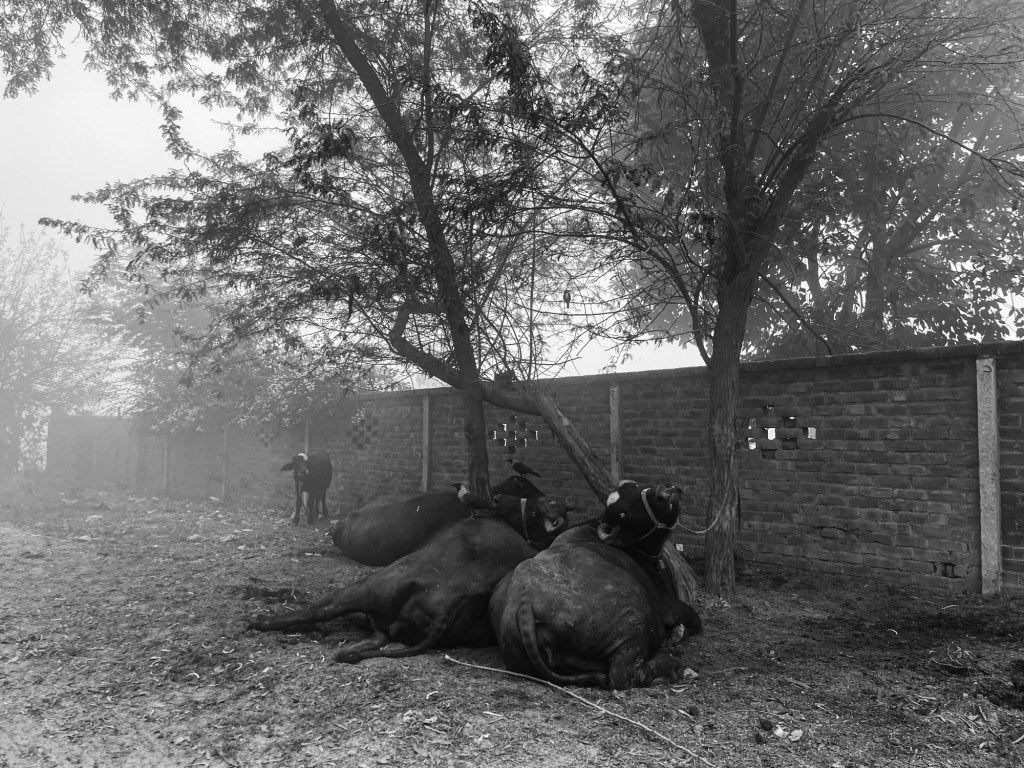
While visiting a bikeshop we get to know Adeel who is actively contributing to the growing bike community in Lahore. Organising community rides and critical mass. The next two days we spend with Adeel and his family – his lovely wife and their 4 boys. He likes to host bike travellers and is welcoming us warmly to his house. A wonderful place in a nice area of Lahore. We go for an early morning ride in the misty outskirts of Lahore and enjoy the company of two fellow cyclists. Both have lived in the US and appreciate being back in Pakistan, with all ist flaws.


Why is noone sleeping?
After a very comfortable 16h ride with a most comfortable sleeperbus we arrive at 4am in Karachi (well in the outskirts of Karachi a 20mio people city). Our bikes wouldn’t fit in the luggage department of the sleeper bus but staff has a quick solution. Bikes go on another bus and will be placed at the security desk in Karachi. We have to say that they managed everything so well and we felt really comfortable leaving our bikes in their custody. They took care of the bike while arranging the luggage and were unbelievably helpful. On the bus ride watched one of the 10 brutal action movies that was available in our sleeper boath and had a solid few hours of sleep.
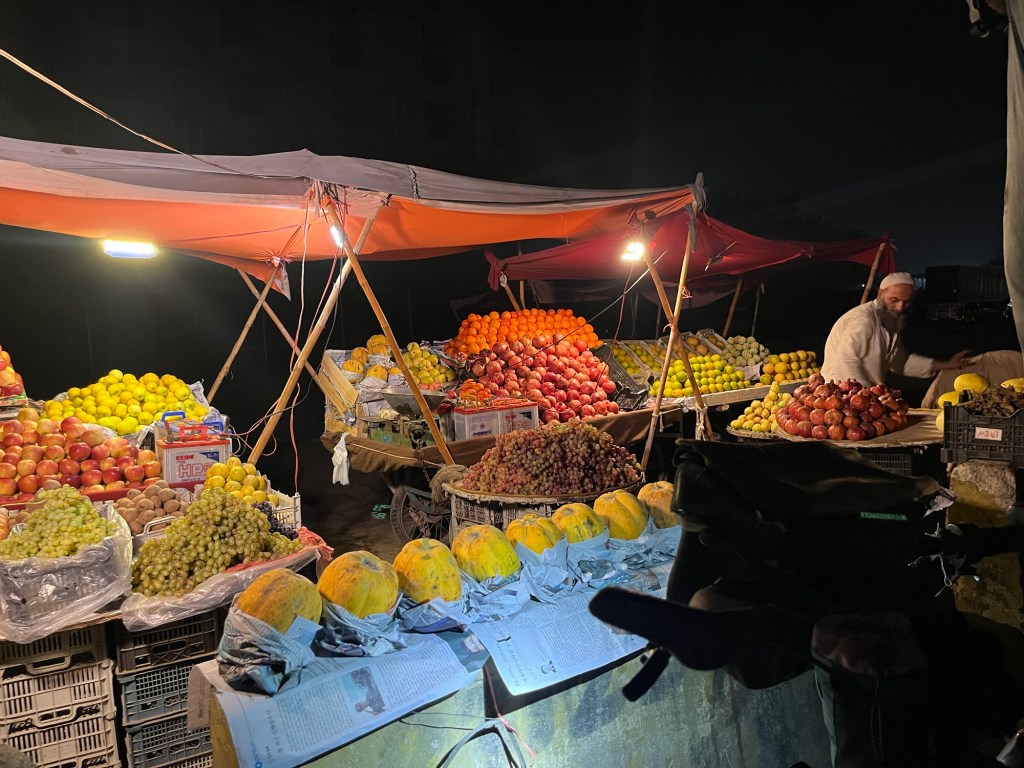

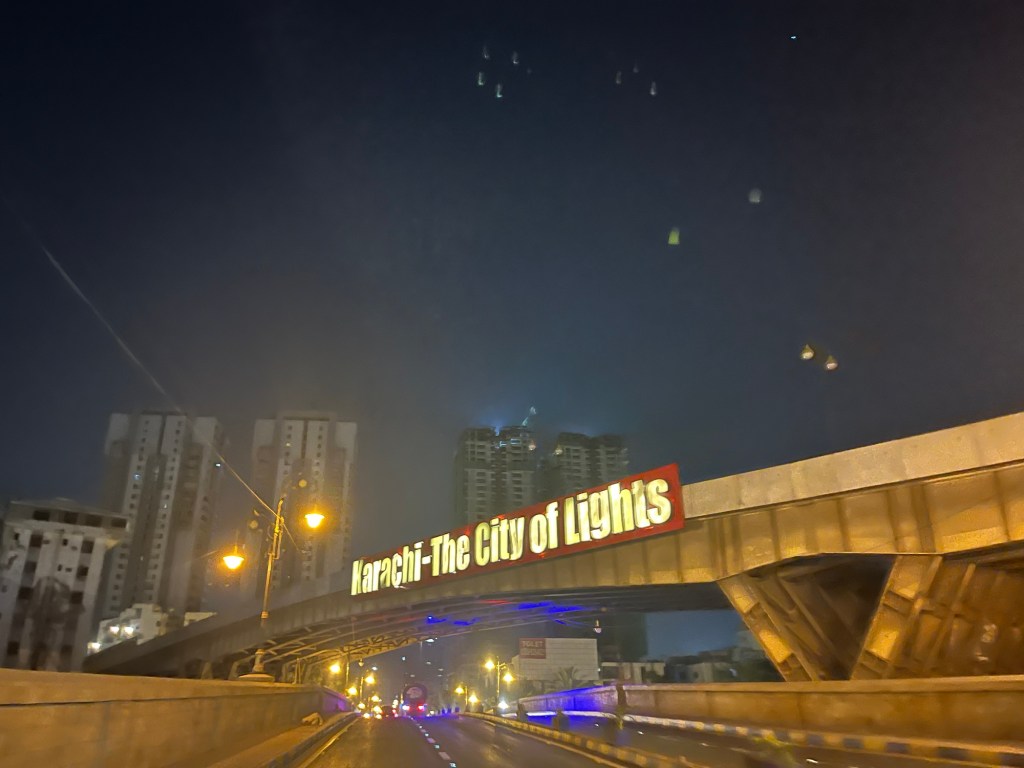
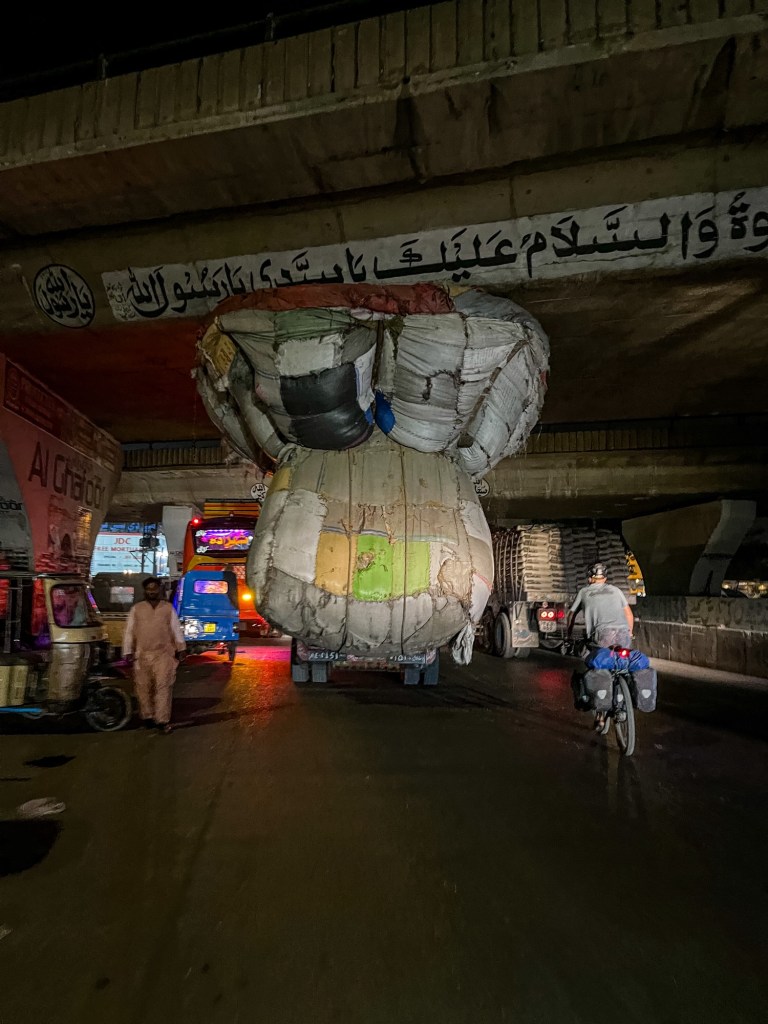
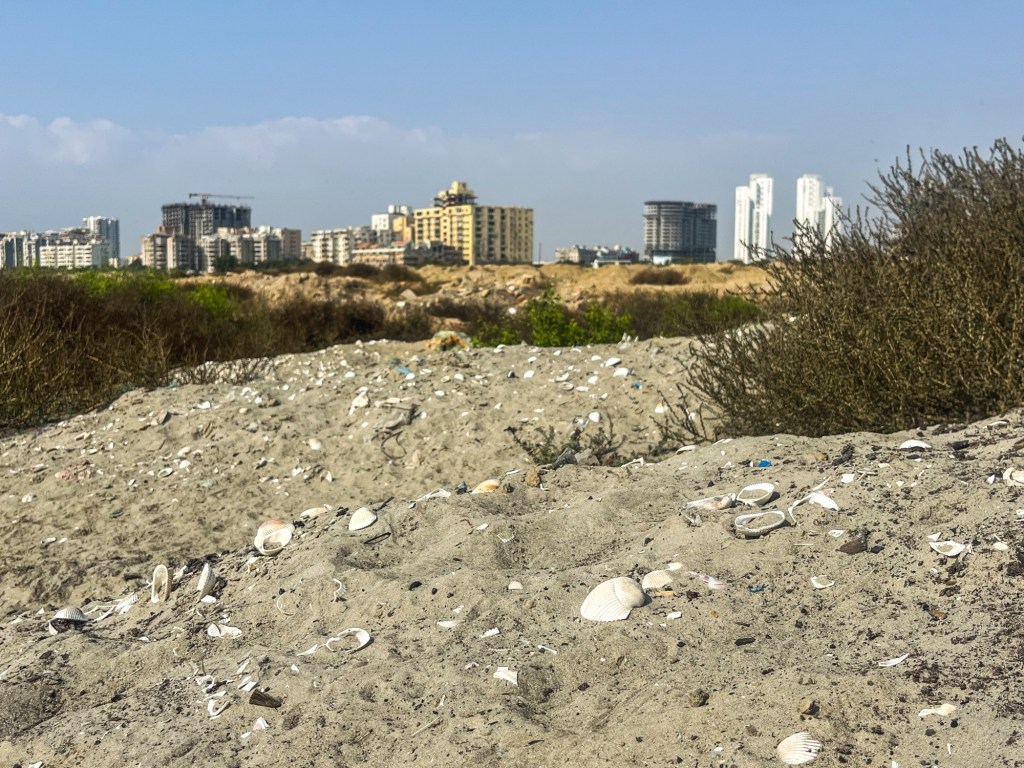
Before dawn we cycled to Karachi downtown, 25km in the night. From the outskirts, where people appear to live on roundabouts and sideways resting from their work shifts, through the oldtown and towards the seaside – where shiny buildings, beautiful trees and flower decorate the rubbish filled roads. Karachi was intended to be a stop to organise and so we spend hours at the Iranian embassy and at banks. Afterwards we do some sightseeing and try to go to the beach. The beach is something between a landfill for garbage and smelly swamp. The bit nicer part of the beach is an amusement park with speaker blasting go-karts and camels rides. Afterwards we check out a mall and are shocked by the prices which are european standard or more expensive. This highlights the immense income gap. In the more populated and urban areas the income gap and poverty becomes more visible. It is painful to see with our comfortable lifes back home. It is however also painful to see the wealth coexisting with this poverty within a few kilometres. We always wonder why no one invests in infrastructure.
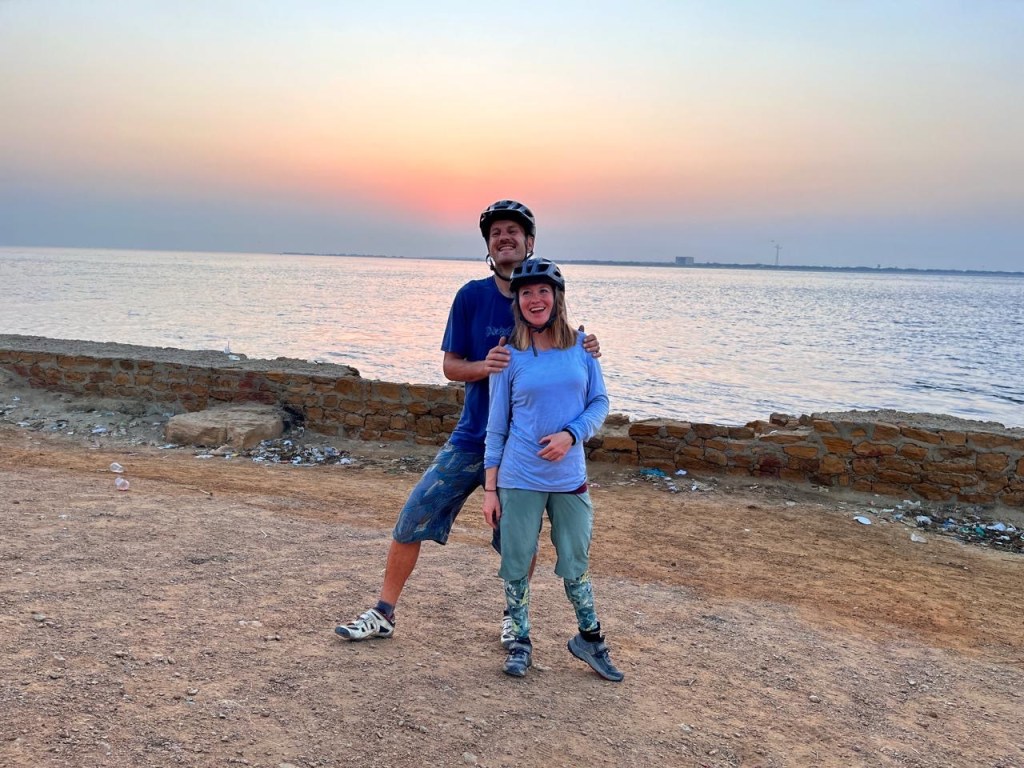
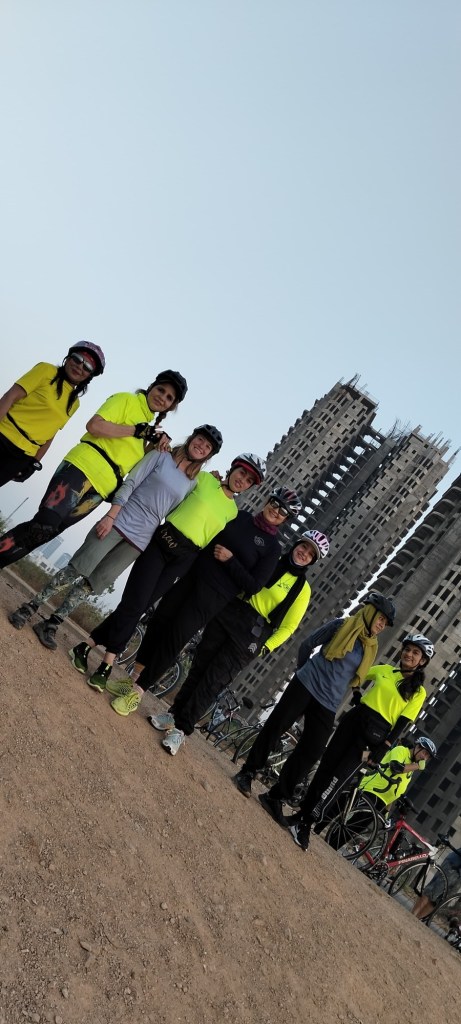
In the evening we get invited for dinner by the local cycling club, Adeel introduced us to, and had a cheerful and fun evening. They also invite us to their community ride the next day. So we meet at 5am for a morning ride with the Karachi bike community – at the seaside. What a joyful and entertaining end of our Pakistan journey!
And then it is time to leave Karachi and so Pakistan. We go to the bus station to leave for Iran. The bus station is a chaos and mess and a garbage hall in itself. While waiting we also get to talk to a young Baluchi in the bus station. He is eager to share his fears, anger and unease about the situation in Baluchistan.
Foreigners are usually escorted in this region and so we take a single bus to the border. It feels strange that tourists are offered this amount of security while citizens seem to experience the opposite.
As alien observers it is hard to grasp the complexity and the problems people face. However Pakistan has shown us yet again that politics don’t define people. The kindness, the help and the friendliness we experienced was unique.
Pakistan was the country that moved us deeply, brought many touching moments as well as many overwhelming situations. So big and diverse the country is so are our memories, feelings and emotions after travelling this region.
Our Path
Pakistan in total (hiking and biking): 1360km | 26700 altitude meters | 4 long-distance busses
 Woanders
Leave a comment